Engineered Racking & Industrial Storage Solutions
Precision-formed roll profiles, automated robotic continuous welding, and multi-stage anti-corrosion surface treatments. Engineered to maximize cubic volume utilization across multi-echelon supply hubs.
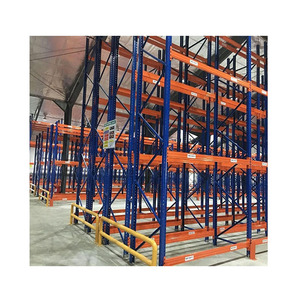
Galvanized Steel Heavy-Duty Pallet Racking (VNA / Double-Deep)
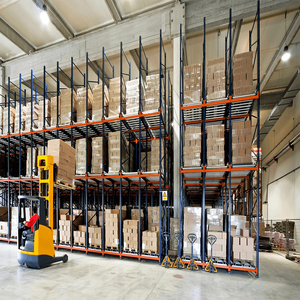
High-Density Gravity Roller Pallet Flow Dynamic Racking System
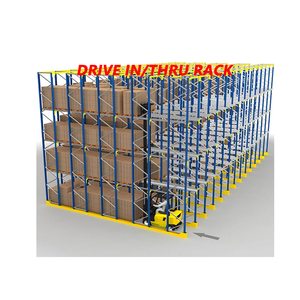
Continuous Drive-In Heavy Duty Warehouse Pallet Rack System
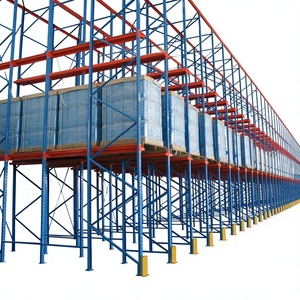
2-Layer Through-Aisle Drive-In Reinforced Industrial Shelving
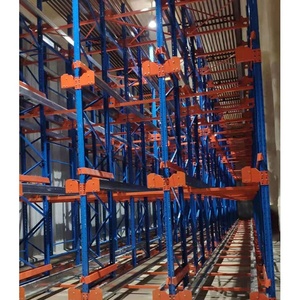
Industrial Radio Shuttle Racking & Custom Steel Stacking System
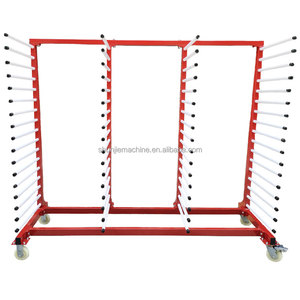
Mobile Panel & Profile Cantilever Storage Rack with Castors
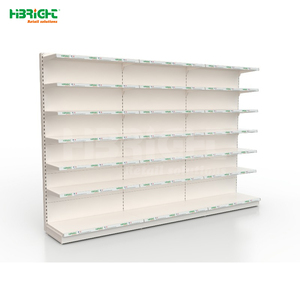
Double-Sided Heavy Duty Perforated Back Gondola Shelving
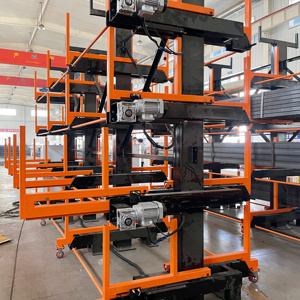
Automatic PLC-Controlled Electric Telescopic Cantilever Rack
25 Years of Factory Direct Racking Infrastructure
Headquartered in Guangzhou, China, our specialized manufacturing complex integrates structural steel cold-roll forming, automated mechanical punching, robotic welding, and German automated electrostatic powder-coating lines.
Certified Structural Steel
We strictly source prime-grade Q235B and Q355B structural steel from Tier-1 national mills (Baosteel, Ansteel). Every batch is validated with 3.1 Mill Test Certificates verifying tensile yield strengths exceeding 355 MPa.
- CE Certificate No. 2435-CPR-8605159
- ISO 9001:2015 Quality Management Certified
- Compliant with FEM 10.2.02 & RMI MH16.1
Precision Engineering & Pretreatment
Racking integrity depends heavily on surface preparation. Our proprietary 10-stage immersion system includes chemical pickling, alkaline degreasing, and micro-crystalline zinc phosphating to guarantee zero subsurface oxidation.
- Continuous automated continuous-roll cold forming
- Multi-pitch adjustable upright punching (50mm / 75mm)
- Salt spray testing compliant with ASTM B117 (>500 hrs)
Global Deployment & Seismic Design
From high-seismic zones across the Pacific Rim (Indonesia, Philippines, Japan) to tropical monsoonal regions across Southeast Asia and dry, temperature-volatile GCC states, our engineers simulate finite element load parameters.
- Free 2D CAD layouts & 3D structural BIM models
- Export packaging with zero-motion container dunnage
- Detailed on-site assembly guides & video telemetry
Warehouse Storage Systems: Technological Development Trends
As industrial land costs escalate globally, the convergence of structural civil engineering with autonomous robotic material handling is redrawing modern warehouse footprints.
1. Transition to High-Bay ASRS and Pallet Shuttle Automation
Traditional selective racking systems, while versatile, are limited by standard forklift operational ceilings (typically 8 to 11 meters) and generous aisle requirements (3.2 to 3.8 meters). The industrial logistics landscape is rapidly shifting toward Automated Storage and Retrieval Systems (ASRS) and Four-Way Radio Shuttle Matrixes that leverage vertical warehouse clearances exceeding 24 to 35 meters.
Shuttle-based density platforms eliminate interior operating forklift corridors entirely. Pallets are shuttled automatically across high-precision steel rails via radio-frequency controlled robotic carriers. By transitioning to high-bay automated racking, logistics operators routinely gain between 65% and 80% higher storage density per cubic meter, while cutting indoor vehicle emissions and workforce collision liabilities to near zero.
2. Finite Element Analysis (FEA) for Seismic Structural Integrity
Historically, industrial pallet racking was perceived as non-structural indoor equipment. Modern international building codes (including EN 15512, Eurocode 3, AS4084-2023, and US RMI MH16.1) now enforce comprehensive dynamic seismic calculations treating full-height racking as structural frames subjected to complex lateral earthquake ground motions.
Our Guangzhou engineering team utilizes specialized structural FEA software to model P-Delta dynamic amplification, seismic base-isolation responses, soil-structure interaction, and live pallet beam slip friction. Upright omega profiles are cold-formed with multi-stage cold work hardening to maintain high structural ductility, while high-tensile baseplates and heavy chemical anchors safeguard warehouses across seismically volatile Asian, Middle Eastern, and Latin American tectonic margins.
3. Cold Chain Logistics Boom & Sub-Zero Metallurgical Stability
The expansion of fresh food delivery, biologics distribution, and pharmaceutical cold supply chains has driven unprecedented demand for cold-room racking (-25°C to -35°C). Operating at sub-zero temperatures presents severe metallurgical challenges: standard mild carbon steels experience brittle fracture transitions when subjected to sudden forklift dynamic impacts in sub-zero environments.
To resolve this failure point, our factory specifies Charpy V-notch impact-tested steels combined with epoxy-polyester architectural powder resins that resist thermal micro-cracking and cyclical condensation corrosion. Additionally, Drive-In and Push-Back configurations engineered for frozen warehouses integrate specialized low-temperature roller bearings and stainless-steel fasteners that eliminate seizing and lubrication breakdown.
4. Ecological Finishes & Low-Carbon Steel Direct Sourcing
Global ESG mandates and European Carbon Border Adjustment Mechanisms (CBAM) are compelling corporate procurement teams to scrutinize the embodied carbon of warehouse racking installations. The transition away from high-polluting solvent paints toward eco-certified, heavy-metal-free electrostatic powder coatings is now universal.
Our Guangzhou automated coating facility recycles 98% of oversprayed powder via computerized cyclone recovery units. Pre-treatment chemical tanks utilize closed-loop, zero-discharge wastewater reclamation systems. By combining optimized cold-formed thin-wall high-strength profiles (Q355B replacing thicker Q235B without sacrificing load capacity), overall steel tonnage is reduced by 12% to 18%, substantially lowering both ocean freight logistics emissions and procurement expenditures.
Future Procurement Trends for Industrial Racking Buyers
How enterprise procurement directors, EPC contractors, and multi-national 3PL operators mitigate volatility, secure tariff efficiencies, and maximize ROI when buying factory-direct from China.
1. Nearshore Hybrid Warehousing & Modular Expansions
Enterprises are pivoting away from monolithic mega-facilities in favor of decentralized, agile regional fulfillment hubs. This transition requires structural storage systems to be modular, standardized, and capable of rapid reconfiguration or relocation. Procurement departments favor bolt-free adjustable beam-to-column connector teeth with 50mm pitch increments, ensuring shelf heights can adapt seamlessly as inventory profiles shift from palletized bulk to carton e-commerce units.
2. Total Cost of Ownership (TCO) vs. Raw Material Capex
Experienced buyers no longer award tenders solely on raw quotation weight. Modern TCO analysis evaluates installation labor velocity, damage tolerance, and column impact replacement costs. Investing in integrated heavy-duty column bullnose protectors, ductile steel baseplates, and pre-assembled structural frame trusses reduces site construction timelines by over 30%, compensating for minor initial freight or manufacturing premiums.
3. Steel Commodity Hedging & Contractual Indexing
Hot-rolled steel coil (HRC) spot prices fluctuate significantly based on global macro trends. Savvy procurement teams structure long-term supply agreements using index-linked pricing tied to Shanghai Metal Market (SMM) benchmarks. Partnering directly with massive Chinese manufacturers possessing 30,000-ton monthly throughput ensures raw material cost stability and priority steel coil rolling allocations even during tight commodity cycles.
4. Container Cube Maximization & Ocean Freight Engineering
Ocean freight volatility remains a decisive factor in total landed costs. Elite Chinese manufacturers deploy computer-modeled 3D container stuffing software before a single steel beam is rolled. By staggering welded beam brackets, nesting cold-rolled uprights with timber spacers, and palletizing wire mesh decking to maximize 40HQ internal cubic limits without exceeding port axle road-weight thresholds, landed logistics costs drop by 15% to 22%.
5. Direct OEM/ODM Strategic Alliances for Regional Integrators
Overseas racking distributors across Southeast Asia, Europe, Australia, and the Middle East are increasingly bypassing local intermediaries to establish direct OEM/ODM supply partnerships with Chinese manufacturing plants. Custom beam profile designs, proprietary column punch geometries, client-branded product labeling, and mill test certification packets are supplied directly under the distributor’s brand identity.
6. Digital Twin Layout Verification & Rapid BIM Delivery
Bidding for logistics real estate now requires BIM (Building Information Modeling) Level 2 compliance. Procurement teams expect manufacturers to deliver native Revit (.rfa) and AutoCAD (.dwg) engineering files within 48 hours of initial enquiry. Simulating fork-truck clearance envelopes, overhead sprinkler cone dispersion, and emergency egress corridors in digital 3D space eliminates costly on-site installation disputes.
Frequently Asked Questions by Industrial Racking Buyers
Detailed technical answers addressing steel metallurgy, structural tolerances, corrosion protection, international compliance standards, and installation logistics.
What are the metallurgical differences between Q235B and Q355B steel in racking design?
Q235B and Q355B represent standard Chinese structural carbon steel grades, approximately equivalent to European S235JR and S355JR (or ASTM A36 and A572 Grade 50). The primary differentiator is minimum yield strength: Q235B yields at 235 MPa, while Q355B yields at 355 MPa (over 50% stronger in pure yield performance).
For standard selective pallet racking with lower clear heights (under 6 meters) and beam loads around 1,000–2,000 kg, Q235B provides superior cost-efficiency and ductility. For tall upright frames (8 to 24+ meters), high-density drive-in systems, or high-bay automated warehouse structures, Q355B is mandatory. Utilizing Q355B allows our engineers to design thinner-gauge cold-formed columns that support identical vertical static loads with significantly reduced overall tonnage, resulting in direct ocean shipping and material cost savings.
How does your factory test and calculate load capacities for custom pallet beams?
All load capacities are calculated in strict compliance with FEM 10.2.02 and RMI MH16.1 specifications. Our engineering team evaluates three critical failure limit states: maximum bending stress (yielding), shear stress, and deflection criteria. Under European FEM standards, the allowable beam vertical deflection under maximum design live load cannot exceed L/200 (where L is the clear span distance between upright columns). For sensitive picking systems or automated radio shuttle applications, we design to a more stringent L/250 or L/400 standard.
Beyond analytical calculation, our on-site laboratory performs full-scale destructive load tests. Beam connector teeth are subjected to cyclic moment-rotation tests to establish exact connector stiffness values (ΧD), which are fed into our global frame stability software to prevent column buckling under uneven warehouse floor conditions.
Which surface treatment is best: Electrostatic Powder Coating or Hot-Dip Galvanization?
The choice depends entirely on the operational environment:
Electrostatic Powder Coating: Ideal for standard ambient dry warehouses, retail distributions, and light manufacturing. We apply 60–80 microns of thermoset polyester/epoxy powder cured at 180°C–200°C. Following our 10-step pickling and phosphating pre-treatment, our coated finishes resist flaking and scratching while offering custom corporate color branding (e.g., standard RAL 5015 Blue for frames, RAL 2004 Orange for beams).
Hot-Dip Galvanization (HDG): Mandatory for outdoor storage yards, high-humidity coastal climates, fertilizer/chemical processing facilities, and severe condensation cold storage. Steel components are immersed in molten zinc at 450°C, forming an 80–120 micron metallurgically bonded zinc-iron alloy barrier. HDG provides sacrificial galvanic protection that resists corrosion even if the outer layer is severely scratched by forklift tines.
What information must a buyer provide to receive a complete 2D/3D layout and quote?
To produce an actionable, production-ready proposal within 24 to 48 hours, our structural engineers require:
1. Architectural Floor Plan: CAD drawing or dimensioned sketch indicating building boundaries, column grid lines, clear overhead height to lowest obstruction (sprinklers, HVAC, trusses), floor flatness class, and dock/door locations.
2. Pallet Load Profile: Overall pallet dimensions (Width × Depth × Height including cargo overhang) and maximum gross weight per unit load.
3. Material Handling Equipment (MHE): Forklift model, mast type, maximum lift height, minimum turning radius (AST - aisle stacking turn width), and operational mast collapse height.
4. Storage Dynamics: Required SKU selectivity (100% selective FIFO vs. deep-lane LIFO), target pallet count capacity, and anticipated daily cycle throughput.
5. Project Location: Country and city name (to calculate wind/seismic zone lateral forces per local building bylaws).
How do you prevent transit abrasion and ocean container corrosion during international shipping?
Heavy industrial steel components shipped across trans-oceanic routes endure intense marine humidity, temperature swings (causing "container rain"), and dynamic ship pitching. Our factory implements stringent export packing protocols:
Every upright frame pack is bundled using custom-molded corrugated cardboard edge protectors and wrapped in multi-layer water-resistant polyethylene stretch film. Structural beams are bundled with steel strapping over protective rubber buffers to prevent metal-to-metal powder coating friction. All baseplates, row spacers, beam connectors, and hardware bolts are sealed in reinforced plywood crates lined with waterproof desiccant packs. Heavy dunnage lumber and high-tensile polyester ratchet lashing secure all cargo bundles inside the 40ft container to prevent load shifting during oceanic voyage.
Can your engineering team certify compliance for local building and safety permits?
Yes. Guangzhou Heda Shelves Co., Ltd. holds valid factory-certified CE marking (Construction Products Regulation EU No. 305/2011, Certificate 2435-CPR-8605159) and ISO 9001:2015 certification. For projects requiring municipal or third-party engineering permits (e.g., USA, Australia, Saudi Arabia, Singapore), we supply complete structural calculation documentation.
These calculation packages detail dead load, live load, seismic base shear coefficient, frame horizontal sway deflection, floor slab point-load bearing stresses, and anchor pull-out ratings. In collaboration with local chartered professional structural engineers (PE), our calculation packages serve as direct documentation for local building control approvals.
Plan Your Warehouse Storage Infrastructure Today
Speak directly with our Guangzhou technical team. Submit your warehouse dimensions, pallet specifications, and throughput targets to receive a complimentary 2D CAD floor plan, 3D structural model, and itemized factory-direct price quotation.