Engineering Architecture What Makes a Cantilever Mezzanine System the Superior High-Density Long-Goods Solution?
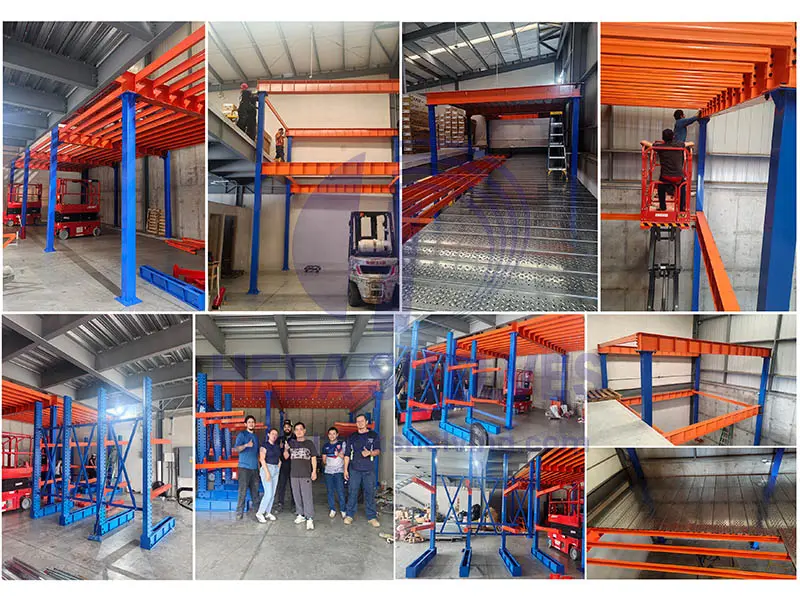
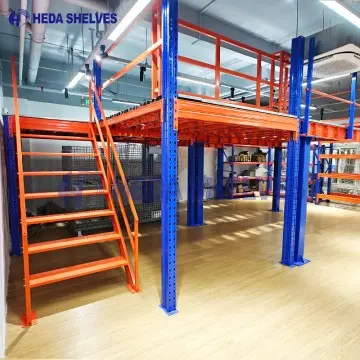
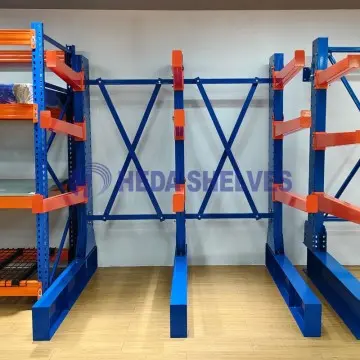
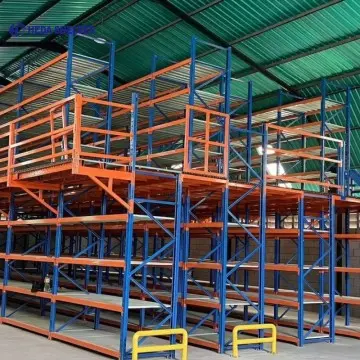
Standard pallet-rack-supported mezzanines rely on fixed front upright columns that obstruct wide, un-palletized loads. A cantilever mezzanine system converts column profiles into structural vertical towers featuring adjustable cantilever arms, crowned with high-tensile main girders, joists, and floor decking. This dual-purpose integration optimizes horizontal access along the floor while building a fully load-bearing upper operations deck.
Industrial facilities handling timber bundles, plumbing pipes, copper tubing, bar stock, extrusions, and sheet goods face an operational dilemma: high-density cantilever racks occupy massive ceiling clearance without utilizing the top vertical envelope, while standard mezzanine platforms require closely spaced structural posts that block wide forklift access.
The Cantilever Mezzanine System breaks this spatial constraint. By calculating upright moment inertia and anchoring uprights directly to thickened slab footings, our engineers utilize the cantilever vertical columns as the structural foundation of the mezzanine level. Forklifts can maneuver long bundles into clear horizontal arm openings below, while order picking, assembly lines, longspan carton shelving, or office spaces function independently on the mezzanine deck above.
At Guangzhou Heda Shelves Co., Ltd., every system undergoes rigorous structural evaluation using finite element analysis (FEA) to verify dynamic live loads, dead loads, and point loads under European EN 15512, FEM 10.2.02, and American RMI standards, preventing arm sag, column torsion, and vibrational resonances.