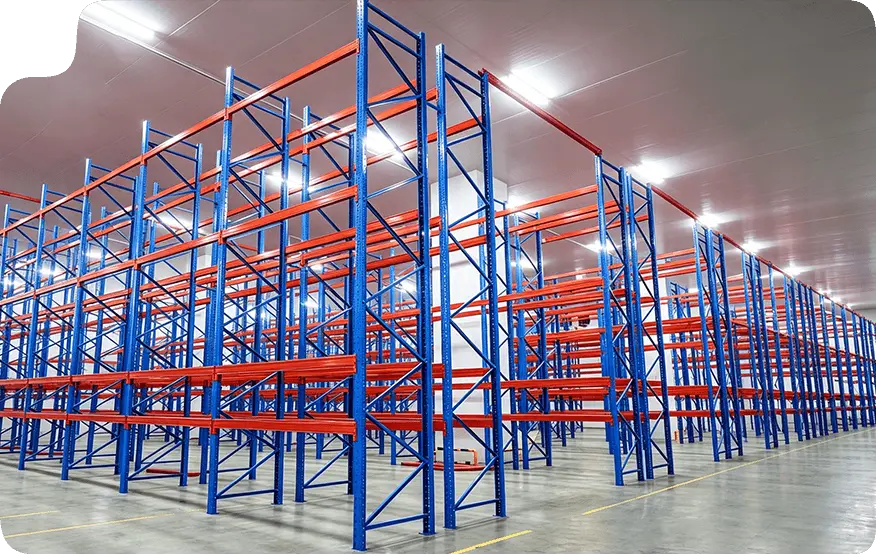
Radio Shuttle Racking System: Is It Worth the Investment for Modern Warehouses?
In the era of surging commercial real estate valuations and escalating labor overhead, warehouse managers and global procurement directors encounter a critical question: Does transitioning to a semi-automated Radio Shuttle Racking System deliver a superior return on investment compared to conventional selective or drive-in racks?
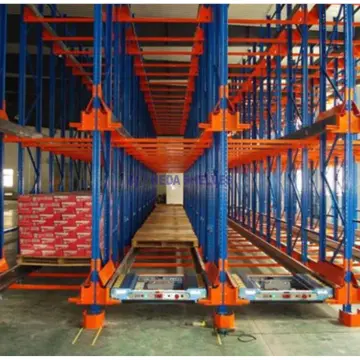
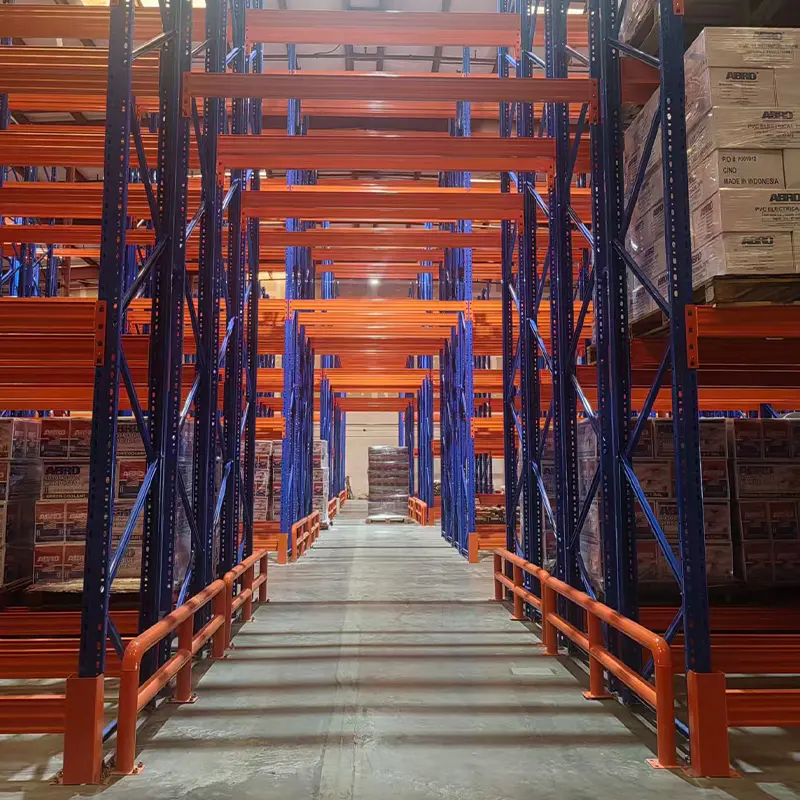
A Radio Shuttle Racking System is a high-density, semi-automated storage solution that utilizes an autonomous, battery-powered pallet shuttle cart running along dedicated guide rails inside storage channels. Rather than requiring forklift trucks to navigate deep into racking aisles—a fundamental risk point in traditional drive-in systems—the forklift operator places the shuttle at the channel entrance, deposits the pallet on the shuttle carriage, and triggers wireless instructions via an industrial tablet or RF remote control.
The motorized shuttle effortlessly lifts the pallet, accelerates smoothly through the lane, and deposits the unit load at the closest available storage location with millimeter precision before returning to the picking face. This mechanical separation of forklift movements and deep storage channels eliminates internal frame impacts, dramatically reduces cycle times, and boosts overall warehouse cubic capacity by up to 85%.
- Up to 50 Pallets DeepContinuous deep-channel storage without structural risk
- Dual FIFO & LIFO SetupTotal configuration flexibility per inventory profile
- Zero In-Aisle CollisionsForklifts remain safely at the main transfer aisle
- Lower Labor RequirementsUp to 60% faster pallet infeed and retrieval throughput
Radio Shuttle vs Drive-In vs Selective Racking: Engineering Matrix
Understanding where capital expenditure intersects operational savings is paramount. Here is how radio shuttle technology contrasts structurally and operationally with alternative storage methodologies.
| Storage Performance Attribute | Selective Pallet Racking | Drive-In Racking System | Radio Shuttle Racking System |
|---|---|---|---|
| Cubic Storage Density | Low (~40% warehouse volume utilized) | High (~65% to 70% volume utilized) | Maximum (~80% to 85% volume utilized) |
| Forklift Travel Inside Lanes | Not required (access from aisles) | Mandatory (high impact hazard) | Strictly zero (Forklifts remain outside) |
| Throughput & Operating Speed | Fast individual pallet access | Extremely slow, high driver fatigue | Rapid (Shuttle travels up to 1.2 m/s) |
| Operational Flexibility | 100% immediate selectivity | Strict LIFO (FIFO requires double access) | Configurable LIFO or FIFO per channel |
| Cold Storage Energy Efficiency | Poor (excessive conditioned air wasted) | Moderate (dense but slow handling) | Optimal (minimal air volume, fast turnover) |
| Structural Maintenance Costs | Low to moderate upright maintenance | High (frequent upright and arm damage) | Extremely low (no rack collisions) |
| Standard Lane Depth | 1 to 2 pallets deep | 4 to 8 pallets deep typical | Up to 40-50 pallets deep per channel |
High-Performance Shuttle Systems & Integrated Storage Configurations
Engineered by Guangzhou Heda Shelves Co., Ltd., our heavy-duty radio shuttle racking solutions integrate roll-formed high-tensile steel, precision-engineered shuttle tracks, and advanced automation.
Heavy-Duty Radio Shuttle
Engineered for high-throughput distribution hubs handling uniform SKU pallets up to 1,500 kg per load with smart optical positioning.
Cold-Chain Shuttle Racking
Specialized low-temperature lithium iron phosphate cells, anti-condensation electronics, and galvanized components operating down to -30°C.
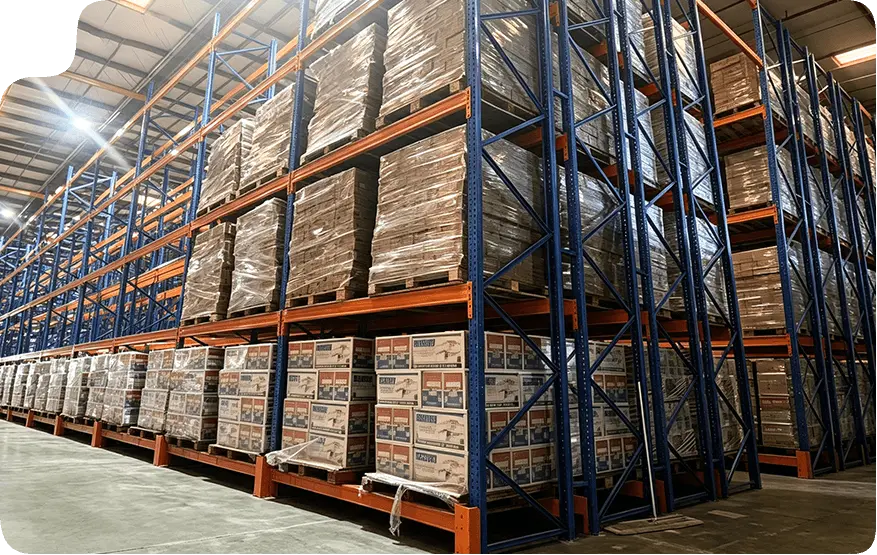
Continuous Flow FMCG Shuttle
Optimized for food and beverage operations requiring strict FIFO batch tracking, automated pallet counting, and continuous sorting capabilities.
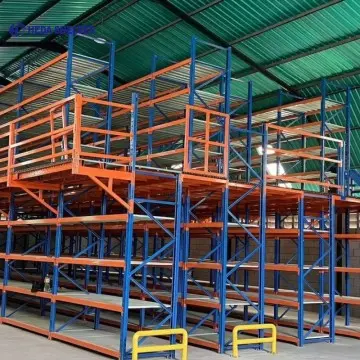
Multi-Tier Shuttle Platforms
Combines multi-tier structural mezzanine flooring with automated radio shuttle channels below for supreme vertical volume optimization.
Global Procurement Trends for Radio Shuttle Racking Systems
What are leading supply chain organizations prioritizing when tendering automated storage projects in 2026 and beyond?
Cold Chain Boom
Rapid expansion in cold-chain logistics across Southeast Asia, the Middle East, and North America is making radio shuttle racking the standard solution to minimize refrigerated volumetric loss.
WMS Integration
Procurement teams are shifting away from standalone hand remotes toward smart shuttles with integrated API connectivity that talks directly to warehouse management systems (WMS) and ERP networks.
LiFePO4 Power Shift
Lead-acid batteries are obsolete in modern specifications. Buyers demand Lithium Iron Phosphate (LiFePO4) power packs with 15-minute quick charging and 8–10 hours of continuous runtime.
Turnkey Direct Sourcing
Enterprises now bypass regional re-sellers to procure factory-direct systems from proven manufacturers who supply both structural racking and the robotic shuttle machinery under single-source accountability.
Future Development Trends: From Semi-Automated Shuttles to 3D Mother-Baby AS/RS
The standard 2D radio shuttle represents the first milestone of warehouse automation. Today, the storage equipment industry is transitioning toward fully integrated, unmanned logistics environments.
Guangzhou Heda Shelves Co., Ltd. is continually driving technological advancements in shuttle design, including:
- 4-Way Multi-Directional ShuttlesCross-channel longitudinal and lateral travel without forklift intervention
- Mother-Baby Shuttle SystemsParent carrier transports child shuttles across vertical lifts and multi-tier grids
- AGV / AMR Handshake CompatibilityAutomated Guided Vehicles load pallets to shuttle racks autonomously
- AI Predictive MaintenanceEmbedded telemetry monitoring motor torque, wheel wear, and battery health
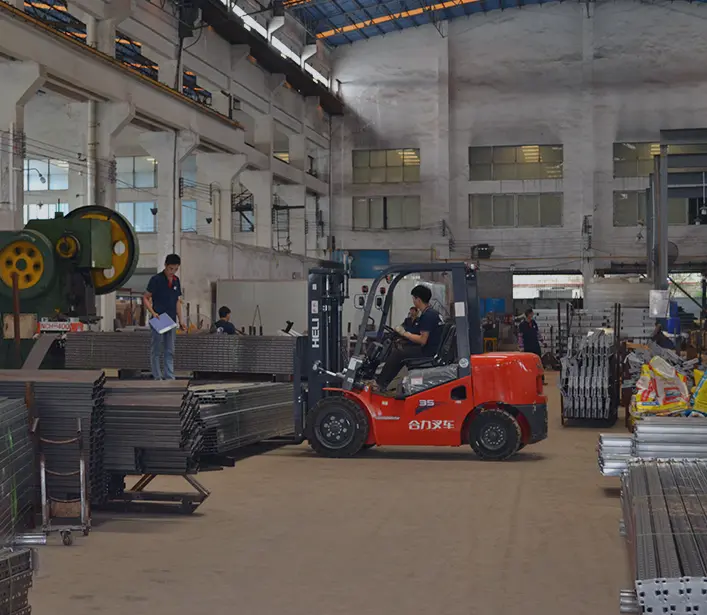
Factory-Direct Manufacturing Prowess & Global Reliability
Over two decades of structural engineering expertise dedicated to premium warehouse optimization worldwide.
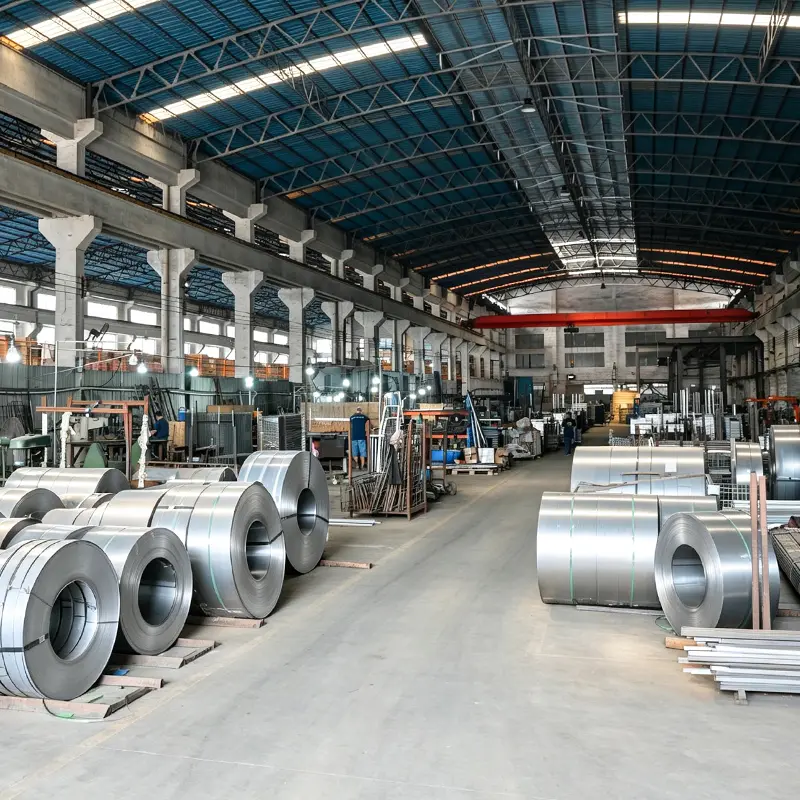 01

25 Years Manufacturing
Since 2001, Guangzhou Heda Shelves Co., Ltd. has delivered over 10,000 successful warehousing and racking installations globally.
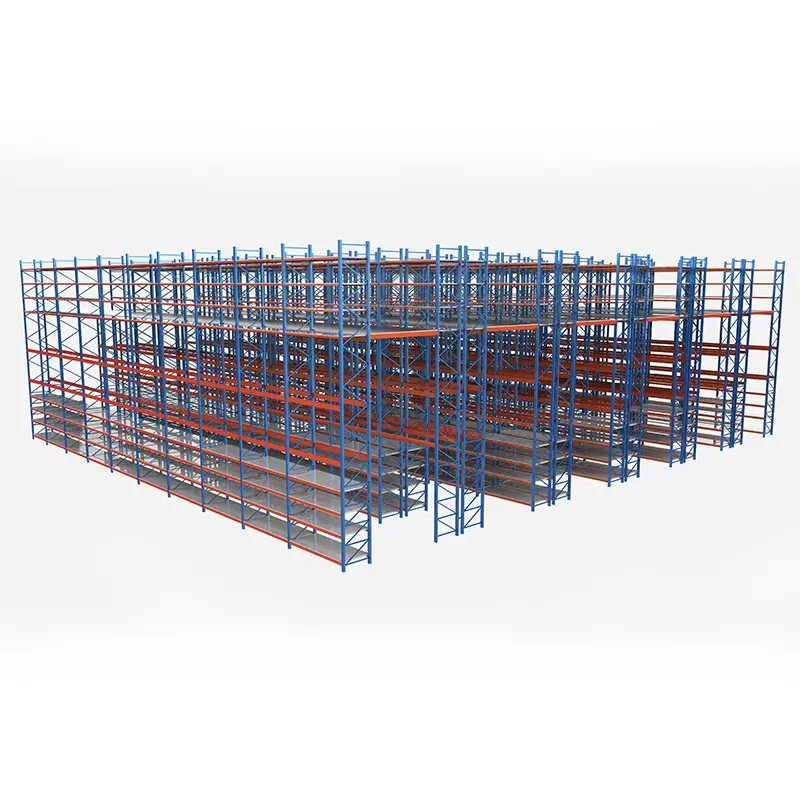 02

Free 3D Layout & Static Calculations
Our senior engineers provide custom CAD blueprints, 3D renderings, and certified static load calculations within 24–48 hours.
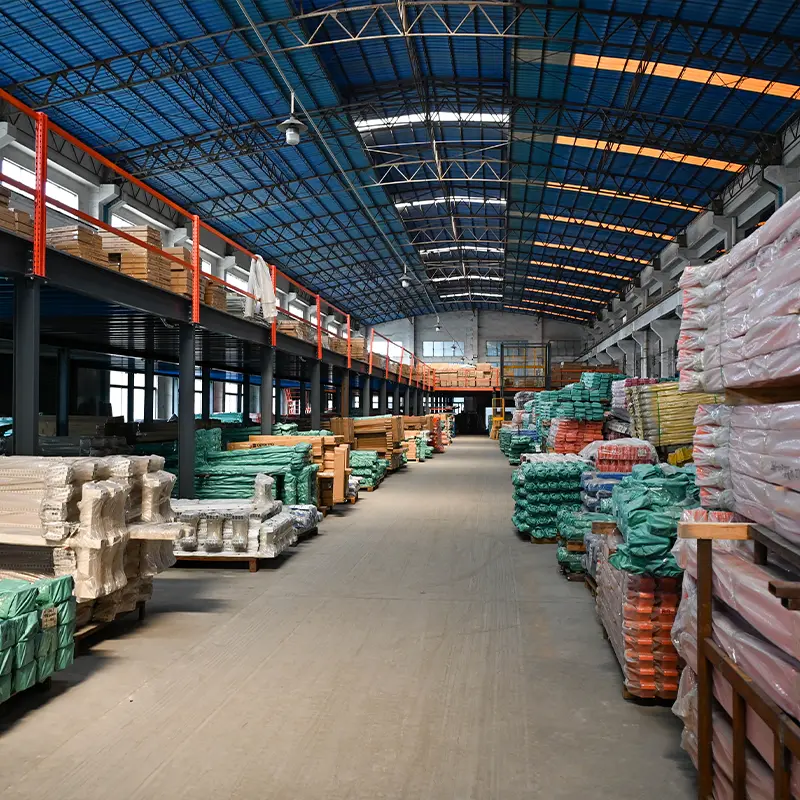 03

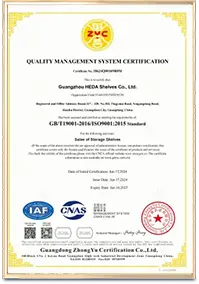
Strict CE & ISO 9001:2015
In-line quality gates covering raw Q235B/Q355B steel inspection, cold-roll track geometry, and dual-cure powder coating durability.
 04

Tailored Turnkey Engineering
Full OEM & ODM capabilities matching diverse pallet standards (Euro, ISO, Australian), cold temperatures, and local seismic requirements.
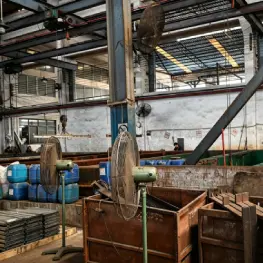
10-Step Precision Manufacturing Process for Shuttle Rails and Frames
Because automated shuttles travel at speeds up to 1.2 m/s, guide rail profile straightness and load-bearing consistency must meet strict tolerances within 1.0 mm.
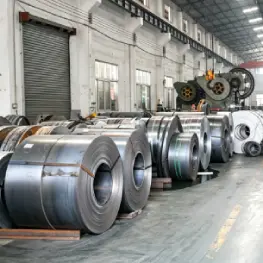
Certified Steel
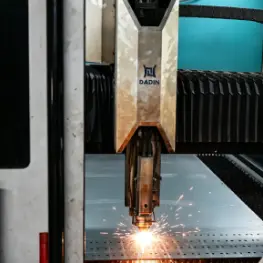
Laser Cutting
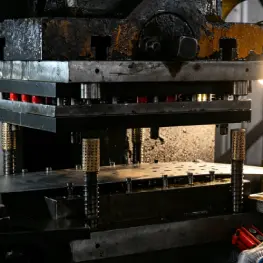
CNC Punching
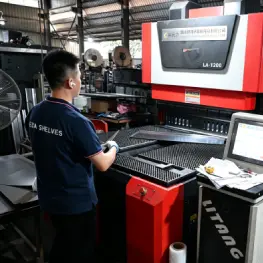
Cold Bending
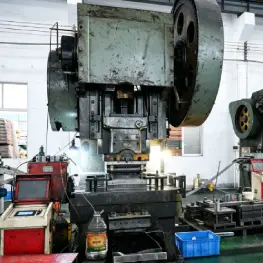
Track Roll Forming
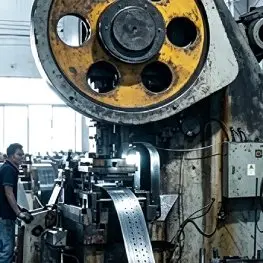
Precision Polish
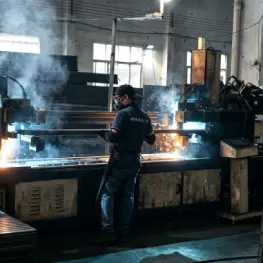
Robotic Welding
Phosphating
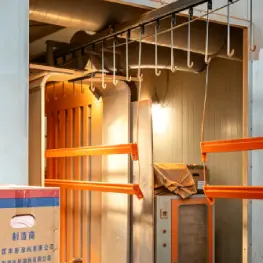
Powder Coating
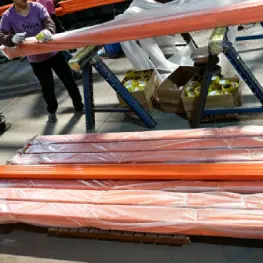
Testing & Load

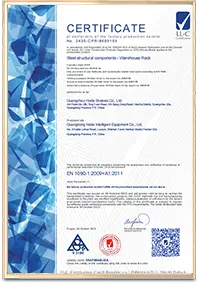
Audited Safety & Structural Calculations
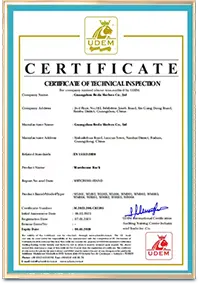
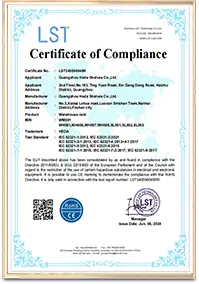
Our radio shuttle racking structures and electric carts are tested under European EN 15512 standards, CE machinery directives, and international ISO quality frameworks.
| Certification | Reference & Scope |
|---|---|
| CE Marking | No. 2435-CPR-8605159 (Structural Racking & Safety Compliance) |
| ISO 9001:2015 | No. 18624Q00169R0M · Audited Manufacturing Quality Assurance |
| RoHS Directive | Restricted Hazardous Substances Compliant Electrical Controls |



Frequently Asked Questions on Radio Shuttle Racking
Clear, technical, and commercial answers for warehouse managers and logistics procurement heads exploring radio shuttle racking systems.
Direct email: [email protected]. Provide warehouse CAD drawings for custom channel load calculations.
1. What is the typical ROI period for a Radio Shuttle Racking System?
2. How many radio shuttle carts do I need per racking project?
3. Can a Radio Shuttle Racking System support both FIFO and LIFO?
4. What pallet specifications and weights are supported?
5. How does the radio shuttle operate in cold storage and freezing temperatures?
6. How long does the shuttle battery last and what is the recharge cycle?
7. What safety features prevent channel over-travel or forklift collision?
Ready to Double Your Warehouse Storage Capacity?
Submit your warehouse blueprint or pallet specifications to Guangzhou Heda Shelves Co., Ltd. Our structural and automation engineers will deliver a full CAD/3D radio shuttle storage layout with detailed static load calculations and container loading plans.
Engineering Design Checklist for Fast RFQ
- Warehouse architectural layout (DWG, CAD, or PDF format) with clear roof heights
- Pallet dimensions (W x D x H) including overhang and gross load weight
- Forklift brand, chassis dimensions, and mast maximum lift reach
- FIFO vs LIFO operation requirements and hourly pallet turnover targets
- Facility operating temperature (Ambient, air conditioned, or down to -30°C freezer)