Executive Industry Overview: The 2026–2030 Intralogistics Transformation
Modern warehouse logistics has shifted from simple cubic storage into high-throughput nodes critical to global supply chain elasticity. Sourcing from a tier-1 pallet warehouse racking factory requires technical evaluation encompassing finite element analysis (FEA), metallurgical load-bearing reliability (EN 15512 standards), and adaptive throughput design. This white paper benchmarks elite racking engineering and evaluates high-density fulfillment configurations.
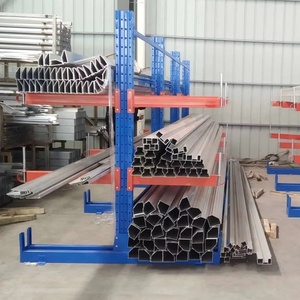
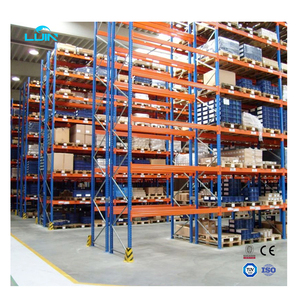
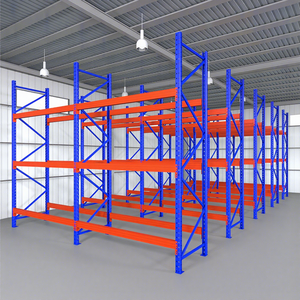
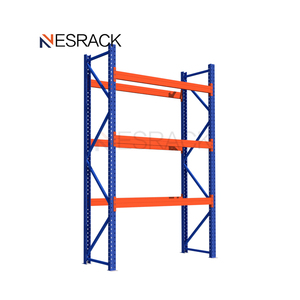
Engineering Configurations: Featured Heavy-Duty Systems
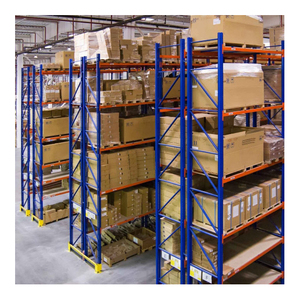
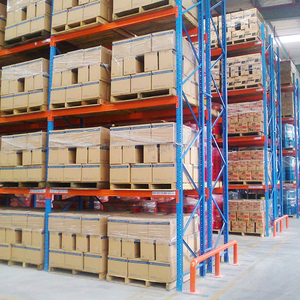
High-tensile industrial racking architectures designed to optimize spatial volumetric efficiency and direct SKU selectivity.
Future Procurement Trends in Intralogistics & Racking
Data-backed perspectives analyzing how engineering, automation, and supply-chain pressures dictate warehouse procurement from 2026 onwards.
ASRS-Ready Dynamic Geometries
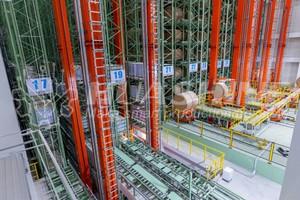
Procurement teams are moving away from purely manual racking toward ASRS integration. Tolerances must shrink from millimeters to fractions of a millimeter to support high-speed automated cranes, automated guided vehicles (AGVs), and autonomous mobile robots (AMRs). Roll-formed profiles with tight dimensional tolerances prevent structural collision errors during peak throughput speeds.
High-Grade Q235B & Q355B Steel
Global commodity volatility drives focus toward strength-to-weight optimization. Structural engineers specify high-tensile cold-rolled steel, optimizing column profiles without increasing weight. Thinner, strategically shaped cross-sections lower shipping weights while supporting static and dynamic pallet loads exceeding 3,000 kg per beam level.
Predictive Seismic Engineering
Cross-regional logistics operators across the Pacific Rim, ASEAN, and the Middle East require engineering calculations based on regional geotechnical codes. Factory direct structural validation, custom baseplates, heavy anchoring, and reinforced spine bracing models allow racking setups to handle dynamic seismic loads safely.
Technological Evolution in Warehouse Racking Fabrication
How metallurgical advancements and computerized manufacturing define the competitive baseline for international racking exporters.
Electrostatic Multi-Stage Pretreatment
Tropical climates across Southeast Asia and coastal Middle Eastern facilities accelerate steel corrosion. Premium manufacturers use multi-stage immersion: pickling, degreasing, and zinc phosphating before automated electrostatic powder coating. This provides salt-spray resistance over 500 hours, keeping installations structural sound across varied climates.
Modularity & Hybrid Storage Platforms
With warehouse rental rates escalating in gateway ports, single-purpose installations are being replaced by multi-tier, rack-supported mezzanine layouts and hybrid dynamic systems (combining Selective and Radio Shuttle channels). Scalable frame configurations allow operators to reconfigure beam elevations quickly as SKU dimensions shift.
Digital Twin Validation & 3D Load Modeling
Prior to roll-forming steel, advanced CAD-integrated FEA software assesses upright stress fields under variable load dynamics, including seismic acceleration and forklift impacts. Buyers receive verified deflection limits (such as 1/200th of span) to ensure structural safety under continuous operation.
In-House Manufacturing: 10-Step Quality Control Matrix
Guangzhou HEDA Shelves Co., Ltd. manages every phase under ISO 9001:2015 frameworks to maintain consistent tolerances across high-volume container exports.
Raw Steel Audit
Chemical analysis and yield strength testing of Q235B/Q355B coils.
Precision Slitting
CNC slitting lines trim coils to precise profile strip dimensions.
Automated Punching
Continuous hydraulic stamping produces uniform pitch configurations.
Cold Roll Forming
Multi-roller forming lines shape multi-bend column profiles.
Beam Profile Roll
Interlocking box-beam seams roll formed for structural cohesion.
Robotic Welding
Automated multi-axis robotic welders join beam-end connectors securely.
Shot Blasting
Abrasive surface preparation strips mill scale to SA 2.5 standards.
Phosphate Wash
Chemical pickling and phosphating enhances powder adhesion.
Electrostatic Coat
Lead-free epoxy-polyester cured at 200°C for wear protection.
Container Load QC
Pre-dispatch bundle banding and custom maritime container packing plans.
Factory Exporter Advantages: Why Global Supply Chains Rely on HEDA
Decades of international supply chain integration backed by strict certification regimes and customized warehouse engineering.
Certified Production
Full conformance to CE Certification (No. 2435-CPR-8605159), ISO 9001:2015 management quality systems, and RoHS environmental surface standards.
Rapid Design Turnaround
Our in-house project engineering team provides comprehensive 2D CAD floor layouts, static structural load checks, and 3D architectural renders within 24 to 48 hours.
Factory-Direct Sourcing
Direct export from our 30,000 m² Guangzhou facility removes intermediary markups, providing transparent pricing, predictable lead times, and OEM compatibility.
Port Connectivity
Short transport corridors to major Pearl River Delta ocean ports (Nansha, Huangpu, Shenzhen) offer efficient transit routing across Southeast Asia, South Asia, and the GCC.
Procurement & Engineering FAQ
Direct technical answers addressing critical procurement criteria, seismic specifications, and production timelines.
What parameters are required to calculate structural load capacities?
How does HEDA ensure structural integrity under seismic conditions?
What surface treatment is best for humid or cold storage facilities?
How are container space and overseas cargo shipping protected?
Can standard selective pallet racking convert to semi-automated shuttle systems?
Request a Comprehensive Warehouse Layout & Quotation
Connect directly with our senior structural logistics engineering team in Guangzhou. Receive full 2D CAD engineering plans, load capacity calculations, and factory-direct export pricing.