Factory-Engineered Heavy Duty Industrial Systems
Cold-rolled with certified Q235B and Q355B structural steel, custom-punched for mm-precise beam adjustment, and surface-protected via multi-stage electrostatic curing.
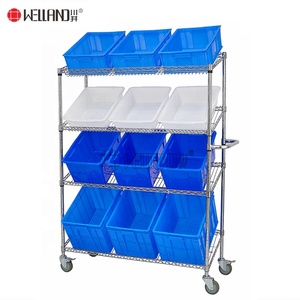
Utility Commercial Garage Slanted Order Picking Shelving Cart Trolley, NSF Factory Warehouse Wire Shelf
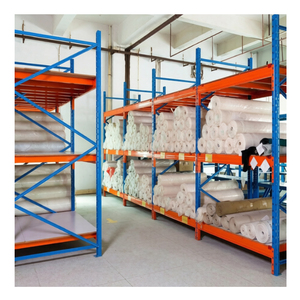
DJ Industrial Heavy Duty Steel Adjustable Warehouse Racking System for Fabric Roll Textile Material Storage
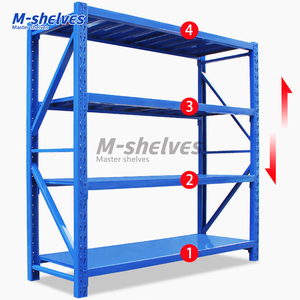
Heavy Duty Warehouse Shelving System Long Span Metal Shelf Stackable Storage Rack for Large Goods Warehouse
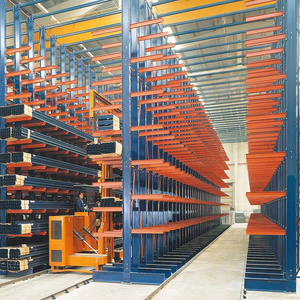
The Factory Sells Powder-coated Cantilever Racking Warehouse Rack Heavy-duty Racks Pallet Single-sided Shelves
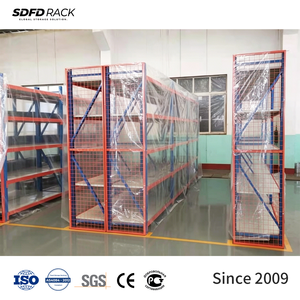
Wholesale Hot Selling 2400x600x2200 Medium Duty Longspan Warehouse Shelves 4 Layers/400kg Load Capacity
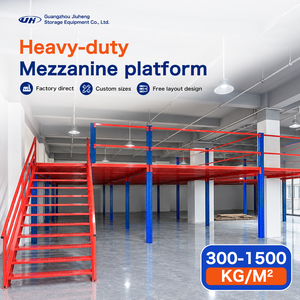
Multi Tier Warehouse Mezzanine Rack Heavy Duty Steel Storage Platform Industrial Shelving Space Saving Customized System
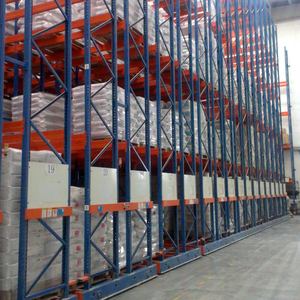
Heavy Duty Automated Electric Movable Pallet Rack Shelf Pallet Racking System for High-Density Storage
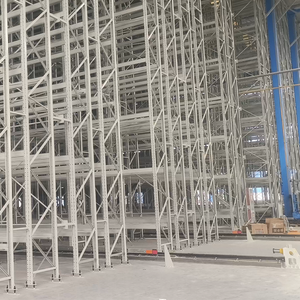
1000kg Warehouse Rack System with High Density Layout Optimized for Pallet Runner Shuttle Automation
Architecture of Semi-Automated Radio Shuttle Pallet Racking
A deep dive into metallurgical integrity, kinematic tolerances, and electrical control frameworks that govern modern high-density automated shuttle storage.
Kinematic Galvanized Rails & Upright Frames
The structural framework utilizes continuous roll-formed Q355B high-yield carbon steel. Shuttle rails are cold-rolled from high-grade structural zinc-galvanized coils, incorporating dual-lip tracking guides that maintain the shuttle’s lateral runout within ±1.0 mm. The asymmetric rail profile acts as both a continuous pallet bearer and a high-traction travel track for the shuttle drive wheels.
- Upright Profile: 90×65mm up to 140×100mm heavy section
- Rail Thickness: 2.5mm – 3.0mm structural galvanized steel
- Standard Deflection Ratio: Strict compliance with ≤ L/250 under static load
Intelligent Pallet Carrier (Radio Shuttle)
Powered by high-capacity Lithium Iron Phosphate (LiFePO4) battery packs, our autonomous shuttles deliver continuous 8 to 12-hour duty cycles with quick-swap battery mechanisms. Integrated with dual optical laser rangefinders, mechanical end-of-rail limit sensors, and industrial CANbus PLC controllers, the shuttle dynamically decelerates and accelerates, suppressing pallet slippage.
- Travel Velocity: 0.8 m/s (laden), 1.1 m/s (unladen)
- Rated Load Capacity: 500 kg to 2,000 kg per pallet
- Control Architecture: 433 MHz RF handheld terminal & WCS integration
Sub-Zero Cold Chain & Harsh Environments
In deep-freeze cold storage facilities operating at -25°C to -30°C, electrical components and mechanical drive chains face extreme thermal contraction and condensation. Our cold-chain shuttle units integrate internal closed-loop thermal heating circuits for the battery housing, food-grade synthetic sub-zero lubricants, and IP65-sealed sensor enclosures.
- Operating Range: Extreme cold (-30°C) up to ambient (+45°C)
- Condensation Protection: Conformal-coated logic boards
- Thermal Efficiency: Conserves up to 40% refrigeration energy vs APR
High-Density Storage System Engineering Matrix
Compare mechanical, volumetric, and operational metrics across key warehouse racking formats to calculate true Total Cost of Ownership (TCO) and pallet density.
| Evaluation Parameter | Selective Pallet Rack | Drive-In Racking | Gravity Pallet Flow | Semi-Automated Radio Shuttle | 4-Way Shuttle AS/RS |
|---|---|---|---|---|---|
| Volumetric Utilization | 40% – 45% | 65% – 70% | 70% – 75% | 80% – 88% (Industry Peak) | 85% – 92% |
| Pallet Selectivity & Access | 100% Direct Access | Poor (Last-In-First-Out) | Strict FIFO (Flow Lane) | High (Both FIFO & LIFO configurable) | 100% Automated Matrix |
| Forklift Mast Incursion | Aisle only | Deep into rack lane (High risk) | Aisle pick/load face only | Zero incursion (Shuttle handles lane) | Zero incursion (Fully robotic) |
| Rack Damage & Repair Frequency | Low | Severe (High column collision rate) | Moderate (Impact on rollers) | Near Zero (Preserves upright life) | Virtually Zero |
| Throughput Rate (Pallets/hr/truck) | 20 – 25 pallets | 10 – 15 pallets (Slow driving) | 25 – 30 pallets | 35 – 50 pallets (Automated indexing) | 60 – 120 pallets (Continuous) |
| Capital Expenditure Index | $ (Low base cost) | $$ (Moderate steel cost) | $$$$ (Roller beds & brakes) | $$$ (Fast ROI within 14–18 months) | $$$$$ (High capital investment) |
| Cold Storage Volume Efficiency | Baseline | +40% vs Selective | +50% vs Selective | +80% (Massive power conservation) | +90% |
Guangzhou HEDA Shelves: 25 Years of Heavy-Industry Manufacturing
Operating from our 30,000 m² production complex in South China, HEDA Shelves integrates precision structural engineering, rigorous material testing, and global export packaging.
Certified Structural Rigor
Full compliance with CE Certification (No. 2435-CPR-8605159), ISO 9001:2015 quality management (No. 18624Q00169R0M), and environmental RoHS standards. Engineering calculations validated under FEM 10.2.02 and EN 15512 specifications.
Full OEM/ODM Customization
From bespoke upright column punch pitches (50mm, 75mm, 76.2mm) to specialized pallet rail sections matching CHEP, GMA, Euro, or custom Australian pallets, we deliver tailored steel profiles under private-label programs for regional distributors.
Rapid 3D CAD Engineering
Our senior engineering department turns around comprehensive 2D CAD layouts, 3D volumetric warehouse models, structural loading capacity calculations, and seismic finite element reports within 24 to 48 hours of project receipt.
South China Maritime Advantage
Direct proximity to Guangzhou, Nansha, and Shenzhen deepwater ports allows streamlined container stuffing, dedicated bundle strapping that eliminates transit deformation, and fast oceanic transit times across Southeast Asia, the Middle East, and the Americas.
10-Stage Metallurgical & Quality Control Workflow
Zero tolerance for deflection or weld cracking. How we forge raw steel coil into certified, heavy-duty industrial storage platforms.
Raw Steel Inbound
Spectrometric tensile verification of Q235B & Q355B coils from tier-1 steel mills.
CNC Slitting
High-precision uncoiling and precision slitting to exact section strip widths.
Continuous Punching
High-speed automated column punch stamping ensuring pitch tolerances under 0.2mm.
Cold Roll Forming
Multi-stand roller forming lines shaping uprights and closed box-beams without internal stress.
Robotic Laser Cut
Burr-free 3D laser profiling and chamfering for beam end connectors and guide rails.
Robotic MIG Welding
Shielded gas-metal arc welding for seamless connector-to-beam joint penetration.
Acid Pickling
Chemical immersion baths eliminating all surface mill scale, iron oxide, and oils.
Zinc Phosphating
Nanotechnology crystalline chemical layer conversion maximizing powder adhesion.
Electrostatic Coating
Automated Swiss Gema powder spray booths applying 60-90μm thermoset epoxy resin.
Curing & Crating
200°C polymerization tunnel, thickness gauge checks, and bundle steel-strapping.
Procurement & Technology Trends in High-Density Storage
Key market disruptions, autonomous vehicle integration, and sustainability mandates transforming modern automated warehouse procurement.
Obsolescence of Drive-In Systems
Logistics operators are systematically replacing traditional Drive-In racking with semi-automated Radio Shuttle racks. Drive-In systems suffer from excessive upright collisions, slow forklift entry cycles, and dangerous structural sway. Shuttle conversions eliminate forklift entry, reducing maintenance costs by up to 85% and boosting loading speeds threefold.
4-Way Shuttle & AMR Synchronization
The next generation of shuttle architecture moves beyond single-lane 2-way shuttles into multi-directional 4-Way Shuttle Fleets linked with Autonomous Mobile Robots (AMRs) and automated vertical lifts. Integrated with Warehouse Control Systems (WCS), these systems autonomously adjust pallet distribution based on dynamic order picking algorithms and ABC velocity curves.
Thermal Energy Decarbonization
With global energy tariffs soaring, cold storage facilities are mandated to compress air volume per pallet. Radio shuttle racking creates monolithic pallet blocks with negligible aisle overhead, reducing the total refrigerated envelope by up to 40%. This delivers lower kilowatt-hour power draw and faster carbon neutrality compliance across pharmaceutical and FMCG sectors.
Seismic-Certified Turnkey Export Packages
International project tenders increasingly require full localized structural calculations. From seismic soil liquefaction analysis in Japan and the Philippines to high-wind load rack-supported clad buildings in the Middle East, procurement trends favor manufacturers capable of providing PE-stamped FEM static calculation reports alongside containerized shipments.
Frequently Asked Technical Questions (FAQ)
Authoritative answers from our structural engineers addressing load capacity, safety interlocks, battery performance, and international customs clearance.
What structural parameters are required to calculate a custom Shuttle Racking layout?
Can a single Radio Shuttle cart operate across multiple storage levels and channels?
How does the system ensure safety and avoid pallet collisions deep inside dark channels?
What battery technology is used, and how does it perform in cold rooms (-25°C)?
What international seismic and structural design codes do your racking systems meet?
What are the lead times and container loading specifications for overseas export?
Request a Custom CAD Layout & Static Loading Calculation
Consult with HEDA Shelves' senior racking engineers. Submit your warehouse architectural layout to receive a customized 2D/3D volumetric layout, pallet capacity optimization model, and budgetary quote within 24 hours.
Connect Directly with Our Project Team
Instant engineering consultation for OEM distributors, system integrators, and direct warehouse operators worldwide.
Contact Us