High-Density Industrial Beam Pallet Racks & Automated Systems
Engineered to resolve vertical floor-load inefficiencies, SKU velocity bottlenecks, and harsh warehousing footprints. Sourced with premium grade high-tensile structural steel profiles.
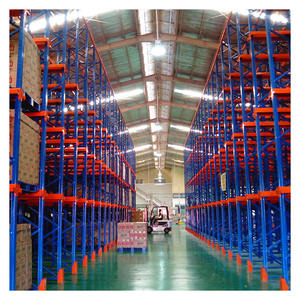
- LIFO/FIFO Deep-lane volume logic
- Pallet Load: 500 – 1,800 kg/pallet
- Eliminates dedicated access aisles
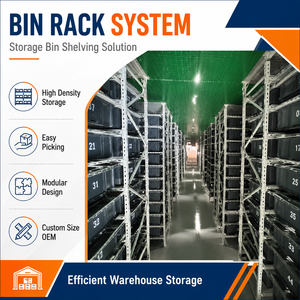
- Precision stamped tight tolerance guides
- Bin Load: 30 – 100 kg/tote level
- High-speed robotic stacker interface
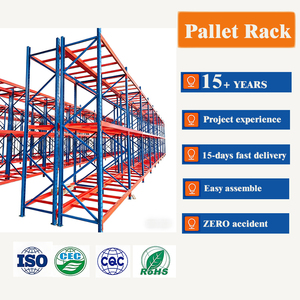
- Box & Step beam interlocking design
- Capacity: 1,000 – 4,500 kg/level
- 50mm / 75mm adjustable pitch
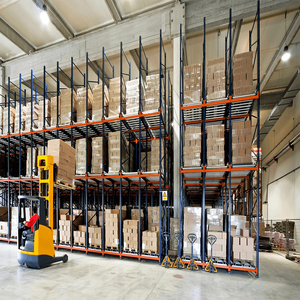
- Strict First-In-First-Out (FIFO) duty
- Speed controller roller tracks built-in
- Brake roller anti-collision safety
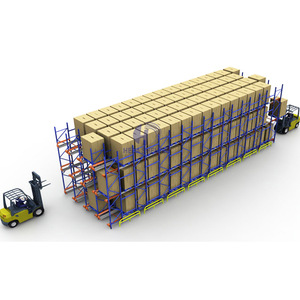
- Omnidirectional cross-aisle travel
- Cold-room & ambient warehouse ready
- Integrated WMS/WCS fleet coordination
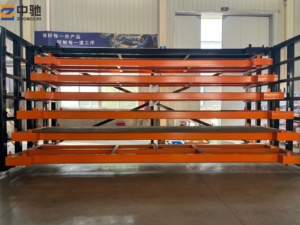
- 8-Layer high-density structural config
- Pre-treatment phosphating + powder coat
- Deflection ratio: Under 1/200th span
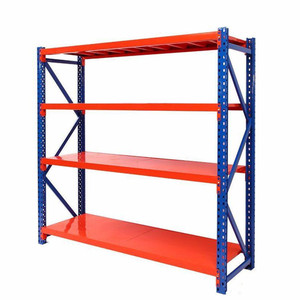
- Engineered wire-mesh decking / steel boards
- Modular expansion upright frames
- Forklift impact reinforced base shoes
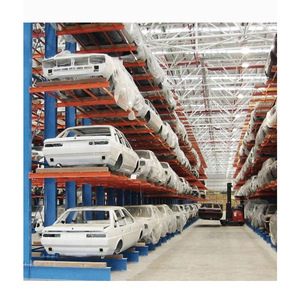
- Unobstructed front arm loading access
- Arm Capacity: Up to 3,000 kg/arm level
- Ideal for rebar, vehicle chassis, lumber
Structural Anatomy & Metallurgical Integrity of OEM Beam Racks
In modern high-density distribution centers, pallet racking is a critical structural load-bearing asset subject to dynamic forklift impacts, harmonic vibration, and heavy static forces. We construct our systems to strict European FEM and American RMI specifications.
Steel Metallurgy & Cold Profiling
Every upright profile and load beam is formed from certified Q235B or Q355B high-yield structural steel coils. We maintain strict yield-strength validation (tensile strength: 375–500 MPa) to resist lateral torsional buckling under maximum rated capacity.
- Standard Steel Grade: Q235B / Q355B (SS400 Equiv.)
- Cold-Bending Forming Lines: Automated Continuous Roll-Forming
- Yield Deflection Limit: Class-L/200 Under Max Load
Beam Connector Hook Geometry
Beams feature high-shear 3, 4, or 5-prong cold-pressed connector claws that engage securely into precision diamond or teardrop upright punches. Integrated auto-locking steel safety pins prevent accidental vertical dislodgement from high-speed reach trucks.
- Connector Claws: 3 to 5 Cold-Stamped Prongs
- Dislodgement Resistance: Spring Safety Pins (5kN Shear)
- Beam Types: Interlocking Box & Step Beams
Anti-Corrosive Electrostatic Finish
Steel profiles undergo an automated pre-treatment bath featuring pickling, alkaline degreasing, and silane phosphating. We apply thermosetting DuPont epoxy-polyester powder coats cured at 180°C–200°C to withstand tropical humidity and condensation in cold stores.
- Coating Layer Thickness: 60 – 90 Microns Uniform
- Salt Spray Testing: ASTM B117 ≥ 500 Hours
- Sub-Zero Performance: Down to -45°C Cryogenic Duty
10-Step Factory Quality Control & Precision Roll-Forming Lifecycle
From metallurgical verification of incoming raw coils to structural packaging, our in-house production operates under certified ISO 9001:2015 and CE EN 1090 standards to eliminate batch defects.
Raw Steel Testing
Spectrometry and yield testing verify tensile ratings of prime steel slit coils before roll processing.
Precision Slitting
High-precision continuous decoiling and shearing achieve dimensional tolerances within ±0.2mm.
Automated Punching
High-speed mechanical presses punch 50mm/75mm pitch diamond hole patterns with repeatable positioning.
Cold Roll-Forming
Multi-station pass rolls profile high-rigidity upright column geometries with reinforced return ribs.
Profile Forming
Twin C-profile nested beam welding produces closed-section box beams with superior torsional stiffness.
Robotic Welding
Panasonic robotic arms weld beam connector end-plates with continuous penetration and zero spatter.
Surface Polishing
Mechanical de-burring and wheel-abrator shot blasting eliminate scale, oxidation, and sharp slag.
Pickling & Phosphating
Multi-stage pre-treatment chemical rinse ensures chemical bonding adhesion for long-term rust prevention.
Powder Coating
Electrostatic Gema powder guns apply uniform polymer resins followed by a 200°C cross-linking cure tunnel.
Container Packing
Components are bundle-strapped, edge-protected, and palletized to prevent shipping transit abrasion.
2025–2030 Global Pallet Racking Procurement & Technology Trends
Industrial supply chain strategies are evolving rapidly. Procurement teams and warehouse engineers must future-proof their storage systems against land constraints, labor shortages, and automation adoption.
ASRS & Autonomous Mobile Robot Integration
Traditional static wide-aisle racking is increasingly being upgraded to accommodate automated guided vehicles (AGVs) and 4-way radio shuttles. Future-ready beam designs demand tighter beam deflection tolerances (L/300) and optical sensor targets along guide channels to avoid sensor misreads during autonomous pallet pick-and-place cycles.
Low-Carbon "Green Steel" Verification
Global ESG mandates are driving multinational logistics hubs to track Scope 3 embodied carbon. Forward-looking buyers are specifying electric arc furnace (EAF) steel and solvent-free, non-toxic RoHS-compliant powder formulations that deliver high structural strength while minimizing carbon tax burdens.
Finite Element Seismic Modeling
With warehouse distribution centers expanding in seismic zones (such as Indonesia, the Philippines, Japan, and the Mediterranean), racking procurement now requires building-code-compliant FEA models. Upright bases, anchor bolt embeds, and splice configurations must withstand high seismic acceleration coefficients without structural collapse.
Cold-Chain & Blast Freezer Optimization
The rapid growth of temperature-controlled pharmaceutical and fresh-food intralogistics has made energy consumption per pallet position a key metric. High-density radio shuttle racks and gravity pallet flow systems maximize storage volume in expensive refrigerated buildings, cutting chilling energy waste per pallet by up to 40%.
Modular Rack-Supported Mezzanines
Rising industrial land rents in gateway cities (Singapore, Dubai, Rotterdam) are steering capital away from greenfield building construction. Instead, multi-tier rack-supported platforms utilize overhead cubic capacity, combining pallet positions on the ground with manual order picking floors above.
Data-Driven Predictive Maintenance Racks
Smart rack architecture is incorporating IoT load deflection sensors, impact accelerometers, and RFID inventory tags directly into upright columns. These modules monitor forklift collisions and structural overloads in real time, alerting safety directors before minor structural damage can cascade into rack collapse.
Frequently Asked Questions on Custom OEM Pallet Racking
Detailed technical, engineering, and manufacturing answers to assist your engineering consultations and purchasing evaluations.
What distinguishes an OEM custom beam pallet rack from a standard catalog off-the-shelf rack?
How do your engineers calculate safe working loads and beam deflection ratios?
What international engineering certifications accompany your pallet racking systems?
How does your factory protect pallet racking from corrosion in tropical or cold storage environments?
What are the minimum specifications required to prepare a free 2D/3D CAD warehouse layout?
What packaging methods do you use to prevent damage during sea freight transit?
Request Your Custom OEM Racking Engineering Review
Send your warehouse drawings or operational parameters to receive a certified 2D CAD floor plan, 3D structural model, and detailed bill of materials within 24 hours directly from our engineering office.