Featured Warehouse Storage & Automation Systems
Precision-engineered pallet racks, ASRS robotics, and industrial mezzanines manufactured in Guangzhou, China. Built to ISO 9001:2015 and CE international structural standards.
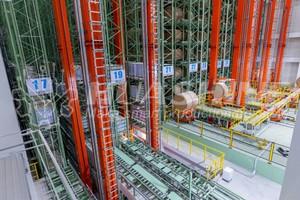
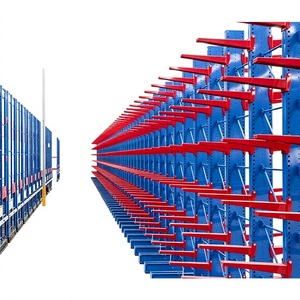
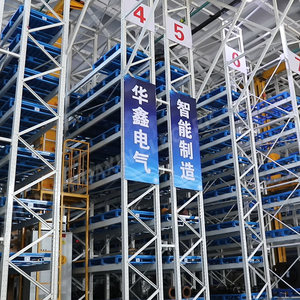
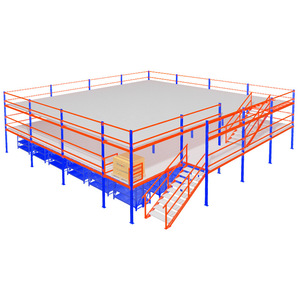
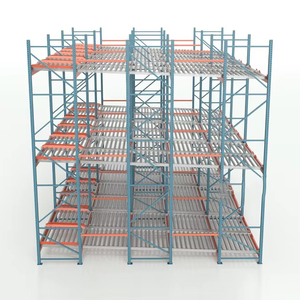
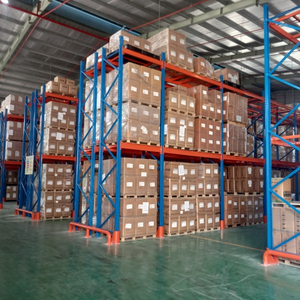
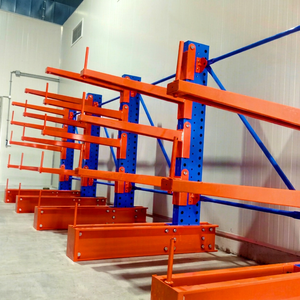
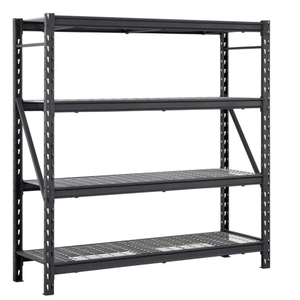
Engineering Blueprint: The Dynamics of China Back-To-Back Pallet Racking Systems
Modern logistics real estate across global trade hubs demands an optimal equilibrium between structural safety, vertical volume utilization, and capital expenditure. As global supply chains centralize procurement through primary Chinese manufacturing clusters, Back-To-Back Pallet Racking Systems have emerged as the foundational storage architecture for third-party logistics (3PL), cold-chain networks, automotive manufacturing hubs, and fast-moving consumer goods (FMCG) distribution centers.
A standard single-selective pallet rack row requires dedicated aisle clearance on both sides. Conversely, a Back-To-Back Pallet Racking layout joins two single rows back-to-back, connected via structural steel row spacers. This engineering configuration eliminates fifty percent of inner aisle space requirements, increasing total floor footprint density by up to 40% while preserving 100% direct SKU accessibility for standard reach trucks, counterbalanced forklifts, and VNA (Very Narrow Aisle) turret trucks.
Optimized Density
Reduces active forklift aisle requirement by connecting twin racks, providing superior floor-space utilization compared to isolated single racks.
High Load Integrity
Structural row spacers (ranging from 200mm to 450mm) stabilize paired upright frames against harmonic lateral sway and severe forklift impacts.
Flue Space Compliance
Meets stringent NFPA 13 building codes by maintaining continuous vertical flue spaces required for overhead ESFR fire sprinkler penetration.
Metallurgical Rigor: Q235B vs. Q355B Cold-Rolled Structural Steel
Leading tier-1 Chinese manufacturers utilize certified high-grade cold-rolled steel coils (specifically SS400, Q235B, and Q355B structural grades). Upright columns undergo multi-stage continuous precision roll-forming to create 8 to 13-fold profile bends, drastically enhancing structural section modulus and torsional resistance under dynamic load conditions.
| Racking Architecture Type | Floor Space Utilization | Direct SKU Selectivity | Forklift Compatibility | Seismic & Impact Stability | Relative Capital Cost |
|---|---|---|---|---|---|
| Back-To-Back Selective Racking | 60% – 65% | 100% Immediate Access | Standard Reach / Counterbalance | High (Tied with Row Spacers) | Economical (Optimal ROI) |
| Single Selective Racking | 35% – 45% | 100% Immediate Access | All Forklift Variants | Moderate (Isolated Uprights) | Lowest Initial Entry Cost |
| Double-Deep Selective Racking | 65% – 75% | 50% (LIFO Bottleneck) | Deep-Reach Pantograph Forklift | Very High (Nested Frames) | Moderate to High |
| Automated ASRS Stacker Crane | 85% – 92% | 100% Automated Access | Fully Automated Crane / AMR | Maximum Integrated Rigidity | Capital Intensive (Long-term) |
Guangzhou HEDA Shelves: Enterprise Capabilities & Global Footprint
Established in 2001, Guangzhou Heda Shelves Co., Ltd. represents South China's premier engineering authority in structural racking production, custom OEM/ODM supply chains, and turnkey warehouse space optimization.
30,000 m² Automated Facility
Equipped with automated continuous roll-forming production lines, robotic laser welding cells, and fully enclosed electrostatic powder coating tunnels capable of producing 30,000 tons per month.
CE & ISO 9001:2015 Certified
Certified under CE (No. 2435-CPR-8605159), ISO 9001:2015 Quality Management Systems (No. 18624Q00169R0M), and strict RoHS environmental compliance for toxic-free powder finishes.
Free 3D Layout & Load Calculation
In-house senior structural engineers provide 2D CAD placement schematics, 3D BIM visualizations, and finite element load capacity checks within 24 to 48 hours for global tenders.
10-Stage Precision Surface Treatment & Production Lifecycle
To withstand extreme tropical humidity across Southeast Asia, coastal marine salinity, or sub-zero cold storage conditions, HEDA implementation teams execute a rigorous 10-step surface preparation regimen:
Future Sourcing & Technology Integration Trends (2025–2030)
The industrial storage landscape is undergoing a rapid paradigm shift driven by land scarcity, labor shortages, and ESG (Environmental, Social, and Governance) mandates. Industrial procurement teams evaluating Chinese racking manufacturers must consider three critical technological mega-trends reshaping modern warehouse infrastructure:
1. Hybrid Integration with Autonomous Mobile Robots (AMRs) and Radio Shuttles
Static storage is increasingly giving way to semi-automated and fully automated hybrid configurations. Traditional Back-To-Back selective racking systems are now routinely retrofitted with integrated guidance channels to accommodate Autonomous Mobile Robots (AMRs), Automated Guided Vehicles (AGVs), and high-density Radio Shuttle systems. Chinese factories that engineer modular, multi-directional rack profiles allow enterprise buyers to transition seamlessly from manual forklift picking to robotic automation without replacing structural upright assemblies.
2. Advanced Seismic Resilience & FEM 10.2.02 Structural Modeling
With global supply chains expanding across seismically active zones in Southeast Asia (Indonesia, Philippines, Japan), North America, and the Middle East, structural engineering standards have intensified. Top-tier Chinese suppliers utilize Finite Element Analysis (FEA) software to simulate earthquake ground acceleration, dynamic wave harmonics, and asymmetric frame loading. Engineering custom baseplates, heavy-duty floor anchor bolts, and specialized X-bracing patterns ensures complete compliance with local building permit approvals and international FEM 10.2.02 / ANSI RMI standards.
3. Cold-Chain Expansion & Sustainable Eco-Coatings
The global surge in fresh food logistics and biopharmaceutical cold-chain storage requires racking components that operate continuously in sub-zero environments (-25°C to -30°C). Under extreme thermal contraction, inferior steel coatings crack and peel, exposing underlying metal to rapid oxidation. Next-generation procurement strategies prioritize pre-galvanized cold-formed steel or hot-dip galvanizing (HDG) post-weld finishes that offer self-healing corrosion protection and zero VOC emissions.
Frequently Asked Questions by International Procurement Managers
Essential answers regarding structural safety, custom manufacturing, logistics, and quality assurance when sourcing from China.
What structural information is required to generate a CAD layout and precise quotation?
To formulate an engineered layout, our engineering team requires: (1) Warehouse floor plan dimensions with pillar positions and door access; (2) Clear building height beneath roof trusses or sprinkler pipes; (3) Pallet dimensions including load height and total weight (e.g., 1200x1000x1500mm @ 1200kg); (4) Forklift specifications, specifically turning radius and maximum lift height; and (5) Operating temperature parameters (ambient vs cold storage).
How do Back-To-Back Pallet Racking systems handle overhead fire safety regulations?
Back-To-Back racking designs incorporate engineered row spacers that maintain a fixed, uniform gap (typically 200mm to 300mm) between adjacent rack frames. This creates a continuous vertical flue space required by NFPA 13 guidelines, enabling heat from fires to rise unhindered to activate overhead ESFR (Early Suppression, Fast Response) sprinklers while allowing water penetration to lower pallet levels.
What is the difference between Q235B and Q355B steel in heavy-duty racking?
Q235B steel offers a minimum yield strength of 235 MPa and is the standard industry choice for medium to heavy selective racking. Q355B is a high-strength low-alloy structural steel with a yield strength of 355 MPa. Utilizing Q355B allows engineers to specify thinner material profiles for tall VNA or high-bay stacker crane applications while maintaining identical or superior structural load safety factors, reducing overall container shipping weights.
How are racking shipments packed to prevent damage during ocean transit?
All upright frames, step beams, and shelf components are bundle-wrapped using industrial plastic stretch film, heavy-duty strapping, and corner cardboard guards. Wooden pallets or custom steel skids are positioned underneath to allow seamless unloading with forklifts at destination ports. Container loading schematics are pre-calculated to maximize 40ft High Cube (40HC) ocean container volume.
Does HEDA Shelves offer on-site installation support or assembly guidance?
Yes. Every order is supplied with detailed 3D assembly schematic drawings, component bolt tightening torque schedules, and step-by-step video tutorials. For large-scale overseas turnkey projects, HEDA can dispatch senior installation engineers or certified project managers to oversee local installation crews and conduct final structural safety sign-offs.
What load testing procedures are conducted before factory dispatch?
Components undergo strict destructive tensile testing, weld seam ultrasonic flaw detection, and full-scale beam deflection testing (ensuring maximum deflection does not exceed L/200 under 100% rated load). Certified quality control reports, steel mill material test certificates (MTC), and third-party inspection documents (SGS/TÜV) are provided upon request.
Optimize Your Warehouse Floor Space Today
Connect directly with Guangzhou HEDA Shelves senior engineering team. Receive your customized CAD drawing, 3D design, and competitive factory-direct pricing within 24 hours.