High-Density Industrial Storage & Material Handling Systems
Direct factory manufacturing complying with EN 15512 and ANSI MH16.1 specifications. Each unit features robotic seam-welding, precision CNC punching, and automated electrostatic powder coating.
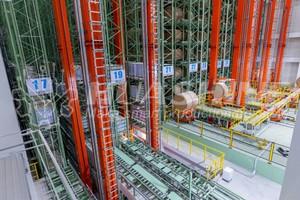
Heavy Duty Stacker Crane Automated AS/RS Warehouse Pallet Racking
- Payload: 500 – 3,000 kg / Pallet
- Max Mast Elevation: Up to 40m Height
- Control: WMS/WCS Real-Time Integration
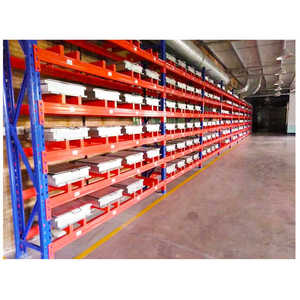
Factory High-Density Drive-In Pallet Storage Rack for Warehouse
- Space Utilization: Up to 85% Volume
- Corridor Rails: Formed Heavy Duty C-Section
- Target Sector: Cold Store & FMCG Beverage
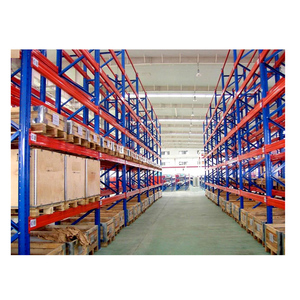
HEDA Steel Pallet Racking Heavy Duty Warehouse Storage Shelves
- Capacity: 1,000 – 5,000 kg / Level
- Steel Grade: Certified Q235B / Q355B
- Beam Pitch: Adjustable 50mm / 75mm
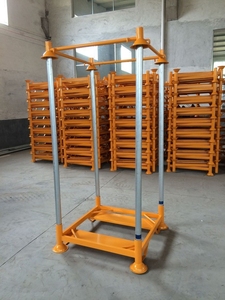
Euro Pallet Racks 4-Way Storage Post Pallet Stacking Racks
- Stacking Tiers: 3 to 5 Levels Mobile
- Entry: 4-Way Forklift Entry Base
- Application: Seasonal Overflow Storage
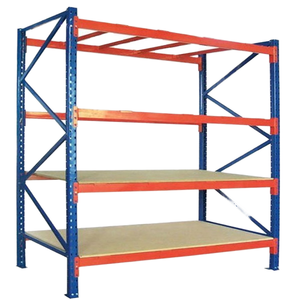
Nesrack Removable Heavy Duty Wire Container Picking Shelf
- Static Load: 1,000 kg Rated Capacity
- Design: Inverted 'Nest' Structural Steel
- Flexibility: Demountable Posts for Empty Return
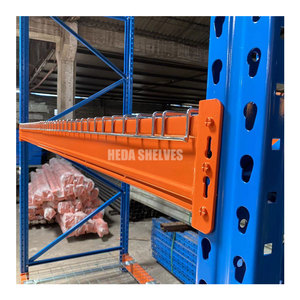
Teardrop Pallet Rack Wholesale Uprights & Step Beams
- Compatibility: 100% Interchangeable Teardrop
- Safety Locks: Auto Spring Lock Connectors
- Standard: RMI MH16.1 Certified Compliance
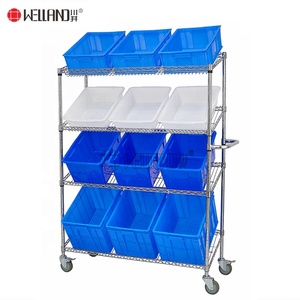
Commercial Slanted Order Picking Shelving Mobile Cart Trolley
- Mobility: Heavy Duty Polyurethane Casters
- Decking: Ergonomic Slanted Gravity Feed
- Surface: NSF Grade Bright Chrome Plating
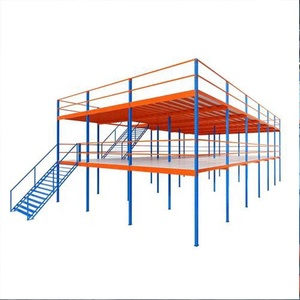
Industrial Heavy Duty Modular Mezzanine Floor Platform System
- Floor Loading: 300 – 1,200 kg/m² Uniform
- Decking: Galvanized Perforated Steel Planks
- Clearance: Multi-tier 2 to 4 Structural Levels
25 Years of Engineering Rigor & Global Export Infrastructure
Established in 2001, Guangzhou HEDA Shelves Co., Ltd. has developed into South China's premier manufacturer of warehouse racking and intralogistics infrastructure, operating state-of-the-art continuous cold-rolling mills and automated powder-coating lines.
25+ Years Experience
Continuous focus on cold-formed structural steel engineering, warehouse optimization, and multinational logistics deployments.
Manufacturing Base
Modern production plant featuring CNC punching towers, robotic gas shielded welders, and automated 10-stage pre-treatment lines.
Monthly Output Capacity
Massive monthly throughput guaranteeing reliable lead times, project staging, and prompt bulk container dispatches from Guangzhou and Shenzhen ports.
Export Destinations
Over 10,000 global warehouse installations across Southeast Asia, the Middle East, North America, Europe, and Latin America.
Structural Steel Integrity & Seismic Design Criteria
In the procurement of heavy-duty industrial racking, structural engineering takes precedence over superficial metrics. A failure in structural integrity under load creates catastrophic economic, supply-chain, and physical liability. At Guangzhou HEDA Shelves, our engineering core relies exclusively on cold-formed structural steel sections formulated to certified chemical compositions: Standard Q235B (Yield Strength fy ≥ 235 MPa) for standard ambient selective racking, and High-Tensile Q355B (Yield Strength fy ≥ 355 MPa) for high-bay stacker-crane installations and dynamic automated shuttle installations.
Our structural design calculations strictly reference both European Norms (EN 15512:2020: "Steel static storage systems – Adjustable pallet racking systems – Principles for structural design") and the American Rack Manufacturers Institute (ANSI MH16.1: "Specification for the Design, Testing and Utilization of Industrial Steel Storage Racks"). For international clients operating in the seismically active Pacific Rim (such as Indonesia, the Philippines, Japan, and Western Latin America), our team provides project-specific Finite Element Method (FEM) analysis. Uprights, frame bracing angles, and base plates are engineered to absorb cyclic seismic spectral accelerations (Ss and S1), including oversized four-anchor floor anchoring assemblies that mitigate ground-shear overturning moments.
| Engineering Parameter | Standard Selective Racking | Heavy-Duty Drive-In Racks | Automated AS/RS High-Bay | Multi-Tier Mezzanines |
|---|---|---|---|---|
| Primary Steel Grade | Certified Q235B Cold-Rolled | High-Yield Q235B / Q355B | High-Tensile Q355B Grade | Q235B Structural Hollow Section |
| Beam Deflection Limit | 1/200th of Span Length (L/200) | 1/250th of Cantilever Rail Span | Strict 1/300 to 1/400 (Robot Tolerances) | 1/300th for Floor Decking Profiles |
| Standard Upright Pitch | 50 mm / 75 mm Adjustable | 75 mm Heavy-Duty Pitch | Precision Continuous Roll-Form | Integrated Structural Grid Columns |
| Surface Pre-Treatment | Pickling & Phosphate Conversion | Pickling & Phosphate Conversion | 10-Stage Micro-Etch Phosphating | Hot-Dip Galvanized / Powder Coated |
| Coating Thickness | 60 – 90 μm Electrostatic Epoxy | 70 – 100 μm Electrostatic Epoxy | 80 – 110 μm Abrasion Resistant | 80 μm Powder or 65 μm Hot Galvanized |
| Compliance Standards | ISO 9001:2015, CE EN 15512 | CE 2435-CPR, FEM 10.2.02 | EN 15512, FEM 9.831, AS 4084 | ISO 9001, OSHA 1910.29 Compliant |
To resist galvanic degradation and atmospheric oxidation in equatorial and coastal environments (such as Southeast Asia and Gulf Cooperation Council nations), our production incorporates a complete 10-stage pre-treatment wash. This involves chemical degreasing, industrial acid pickling to strip mill-scale, and iron-phosphating to form an inert crystalline rust-inhibiting matrix. The electrostatically applied thermo-cured hybrid epoxy-polyester powder coating guarantees over 500 hours of continuous salt-spray resistance according to ASTM B117 protocols, preventing flaking and under-film rust creep.
Macro Trends Transforming Warehouse Racking Procurement (2025–2030)
Global supply chain directors are shifting from transactional purchasing toward lifecycle resilience, automated intralogistics alignment, and geopolitical supply decoupling.
Total Cost of Ownership (TCO) vs. Initial Capital Outlay
Global procurement teams no longer evaluate racking solely on steel tonnage price. Total Cost of Ownership calculations now factor in ease of installation, pallet throughput velocity, maintenance deflection rates, and floor slab impact. Investing in certified structural steel grades reduces lifecycle repair downtime by up to 65% across a 15-year facility horizon.
Modular "Automation-Ready" Racking Topology
Warehouse operators are increasingly installing structural racking designed with universal interfaces for future AMR (Autonomous Mobile Robots) and automated 4-way radio shuttles. Rather than ripping out existing assets when automating, facilities procure hybrid racking lines with standardized bolt-on guide rails and retrofittable busbar electrification conduits.
Factory-Direct Modularization & Export Staging
To circumvent escalating Western fabricator costs and extended delivery timelines, procurement heads contract directly with accredited Chinese OEMs that offer complete end-to-end services. Precision factory containerization, computerized bundle staging, and modular KD (Knock-Down) framing cut ocean shipping volume costs by up to 35%.
Technological Frontiers in High-Density Storage Engineering
Structural mechanics, IoT telemetry, and smart metallurgy are redefining how warehouses maximize cubic volumetric space safely.
4-Way Radio Shuttle & Multi-Tier Pallet Systems
While traditional drive-in racks enforce LIFO (Last-In, First-Out) operations with high forklift collision risks, next-generation 4-way multi-directional shuttle platforms navigate deep lanes autonomously. This maximizes cubic storage density up to 90% without requiring forklift entry, drastically reducing frame impact accidents and boosting cycle counts.
Structural Dynamic Damping & Seismic Isolation
Modern mega-hubs built in seismic zones utilize base-isolation dampeners and energy-dissipating ductile bracing links. By engineered yielding of select diagonal connectors during seismic events, the primary vertical columns preserve their axial load capacity, preventing localized buckling and full-scale racking cascade failures.
Green Metallurgy & Low-VOC Thermal Poly-Coatings
Corporate ESG directives are forcing structural steel suppliers to prove lower embodied carbon footprints. Guangzhou HEDA Shelves utilizes scrap-recycled EAF (Electric Arc Furnace) continuous strip coils where specified, paired with zero-VOC, heavy-metal-free thermoset powder coatings that comply with EU RoHS directives.
Frequently Asked Questions for B2B Racking Importers & Contractors
Essential technical, logistical, and compliance insights straight from our international project engineering division.
What precise technical data is required to calculate a safe warehouse racking layout?
To deliver certified 2D CAD layouts and 3D architectural models within 24 to 48 hours, our structural engineers require: (1) Architectural floor plans detailing building columns, fire doors, and clear height under sprinkler heads; (2) Concrete slab thickness and compressive strength rating (e.g., C20/25 or C30); (3) Pallet specifications (width, depth, overall height, and gross weight); (4) Material handling equipment data (forklift turning radius, mast lowered/raised height, and aisle clearance requirements).
How does HEDA ensure dimensional compliance and beam-weld integrity?
All structural steel strip undergoes inbound spectrometer chemical validation and tensile verification before roll-forming. Upright and beam weld connectors are fabricated with calibrated continuous robotic welding jigs. Ultrasonic weld-flaw testing is routinely performed on high-load connector joints, and every export batch includes a Mill Test Certificate (MTC) proving compliance with mechanical yield and elongation standards.
Can you engineer racking systems according to local seismic building codes?
Yes. We regularly engineer racking for high-seismic zones such as Indonesia, the Philippines, New Zealand, and seismic areas of the Middle East and Latin America. We compute site-specific Spectral Response Accelerations (Ss and S1) based on local geotechnical surveys. Our design parameters adjust column cross-sections, increase gauge thickness, incorporate reinforced floor shoes, and add top-tie strut portals.
How are international ocean freight containers packed to prevent transit damage?
Structural upright frames and beams are bundled with steel strapping over protective corrugated edge-boards, wrapped in heavy-duty polyethylene stretch-film, and supported on wooden or steel dunnage skids. Small hardware components, bolts, base plates, and safety clips are packed in heavy-ply corrugated master cartons secured on export pallets. Computerized container loading software balances axle weights and eliminates internal shifting.
What finish should be chosen for cold storage or high-humidity coastal sites?
For ambient warehouses, our multi-stage electrostatic powder coating provides superior impact resistance and scratch protection. For cold rooms operating down to -30°C, high-humidity food processing plants, or open coastal environments, we recommend Hot-Dip Galvanizing (HDG) per ISO 1461. The resulting metallurgical zinc-iron alloy coating provides active sacrificial galvanic protection that prevents rust even if mechanically scraped.
Can HEDA manufacture teardrop racking compatible with existing North American systems?
Yes. Our Teardrop Pallet Rack line features the standard 2-inch pitch teardrop punched hole pattern, fully compatible and interchangeable with major North American brands. The step beams accept standard 1-5/8 inch step-down wire mesh decks, crossbars, and drop-in accessories, manufactured to meet ANSI MH16.1 load rating standards.
What is the standard production lead time for full container load (FCL) orders?
Standard production lead times for standard selective pallet racking typically range from 15 to 22 business days for 1 to 5 forty-foot high-cube containers (40HQ). Complex custom projects such as multi-tier rack-supported mezzanines or AS/RS high-bay structures require 25 to 35 days to allow for precision roll-tooling setup, structural fabrication, and pre-assembly testing.
Do you supply on-site installation supervision and assembly documentation?
Every project includes full 3D assembly exploded views, marked component tags matching the packing manifest, and torque-specification datasheets. For major industrial installations, we dispatch certified senior site engineers to supervise, laser-align, and oversee commissioning with your local contractor team.
What safety factors are applied to beam load capacities and upright frames?
In strict accordance with EN 15512 and ANSI MH16.1 specifications, our structural pallet beams incorporate a safety factor of at least 1.5 against structural yield, with beam deflections restricted to L/200 under uniformly distributed loads (UDL). Upright vertical columns are engineered with safety factors exceeding 1.65 to 1.8, accommodating dead loads, full live payloads, and forklift placement impact margins.
Can you provide custom OEM / ODM branding for regional warehouse equipment dealers?
Yes. We partner with material handling dealers and systems integrators across Europe, North America, Oceania, and Southeast Asia. We offer private-label branding, customized punch patterns, dedicated RAL electrostatic powder-coating matches, bespoke connector bracket engineering, and neutral export packaging.