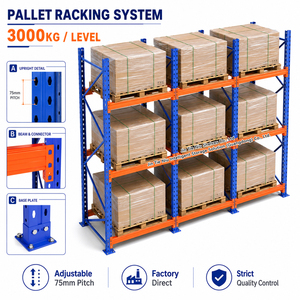
Factory-Direct Pallet Racking Systems
Engineered cold-formed steel racking built for high verticality, maximum payload safety, and custom logistics footprints across global distribution hubs.
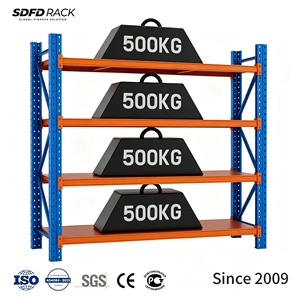
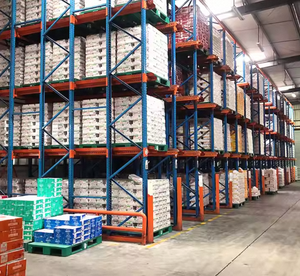
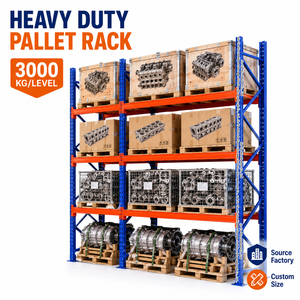
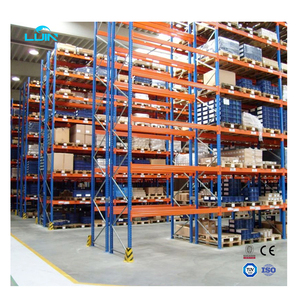
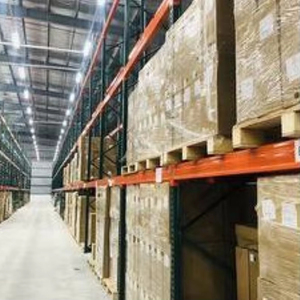
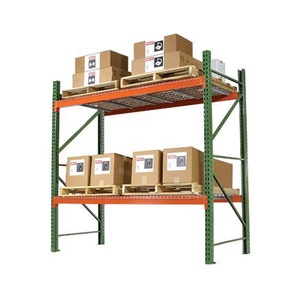
25+
Years Manufacturing Excellence (Since 2001)
30,000m²
Guangzhou Modern Production Facility
30,000t
Monthly Structural Steel Output Capacity
120+
Export Destination Countries & Regions
Engineering Authority Whitepaper: Industrial Pallet Racking Procurement, CE Compliance, & Supply Chain Risk Mitigation
In high-throughput, modern fulfillment centers and logistics supply hubs, pallet racking is fundamentally an engineered load-bearing structural framework rather than standard storage furniture. The modern intralogistics environment demands stringent safety margins, seismic compliance, tight deflection limits, and advanced metallurgy to withstand continuous dynamic stresses imposed by automated guided vehicles (AGVs), reach trucks, and high-frequency order fulfillment. Selecting a CE-certified manufacturer guarantees verified cross-sectional steel stability, traceable mechanical yield strengths, and compliance with the European Standard EN 15512.
Information Gain Metric: Structural verification under CE Certificate No. 2435-CPR-8605159 and ISO 9001:2015 guarantees that every roll-formed upright profile, box-beam connector clip, and baseplate anchor configuration is calibrated for ultimate limit states (ULS) and serviceability limit states (SLS) under strict international load factors.
1. CE Certification and the Structural Mechanics of EN 15512: Why It Governs Modern Racking
The European Standard EN 15512 specifies the structural design requirements applicable to cold-formed steel pallet racking subjected to static and pseudo-static loads. Procurement teams must understand why an authentic CE Marking (Construction Products Regulation No. 305/2011 CPR) is indispensable for warehouse infrastructure:
Perforated Column Buckling Resistance
Continuous slot perforations along upright columns reduce cross-sectional area. CE certification enforces non-linear finite element modeling (FEM) and stub-column testing to prevent torsional-flexural buckling under axial stress.
Rotational Beam-End Connector Stiffness
Beam-to-column connector clips provide frame stability without cross-bracing in the aisle direction. CE compliance verifies moment-rotation characteristics (semi-rigid joint behavior) to eliminate frame sway.
Deflection Limits & Serviceability
Under maximum design load, beam vertical deflection must not exceed L/200 (or L/300 in high-density AGV aisles). Non-certified systems frequently suffer from permanent plastic deformation, jamming handling equipment.
2. Comparative Engineering Specifications: Matching Racking Types to Inventory Dynamics
Optimizing warehouse storage capacity demands balancing selectivity (SKU direct accessibility) with volumetric density. The table below outlines technical criteria utilized by structural engineers when specifying storage typologies:
| Racking System | Pallet Density Ratio | Selectivity Profile | Typical Payload / Level | Operating Machinery | Seismic & Cold Chain Suitability |
|---|---|---|---|---|---|
| Selective Pallet Racking | Baseline (40-50% Floor Util.) | 100% Direct (Immediate) | 1,000 kg – 4,500 kg | Standard Counterbalance / Reach | Excellent; adaptable baseplate anchoring |
| Double Deep Selective | High (+30% vs Selective) | 50% Immediate (FILO pair) | 1,500 kg – 3,200 kg | Pantograph Double-Reach Truck | High stability; requires reinforced bottom levels |
| Drive-In / Drive-Through | Maximum (Up to 75% Floor Util.) | Low (Last-In First-Out) | 800 kg – 2,000 kg | Narrow Aisle Sit-down Mast Truck | Requires top-tie portal beams & floor guidance |
| Radio Shuttle Automation | Ultra-High (Deep Lane 40m+) | Dynamic (Configurable FIFO/LIFO) | 500 kg – 2,500 kg | Autonomous Pallet Runner + Forklift | Outstanding; reduces forklift-rack collision risks |
| Rack-Supported Mezzanines | Multiplies Usable M² (2-4 Tiers) | High for Small Parts & Pallets | 300 kg – 1,000 kg / m² | Conveyors, Vertical Lifts, Hand Trucks | High engineering checks for floor slab shear |
3. Future Racking Procurement & Technological Trends (2025–2030)
The intralogistics ecosystem is undergoing rapid architectural changes. Enterprise buyers must anticipate the following structural transformations:
Automation & AGV Tolerances
AS/RS and AGVs demand millimeter-exact manufacturing tolerances. Future racks utilize automated laser-guided punching to maintain 0.5mm beam position tolerance over 12-meter lift columns.
Cold-Formed High-Tensile Steels
Transition from standard Q235B steel to micro-alloyed Q355B and high-strength steels. This delivers a 20% reduction in tare weight while expanding load safety factors and seismic ductility.
Hybrid Corrosion Engineering
Expansion of hot-dip galvanizing (HDG) and thermosetting epoxy-polyester powder coats with phosphate pre-treatment to survive chemical fumes and high-humidity tropical microclimates.
Digital Twin Racking Monitoring
Integration of IoT strain-gauge sensors along critical upright sections to transmit real-time alerts on overload states, impact collisions, and baseplate anchoring micro-shifts.
4. Enterprise Manufacturing Strengths: Guangzhou Heda Shelves Co., Ltd.
With over two decades of dedicated industrial manufacturing excellence, Guangzhou Heda Shelves Co., Ltd. has established itself as an authoritative leader in engineered warehouse systems:
- Full-Cycle Vertical Manufacturing: In-house steel slitting, automated CNC cold-roll profile forming, high-speed automated column punching, robotic welding, 8-stage pickling and phosphating, and electrostatic powder coating across a 30,000 square meter plant.
- Rigorous Testing Protocols: Ongoing batch testing for yield tensile strength, weld seam penetration, coating salt-spray resistance (exceeding 500 hours), and vertical deflection loading tests.
- Comprehensive Global Certifications: Formally accredited with CE Certification (No. 2435-CPR-8605159), ISO 9001:2015 Quality Management System Certification (No. 18624Q00169R0M), and full RoHS environmental compliance.
- Free Engineering Pre-Sales Service: Our structural engineers deliver custom 2D CAD floor plans, comprehensive 3D realistic renderings, and full static load calculation reports within 24 to 48 hours.
Frequently Asked Questions: Racking Sourcing & Engineering
Clear, technical guidance addressed to procurement managers, structural consultants, and warehouse operators worldwide.
What specific documentation is required to verify CE Certification for structural pallet racking?
To ensure genuine compliance, the buyer should receive a Declaration of Performance (DoP) referencing Construction Products Regulation (CPR No. 305/2011), the manufacturer’s CE Certificate issued by an accredited notified body (such as HEDA Shelves CE No. 2435-CPR-8605159), mill test certificates for steel raw material grades (e.g., Q235B, Q355B), and third-party finite element structural load analysis reports verifying compliance with EN 15512 standards.
How do engineers design racking systems for high-risk seismic zones?
In earthquake-prone territories (such as the Pacific Ring of Fire, Indonesia, the Philippines, Japan, and the Mediterranean), racking cannot be designed solely for vertical gravity loads. Engineers implement seismic design according to EN 16681 or RMI standards. This incorporates heavier baseplates, oversized seismic wedge anchors (Hilti/Fischer), enhanced diagonal tubular bracing, closed omega-profile upright sections, and seismic moment dampers to dissipate horizontal ground accelerations without collapse.
How does tropical humidity and sub-zero cold chain impact steel coating selection?
For humid, tropical climates across Southeast Asia and coastal ports, standard painted steel rapidly rusts at punched slots. HEDA Shelves utilizes an eight-stage industrial pre-treatment process (degreasing, acid pickling, rinsing, and zinc phosphating) before applying a 60–80 micron electrostatic powder coat. For deep-freeze cold storage (-20°C to -30°C) or outdoor bulk terminals, Hot-Dip Galvanizing (HDG) to ISO 1461 is recommended, immersing steel components in molten zinc at 450°C to achieve complete metallurgical bonding and 25+ years of rust immunity.
What critical parameters are required to generate an optimized warehouse layout and load proposal?
Our engineering team requires five primary datasets: (1) Architectural CAD drawing or dimensioned sketch detailing interior building columns, ceiling clear height, doors, and fire sprinkler clearances; (2) Pallet specifications including overall dimensions (W x D x H) including load overhang and gross payload weight; (3) Handling equipment model, turning radius, and maximum reach height; (4) Inventory turnover profiles (FIFO vs. LIFO requirements); and (5) Ambient thermal conditions (dry, ambient, refrigerated, or deep freeze).
How does HEDA Shelves manage container loading to prevent transit deformation?
Because pallet racking beams and uprights represent long, heavy steel profiles, poor packing results in bent connector teeth and twisted flanges. We generate detailed 3D container packing load plans for every 40-foot High Cube (40HQ) container. Components are bundled with protective corrugated paper, edge angle guards, high-tensile steel strapping, and wooden dunnage, ensuring seamless container unloading via forklift at destination job sites.
Accelerate Your Warehouse Intralogistics Efficiency
Connect directly with HEDA Shelves engineering specialists. Obtain a complimentary 2D CAD layout design, full 3D visual rendering, and certified payload structural calculation report customized to your warehouse dimensions.
Inquire Now