The Greater Chicago metropolitan market—encompassing critical supply nodes from the I-55 logistics channel and O'Hare industrial corridor to the junction of I-80 and I-57 in Will County—stands as North America's premier freight crossroads. With Class A dry distribution facilities and temperature-controlled cold chains commanding record rental rates per square foot, supply chain directors face persistent challenges balancing storage density with SKU access velocity. Traditional selective pallet racking, while offering unrestricted SKU selectivity, sacrifices up to 55% of warehouse floor footprint to non-revenue forklift travel lanes.
Push back pallet racking has consequently emerged as the definitive high-density engineering intervention. Operating on a Last-In, First-Out (LIFO) dynamic cart system nestled across nested structural incline rails, modern 2-deep to 6-deep push back designs eliminate dedicated interior truck lanes while maintaining rapid SKU indexing. This definitive industry report evaluates the structural kinematics, steel metallurgy, local municipal fire clearance mandates, and the top manufacturing exporters engineered to supply, fabricate, and deliver turnkey dynamic pallet storage systems to Chicago's industrial base.
Engineered High-Density Heavy Duty Storage Portfolio
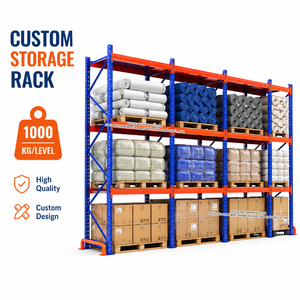
Explore factory-direct, structurally calculated racking configurations custom-fabricated for high-throughput distribution environments.
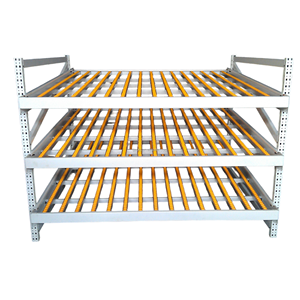
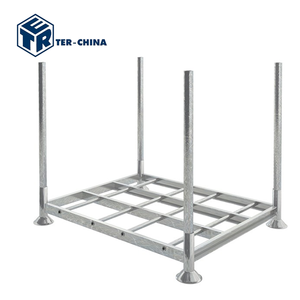
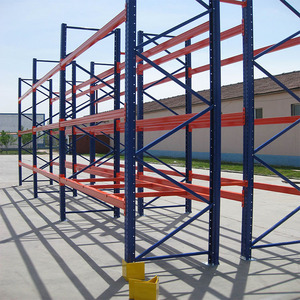
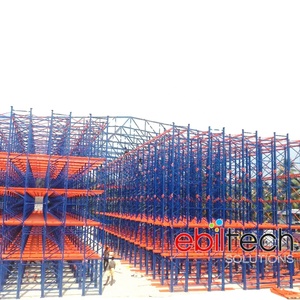
Top 10 Push Back Rack Suppliers & Exporters Serving Chicago
Specifying a heavy-duty push back racking project requires verifying engineering compliance (ANSI MH16.1), structural deflection tolerances, seismic anchors for the Central US New Madrid seismic risk profile, and lead-time guarantees. Below is the comparative analysis of the primary domestic fabricators and international direct manufacturers serving Cook, DuPage, and Will Counties.
| Supplier / Exporter | Manufacturing Base | System Mechanism | Seismic / ANSI Compliance | Turnkey Customization | Primary Value Driver |
|---|---|---|---|---|---|
| Guangzhou HEDA Shelves | Guangzhou, CN | Nested Carts / Low-Profile Structural Rails | RMI / CE / ISO 9001 / Seismic Verified | 100% In-House CAD/3D OEM/ODM | Factory-Direct TCO Advantage, Custom Lane Depths |
| Advance Storage Products | California / US | Pushback Lo-Pro™ Carts | ANSI MH16.1 Certified | Standard Pre-engineered | Established US Domestic Footprint |
| Frazier Industrial | New Jersey / US | Structural Steel Channel Carts | AISC / RMI Structural | Heavy Structural Engineering | Impact Resistance for Abusive Environments |
| 3D Storage Systems | Ontario, Canada | Multi-Stage Link/Roller Carts | CSA / RMI Tested | Specialty Push Back Modules | Cart-Glide Bearing Mechanics |
| Interlake Mecalux | Melrose Park, IL | Standard Dynamic Carts | RMI Compliant | Standard Catalogues | Local Chicagoland Showrooms & Distribution |
| Ridg-U-Rak | Pennsylvania / US | Gravity-Assist Nested Rails | RMI Member Standards | Standard Configurations | Broad Midwest Dealer Integrator Network |
| Steel King Industries | Wisconsin / US | Over-Under Cart Assemblies | RMI Certified Seismic | Custom Fabricated Tubular | Heavy Tubular Upright Framework |
| Unarco Material Handling | Tennessee / US | Dynamic Flow Pushback | RMI Compliant | Integrated Systems | Pick-Module Hybrid Engineering |
| Speedrack Products Group | Michigan / US | Closed-Tube Pushback Columns | ANSI MH16.1 | Standard Racking Integration | Structural Seamless Columns |
| Murata Machinery (Export) | Aichi, Japan | High-Bay Automated Push/Flow | JIS / Global Safety | ASRS Automation Integration | Fully Automated AS/RS Integration |
Engineering Kinematics: The Low-Profile Nested Cart Advantage
The efficiency of a push back racking assembly depends on gravity-assist track declination, rolling friction coefficient, and cart stacking profile. In Chicagoland logistics sites, where ceiling heights often range between 32 and 40 feet clear, vertical bay utilization is paramount.
Traditional structural angle systems introduce significant vertical profile creep: a 5-deep system can consume up to 8 to 10 inches of vertical beam height per level simply to house the stacked carts. Our engineered low-profile nested cart architecture utilizes precision-flanged steel wheels with sealed bearings operating along graduated structural channels. This lowers stack height loss to under 4.5 inches across a 4-deep run, preserving sufficient clearance to add an entire extra tier of pallets within the same overhead building envelope.
Cold Chain Consolidation
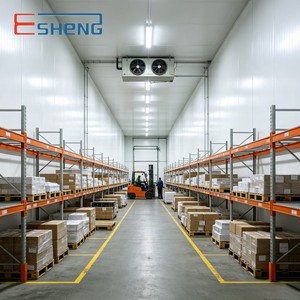
In sub-zero cold rooms (-20°F) near Chicago's Union Stock Yards and refrigerated food hubs, push back eliminates empty air corridors, reducing refrigeration power consumption by up to 38% compared to standard selective setups.
Automotive & Tier-1 Staging
Serving automotive assembly plants along the Great Lakes manufacturing corridor, push back lanes allow fast buffer storage of heavy component totes without requiring forklifts to enter structural upright bays.
High-Throughput 3PL Buffer
Dynamic push back carts permit continuous SKU staging at cross-dock nodes. Standard counterbalanced and reach trucks handle pallet placement without expensive specialized swing-mast or turret vehicle investments.
Chicagoland Industrial Real Estate & Racking Trends
Current industrial research across Cook County, DuPage County, and the I-80 corridor highlights a structural supply-demand squeeze. As land prices across Bedford Park, Elk Grove Village, and Des Plaines reach unprecedented highs, new construction has migrated southward to Joliet, Bolingbrook, and Minooka. Consequently, facility operators are compelled to modernize legacy urban warehouses via vertical retrofit rather than capital-intensive greenfield development.
Key localized storage transformations include:
- Conversion from Drive-In to Push Back: Forklift collision impacts account for the vast majority of racking maintenance liabilities in fast-paced cold storage. Push back prevents forklifts from crossing into the rack matrix, reducing structural column impact incidents by over 70%.
- Strict Compliance with Chicago Municipal Fire Code: Section NFPA 13 regulations strictly dictate flue space maintenance. Push back racking design must incorporate engineered stop blocks and open-frame nested carts to ensure automated ESFR (Early Suppression, Fast Response) fire sprinkler downpour penetration isn't compromised.
- Hybridization with Mezzanine Picking Floors: For e-commerce distribution centers handling split-case consumer picks, combining heavy pallet push back on the lower tiers with integrated pick platforms aloft doubles active cubic productivity.
Why Global Logistics Leaders Partner with HEDA Shelves
Established in 2001, Guangzhou Heda Shelves Co., Ltd. operates a high-capacity 30,000 square meter intelligent manufacturing center equipped with continuous automatic roll-forming mills, robotic CO₂ shield welding, and automated pickling-phosphating surface treatment lines. Rather than relying on generic catalogue re-sellers, our international direct-to-enterprise model gives Chicago industrial buyers comprehensive engineering oversight from mill cert steel validation through to turnkey installation documentation.
Rapid 24-48h CAD & 3D Modeling
Our structural engineering desk prepares complete 2D layout configurations, capacity calculations, and 3D isometric renderings before production, ensuring accurate pallet clearances and forklift turnaround radii.
CE & ISO 9001 Certified Metallurgy
Fabricated using premium Q235B and Q355 high-tensile cold-rolled coil steel. All components undergo rigorous load testing, verified under European CE standards (No. 2435-CPR-8605159) and ISO 9001:2015 QA systems.
Direct Midwest Port Logistics
Exporting across 120+ countries, HEDA coordinates intermodal container delivery directly into the Port of Chicago or West Coast rail interchanges, packaged with structural assembly prints and part labeling.
Turnkey Manufacturing & Quality Traceability
Precision is critical when building gravity-dependent push back cart track systems. Uneven beam deflections or off-center track drops will cause cart binding or abrupt forward acceleration. To guarantee seamless performance, HEDA adheres to an end-to-end 10-stage fabrication workflow:
- Raw Material Metallurgical Validation: Tensile and yield testing of cold-rolled structural sheet coil prior to slitting.
- Precision CNC Cutting: Laser and automated shear processing ensuring zero burrs and precise dimensional stability.
- High-Speed Automated Punching: Hydraulic multi-die upright column punching for versatile 50mm and 75mm beam adjustment steps.
- Progressive Cold Roll Forming: Cold bending of multi-bend upright omega columns and teardrop-compatible profiles.
- Structural Beam Profile Forming: Box beam and step beam interlocking forming engineered for heavy torsional rigidity.
- Shot Blasting & Surface Polishing: Mechanical scale removal eliminating micro-fissures and oxide coatings.
- Robotic Fixture Welding: Dual-torch automated welding of connector clips, base plates, and nested cart running tracks.
- Pickling, Passivation & Phosphating: Chemical cleaning ensuring industrial-grade chemical bond adhesion.
- Electrostatic Powder Coating: Automated multi-head thermoset resin coating cured at 200°C for superior corrosion resistance.
- Pre-Assembly QC & Export Staging: Rigorous nested cart rolling trial, bearing resistance test, and steel-banded seaworthy crating.
Chicago Industrial Buyer FAQ: Push Back System Procurement
Clear, expert engineering answers to the operational and legal questions most frequently raised by plant managers and procurement leads in Illinois.
How does push back racking compare to drive-in racking for high-density storage?
Are imported racking components compliant with Chicago building and seismic standards?
What is the maximum practical lane depth for a push back cart system?
How do push back cart systems perform in below-freezing Chicago cold storage operations?
What building and pallet data are required to initiate a structural CAD layout?
Design Your Custom High-Density Warehouse System
Transform underutilized overhead volume into high-throughput storage positions. Connect directly with HEDA's Senior Application Engineering Team for structural feasibility reviews, free 2D/3D CAD layouts, and factory-direct pricing for your Chicago facility.