Enterprise Material Handling Engineering
Seismically Rated Structural Steel Racking for Osaka Port & Greater Kansai Hubs
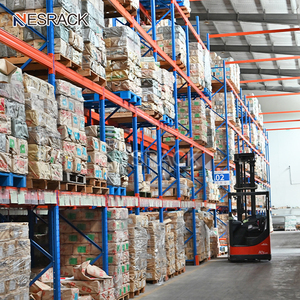
As the supply chain axis between Osaka Bay (Yumeshima, Nanko, Maishima), Sakai-Senboku, and the interior distribution nodes of Higashiosaka and Kadoma faces intensifying regional turnover, warehousing demands have pivoted definitively toward high-durability structural pallet racking. Standard roll-formed racking frequently buckles under the dual stresses of repetitive multi-shift forklift collisions and cyclical seismic ground acceleration. As an established direct manufacturing force operating over 30,000 square meters of specialized structural steel fabrication facilities, we engineer, fabricate, and deliver heavy-gauge, anti-corrosive industrial rack systems directly tailored to the rigorous spatial configurations of Osaka facilities.
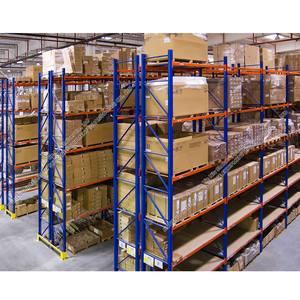
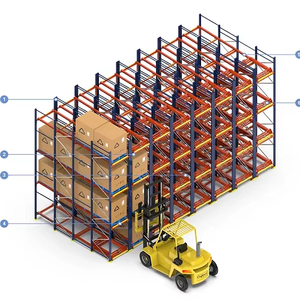
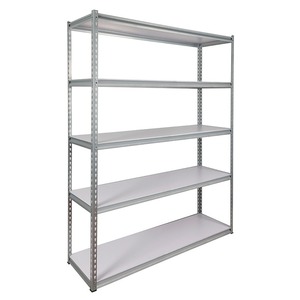
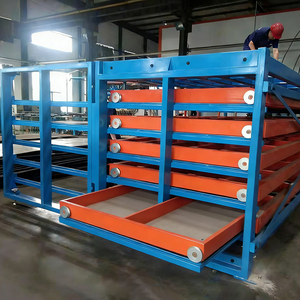
Featured Structural Pallet Racking Systems
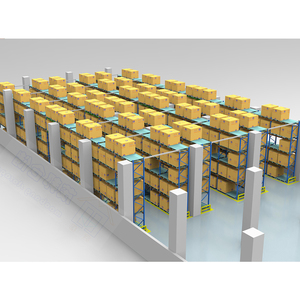
Direct engineering specifications, dynamic loading capacities from 1,000 kg to over 4,500 kg per level, and precision finishes for dry and cold-chain facilities.
25+
Years Manufacturing Excellence (Since 2001)
30,000
Sq. Meters In-House Facility Area
30,000t
Monthly Steel Output Capacity
10,000+
Global Logistics Installations Delivered
Operational Topology
Strategic Storage Application Scenarios Across Osaka & Kansai
Osaka’s geographic placement as Western Japan’s principal maritime and manufacturing gateway demands precision structural engineering adapted to specific industrial micro-zones.
Osaka Bay Waterfront & Reefer Cold Chains
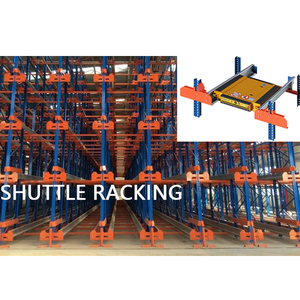
Facilities situated across Yumeshima, Nanko, and Maishima frequently endure saline humidity, stringent thermal shifts (down to -30°C), and high coastal wind load factors. In these sub-zero distribution environments, lightweight roll-formed steel can suffer brittle fracture risks under forklift nudges. Our heavy-wall structural C-channel uprights, combined with hot-dip galvanization (HDG) and automated radio shuttle systems, preserve seismic structural ductility while maximizing cubic density where refrigerated electrical power costs are premium.
Inland Heavy Manufacturing & Metal Tooling
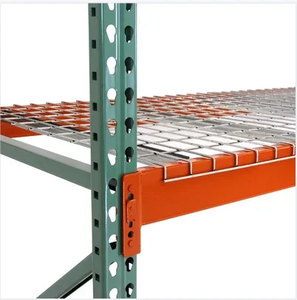
The precision engineering, metal stamping, and automotive supply ecosystems across Higashiosaka, Kadoma, and Daito handle concentrated, high-mass loads. Sheet metal dies, raw steel billets, and machining tooling require structural pallet systems with unified safety factors resisting dynamic point-load impacts. Custom structural racking featuring heavy boxed beams and integral coil beds guarantees zero permanent deflection under continuous multi-ton static pressures.
Multi-Tier Automated E-Commerce Hubs
Accelerated by cross-border logistics from the Port of Osaka and Kansai International Airport (KIX), massive multi-tenant logistics properties (Repsol, GLP, Mitsui Fudosan parks) in Ibaraki, Takatsuki, and Sakai require dense vertical storage integration. By utilizing structural upright columns capable of supporting elevated multi-tier mezzanine floors and high-throughput vertical reciprocating conveyors (VRC), operators achieve double or triple usable floor footprints without lease expansion.
Macro Industry Dynamics
Structural Racking Trends Serving Osaka (2025–2030)
Strategic shifts in labor availability, coastal mitigation codes, and automation investments are redefining warehouse infrastructure benchmarks throughout Kansai.
Seismic Damping & Level 2 Earthquake Readiness
Following renewed meteorological focus along the Nankai Trough, Osaka industrial developers are shifting specifications from baseline Japanese Building Standard Act requirements to resilient structural grade frameworks. Facilities are increasingly requiring dynamic finite-element analysis (FEA) validating frame response during cyclic oscillations. Heavy structural upright sections engineered with oversized welded base plates, wedge anchors exceeding embedment minimums, and energy-dissipating X-bracing prevent catastrophic racking progressive collapse during seismic ground shift.
Adapting to the "2024 Logistics Overtime Cliff"
With the strict enforcement of Japanese driver overtime limitations, logistics velocity must be reclaimed inside warehouse gates. Turnaround times at Osaka dock terminals can no longer tolerate sluggish manual narrow-aisle forklift operations. Structural racking architectures are actively converted into semi-automated dense storage blocks, integrating high-speed pallet runners, automated guided vehicles (AGV), and pallet-flow gravity tracks that condense loading and unloading cycle intervals by over 45%.
Eco-Friendly Closed-Loop Surface Finish Mandates
Kansai municipal industrial compliance policies enforce rigorous ESG criteria on indoor volatile organic compounds (VOCs). Legacy spray-paint systems have been completely decommissioned in our factories in favor of multi-stage pickling, zinc phosphating, and electrostatic high-durability epoxy powder coatings certified under European RoHS guidelines. These smooth, wear-resistant, VOC-free structural finishes ensure sanitary, particle-free environments essential for pharmaceutical, semiconductor, and food packaging operations.
Industrial Provenance
Factory-Direct Quality Controlled from Raw Steel to Osaka Port
Guangzhou Heda Shelves Co., Ltd. eliminates third-party markups, long broker lead times, and structural tolerances uncertainty through vertically integrated in-house production lines.
01
Mill-Certified Steel
Direct Q235B/Q355B coils with chemical tensile test certification.
02
High-Speed Slitting
Automated high-precision strip edge squaring and deburring.
03
Continuous Punching
CNC progressive multi-die pitch punching within 0.1mm tolerance.
04
Precision Cold Rolling
Multi-roller profiling ensuring structural stiffness and zero residual stress.
05
Laser Precision Cut
Fiber-optic mitering, notch cutting, and automated bevel finishing.
06
Robotic Weld Stations
Dual-shield automated gas metal arc welding on beam connectors.
07
Pickling & Phosphating
Multi-stage immersion tanks removing scale and assuring paint bonding.
08
Powder Application
High-voltage electrostatic coating cured at 200°C for impact resistance.
09
Structural QA Deflection
Batch hydraulic destructive loading verification per ISO 9001 protocols.
10
Kansai Direct Packing
Palletized containerized sea-freight packing destined for Osaka Port.
Procurement Due Diligence
Frequently Asked Questions by Warehouse Operators in Osaka
Key structural compliance, sea shipping timelines, customs certifications, and technical compatibility parameters addressed transparently.
How do your structural pallet racks comply with Japanese seismic design codes?
Our structural racking systems are fully engineered with structural calculation checks adaptable to Japanese Building Standard Law (Kenchiku Kijun-hō) guidelines and regional seismic load values (Z-factor coefficients for Kansai). We customize column cross-sectional inertia, provide upsized 10mm to 16mm base anchor plates, incorporate heavy-duty seismic floor ties, and can deliver complete Finite Element Analysis (FEA) documentation for your local general contractor or municipal building inspection filing.
What is the ocean transit and customs lead time from your factory to Osaka Port?
Because our core manufacturing facilities are strategically situated in Guangzhou near major South China deep-water container terminals (Nansha and Yantian), sea-freight routing to Osaka Port is exceptionally rapid. Typical port-to-port ocean transit runs between 4 to 6 days. Standard custom production cycles run 15 to 25 calendar days, allowing total turn-around from CAD design approval to site container delivery in Osaka within 4 to 5 weeks.
Can your racking match standard Japanese JIS pallet formats (T11 & T12)?
Yes. All structural beam spans, frame depths, and wire mesh decking accessories are custom-dimensioned to perfectly accommodate both standard Japanese industrial pallets (JIS T11 type: 1,100mm × 1,100mm) and regional chemical/beverage formats (T12: 1,200mm × 1,000mm). Our design eliminates overhang hazards, beam spacing mismatch, or non-uniform point-load concentrations across beam steps.
Which official factory certifications and material test reports are supplied?
Every shipment arrives accompanied by CE Certification (Certificate No. 2435-CPR-8605159), ISO 9001:2015 Quality Management documentation (No. 18624Q00169R0M), RoHS compliance confirmation for environmental powder coatings, and mill metallurgical test certificates detailing structural yield, tensile strength, and steel chemical composition.
What finish options do you provide for Osaka Bay high-humidity or cold-chain docks?
For standard indoor ambient logistics, our multi-stage electrostatic powder coating provides superior impact resistance against heavy forklift scrapes. For waterfront facilities along the Osaka coastline or deep cold-storage units (below -20°C), we offer complete Hot-Dip Galvanization (HDG) in compliance with ASTM A123/BS EN ISO 1461, ensuring decades of rust-free performance under condensed moisture exposure.
Can you provide structural load calculation reports for local municipal permit filings?
Yes. Our in-house engineering team works with your architectural blueprints to prepare complete 2D layout drawings, 3D spatial models, dynamic dead/live load tables, and beam deflection calculations (conforming to L/200 or L/250 standards) required by property owners, insurers, and structural inspectors in Osaka.
Plan Your Osaka Warehouse Storage Upgrade Today
Consult directly with our project engineering specialists. Send us your site dimensions, forklift specifications, and pallet load profiles to receive a comprehensive, seismic-optimized 2D CAD layout and formal quotation within 24–48 hours.
Contact Us