Push Back Pallet Racking Manufacturers & Supplier serving Jakarta
High-Density 2–6 Deep LIFO Structural Engineering Sized for Greater Jakarta Logistics Hubs, Cold Storage Facilities, and High-Yield Industrial Warehouses.
High-Density & Industrial Storage Racking Inventory
Engineered cold-formed steel racking systems fabricated in our 30,000 m² factory, certified under ISO 9001:2015 and CE standards for rapid shipment across Southeast Asia.
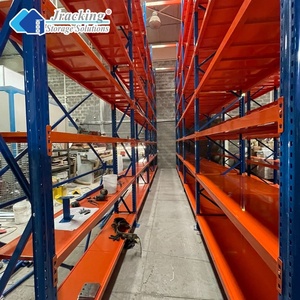
Push Back Pallet Racking: Mechanics & Kinematics
Push back pallet racking is a dynamic high-density accumulation storage system operating on an inclined rail cart architecture, delivering rapid throughput without entering rack lanes.
Nested Cart Kinematics
Multi-lane nesting carts rest on an inclined structural rail (typically a 3% slope gradient). Pallets are pushed uphill using forklift entry pressure; when a front pallet is retrieved, gravity gently feeds rear carts forward along sealed low-friction flanged bearing wheels.
LIFO Lane Independence
Push back configurations function on a Last-In, First-Out (LIFO) protocol per lane, yet each vertical tier and vertical bay remains an independent picking face. This provides far greater selectivity than traditional drive-in racking while conserving up to 75% of aisle floor footprint.
Structural Safety & Durability
Forklift trucks never enter the physical rack upright infrastructure. Drivers operate strictly from the exterior access aisle, dramatically reducing column collision risks, lowering rack maintenance costs, and accelerating round-trip cycle loading times.
Technical Comparison: High-Density Warehouse Solutions
| Racking Topology | Storage Density | SKU Selectivity | Rotation Principle | Risk of Truck Impact | Ideal Application Profile |
|---|---|---|---|---|---|
| Push Back Racking | High (75% floor use) | Moderate (Lane-level SKU) | LIFO (per lane) | Very Low (Outside aisle) | Medium-turnover, multi-SKU cold rooms & FMCG |
| Selective Pallet Racking | Low (40-45% floor use) | High (100% pallet pick) | FIFO / LIFO | Moderate | Omni-channel distribution, high SKU divergence |
| Drive-In Racking | Very High (80% floor use) | Low (Block-level SKU) | Strict LIFO | High (Trucks enter lanes) | Mass seasonal bulk commodities, single-SKU lots |
| Radio Shuttle Racking | Extreme (85%+ floor use) | Moderate (Lane automation) | FIFO / LIFO configurable | Very Low | Mass automated manufacturing, long-run deep cold chain |
Jakarta & West Java Industrial Deployment Realities
Designing pallet storage in Greater Jakarta (Jabodetabek) requires a tailored engineering strategy that addresses spatial real estate costs, high ambient humidity, and regional seismicity.
Industrial Corridors (Bekasi, Cikarang, Karawang)
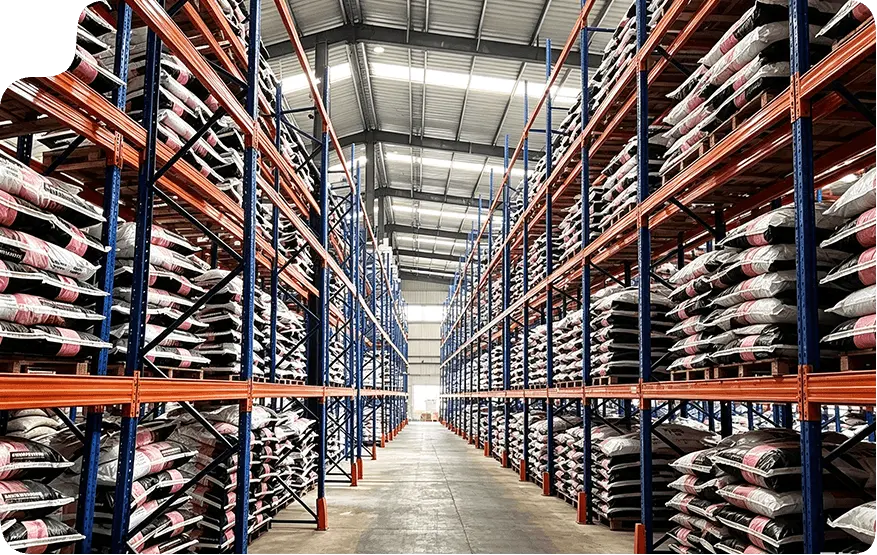
Warehousing land leases across MM2100, GIIC, and KIIC have risen consistently. Logistics planners cannot afford 3.5m+ aisles for every two rows of selective racks. Our 2-deep to 5-deep push back systems allow operators to convert excessive aisle pathways into high-capacity pallet locations, increasing overall storage yields by 45% to 65% in the same warehouse footprint.
Cold Chain Hubs: Pluit, Marunda & Tanjung Priok
Cold storage facilities adjacent to Port of Tanjung Priok experience high electrical cooling expenses. Every cubic meter of refrigerated air must be filled with inventory. Push back racking eliminates unnecessary cold corridors, maximizing chilled storage density for dairy, seafood, meat, and frozen poultry imports.
Tropical High-Humidity Surface Treatment
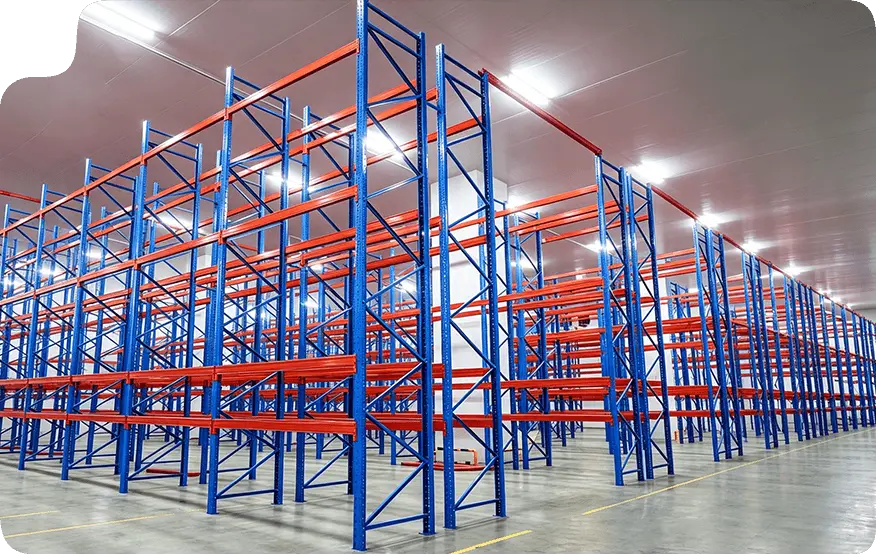
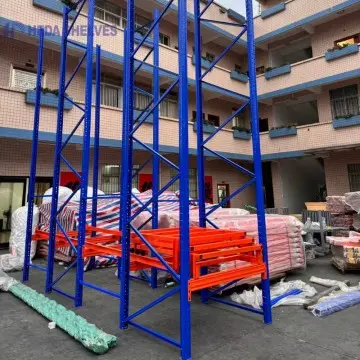
Greater Jakarta experiences relative humidity consistently between 75% and 90%. HEDA Shelves integrates a 10-step surface treatment: shot blasting, acid pickling, phosphating passivation, and anti-corrosive thermoset polyester powder coating. For chilled wet rooms and coastal port corridors, hot-dip galvanized (HDG) rails and nested carts provide permanent protection against rust.
Engineering for SNI 1726 Seismic Zones & Pallet Specs
Structural reliability across West Java necessitates strict compliance with regional safety codes, seismic site coefficients, and regional pallet standards.
Indonesian Seismic Code (SNI 1726 / FEMA 460)
Jakarta sits in an active seismic belt. We design structural uprights, bracing geometry, and enlarged seismic base plates based on specific Spectral Acceleration values ($S_s, S_1$) and Soil Classes ($S_D, S_E$), anchoring securely with Hilti mechanical or chemical anchors.
Pallet Tolerance Adaptation
Indonesian operations utilize diverse pallet types: standard Indonesian wooden pallets (1200x1000mm), ISO standard modules, and regional plastic hygienic runners. Push back nesting carts are custom-fabricated to support both cross-pallet runners and bottom-skid pallets without deflection or track derailment.
Optimized Push-Force Calibration
Our engineered low-friction sealed bearings ensure that forklift push resistance does not exceed 4% to 5% of total gross pallet weight. Even standard counterbalanced or reach trucks can effortlessly load 1,200kg pallets into a 5-deep lane without wheel spin or mast strain.
Why Asian 3PLs & Plant Managers Partner with HEDA Shelves
Founded in 2001, Guangzhou Heda Shelves Co., Ltd. provides factory-direct manufacturing, rapid turnaround times, and verified engineering compliance for global logistics hubs.
25+ Years Industrial Mastery
Over two decades of precision steel fabrication, cold roll-forming, and high-density racking engineering. We solve layout bottlenecks across cold storage, chemicals, FMCG, and automotive assembly before parts arrive on site.
End-to-End In-House Production
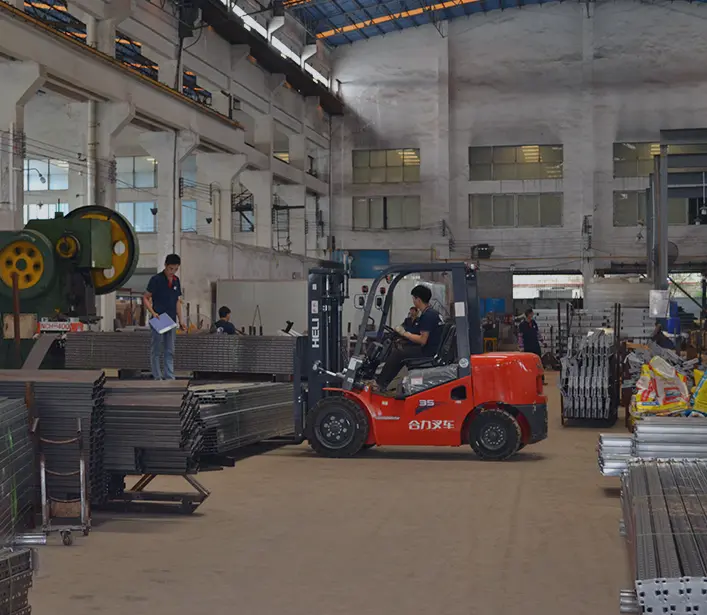
From prime Q235B/Q355B steel coil inspection, automated multi-station punching, CNC bending, to robotic welding and automated electrostatic powder coating lines—every component is monitored under ISO 9001:2015 management.
Free 2D/3D CAD & Structural Calculation
Share your architectural warehouse floor plan, clear building heights, forklift models, and pallet specifications. Our engineering team returns a 2D CAD layout, 3D realistic rendering, and structural load analysis within 24 to 48 hours.
Short Sea Freight to Port of Tanjung Priok
Located in Guangzhou, South China, we offer direct ocean shipping routes to Jakarta with typical maritime transit times of 7 to 10 days. Comprehensive container nesting plans minimize freight costs per pallet position.
Frequently Asked Questions: Jakarta Push Back Racking Procurement
Clear, direct technical responses to help procurement executives, engineering heads, and logistics managers select the ideal racking infrastructure.
How does push back racking compare to radio shuttle racking in Jakarta cold storage?
Push back racking operates mechanically via gravity and forklift momentum, requiring zero electronic shuttles, lithium batteries, sensors, or ongoing electrical maintenance in sub-zero environments (-25°C). For facilities with 2 to 5 pallets deep per lane and moderate throughput, push back systems deliver lower upfront CAPEX, zero electronic downtime, and immediate operational simplicity.
Can our standard reach trucks handle deep push back lanes without excessive push resistance?
Yes. Our nesting carts utilize precision-machined steel flanged wheels mounted on lubricated sealed bearings. The required push resistance is only 4%–5% of the total mass pushed. Standard counterbalance and reach trucks routinely deployed in Indonesian warehouses can load and retrieve pallets smoothly without mast overloading or floor tire slip.
How are structural systems certified for Indonesian building permit approval (PBG/SLF)?
Upon design confirmation, HEDA Shelves supplies comprehensive structural calculation books based on Indonesian Seismic Code SNI 1726, FEM 10.2.02, and EN 15512 specifications. We provide clear moment capacity verifications, base plate shear calculations, and deflection limits suitable for local structural engineering sign-off.
What happens if a wooden pallet has a broken bottom board?
Push back racking is safer than conventional drive-in systems with damaged pallets because the pallet sits flat within a welded structural steel cart rather than perching on narrow side rails. The full perimeter is firmly supported by the cart frame, eliminating catastrophic dislodgement or pallet drops during storage cycles.
What is the typical shipping lead time from Guangzhou to Jakarta?
Manufacturing turnaround typically ranges from 15 to 25 days depending on project tonnage. Ocean freight from South China ports (Nansha/Shekou) to Tanjung Priok, Jakarta requires only 7 to 10 days at sea, facilitating rapid project execution compared to domestic structural fabrication timelines.
How is site installation managed across West Java?
Every shipment is delivered with container loading layouts, component marking labels, and detailed step-by-step CAD 3D installation drawings. Buyers can either use their preferred local mechanical erection contractors or request remote video installation support from HEDA's engineering staff.
Maximize Your Warehouse Capacity in Jakarta
Get a complete structural consultation, customized 2D CAD floor plan, 3D rendering, and a competitive factory-direct quote within 24 to 48 hours.
Get Catalog