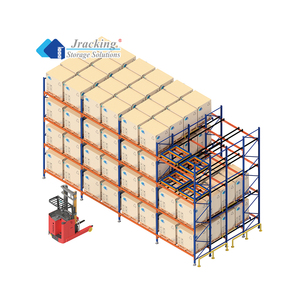
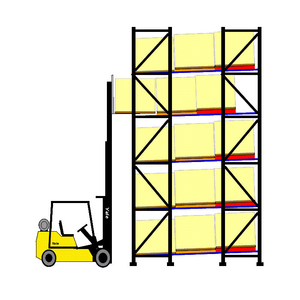
Jracking Push Back Racking Push-in Pallet Storage System
- 2–6 Pallets Deep
- LIFO Rotation
- High Utilization
Manufactured under strict ISO 9001:2015 and CE standards, our industrial shelving and rack assemblies are tailored to meet rigorous load tolerances, high cycle frequencies, and precise vertical clearance requirements.
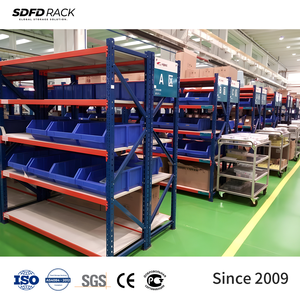
A comprehensive examination of how warehouse operators across Seattle, Kent Valley, Tacoma, and Everett balance extreme industrial real estate costs with strict seismic safety codes.
Operating a distribution or manufacturing center within the Seattle metropolitan region places facilities directly above complex geological interfaces, primarily influenced by the Cascadia Subduction Zone and the Seattle Fault system. Under modern municipal mandates across Western Washington—which align directly with the International Building Code (IBC) and ASCE 7 structural design provisions—warehouse storage racks are legally classified as non-building structures similar to buildings. This designation requires strict adherence to Seismic Design Categories (SDC) D, E, or even F depending on local soil-site classifications (ranging from Stiff Soil Class D to Soft Soil Class E in coastal tide flats).
For custom OEM warehouse racking procurement, off-the-shelf catalog solutions from unverified sources present massive structural and liability risks. Standard shelf uprights often fail to accommodate dynamic horizontal shear stress during a high-magnitude seismic event. As an established high-capacity manufacturer, our engineering team constructs heavy-duty cold-formed upright profiles using premium-grade Q235B and high-yield Q355B structural steel. We integrate oversized, laser-cut baseplates (typically 12mm to 16mm in thickness) equipped with dual seismic wedge anchor configurations, engineered heavy horizontal/diagonal tubular bracing panels, and high-ductility teardrop or bolted beam connections designed to absorb seismic energy without localized tear-out or column buckling.
Targeted solutions developed for maritime logistics, aerospace fabrication, advanced technology distribution, and temperature-controlled food preservation.
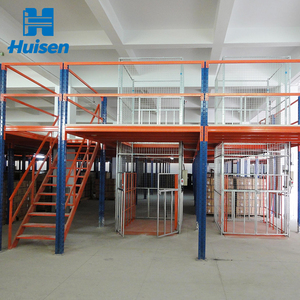
Kent Valley stands as the third-largest industrial core on the US West Coast. High land valuation necessitates extreme cubic space optimization. Our structural multi-tier rack-supported mezzanines and high-clearance selective pallet racks convert vertical ceiling volume up to 40 feet into active fulfillment pathways, doubling pick rates for regional e-commerce giants.
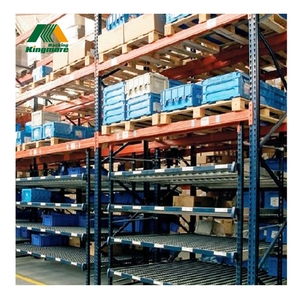
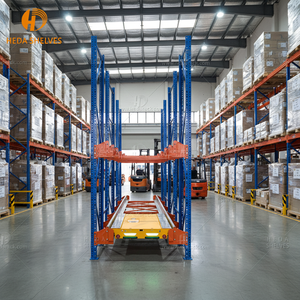
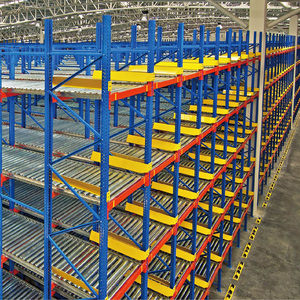
Transload operators managing dynamic ocean-freight cargo require rapid turnaround. Our push-back systems and high-density carton/pallet flow tracks eliminate unnecessary forklift travel time, allowing short-dwell freight forwarding stations to process variable import payloads with continuous First-In, First-Out (FIFO) mechanics.
Northwest maritime fisheries and dairy producers face expensive refrigerated cubic operating costs. Our radio shuttle pallet racking and drive-in assemblies maximize storage density within sub-zero environments, featuring anti-corrosive powder finishes and hot-dip galvanization that eliminate moisture-induced oxidation.
Serving Tier-1 aerospace suppliers surrounding Snohomish County airport hubs, our custom-engineered heavy-duty cantilever racks and wide-span shelving reliably store oversized composite materials, structural extrusion bars, heavy press tooling, and irregular aviation assemblies with individual arm capacities exceeding 3,000 kg.
How forward-thinking logistics operations in Western Washington are adapting their supply chain infrastructures to technological, environmental, and spatial shifts.
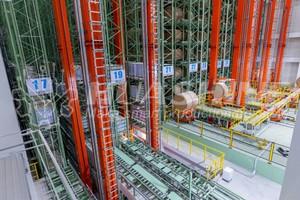
Faced with escalating labor shortages throughout the Puget Sound industrial basin, logistics facilities are rapidly retrofitting traditional warehouse layouts with Automated Storage and Retrieval Systems (ASRS) and autonomous shuttle lanes. By tightening rack tolerances down to millimeter margins, our OEM manufacturing ensures precision alignment for high-speed automated cranes and autonomous mobile robots (AMRs).
The maritime climate characteristic of Western Washington introduces relentless humidity and persistent damp air conditions. Conventional single-coat paint treatments succumb to micro-cracking and oxidation over short deployment horizons. In response, modern facility specifications mandate rigorous 10-step pickling, phosphating, and thermo-cured electrostatic epoxy-powder coating processes to maintain structural longevity.
With industrial vacancy rates hovering near historic lows across South King County and commercial land pricing setting national records, regional operators are barred from outward physical expansion. The prevailing engineering trajectory relies on vertical expansion—utilizing high-bay selective racks and multi-deck rack-supported platforms that double or triple usable floor territory within existing facility perimeters.
Eliminate intermediate broker markups and engineering miscommunications. Direct-from-factory OEM production brings certified quality, structural customization, and complete supply chain transparency.
Unlike regional distributors who rely on fragmented third-party component sourcing, our facility in Guangzhou executes every stage of structural rack manufacturing in-house across our dedicated 30,000 square meter plant. From high-grade raw steel coil testing to precision slitting, continuous automated roll-forming, CNC column punching, and robotic weldment assembly, our mechanical engineers maintain end-to-end tolerance oversight.
Before any rack leaves our bays for maritime dispatch, all components undergo intensive chemical pre-treatment—comprising high-pressure alkaline degreasing, acid pickling, zinc phosphating, and multi-stage cascade rinses. This ensures absolute chemical purity before the application of non-toxic, RoHS-compliant electrostatic polyester powder coats. The result is a structural finish impervious to impact, abrasion, hydraulic oils, and maritime moisture.
Advanced continuous roll-forming lines ensure uniform cross-sectional thickness and profile rigidity across full upright lengths.
Dual-arm automated robotic welding stations yield flawless weld seams between box-beam profiles and multi-prong connection connectors.
Complete chemical surface conversion creates an impenetrable crystalline barrier against localized rust and flaking.
Physical destructive and cyclic load testing validates compliance with CE (No. 2435-CPR-8605159) and ISO 9001:2015 frameworks.
Critical structural, permitting, freight, and engineering answers compiled directly from cross-Pacific project management records.
Bypass middlemen and access direct OEM production pricing. Receive a comprehensive warehouse racking layout, finite load assessment, and detailed project estimate within 24 hours.