High-Capacity Industrial Storage & Tire Stacking Systems
Direct from our ISO 9001 and CE certified manufacturing facility to New England logistics facilities along I-95, I-495, and the Massachusetts Turnpike. Every unit is engineered for rigid structural integrity under extreme tire payload densities.
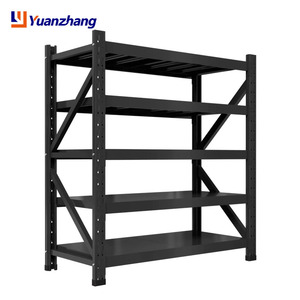
Custom Steel Heavy Duty Shelving 300 Kg Layer Garage Black 4 Tier Warehouse Storage Metal Stacking Rack Unit for Warehouse
- Cold-formed Q235B high-tensile steel
- Boltless interlocking tire-cradle beam design
- Matte black anti-scuff powder coating
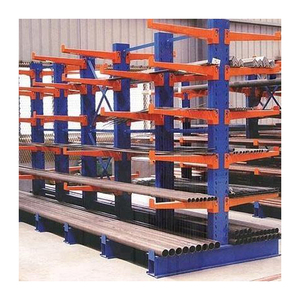
H-Beam Heavy Duty Cantilever Racks Steel Structural Shelf Industrial Warehouse Racking for Storaging Wooden Boards, Pipes
- Hot-rolled H-beam structural steel profile
- Ideal for oversized OTR, bus, and truck tires
- Arm capacities from 800 kg to 3,000 kg
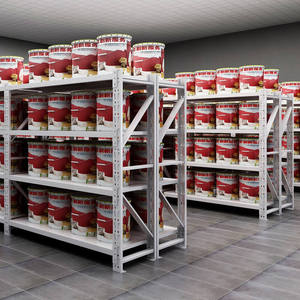
Heavy Duty Industrial Pallet Rack Storage Shelves System Metal Stacking Units Warehouse Steel Pallet Racking
- Standard teardrop and European beam connector
- Adaptable with barrel and curved tire supports
- Up to 5,000 kg per beam level capacity
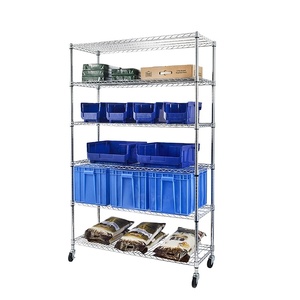
NSF Factory Industrial Warehouse Metal Mobile Storage Wire Racks Shelving Systems
- Chrome plated or heavy epoxy finish options
- Mobile industrial casters with directional locks
- Optimal for rapid inner-shop tire transport
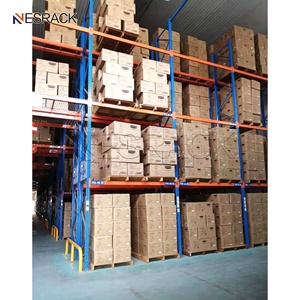
Industrial Heavy Duty 5 Layer Storage Shelves System Multi-layer Stacking Units Metal Rack Warehouse Steel Pallet Shelf
- Multi-level vertical density for high cubic ceiling
- Adjustable pitch at 50mm / 75mm increments
- Optimized for on-tread vertical tire positioning
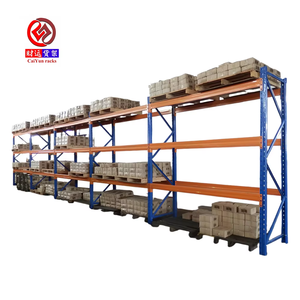
Factory Supply Heavy Duty Warehouse Storage System Live Heavy Rack System Selective Warehouse Stacking Shelving Display Shelves
- 100% direct selectivity across hundreds of SKUs
- Certified powder coating passing salt-spray tests
- Compatible with counterbalanced & reach trucks
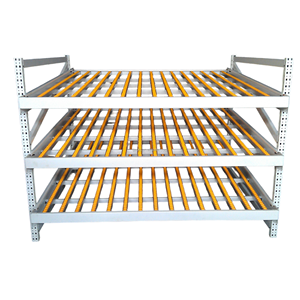
AOCHEN Collapsible Powder Coated Warehousing Logistics Mobile Gravity Pallet Roller Steel Rack
- Integrated gravity roller lanes for automated flow
- Strictly enforces FIFO stock date rotation
- Collapsible framework saves freight cost by 60%
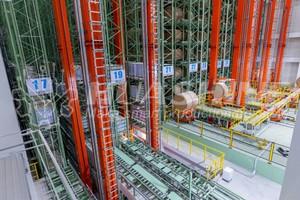
Heavy Duty Scale STACKER CRANE and on Request Capacity Pallet Racking Auomated ASRS Warehouse HUASHINE INTELLIGENT
- Robotic stacker crane up to 30+ meter elevations
- Automated WMS integration for high-throughput
- Eliminates forklift labor & maximizes land value
Structural Engineering, Seismic Design & Fire Safety for Greater Boston
Designing industrial tire storage racking for Massachusetts commercial facilities requires navigating the intersection of extreme floor loading densities, local seismic zone codes (780 CMR), and stringent NFPA 13 rubber tire fire safety requirements.
1. Material Yield Performance & New England Environmental Durability
Analysis of Cold-Formed High-Tensile Steel (Q235B/Q355B vs. ASTM A36/A1011) Under Cyclic Temperature Fluctuations
Warehousing in the Boston metropolitan area—from Chelsea and South Boston to Framingham and Worcester—endures extreme seasonal temperature swings ranging from sub-zero coastal blizzards in January (-15°C) to humid, salt-air summers (+35°C). Under ambient conditions, steel storage frameworks experience thermal expansion and contraction that exacerbate mechanical deflection across long-span beam levels.
Our manufacturing plant fabricates tire racking uprights and step beams using certified Q235B and high-yield Q355B structural steel (equivalent to ASTM A36 and ASTM A572 Grade 50). Upright profiles undergo precision continuous roll-forming to ensure uniform cold-work hardening across flange bends. This geometry increases the moment of inertia without adding deadweight, maintaining a safety factor of 1.67:1 under full rated load as dictated by ANSI/RMI MH16.1 specifications.
| Mechanical Parameter | HEDA Standard (Q355B) | ASTM Equivalent | Engineering Impact |
|---|---|---|---|
| Yield Strength (Fy) | ≥ 355 MPa (51.5 ksi) | ASTM A572 Gr 50 | Resists dynamic impact during forklift load placement |
| Tensile Strength (Fu) | 470 – 630 MPa | ASTM A572 | Prevents frame buckling under multi-tier tire racking |
| Elongation (δ5) | ≥ 21% | ASTM A36 (20%) | Ductility prevents brittle failure in freezing New England winters |
| Deflection Limit | L / 240 Service Load | ANSI/RMI MH16.1 | Zero beam binding, guarantees unimpeded tire rolling & picking |
| Salt Spray Resistance | 500+ Hours (ASTM B117) | Powder Spec | Complete defense against coastal salt fog along Boston logistics hubs |
2. Massachusetts State Building Code (780 CMR) & Seismic Design Categories
Seismic Base Anchor Embedment, Concrete Slab Dynamics & Structural Calculation Checks
Under the Massachusetts State Building Code (780 CMR 9th and 10th Editions, incorporating IBC and ASCE 7 standards), the Boston region is categorized within Seismic Design Categories B and C. Storage rack systems exceeding 8 feet in height are classified as distinct steel building structures and must be engineered with explicit base plate dimensions, certified anchor embedments, and seismic diagonal bracing arrays.
Because rubber tires are non-rigid, dynamic payloads that alter their natural frequency under lateral earth tremors, standard static load calculations are insufficient. Heda Shelves supplies full stamped engineering design packets for every Boston installation, calculating spectral acceleration parameters (Ss and S1 values) specific to Middlesex, Suffolk, and Essex counties. Our baseplates are enlarged to 150mm × 150mm × 8mm minimum thickness, pre-punched for heavy-duty wedge mechanical anchors embedded into minimum 4,000 PSI reinforced concrete slabs.
3. NFPA 13 Fire Code Mandates for Industrial Rubber Tire Storage
Flue Space Architecture, In-Rack Sprinkler Clearances & Combustion Suppression Matrix
In the NFPA 13 standard (Standard for the Installation of Sprinkler Systems), rubber tires are categorized among the most severe fire risks—exceeding Class IV commodities and falling into the Group A Plastics / Rubber Tire classification due to their extreme British Thermal Unit (BTU) heat release rates and petroleum-based smoke generation. Boston fire marshals enforce rigorous compliance regarding rack structure flue spaces:
Longitudinal and Transverse Flue Clearance: Solid decking is prohibited in high-pile tire storage exceeding 12 feet unless dedicated in-rack sprinkler lines are incorporated at every tier. Our industrial tire racking uses open-aperture welded wire mesh decking or dual-rail steel tire cradles. This layout maintains a minimum 6-inch continuous vertical transverse flue space and 6-inch longitudinal flue space between back-to-back rack rows, allowing sprinkler suppression water to penetrate directly to early-stage smoldering ignition points.
Tire Stacking Orientation: On-tread (vertical rolling position) vs. on-side (horizontal laced/stacked) configurations dictate fire sprinkler discharge densities. Our selective and dynamic tire racks are custom engineered to stabilize on-tread storage with curved beam contours, preventing horizontal tire cascading during emergency water discharge while meeting city of Boston municipal safety permits.
Key NFPA 13 Compliance Specs:
- Minimum 36-inch clearance from top of tire rack to sprinkler deflectors for standard ESFR systems.
- Welded wire decking with minimum 70% open area to qualify as water-permeable under NFPA definitions.
- Pre-engineered conduit mounting brackets integrated along upright columns for direct in-rack sprinkler pipe fastening.
- Certified non-combustible Q235B/Q355B steel construction throughout all structural members.
Strategic Storage Implementations Across New England
From port drayage terminals along Boston Harbor to high-throughput regional 3PL fulfillment operations down the I-95 logistics spine, our industrial racking systems solve real-world floor space bottlenecks.
Commercial Fleet Hubs & Transit Maintenance
Boston's extensive municipal transport infrastructure, Logan International Airport GSE (Ground Support Equipment), and regional commercial delivery fleets require instant access to heavy commercial truck, van, and bus tire reserves. High-density 4-tier and cantilever units allow fleet workshops in South Boston, Dorchester, and Everett to organize heavy 22.5-inch and 24.5-inch commercial tires with zero floor clutter.
- Fast turnaround emergency tire change bays
- Ergonomic loading heights for OSHA compliance
Automotive Dealership Seasonal Tire Hotels
Massachusetts drivers encounter harsh winters requiring biannual seasonal changeovers between all-season and dedicated studded/winter tires. Automotive dealership groups across Newton, Norwood, and Woburn utilize our multi-tier rack-supported mezzanine platforms to operate lucrative "tire hotel" storage services, doubling storage capacity without expanding building footprint.
- 2 to 3 tier picking mezzanine architectures
- Customer barcode tracking integration
I-495 Logistics Corridor Wholesale Centers
Regional distributors situated in Marlborough, Franklin, and Lawrence supply retail tire dealers throughout Massachusetts, Rhode Island, and New Hampshire. Utilizing our heavy selective pallet racks and gravity flow roller systems, wholesale DCs handle full container loads direct from Port of Boston Conley Terminal, ensuring continuous FIFO rotation and zero sidewall distortion.
- Direct forklift accessibility to every SKU
- High-volume pallet in-out cycle optimization
Greater Boston Industrial Real Estate & Supply Trends
Real estate economics in Eastern Massachusetts demand maximum cubic utilization, seismic compliance, and modern warehouse mechanization to offset rising operational overheads.
Skyrocketing Industrial Lease Rates ($18–$28/sq.ft NNN)
Greater Boston has one of the most constrained industrial markets in North America, driven by life sciences conversion and tight zoning around Route 128. With industrial warehouse space commanding record triple-net rates, operators cannot afford floor-stacked tire inventories. Vertical racking converting 28-to-36-foot clear heights into multi-tier storage increases pallet capacity per square foot by up to 320%.
- Minimizes footprint requirements in high-rent zones
- Rapid capital amortization within 14–18 months
Electric Vehicle (EV) Fleet Tire Weight Influx
Massachusetts leads New England in zero-emission vehicle adoption. EV replacement tires are up to 25% heavier than conventional internal combustion tires due to specialized sound-deadening foam, thicker sidewalls, and reinforced bead construction required for heavy battery torque. Heda Shelves reinforces all beam calculations to accommodate this increased load density without beam sag.
- Enhanced beam safety coefficients for heavier tires
- Custom beam profiles prevent flat-spotting of soft rubbers
Factory-Direct Procurement Bypassing Middlemen
New England distributors are increasingly bypassing domestic warehouse equipment resellers who apply 40–60% dealer markups. By establishing factory-direct supply agreements with certified manufacturers like HEDA Shelves, logistics directors secure direct engineering support, custom dimension tailoring, and optimized ocean container logistics landing directly at Port of Boston Conley Terminal.
- Substantial CAPEX savings on large-scale rollouts
- Dedicated 2D CAD and 3D layout engineering support
Guangzhou HEDA Shelves Co., Ltd. – Global Engineering Powerhouse
Since 2001, Guangzhou Heda Shelves Co., Ltd. has stood at the forefront of international warehouse storage innovation, combining advanced robotic fabrication, rigorous structural metallurgy, and global supply chain reliability.
CE Certification
Certified under EN 1090 & CPR Directives (No. 2435-CPR-8605159) for load-bearing structural steel components.
ISO 9001:2015
Accredited Quality Management System (No. 18624Q00169R0M) covering steel roll-forming, welding, and load verification.
RoHS Non-Toxic Finishes
Environmentally compliant electrostatic coatings free from lead, mercury, cadmium, and hazardous heavy metals.
10-Step End-to-End Production & Quality Control Pipeline
Raw Materials
Mill-certified high-tensile steel coils tested for tensile and chemical purity.
Precision Cutting
High-speed automated CNC decoiling and laser-guided hydraulic shearing.
Column Punching
High-tonnage continuous punching presses delivering precise pitch alignment.
Cold Bending
Multi-roller forming stations shaping rigid multi-angle upright post contours.
Profile Forming
Automated interlocking roll-forming for step beams and box-beam channels.
Surface Polishing
Shot-blasting and mechanical de-burring to remove all mill scale and edge burrs.
Robotic Welding
Automated multi-axis robotic welders bonding beam end-connectors with zero slag.
Pickling & Phosphate
Multi-stage chemical degreasing, acid rust stripping, and zinc phosphating.
Powder Coating
Electrostatic spray guns curing polymer resins at 200°C in cleanroom ovens.
QC & Shipping
Ultrasonic weld inspection, load stress testing, and steel-banded bundle packing.
Frequently Asked Questions by Boston Warehouse Directors
Clear, engineer-backed answers addressing structural codes, shipping logistics to Conley Terminal, seismic permits, and custom tire configurations.
How does HEDA Shelves support Massachusetts 780 CMR building permits?
We provide full structural engineering calculation packages, including 2D CAD architectural plans, load-bearing stress calculations, and seismic reaction figures tailored to New England Seismic Design Category B/C. These documents can be submitted directly to municipal building departments in Boston, Cambridge, Worcester, or surrounding towns for review and approval.
How do you ship tire racks to Greater Boston distribution facilities?
Orders ship in 40ft High Cube (HC) ocean containers directly from South China ports to the Port of Boston (Paul W. Conley Container Terminal) or via the Port of New York & New Jersey with expedited bonded rail/drayage into Massachusetts. We prepare customized container stowage diagrams to maximize internal cubic fill, preventing shipping damage while lowering landed freight cost per bay.
How does your racking design meet NFPA 13 rubber tire fire codes?
Our designs use open welded wire decking with >70% vertical water permeability, or contoured dual-rail tire supports that leave open transverse and longitudinal flue spaces. This architecture allows emergency fire sprinkler water to discharge unimpeded directly between tire tiers, preventing local fire marshal code citations during building walkthroughs.
Can the tire racks be customized for varied passenger, commercial, and OTR tires?
Yes. Because we control all roll-forming and punching processes in-house, beam lengths, cradle depths, and load capacities are manufactured to your specific mix of tire diameters (from 15-inch passenger treads up to 55-inch agricultural and construction OTR tires). Step-beam increments adjust at 50mm or 75mm intervals to eliminate wasted vertical air space.
What is the typical production and delivery lead time for New England projects?
Precision manufacturing in our Guangzhou plant takes approximately 15 to 22 business days following CAD drawing sign-off. Ocean transit to Conley Terminal or Port of NY/NJ ranges between 26 and 32 days. We recommend initiating engineering consultations 8 to 10 weeks before your facility's planned operational commissioning date.
Who handles equipment installation and bolting in Massachusetts?
Every shipment includes numbered piece tags, comprehensive 3D assembly sequence blueprints, anchor hole patterns, and beam safety-pin alignment instructions. Clients can deploy their preferred local Massachusetts union or open-shop rigging contractors, or we can coordinate remote video supervision with our lead project engineers.
What concrete slab thickness is required for tall tire rack uprights?
For standard 4-to-5 tier industrial tire racks (up to 20 feet high), an unreinforced or wire-mesh reinforced 5-inch concrete slab with a 3,000–4,000 PSI rating is typically sufficient. For taller automated ASRS systems or multi-level mezzanines exceeding 24 feet, our structural engineers evaluate slab thickness, sub-base soil compaction, and anchor pull-out ratings before establishing baseplate footprints.
Can you manufacture private-label racking for regional New England material handling distributors?
Yes. We provide complete OEM/ODM production partnerships for industrial equipment distributors and warehouse system integrators throughout New England. This includes custom corporate powder coat color matching (RAL colors), specialized stamping on upright posts, customized packaging, and container dropshipping under your distributor brand.
Request an Engineered 2D/3D Tire Racking Layout for Your Boston Facility
Our senior warehouse engineers will analyze your building blueprint, slab strength, ceiling clear height, and tire payload inventory to build an optimized 3D storage blueprint within 24 to 48 hours—free of charge.
Factory-Direct Consultation
Speak directly with our English-speaking engineering team regarding beam spans, NFPA clearances, and volume pricing.