Factory-Engineered Industrial Pallet Racks & Storage Systems
Explore our structural steel storage systems manufactured in accordance with strict international tolerance limits. Each system is designed with custom cold-formed upright profiles, certified high-tensile locking pins, and protective powder coatings engineered for distribution logistics centers, chemical plants, textile hubs, and temperature-controlled cold chains.
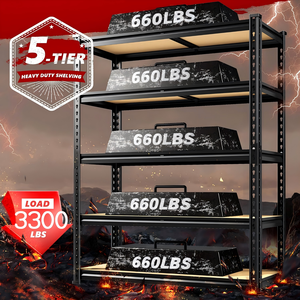
Adjustable Industrial Metal Steel Stacking Racks for Garage Boltless Storage Racks Metal Angle Storage Rack for Warehouse
Precision cold-bent slotted angle uprights with adjustable pitch levels for light-to-medium industrial goods, garage maintenance storage, and parcel processing stations.
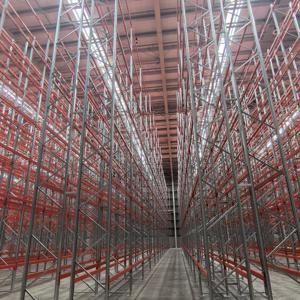
Jracking Industrial Vertical Warehouse Racks Heavy Duty Steel Pallet Racking System for Cold Storage
Heavy-duty vertical upright geometry engineered for sub-zero thermal contraction environments, resisting brittle failure across seafood, meat, and pharma cold logistics facilities.
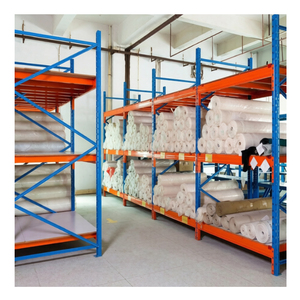
DJ Industrial Heavy Duty Steel Adjustable Warehouse Racking System for Fabric Roll Textile Material Storage
Reinforced cradle beams and axle support brackets configured to safely suspend cylindrical textile rolls, non-woven materials, and technical membranes without creasing damage.
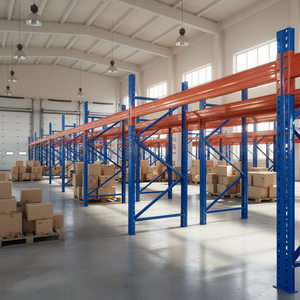
Warehouse Heavy Rack Pallet Rack Store Shelf Warehouse Racking System For Racking Rack Shelf Factory Shelf
The global benchmark for multi-SKU selective pallet management. Integrates adjustable connector clips with automatic safety lock pins to prevent accidental forklift dislodgement.
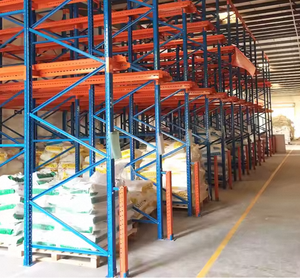
High Quality Adjustable Drive-Through Pallet Rack Industrial Warehouse Drive-In Racking System Folding Metal Storage Rack
High-density aisleless architecture allowing reach trucks to drive straight into bay lanes. Maximizes cubic floor utilization by up to 75% for batch-manufactured dry goods and cold storage.
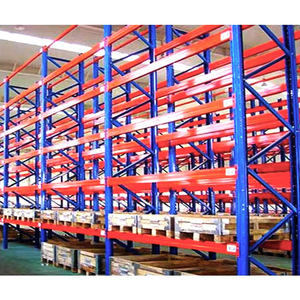
Easy Assembly Heavy Duty Pallet Racking Modular Warehouse Storage System International Standard Industrial Racks
Standardized modular bays engineered for rapid container unloading and swift on-site installation, reducing warehouse integration downtime for e-commerce and retail distribution hubs.
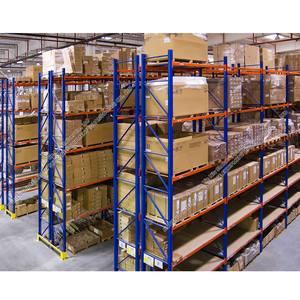
Industrial Pallet Storage 3000KG 2000KG 1500KG 1000KG Load Capacity Heavy Duty Racks Pallet Racking System Distribution Center
High-capacity structural steel frames engineered for machinery casting storage, heavy chemical drums, and automotive powertrain assemblies with guaranteed deflection ratios under full payload.
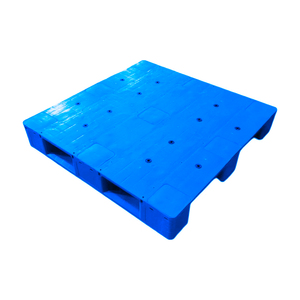
4 Way PP/HDPE Euro Pallet Factory's Solid 3-Glides 3-Type Legs Food-Safe Single Faced Industrial Pallet Rack Skid
Precision injection-molded, food-grade virgin HDPE skids designed with internal galvanized reinforcement bars for zero-sag racking placement in automated high-bay facilities.
A Quarter-Century of Structural Racking Manufacturing & Global Export
Headquartered in Guangzhou since 2001, Guangzhou Heda Shelves Co., Ltd. operates as a vertically integrated manufacturer and direct exporter of industrial warehouse racking, high-bay structural mezzanines, and automated warehouse components. With extensive engineering design capacity, our teams deliver certified solutions directly to EPC contractors, logistics integrators, and third-party logistics (3PL) providers worldwide.
30,000 m² Automated Facility
Equipped with 16 continuous automated roll-forming lines, automated punch presses, robotic dual-torch welding cells, and eco-friendly automated electrostatic powder coating lines.
CE & ISO 9001 Certified
Manufactured under documented quality standards: Factory Production Control CE Certificate No. 2435-CPR-8605159 and ISO 9001:2015 Certification No. 18624Q00169R0M with RoHS compliance.
30,000 Tons Monthly Output
Industrial-scale continuous processing guarantees stable steel coil supply, precision cold forming of up to 3.0mm thickness upright profiles, and expedited container vessel turnaround.
Export to 120+ Countries
Specialized logistics engineering optimized for sea shipping out of South China ports to Southeast Asia (ASEAN), the Middle East (GCC), Europe, Australia, and the Americas.
Standard pallet racking design requires multi-variable structural mechanics calculations. We analyze torsional flexural buckling of thin-walled, cold-formed open section columns under axial compression. Upright geometry uses finite element analysis (FEA) to confirm minimum section modulus limits. Connectors are verified through physical double-shear testing to establish actual moment-rotation characteristics (semi-rigid connection constant Ki). We guarantee beam deflection will never exceed L/200 under nominal static payload, with a minimum 1.5 safety factor against structural yield.
Technological Advancements in Modern Standard Pallet Racking
Industrial warehouse storage is evolving rapidly from passive steel frames into intelligent, resilient structural interfaces. Explore the metallurgical, seismic, and digital manufacturing trends transforming modern pallet rack performance.
High-Yield Micro-Alloyed Steel
The transition from commercial grade carbon steel to hot-rolled micro-alloyed Q355B (equivalent to S355JR and ASTM A572 Grade 50) allows for thinner upright walls while increasing load-bearing capacity by up to 28%.
- Continuous roll-forming lines maintain a ±0.5mm profile tolerance across 12-meter single-piece columns.
- Yield strength of ≥ 355 MPa guarantees higher resistance to dynamic forklift impact.
- Cold-formed omega profile section geometry with 11-13 fold stiffening ribs optimizes the gyration radius.
Non-Linear Seismic Damping
In earthquake-prone regions (such as Indonesia, the Philippines, Japan, and Western Latin America), pallet racks must act as ductile energy-dissipating frameworks under regional seismic acceleration spectra.
- Extended ductile base plates with anchored chemical anchors disperse horizontal ground shear forces.
- Heavy-duty horizontal and diagonal C-channel frame bracing with reinforced gusset brackets.
- Dynamic finite element modeling (FEM) simulates sway displacement under ASCE 7 / Eurocode 8 seismic demands.
Duplex Anti-Corrosion Finishing
Tropical monsoon humidity and sub-zero cold chain condensation trigger rapid oxidation in sub-standard steel. Modern racking employs advanced multi-stage chemical pretreatment and duplex finishes.
- Continuous zinc-manganese phosphating creates a nano-crystalline conversion layer preventing sub-film rust.
- Electrostatic polyester powder baking at 180°C–200°C yields a 60–90µm pinhole-free protective shell.
- Continuous batch hot-dip galvanizing per ISO 1461 provides permanent sacrificial cathodic protection for cold stores.
Standard Pallet Storage Systems: Comparative Performance Data
Selecting the optimal pallet racking system requires balancing storage density, SKU accessibility, forklift handling requirements, and capital expenditure per pallet location.
| Racking Architecture | Floor Space Utilization | SKU Selectivity | Operating Aisle Width | Stock Rotation Strategy | Relative CapEx / Pallet Position |
|---|---|---|---|---|---|
| Standard Selective Rack | 40% - 45% | 100% Direct | 3.0m - 3.5m (Counterbalance) | FIFO / LIFO Flexible | Low (Baseline 1.0x) |
| Double-Deep Pallet Rack | 55% - 60% | 50% Direct | 3.0m - 3.3m (Reach Truck) | LIFO (Batch Pallets) | Low-Medium (1.2x) |
| Narrow Aisle (VNA) Rack | 60% - 65% | 100% Direct | 1.6m - 1.9m (Turret / Stacker) | FIFO / LIFO Strict | Medium (1.4x) |
| Drive-In / Drive-Through | 70% - 75% | Low (Lane Access) | Forklift Drives into Lane | LIFO (Drive-In) / FIFO (Drive-Thru) | Medium (1.5x) |
| Radio Shuttle Automation | 80% - 85% | Medium-High | Single Front Access Aisle | Semi-Automated FIFO/LIFO | Medium-High (2.2x) |
| Gravity Pallet Flow Rack | 75% - 80% | High per Lane | Loading Face & Unloading Face | Strict FIFO Automatic | High (2.5x - 3.0x) |
Procurement Trends Shaping Industrial Racking (2025–2030)
Global supply chain disruptions, soaring logistics real estate costs, and aggressive ESG net-zero mandates are transforming how industrial warehouse equipment is designed, sourced, and commissioned.
Autonomous Mobile Robot (AMR) Interface Readiness
Racks are increasingly designed with integrated bottom pickup bays, laser-cut clearance guides, and floor-level alignment stops to accommodate self-guiding AMRs and automated reach trucks without column strike risks.
Total Cost of Ownership (TCO) vs. Initial CapEx
Procurement directors are prioritizing lifecycle durability over the lowest price per ton. Investing in heavier upright column gauges, wrapped column protectors, and structural base anchors prevents costly structural deformation downtime.
Multi-Tier Vertical Footprint Densification
High warehouse land costs in metropolitan hubs across Southeast Asia, Europe, and the Middle East are accelerating the shift toward rack-supported mezzanines and multi-tier picking structures, unlocking vertical building height without real estate expansion.
Decarbonized Steel & ESG Traceability
Multinational EPC projects require verified Environmental Product Declarations (EPD) and certified scrap-recycled content ratios, holding racking manufacturers accountable for embodied emissions throughout roll-forming and powder baking.
Rigorous 10-Step Production & Quality Control Protocol
Every structural upright, load beam, and horizontal frame diagonal leaving our Guangzhou manufacturing plant completes a 10-stage quality verification process ensuring exact metallurgical and dimensional tolerances.
Coil Spectrometry
Raw steel coil chemical composition and tensile testing verifying Q235B and Q355B structural compliance.
Precision Slitting
Automated high-speed slitting lines cut wide master coils to target strip widths with burr-free edges.
CNC Punching
Continuous CNC presses punch 50mm/75mm diamond or teardrop pitch holes with ±0.1mm tolerance.
Cold Roll-Forming
16 progressive roller stands cold-shape omega profiles without generating residual internal stress fractures.
Robotic Welding
Dual-torch robotic MIG welding cells connect beam connector claws to step/box beams with full penetration.
Surface Pickling
Chemical immersion degreasing, acid pickling, and water rinsing eliminate mill scale, oils, and surface oxidation.
Zinc Phosphating
Zinc-manganese phosphating creates a crystalline passivated layer ensuring maximum powder paint adhesion.
Powder Coating
Automated Swiss Gema electrostatic spray guns apply lead-free, RoHS-compliant thermoset epoxy powders.
Infrared Curing
200°C long-tunnel curing produces a scratch-resistant, impact-absorbing 60–90µm surface coating finish.
Container Packing
Modular steel banding, corrugated cushioning, and wood skids optimized for space-efficient 40HQ container shipping.
Frequently Asked Questions by Industrial Racking Importers & Contractors
Clear, technically rigorous answers covering structural load certification, deflection tolerances, earthquake standards, and international logistics execution.
Q: Which specific manufacturing and structural safety standards do your pallet racks satisfy?
Our pallet racking systems are engineered, calculated, and manufactured in full compliance with European standard EN 15512:2020 (Steel static storage systems – Adjustable pallet racking systems – Principles for structural design) and American ANSI/RMI MH16.1 (Specification for the Design, Testing and Utilization of Industrial Steel Storage Racks). In addition, we adhere to FEM 10.2.02 and AS 4084-2023 for Australasian markets, backed by CE Certificate No. 2435-CPR-8605159 and ISO 9001:2015 registration.
Q: What is the acceptable beam deflection limit under maximum working payload?
Under both EN 15512 and RMI specifications, the vertical deflection of any horizontal beam under uniformly distributed design load (UDL) must not exceed L/200, where L represents the clear distance between column faces (for automated ASRS or high-tolerance applications, we engineer to L/300). Our box and step beams include a safety factor of ≥ 1.5 against yield point failure under nominal load conditions.
Q: How do you engineer pallet racks for active seismic zones?
For installations in seismic areas across Indonesia, the Philippines, Japan, Taiwan, and the Pacific Rim, we analyze the site's spectral acceleration coefficients (Ss, S1) according to ASCE 7 / UBC Zone 4 guidelines. We increase upright gauge thickness, enlarge heavy-duty ductile footplates, utilize multiple M12–M16 high-tensile wedge anchors, and add heavy horizontal and diagonal portal bracings to ensure ductility and dissipate seismic energy.
Q: What documentation is required to generate a custom 2D CAD & 3D warehouse layout?
To produce a preliminary structural calculation, 2D AutoCAD layout, and 3D visualization within 24–48 hours, our engineering department requires: (1) Warehouse building CAD drawings showing clear height, column grid coordinates, and emergency exits; (2) Pallet specifications including overall width, depth, height, and maximum unit load gross weight; (3) Forklift or material handling equipment specifications including turning radius, mast type, and lift height; and (4) Operating temperature and humidity requirements.
Q: How does sub-zero cold storage impact structural steel pallet racks?
At temperatures between -20°C and -30°C, structural mild steels undergo a ductile-to-brittle transition, increasing the risk of sudden brittle fracture under forklift impact. We specify fine-grain Q355B/Q355D structural steel with verified Charpy V-notch impact toughness values at sub-zero temperatures. For surface protection, we apply specialized low-temperature impact-resistant epoxy coatings or complete batch hot-dip galvanizing per ISO 1461 to eliminate condensation corrosion.
Q: How are heavy structural racking components protected against shipping damage during sea transit?
All upright frames, beams, and shelf panels are packed according to sea container export protocols. Upright frames are stacked on timber runners and secured with heavy-duty polyester-steel strapping. Contact faces are protected with corrugated cardboard corner guards and stretch-wrapped in moisture-barrier PE film. Beams are bundled in color-coded matched pairs on dedicated wood bearers, optimizing forklift container offloading and preventing scratched powder paint.
Q: Can HEDA Shelves manufacture private label / OEM racking systems for regional distributors?
Yes. Approximately 40% of our production volume supports long-term OEM and ODM partnerships with regional warehouse equipment distributors, rack manufacturers, and systems integrators across Southeast Asia, Europe, and the Middle East. We provide custom upright slot profiles (teardrop, diamond, keyhole, hex), tailored beam connector claws, custom RAL powder coating formulations, and neutral or custom-branded packaging.
Q: What are the installation tolerances for upright plumbness and vertical alignment?
In accordance with EN 15635 and SEMA codes of practice, the maximum out-of-plumb deviation of any unloaded upright frame must not exceed H/500 (where H is the total rack height) or a maximum of 15mm in both cross-aisle and down-aisle directions. Precision laser leveling shims (1.0mm to 3.0mm thickness) are placed underneath column base plates during assembly to compensate for concrete floor slab slope variations.
Accelerate Your Storage Capacity with Certified Factory Engineering
Partner directly with an established South China pallet racking manufacturer. Submit your warehouse floor plan, ceiling clear height, and pallet load parameters to receive a complimentary 2D AutoCAD layout plan, 3D structural rendering, and comprehensive container-load cost estimate within 24 to 48 hours.