Featured Industrial Pallet Racking & Warehouse Systems
Discover our high-capacity selective racks, specialized roll-out sheet metal drawers, intelligent structural platforms, and high-density warehouse accessories engineered from high-tensile Q235B/Q355B cold-formed structural steel.
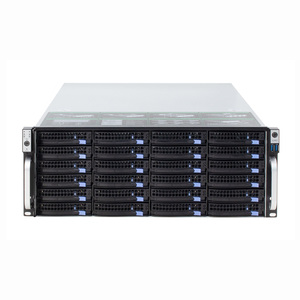
High-Performance 4U 24-Bay Rack Server Chassis
Customizable ITX/IPTV storage enclosure built with 1300W redundant power architecture and high-reliability Xeon multi-core processing integration for warehouse digital twins.
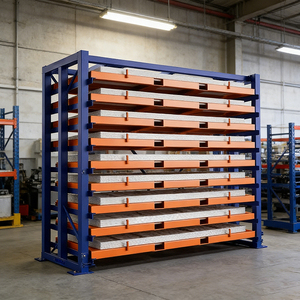
High-Capacity Vertical Sheet Metal Rack
Forklift-compatible roll-out tray engineering designed for ergonomic overhead crane access and high-density industrial sheet metal storage up to 3,000 kg per drawer level.
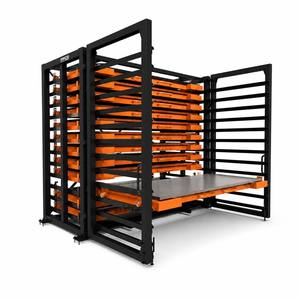
Heavy-Duty Roll-Out Sheet Metal Rack
Precision mechanical glide drawers enabling 100% full-extension accessibility for steel plates, dies, and molds, eliminating hazardous manual scratching and handling damage.
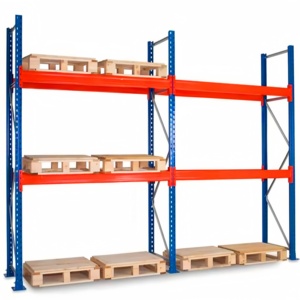
Heavy-Duty Selective & Double Deep Pallet Rack
Standard and double-reach heavy-duty bin racking configured for 500–1500kg uniform distributed load per beam level with 75mm/50mm pitch adjustability and interlocking safety locks.
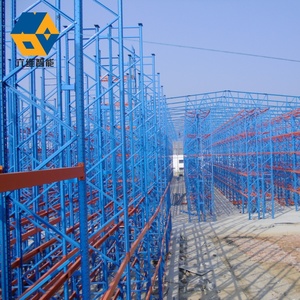
Clad-Rack Building Structure & System
Integrated rack-supported building architecture where the storage uprights form the structural envelope of the warehouse, cutting civil construction schedules and CAPEX by up to 35%.
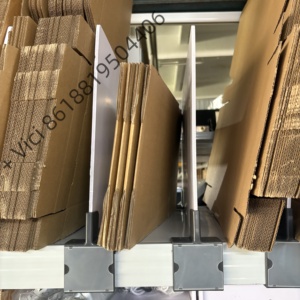
Durable PVC Snap-On Rack Partition Barriers
Heavy-impact modular PVC dividers and beam lane separation barriers preventing pallet push-through, SKU mixing, and accidental rear-bay merchandise displacement.
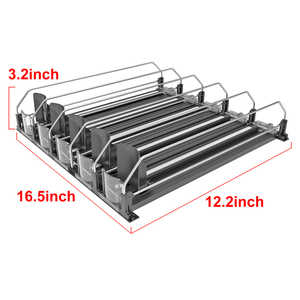
Automatic Spring-Loaded Slow Motion Pusher Rack
Continuous self-facing gravity and spring pusher modules engineered for beverage cans, FMCG, and high-turnover pharmaceutical picking, ensuring flawless first-in-first-out shelf discipline.
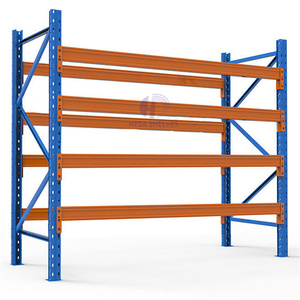
Heavy-Duty 5-Layer Boltless Steel Storage Rack
Modular industrial rivet shelving featuring reinforced dual-rivet cold-rolled steel tie beams, multi-level height adjustment, and up to 500 kg per shelf capacity without requiring nuts or bolts.
Industrial Manufacturing Rigor & Global Certification Authority
Guangzhou Heda Shelves Co., Ltd. integrates 25 years of specialized metallurgical and structural design excellence. All logistics hardware is produced within our vertical manufacturing ecosystem, offering uncompromised traceability from primary coil slitting to automated electrostatic curing.
Rigorous International Certifications
Engineered strictly under CE Certification (No. 2435-CPR-8605159) complying with EN 15512 European racking code, alongside ISO 9001:2015 Quality Management System Certification (No. 18624Q00169R0M) and RoHS eco-compliant thermoset powder formulations.
Finite Element Seismic Modeling
Every high-bay and selective racking system undergoes ANSYS structural finite element analysis (FEA). We compute dynamic base shear, seismic ground motion coefficients (for zones like Japan, the Philippines, and Indonesia), and wind loads for rack-clad facilities.
Free 3D CAD & Engineering Turnaround
Our team of 30+ senior structural engineers delivers compliant 2D CAD floor plans, 3D BIM-ready warehouse visualization renderings, and rigorous beam deflection load calculations (L/200 standard) within 24–48 hours of initial project scoping.
Standardized 10-Step Manufacturing & Quality Control Protocol
Total vertical integration guarantees dimensional consistency down to ±0.5mm across all roll-formed profiles.
Prime Steel Testing
Spectrometric verification of Q235B/Q355B tensile yield strength.
CNC Slitting & Cutting
Burr-free high-precision strip edge processing with CNC shears.
Upright Punching
Continuous progressive punching maintaining exact 75mm/50mm pitch.
Multi-Pass Cold Roll
18–24 stage precision cold rolling for high torsional upright stiffness.
Beam Interlock Profile
Box beam & step beam seam locking with robotic accuracy.
Automatic Welding
Multi-axis robotic GMAW welding of beam connectors and endplates.
Surface Pickling
Multi-tank chemical acid bath removing all mill scale and surface oxides.
Zinc Phosphating
Conversion coating creating a dense microscopic anti-corrosion barrier.
Electrostatic Powder
Automated powder spray cured at 200°C for 70–90µm paint thickness.
QC & Seaworthy Pack
Laser measurement, load proof tests, and export steel banding.
Future Procurement Paradigms & Technology Trends in Warehouse Racking (2026–2032)
A deep-dive technical briefing for supply chain directors, industrial real estate developers, and warehouse automation project heads.
The global warehousing and intralogistics landscape is experiencing a fundamental structural transformation driven by skyrocketing industrial real estate land premiums, acute warehouse labor shortages, and the explosive growth of automated micro-fulfillment hubs. In tier-1 global trade epicenters—ranging from Singapore, Hong Kong, and Tokyo to Dubai, Rotterdam, and Los Angeles—conventional static floor storage has transitioned from an operational inefficiency into a critical financial liability. Warehouse operators can no longer afford unutilized vertical cubic space. Consequently, the industrial racking sector is pivoting toward intelligent structural integrations that treat the racking matrix not merely as passive steel shelving, but as the active structural backbone of automated material handling ecosystems.
1. Convergence with Autonomous Mobile Robots (AMRs) and AS/RS Infrastructure
Historically, selective pallet racks and cantilever racks were designed with generous clearance tolerances calculated solely for human forklift drivers navigating wide 3.2m to 3.8m aisles. However, the modern procurement frontier is defined by Very Narrow Aisle (VNA) systems operating within 1.6m profiles and multi-tier high-bay AS/RS systems scaling up to 40 meters in vertical clearance. Such demanding installations impose stringent engineering demands on racking uprights and guide rail parallelism. Suppliers must engineer column sections capable of resisting not only static gravity loads but also dynamic torsional forces caused by high-acceleration automated stacker cranes and four-way radio shuttles. Future-ready procurement contracts now explicitly require finite element vibrational harmonic verification and floor flatness specification alignment (DIN 18202 Table 3 Group 4 and ASTM E1155 F-min 75/100 criteria).
2. The Ascendancy of Rack-Clad Building Systems (Building-Integrated Racking)
Traditional warehouse construction involves a two-stage sequential workflow: erecting a structural steel portal building envelope followed by concrete pouring and secondary interior racking assembly. Modern procurement models, particularly across the European Union, GCC, and fast-growing Southeast Asian industrial clusters, increasingly favor Rack-Clad Warehouses (Clad-Rack Systems). In this unified architectural paradigm, the heavy-duty pallet racking uprights simultaneously serve as the supporting structural columns for the warehouse external insulated wall cladding, roof trusses, overhead rainwater management, and solar photovoltaic arrays. By eliminating standard civil structural framing, industrial developers achieve a 30% to 35% reduction in overall construction timelines and compress capital expenditures (CAPEX) by millions of dollars while accelerating commercial commissioning.
3. Structural Decarbonization, Low-Carbon Steel & Green Surface Chemistries
Environmental, Social, and Governance (ESG) compliance is transitioning from an optional corporate marketing checkbox into an enforced procurement mandate for multinational enterprises. Pallet racking represents significant embodied carbon due to massive steel tonnage. Leading industrial suppliers like HEDA Shelves are pioneering the transition toward Electric Arc Furnace (EAF) scrap-recycled steel feedstock, reducing Scope 3 supply chain emissions by over 50% compared to traditional blast furnace basic oxygen production. Concurrently, traditional solvent-based painting lines that emit hazardous Volatile Organic Compounds (VOCs) are rendered obsolete. Modern compliance centers on heavy metal-free zinc-calcium phosphating pre-treatments, closed-loop water deionization recovery systems, and electrostatic TGIC-free thermoset powder coatings that yield exceptional salt spray corrosion resistance (exceeding 500 hours ASTM B117) with zero toxic atmospheric emissions.
4. Cold Chain Thermal Densification in Tropical and High-Humidity Climates
Global demand for high-value cold chain logistics—spanning perishable FMCG foods, aquaculture exports, and temperature-sensitive biological vaccines—is expanding rapidly across tropical and equatorial regions. The refrigeration of massive cubic footprints incurs enormous thermal electricity costs. This reality has catalyzed an aggressive shift away from single-selective racking toward high-density Radio Shuttle systems and Drive-In racking. By consolidating multiple pallet depths into a unified high-density cube, air-conditioned and sub-zero (-25°C to -30°C) volume utilization jumps from 40% to upwards of 85%. Furthermore, industrial suppliers must resolve unique metallurgical vulnerabilities: standard structural carbon steel suffers low-temperature brittle transition below 0°C. Technical tenders specify low-temperature impact-tested steels (e.g., Q355D/E or European S355NL grades) with specialized duplex zinc-rich coatings or hot-dip galvanizing to withstand constant condensation and aggressive chemical washdowns.
Essential Technical Answers for Industrial Racking Buyers
Addressing mission-critical engineering, regulatory safety, seismic calculation, and container shipping inquiries encountered during international warehouse tender planning.
What are the key technical parameters required to produce an accurate 2D/3D warehouse layout?
- Architectural Floor Plan (CAD/DWG): Highlighting column grid spacing, building clear height (distance from finished floor to lowest roof obstruction/sprinkler pipes), warehouse doors, dock positions, and egress pathways.
- Unit Load Dimensions: Overall pallet width (W), depth (D), total height including cargo (H), and maximum gross weight per pallet. Specification of pallet entry side (e.g., Euro 800x1200mm, ISO 1000x1200mm, or American 48x40 inch).
- Material Handling Equipment (MHE): Specific forklift make/model, mast collapsed height, maximum lift elevation, aisle turning radius requirement, and mast reach mechanism.
- Throughput Dynamics: Total SKU count, inventory velocity (FIFO vs. LIFO requirements), and working temperature (ambient dry, chilled, or -25°C sub-zero cold room).
How does HEDA Shelves ensure structural safety and seismic resilience in earthquake-prone regions?
What are the maximum allowable deflection limits for heavy-duty pallet rack beams under load?
Maximum Deflection = L / 200 (where L represents the unsupported clear beam length between uprights).
For a standard 2700mm beam carrying two 1,000kg pallets, maximum allowable central deflection is 13.5mm. Once unloaded, the beam must return to zero without plastic permanent deformation. To prevent accidental displacement caused by forklift mast contact, every beam connector is anchored with a safety locking pin withstanding a minimum vertical shear force of 5.0 kN.
How are components protected against tropical humidity, salt-spray, and cold room condensation?
- Acid Pickling: Complete removal of hot-roll mill scale and microscopic iron oxides.
- Zinc Phosphating Pre-treatment: Chemically bonds an insoluble inorganic crystalline layer that blocks moisture migration under the paint film.
- Electrostatic Powder Curing: Automated Swiss Gema guns apply high-adhesion pure polyester thermosetting powder baked at 180°C–200°C, reaching a dry film thickness (DFT) of 70–90 μm.
What international export packaging and container optimization standards do you implement?
Ready to Optimize Your Warehouse Cubic Storage Capacity?
Submit your warehouse floor layout, beam span requirements, or pallet load specifications today. Our senior structural logistics engineering team will deliver a comprehensive 3D layout simulation, structural load calculation report, and factory-direct quotation within 24 hours.