Top Trusted Pallet Flow Racking Systems Manufacturers & Suppliers
Comprehensive engineering analysis, FIFO high-density gravity roller dynamics, international load compliance standards (RMI & EN 15512), and strategic global procurement evaluation for modern high-throughput logistics hubs.
Engineered Warehousing Systems
Featured Heavy-Duty Racking & High-Density Storage Solutions
Browse our factory-direct structural configurations designed to handle extreme dynamic load tolerances, cold-chain environments, and rapid pallet turnover across global distribution networks.
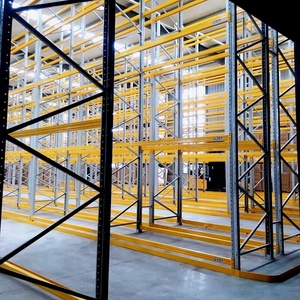
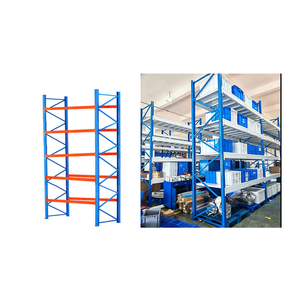
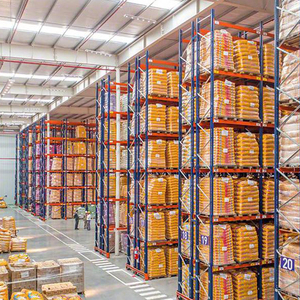
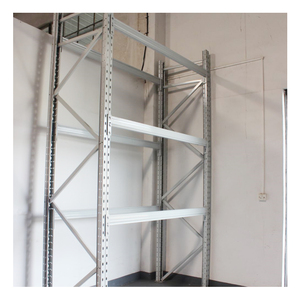
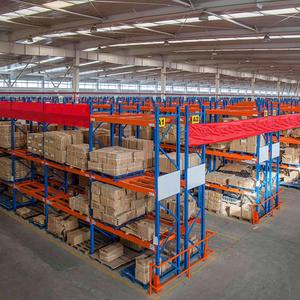
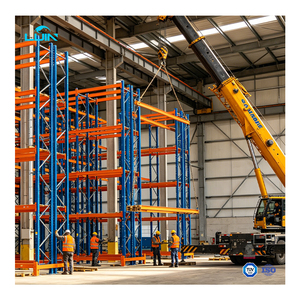
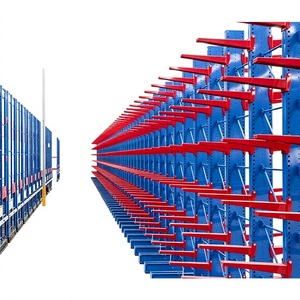
Pallet Racking Warehouse Storage Heavy Duty Industrial Pallet Shelf Narrow Aisle Selective Warehouse Racking System
In modern industrial logistics, square footage and cubic volume efficiency represent two critical operational cost determinants. Pallet flow racking—also classified under gravity flow racking or dynamic roll-through systems—stands as the definitive mechanical solution for operations demanding strict First-In, First-Out (FIFO) stock rotation coupled with maximum spatial density. Unlike standard selective racking where access aisles can consume between 55% to 65% of the total building footprint, pallet flow racking consolidates storage into compact multi-lane blocks, shrinking internal aisle requirements down to an input loading aisle and an output retrieval aisle.
The core operating mechanics rely on a finely engineered slope, typically pitched between 2.5% to 4.0% (approximately 1.5° to 2.3°) depending on the pallet construction (wood, heavy composite, or HDPE plastic), runner configuration, and unit load weight ranging from 500 kg up to 2,500 kg per position. Pallets introduced on the charging face automatically glide downward under controlled gravitational force along heavy-duty cylindrical steel rollers or multi-track polycarbonate skate wheels.
"Mechanical speed deceleration systems and centrifugal brakes are non-negotiable safety components. In lanes exceeding four pallets deep, unbraked gravitational acceleration can yield terminal speeds in excess of 1.2 m/s, presenting severe impact hazards to both structural end stops and downstream forklift operators."
Precision-engineered flow systems mitigate kinetic build-up through internal centrifugal brake drums mounted directly within the roller tracks at calculated intervals (typically every pallet pitch). As the pallet rolls over the brake roller, internal flyweights expand against a friction surface, governing velocity to a constant, controlled transit speed of 0.15 m/s to 0.25 m/s. At the discharge face, dedicated entry pallet separators (mechanical spring-loaded or pneumatic pedal latches) isolate the forward-most pallet from the line pressure exerted by trailing inventory. This ensures that when an operator lifts the lead pallet, zero back-pressure is transmitted, completely eradicating rack hang-ups, tip-over risks, and beam twisting.
65%
Footprint Density Gain
100%
Guaranteed FIFO Compliance
35%
Forklift Travel Reduction
<0.25m/s
Governed Roller Descent
2. Technological Advancements & Systemic Evolution in Flow Racking
The manufacturing landscape for pallet flow storage has shifted dramatically from static structural assemblies to integrated electro-mechanical and digital inventory systems. Modern supply chain operations within cold storage, pharmaceuticals, FMCG distribution, and automotive assembly require unprecedented durability and automated tracking interfaces.
Self-Energized Speed Regulation
Next-generation eddy current and magnetic hysteresis brake rollers eliminate mechanical wear parts entirely. By using opposing magnetic fields to slow pallets proportionately to their weight and speed, maintenance-free operations are achieved across severe temperature swings down to -30°C.
IoT-Enabled Flow Lane Telemetry
Embedded optical sensors and optical time-of-flight (ToF) lane monitors integrate directly into Warehouse Management Systems (WMS). Real-time telemetry detects hang-ups, monitors lane occupancy counts, and dynamically triggers automated replenishment cycles before pick faces run empty.
Hybrid AMRs & AGV Pick Interfaces
Discharge stops have transitioned to precision-machined laser targets and pneumatic docking guides that accommodate autonomous mobile robots (AMRs) and reach-AGVs. This automation enables continuous 24/7 unassisted material extraction without human forklift operators.
Comprehensive System Comparison Matrix
To assist logistics directors in evaluating capital investments, the following engineering matrix contrasts Pallet Flow Racking against alternative high-density warehouse systems:
Storage System Type
Stock Rotation Strategy
Floor Space Utilization
SKU Selectivity Rate
Cold Chain Suitability
Throughput Capability
Pallet Flow (Gravity)
Strict FIFO (100%)
Exceptional (Up to 80%)
1 SKU per Lane
Outstanding (Saves Chilled Vol.)
Very High (Simultaneous Load/Pick)
Drive-In / Drive-Through
Strict LIFO / Limited FIFO
High (Up to 70%)
Low (Block Density)
High (Risk of Truck Collisions)
Low to Moderate (Aisle Bottlenecks)
Push Back Racking
Strict LIFO (Last-In, First-Out)
Moderate to High (65%)
1 SKU per Lane (2–6 Deep)
Moderate (Cart Jam Potential)
Moderate (Single Aisle Traffic)
Radio Shuttle System
Flexible FIFO or LIFO
Maximum (Up to 85%)
1 SKU per Channel
High (Battery Maintenance Needed)
High (Automated Shuttle Transfer)
Standard Selective
Arbitrary / Direct Access
Low (35% - 45%)
100% Individual Pallet
Poor (High Energy Waste)
Moderate (Multiple Aisle Access)
3. Strategic Procurement Trends: 2026–2030 Sourcing Outlook
Enterprise procurement professionals and engineering consultancies are overhauling how intralogistics infrastructure is specified and contracted. Sourcing is no longer a localized, commodity-priced steel transaction; it has become an integrated lifecycle evaluation encompassing supply chain resilience, carbon accounting, and total cost of ownership (TCO).
Scope 3 & Low-Carbon Steel
Global corporate procurement mandates now require verifiable Environmental Product Declarations (EPD). Tier-1 manufacturers utilize Electric Arc Furnace (EAF) steel with recycled scrap content exceeding 60%, drastically minimizing embodied carbon footprint.
Modularity & Hybridization
Warehouse owners prioritize systems capable of rapid lane reconfiguration. Standardized upright punching (such as 50mm or 75mm pitches) allows quick conversions between gravity roller beds, carton flow shelves, and push-back nested carts as SKU profiles shift.
Advanced Seismic Verification
Procurement in geologically active regions (such as the Pacific Rim, Mediterranean, and Middle East) demands site-specific structural Finite Element Analysis (FEA) conforming strictly to Eurocode EN 15512:2020 and RMI ANSI MH16.1 specifications.
Turnkey BIM/CAD Engineering
Leading suppliers provide end-to-end 3D Building Information Modeling (BIM) files prior to purchase orders. Integrating full-depth dynamic racking models into warehouse digital twins accelerates sprinkler layout, slab deflection checks, and permit approvals.
Guangzhou HEDA Shelves: 25 Years of Precision Storage Engineering
Established in 2001, Guangzhou Heda Shelves Co., Ltd. has developed into a premier industrial rack manufacturing powerhouse. Operating from our advanced 30,000 m² facility in Guangzhou, South China, we maintain end-to-end metallurgical and manufacturing control—from high-tensile cold-rolled steel coil slitting, precision CNC punching, and automated roll-forming to 10-stage chemical pickling, phosphating, and automated electrostatic powder coating.
Having successfully engineered and delivered over 10,000 warehouse projects across Southeast Asia, South Asia, the Middle East, Europe, and the Americas, HEDA provides global procurement teams with direct factory pricing, absolute structural transparency, and complete engineering peace of mind.
30,000 Tons Monthly Output
Equipped with continuous automated roll-forming lines, automated robotic welding units, and dual electrostatic coating booths to guarantee rapid order fulfillment even on mega-projects.
CE & ISO 9001 Certified
Strict third-party audited compliance holding CE Certification No. 2435-CPR-8605159, ISO 9001:2015 Certification No. 18624Q00169R0M, and comprehensive RoHS environmental coating verifications.
Seismic & Climate Hardened
Custom structural calculations for regional seismic compliance across Indonesia, the Philippines, and Japan, complemented by hot-dip galvanizing for harsh tropical humidity and marine exposure.
Free 2D/3D BIM Layout Service
Our senior structural logistics engineers evaluate pallet characteristics, forklift aisle profiles, and building slab tolerances, providing custom CAD plans and 3D renderings within 24 to 48 hours.
When selecting and commissioning a heavy-duty pallet flow racking installation, procurement and facility managers must evaluate complex mechanical variables. Below are authoritative answers formulated by our senior project engineering team.
What is the optimum slope pitch for pallet flow racking, and how is it determined?
The standard engineering gradient typically ranges from 3.0% to 3.5% (approx. 1:30 or 1.7° to 2.0°). However, the precise angle must be calculated based on pallet material, underside runner profile, and gross weight. Standard hardwood Euro or GMA pallets roll effectively at 3.0%, while flexible plastic pallets with solid runners or uneven bottom decking may require 3.5% to 4.0% to overcome static friction. At HEDA Shelves, we mandate physical flow testing of client pallet samples on custom test incline beds before rolling production to guarantee zero stall rates.
How are pallet runaway risks prevented in deep flow lanes?
Safety is maintained via two key mechanical assemblies: Centrifugal Speed Controller Rollers and Mechanical Pallet Separators. Speed controllers are integrated every one to two pallet positions along the lane. They utilize internal internal brake pads that react to rotational velocity—the faster the pallet moves, the greater the counter-resistance exerted, capping pallet speed under 0.25 m/s. At the discharge face, a heavy-duty mechanical separator holds back the queue of pallets behind the first pallet, eliminating hydrostatic line load pressure when the forklift operator extracts the lead unit.
Can pallet flow racking function reliably inside sub-zero cold chain facilities?
Yes, pallet flow racking is exceptionally advantageous in blast freezers and cold storage (-25°C to -30°C) because eliminating service aisles minimizes chilled cubic volume, saving up to 40% in refrigeration energy costs. For cold environments, HEDA specifies low-temperature synthetic lubricants inside sealed roller bearings, zinc-electroplated or hot-dip galvanized steel chassis to resist freeze-thaw condensation corrosion, and polyurethane/synthetic roller compounds that remain ductile without micro-cracking at extreme freezing temperatures.
What critical data is required to request a custom warehouse layout design?
To produce an accurate CAD design, load check, and quotation, our structural engineers require: (1) Warehouse architectural drawings showing columns, clear eaves height, building obstructions, and floor slab load capacity; (2) Detailed pallet specifications including dimensions (W x D x H), runner orientation, pallet condition, and min/max gross load weights; (3) Operational throughput figures (pallets per hour in/out); and (4) Forklift specifications including mast height, turning radius, and lift capacity.
How does HEDA ensure compliance with international racking safety standards?
All HEDA warehouse racking configurations are engineered in full compliance with European EN 15512:2020 standards, FEM 10.2.02 codes, and American RMI (Rack Manufacturers Institute) MH16.1 guidelines. Steel raw materials (Q235B and Q355B structural steel) undergo certified tensile and yield strength batch testing. Upright columns feature high-moment cold-formed profiles with multi-point hook locking beam connectors and safety lock pins to prevent accidental dislodgement from upward forklift impacts.
What is the maintenance lifecycle and inspection regimen for dynamic flow beds?
Unlike static racking which requires only structural visual checks, dynamic flow systems require periodic mechanical auditing. We recommend: (1) Monthly visual inspection of roller tracks to clear debris, broken pallet splinters, or stretch wrap tangles; (2) Quarterly verification of centrifugal brake responsiveness and separator spring tensions; and (3) Semi-annual structural checks of upright anchor torque and beam deflection limits (which must never exceed L/200 under full design load). Under standard operating conditions, HEDA heavy-duty flow beds deliver a design lifespan exceeding 15 to 20 years.
Ready to Maximize Warehouse Storage Density & Throughput?
Connect directly with Guangzhou HEDA Shelves' senior racking engineering division. Get a complimentary 2D CAD architectural plan, 3D structural rendering, and comprehensive container-optimized price quote within 24 hours.