[email protected] Serving Southeast Asia, South Asia & the Middle East
EN

Top Trusted Industrial Racking Solutions Factory & Suppliers

Precision-Engineered Heavy Duty Warehouse Storage Systems, Multi-Tier Mezzanines, and Seismic-Certified Structures Direct from China's Foremost Manufacturing Facility.

25+
Years Engineering Expertise
30,000m²
Smart Manufacturing Base
10,000+
Global Turnkey Projects
120+
Export Destined Nations

Featured Industrial Racking & Storage Equipment

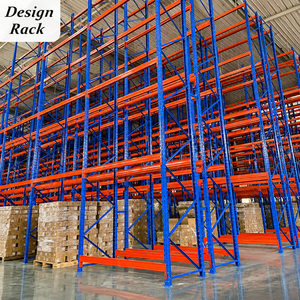
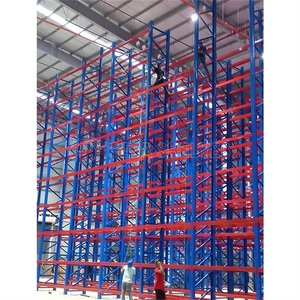
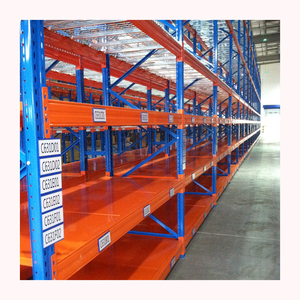
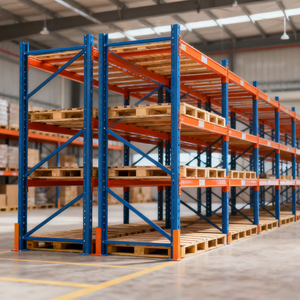
Standard and engineered-to-order warehouse racking modules built from certified Q235B/Q355B structural steel, processed via CNC cold roll-forming and electrostatic polymer shielding.

Direct Factory Capabilities & Engineering Rigor

Guangzhou Heda Shelves Co., Ltd. (founded 2001) bridges mechanical precision engineering with high-capacity roll-forming lines, providing supply chain security and certified structural performance.

⚙

Continuous Roll-Forming Lines

Our 30,000 m² factory operates fully automated roll-forming profile machinery capable of 30,000 tons of monthly throughput. Profiles are punched on continuous lines to guarantee hole-pitch accuracy down to ±0.1mm, ensuring flawless locking pins and shelf-safety beam retention.

🛡

Multi-Stage Surface Pre-Treatment

Unlike small fabricators using manual spray painting, every steel element undergoes 8-stage automatic chemical degreasing, ultrasonic pickling, and zirconium phosphating before electrostatic curing. This achieves over 500 hours of continuous salt-spray rust endurance.

📐

Free 2D/3D FEM Layout Design

Within 24 to 48 hours, our structural engineering team generates complete 2D AutoCAD configurations and realistic 3D renderings complete with Finite Element Method (FEM) load stress analysis, providing regional building authorities with certified compliance records.
Strategic Procurement Trends in Global Intralogistics (2025–2030)

Global supply chains are transitioning rapidly from basic static pallet storage to integrated, high-throughput spatial architectures. As warehousing real estate premiums rise across the Middle East, Southeast Asia, Europe, and the Americas, procurement officers and supply chain directors must evaluate structural steel infrastructure across four major procurement paradigms:

1. Seismic Load Verification & Local Code Enforcement

Building authorities in earthquake-prone belts (including Indonesia, Philippines, Japan, Turkey, and California) now demand structural calculation reports referencing Eurocode 3 (EN 1993-1-3), RMI MH16.1, or AS4084 standards. Specifying oversized baseplates, seismic heavy back-bracing, and certified M16/M20 chemical concrete anchors is no longer optional—it is a non-negotiable procurement baseline.

2. High-Density Automation Readiness (Shuttle & AS/RS)

Labor shortages and land acquisition spikes are driving procurement away from conventional wide-aisle selective racking toward Radio Shuttle systems, Very Narrow Aisle (VNA), and automated rack-supported warehouse buildings. Modern steel profiles must be roll-formed with tighter tolerances to accommodate high-speed autonomous shuttles without structural snagging.

3. Harsh Climate Coatings & Cold-Chain Resiliency

The cold-chain surge for biological pharmaceuticals and fresh food distribution requires steel racking that thrives at temperatures down to -30°C. Specifiers are moving toward hot-dip galvanization (EN ISO 1461) or specialized epoxy powder finishes formulated to prevent cryogenic brittleness, cracking, and condensation-driven electrolytic rust.

4. Total Cost of Ownership (TCO) Over Upfront Capital

Enterprise buyers increasingly audit suppliers on lifetime maintenance metrics rather than simply initial FOB price per ton. High-tensile Q355B hot-rolled strip steel, impact-deflecting column protectors, heavy-gauge row connectors, and precision lock-pins reduce operational damage, mitigating catastrophic upright collapse and warehouse downtime.

Standardized 10-Step Manufacturing Pipeline

From metallurgical chemical batch testing to export-ready containerized dunnage, every component undergoes strict dimensional and non-destructive weld inspections.

STEP 01

Raw Steel Inflow

Certified Q235B/Q355B coils with verifiable mill test certificates (MTC).

STEP 02

Precision Slitting

High-speed rotary longitudinal shearing to exact strip tolerances.

STEP 03

Continuous Punching

Automated hydraulic punching presses establishing precise 50mm/75mm hole pitches.

STEP 04

Cold Roll-Forming

Multi-station roller dies shaping multi-faceted structural upright profiles.

STEP 05

Automatic Sizing

Flying circular cutting heads producing burr-free end cuts to exact CAD lengths.

STEP 06

Robotic MIG Welding

Robotic welding of beam connector brackets to beam tubes with continuous deep penetration.

STEP 07

Shot Blasting & Pickling

Complete removal of mill scale, surface oils, and rust through chemical phosphating baths.

STEP 08

Powder Polymer Coating

Nordson electrostatic powder application followed by 200°C polymer curing.

STEP 09

Deflection Testing (QA)

Batch hydraulic load testing to verify L/200 deflection thresholds.

STEP 10

Export Bundling & Dunnage

Airbag-isolated steel strapping bundled for dense container stowage.

Frequently Asked Questions (Procurement & Engineering)

Everything warehouse directors, EPC contractors, and global logistics buyers ask before issuing tender requests.

What engineering data is required to generate an accurate warehouse racking proposal?
To provide an engineered proposal and structural load calculation, our technical department requires:
  • Building Layout: Architectural CAD drawing or dimensioned sketch indicating building clear height under truss, column grid spacing, floor slab thickness, and overhead obstructions (HVAC, sprinkler mains, lighting).
  • Unit Load Specs: Pallet dimension (Width × Depth × Height including cargo overhang) and maximum gross weight per pallet.
  • Material Handling Equipment: Make and model of forklift or Reach Truck, minimum aisle turning radius (ASt), and maximum mast lift reach.
  • Environmental Conditions: Concrete slab compressive strength (Fck rating), warehouse operating temperature (ambient or cold storage), and regional seismic acceleration coefficients.
How do your racking systems achieve compliance with international safety standards?
All HEDA Shelves systems conform to CE Certification No. 2435-CPR-8605159 and ISO 9001:2015 quality frameworks. In structural detailing, we adhere to EN 15512 (European code for steel static storage systems), RMI MH16.1 specifications, and FEM 10.2.02 design rules. Finite element stress distribution and safety factors (typically 1.5 to 1.95 depending on dynamic live loads) ensure structural margins against catastrophic collapse under operational forklift collisions.
Can HEDA Shelves engineer racking systems for high-risk seismic zones?
Yes. We routinely supply project sites in seismic-active countries including Indonesia, the Philippines, Chile, New Zealand, and Japan. Our seismic designs incorporate widened heavy-gauge baseplates with dual concrete anchoring, heavy horizontal and diagonal brace trusses, thicker upright column gauges (up to 2.5mm or 3.0mm Q355B high-tensile steel), and specialized top-tie structural bracing across bays to counteract harmonic sway forces.
What surface treatment is best suited for high-humidity or cold-chain warehousing?
For standard ambient environments, our multi-stage electrostatic powder coating provides superior impact and corrosion defense. For tropical maritime regions with sustained relative humidity (>85%) or cold-storage environments ranging from 0°C down to -30°C where condensation and humidity cycling occur, we recommend hot-dip galvanization (HDG). HDG creates a metallurgically bonded zinc-iron alloy coating (conforming to ISO 1461) that self-heals minor surface gouges caused by rough pallet movement.
What is your production lead time and container packing efficiency?
Standard project sizes (5 to 20 containers) are manufactured within 15 to 25 business days following CAD drawing and structural sign-off. As experienced exporters located near South China deepwater ports (Guangzhou, Shenzhen, Nansha), our engineering team pre-models every container stowage via 3D software to optimize cubic volume. Uprights and beams are systematically bundled with heavy-duty steel bands, edge corner guards, and cushion dampening to prevent transit scratching and minimize ocean freight costs per pallet position.

Design Your Custom Racking Facility With Factory Direct Pricing

Send your project blueprints, pallet parameters, or tender specifications today. Our engineering department will furnish a full 2D AutoCAD layout, 3D visualization, and structural load analysis within 24–48 hours.