Factory-Direct Heavy Duty Industrial Shelving & Racks Showcase
Precision cold-roll formed using premium Q235B and Q355B structural steel. Each system is custom engineered to match your load profiles, clearance dimensions, forklift turning radiuses, and regional building standards.
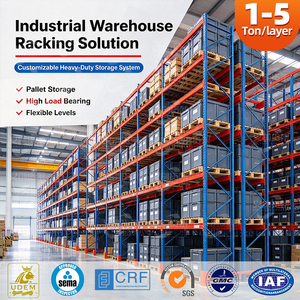 1000-4500kg Load
Heavy Duty Warehouse Storage Rack Selective Pallet Rack 1000-4500kg Load Capacity Q235B Steel Industrial Racking System
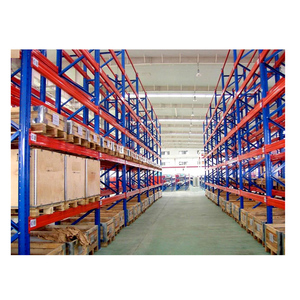 Direct Factory
HEDA Guangzhou Steel Pallet Racking System Warehouse Rack Storage Shelves Heavy Duty
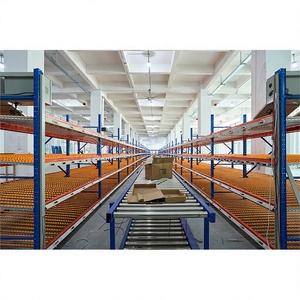 FIFO Gravity
Automated Carton Flow Gravity Racking FIFO Steel Roller Warehouse Storage System Heavy Duty Pallet Live Rack
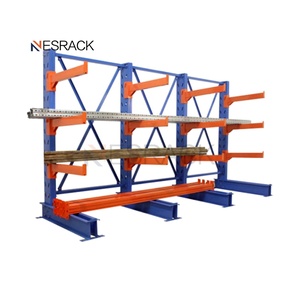 Heavy Cantilever
Adjustable Customized Heavy Duty Rack Warehouse Storage 4 Layers Cantilever Rack Steel Single Long Arm Support For Industrial
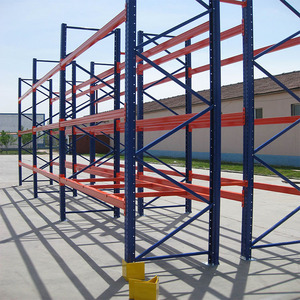 Anti-Corrosion
Warehouse Heavy Duty 5 Layer Stainless Steel Boltless Pallet Rack Shelving System with Corrosion Protection
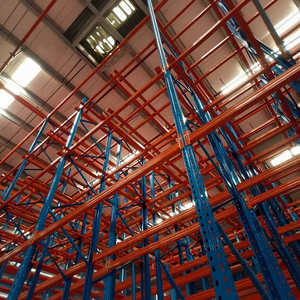 Single Deep
Heavy Duty Single Deep Industrial Selective Pallet Rack Steel Corrosion Protected Powder Coated Garage Storage Warehouse Racks
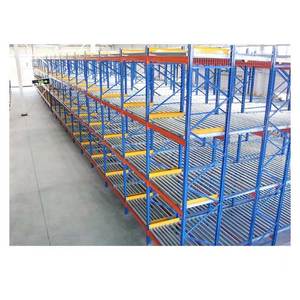 CE Certified
 Anti-Rust 2000kg Load Capacity Gravity Pallet Racking High Quality Heavy Duty Roller Pallet Rack
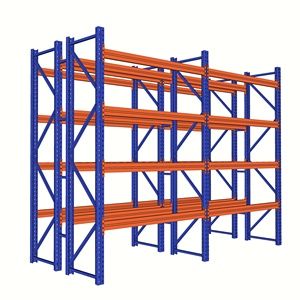 Modular Bolted
Industrial Heavy Duty Bolted Metal Shelving System Selective Pallet Rack for Garage & Warehouse Storage Rack for Wholesale
Why Global Procurement Managers Partner with HEDA Shelves
Founded in 2001 in Guangzhou, China, Guangzhou Heda Shelves Co., Ltd. has developed over two decades into an international manufacturing powerhouse. With 30,000 m² of modern industrial production facilities and over 30,000 tons of monthly capacity, we deliver end-to-end structural precision from coil slitting to overseas on-site assembly supervision.
Verified Certifications
Full CE Certification (No. 2435-CPR-8605159), ISO 9001:2015 Quality System (Certificate No. 18624Q00169R0M), and RoHS compliant non-toxic electrostatic powders guarantee international customs compliance and building permit acceptance.
Structural Steel Mastery
We source certified prime Q235B and Q355B coil stock from Baosteel and Shougang. High-precision 24-station automated roll-forming lines guarantee upright profile tolerances within ±0.5mm, eliminating structural eccentricity.
Anti-Corrosion Surface Finish
Our complete multi-stage automated pre-treatment includes ultrasonic degreasing, acid pickling, phosphating, and 180°C thermocured polyester electrostatic powder coating, exceeding 500-hour neutral salt spray tests (ASTM B117).
Worldwide Engineering Export
With 10,000+ completed warehouse installations spanning 120+ countries across ASEAN, the Middle East, Europe, and the Americas, our multi-lingual structural engineers generate CAD blueprints, 3D BIM models, and FEA calculations within 24 hours.
Emerging Procurement Trends in Heavy-Duty Industrial Shelving
Industrial logistics procurement is transitioning from lowest initial capital cost (CapEx) to lowest Total Cost of Ownership (TCO), operational resilience, and automated interface capabilities. Key transformations dominate strategic enterprise procurement.
1. Automation-Ready Hybrid Infrastructure
Static storage racks are increasingly being phased out in favor of hybrid structural platforms that seamlessly integrate Autonomous Mobile Robots (AMRs), Automated Guided Vehicles (AGVs), and 4-way radio shuttles.
- Precision-milled floor guide rails with sub-millimeter tolerances
- Integration of optoelectronic pallet sensors & dynamic end-stops
- Pre-engineered wiring conduits for warehouse execution system (WES) sensors
- Dual-purpose beam configurations for human pickers and robotic arms
Procurement teams now mandate that any heavy-duty racking investment must support future semi-automated retrofitting without tearing down upright frameworks.
2. Life Cycle Carbon Audits & ESG Steel
Global supply chains require documented Scope 1, 2, and 3 emission audits. Procurement officers in multinational 3PLs require environmental product declarations (EPDs) from racking factories.
- Adoption of electric arc furnace (EAF) low-carbon recycled steel
- Low-temperature curing thermoset powder coatings saving 22% thermal energy
- Zero-effluent closed-circuit chemical pickling and phosphating cycles
- Flat-pack modular container nesting to slash transoceanic carbon intensity
Compliance with European CBAM (Carbon Border Adjustment Mechanism) and ESG frameworks has evolved from a marketing bonus into an essential tender qualification.
3. Total Cost of Ownership (TCO) Model
Forward-thinking supply chain directors evaluate rack procurement over a 15-year operational lifecycle rather than comparing raw metric ton quotations.
- Deflection ratio benchmarks strict at L/200 or L/250 under full dynamic load
- Impact-resistant column sentinels reducing upright replacement frequencies
- Universal slotted punch designs facilitating rapid rack re-profiling
- Standardized interchangeable beam connectors lowering future maintenance inventory
A quality-built Q355B beam profile with resilient galvanization lowers damage maintenance downtime by up to 64% over a ten-year operational span.
Technology Trends Reshaping Industrial Heavy-Duty Storage Racks
From advanced structural finite element analysis (FEA) to cold-formed high-strength micro-alloyed steel, racking engineering is witnessing revolutionary structural improvements.
High-Yield Micro-Alloyed Steels
The industry is migrating from conventional low-carbon Q235B steel to hot-rolled micro-alloyed high-strength Q355B and Q460 steels for cold-formed upright profiles. This transition increases ultimate tensile strength (up to 550 MPa) while reducing structural deadweight by 18-24%, significantly mitigating foundation slab stress.
Advanced roll tooling allows continuous formation of complex multi-bend omega (Ω) upright profiles featuring up to 12 distinct load-bearing stiffener ribs, optimizing cross-sectional moment of inertia and buckling resistance under seismic forces.
Seismic Geotechnical Dynamic Modeling
Modern distribution warehouses situated across circum-Pacific earthquake belts (Japan, the Philippines, Indonesia, Western Americas) demand stringent compliance with EN 15512:2020 and RMI ANSI MH16.1 codes.
Engineers employ modal response spectrum analysis to determine inter-story drift, second-order (P-Delta) destabilizing effects, and base-plate rotational stiffness. Ductile seismic base plates with high-tensile chemical anchors (Grade 8.8 or 10.9) ensure energy dissipation without brittle frame collapse.
Extreme-Environment Coating Science
The explosive expansion of pharmaceuticals, frozen food logistics, and chemical processing has redefined corrosion control. In sub-zero temperatures down to -30°C, ordinary powder paints become brittle and micro-fracture under thermal contraction.
HEDA utilizes specialized continuous hot-dip galvanizing (HDG) conforming to ISO 1461 with zinc bath thicknesses exceeding 65–85 μm for extreme marine, tropical monsoon, or blast freezer installations, delivering C4/C5 corrosion class resistance for over 25 maintenance-free years.
Industrial Racking Structural Systems Comparative Guide
Select the optimal storage density, operational workflow, and capital cost balance based on structural characteristics verified by HEDA’s engineering team.
| Racking Typology | Load Capacity (Per Tier) | Space Utilization | Inventory Access | Primary Industry Fit | Key Engineering Standards |
|---|---|---|---|---|---|
| Selective Pallet Racking | 1,000 kg – 4,500 kg | 40% – 50% | 100% Direct (FIFO) | General 3PL, FMCG, Retail DCs | EN 15512, RMI MH16.1, FEM 10.2.02 |
| Drive-In / Drive-Through | 1,000 kg – 2,000 kg | 65% – 75% | LIFO / Strict Batch | Cold Chain, Beverage, Raw Materials | FEM 10.2.07, AS 4084 |
| Gravity Flow (Live Pallet) | 500 kg – 2,000 kg | 70% – 80% | Automatic FIFO | Perishables, Pharmaceuticals, Food | EN 15620, DIN 18800 |
| Radio Shuttle Automation | 1,000 kg – 2,500 kg | 80% – 85% | Flexible FIFO / LIFO | Cold Storage, High-Volume E-Commerce | CE Machinery Directive, ISO 12100 |
| Heavy-Duty Cantilever | 500 kg – 3,000 kg/arm | Variable (Unobstructed) | 100% Frontal Cranes/Forklifts | Steel Pipes, Lumber, Extrusions, Sheet | AISC 360, EN 1993-1-3 |
| Multi-Tier Mezzanine Rack | 300 kg – 1,000 kg/m² | 100% – 250% (Vertical) | Manual & Conveyor Pick | Auto Parts, Apparel, Electronics E-Com | IBC 2021, EN 1090-2 Execution Class 2 |
Frequently Asked Questions for Warehouse Racking Procurement
Direct technical answers to the most common structural, logistic, and commercial questions raised by international procurement managers and project contractors.
Our engineering team requires: (1) Architectural warehouse CAD drawing indicating clear building eaves height, column grid coordinates, sprinkler drops, and dock door locations; (2) Pallet unit load characteristics: pallet dimensions (width, depth, full load height including timber skid) and total weight; (3) Materials handling equipment (MHE) data: forklift make, mast type, maximum lift height, and minimum right-angle stacking aisle width (Ast); (4) Inventory dynamics: total SKUs, inventory turnover cycles (FIFO vs. LIFO), and local seismic acceleration values if applicable.
We perform complete finite element analysis (FEA) based on the structural seismic provisions of the local building codes (e.g., NSCP for the Philippines, SNI 1726 for Indonesia, or IBC/UBC standards). Upright section geometries are increased from standard 90mm profiles to 100mm or 120mm with steel wall thicknesses up to 2.5mm or 3.0mm. We implement heavy-duty welded box-foot plates, expanded structural horizontal and diagonal bracing trusses, and high-tensile anchor bolts with European Technical Assessment (ETA) approvals.
While both codes prioritize life safety and limit state design, EN 15512 is grounded on Eurocode 3 (EN 1993) limit states, calculating semi-rigid beam-to-column connector rotational stiffness via testing and rigorous second-order structural analysis. RMI (ANSI MH16.1) specifies load factor resistance design (LFRD) or allowable stress design (ASD) focused on member buckling and perforated upright reduction factors. HEDA produces tooling profiles fully compliant with both EN and RMI standards, depending on regional client specifications.
Standard epoxy paints chip during heavy fork impacts, exposing bare steel to moisture. HEDA applies an automated nine-stage chemical pre-treatment process: hot alkaline degreasing, clean water rinse, pickling for scale removal, zinc phosphating to create a dense crystalline conversion barrier, and demineralized final rinse. Electrostatic powder coating is then cured at 180°C–200°C. For sub-zero freezers down to -30°C or sea-freight humidity, hot-dip galvanizing (HDG) with 65-85 microns of molten zinc provides sacrificial cathodic protection.
According to international standards (EN 15512 and FEM 10.2.02), beam deflection under maximum design working load must not exceed 1/200th of the clear span (L/200). For automated retrieval systems or sensitive robotic crane interfaces, HEDA tightens the structural engineering deflection tolerance to L/250 or L/300. Every beam level incorporates heavy-duty zinc-plated mechanical safety lock pins capable of withstanding a 5,000 N vertical uplift force caused by accidental forklift operator snagging.
Steel racking elements are heavy and susceptible to transit damage if packed haphazardly. HEDA utilizes automated container loading simulation software to balance weight distribution (axle loads) across 40ft High Cube (HC) containers. Uprights are bundled with protective corrugated paper sleeves, corner protectors, and heavy plastic strapping on custom wooden blocks. Beams are nested in bundles of 40–60 pieces with wooden spacers. Small hardware components (baseplates, shims, bolts, safety pins) are boxed and crated on export pallets for fast forklift destuffing.
HEDA designs boltless teardrop or 75mm/50mm pitch connector hooks for rapid assembly. With every export shipment, we supply comprehensive structural 2D shop drawings, component identification schedules, 3D exploded assembly diagrams, and torque specifications for anchor bolting. For medium-sized projects, local contractors easily execute installation. For large-scale projects, automated shuttle integrations, or multi-tier mezzanine floors, HEDA can dispatch bilingual structural installation supervisors on-site.
Forklift mast and outrigger impacts on front corner uprights account for over 85% of warehouse racking damage. We recommend: (1) Heavy-duty wrap-around steel column protectors anchored independently to the floor slab; (2) Heavy tubular or C-channel end-of-row aisle protectors; (3) Pallet backstop beams to prevent loads being pushed through the flue space into opposing bays; (4) Flame-retardant electro-galvanized wire mesh decking to support broken pallets and comply with NFPA 13 in-rack fire sprinkler penetration rules.
Ready to Optimize Your Warehouse Layout & Engineering Specifications?
Connect with HEDA's structural engineering team today. Share your warehouse CAD floor plan, pallet dimensions, and operational requirements to receive a complimentary 2D CAD blueprint, 3D structural rendering, and comprehensive factory-direct quotation within 24 to 48 hours.