High-Density Push Back Systems & Dynamic Pusher Racks
From industrial multi-deep telescoping pallet carts to retail automatic front-facing merchandisers, explore our factory-tested dynamic push solutions built under strict structural and mechanical tolerances.
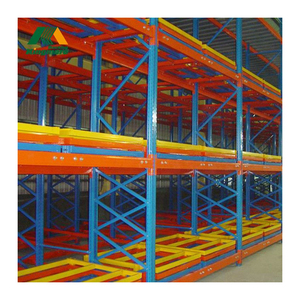
Heavy Duty Push Back Rack Stacking System Industrial Metal Rack
Telescoping nested carriage assembly engineered for 2 to 6 pallet-deep LIFO storage. Heavy-gauge Q235B steel rails handle up to 1,500 kg per pallet position.
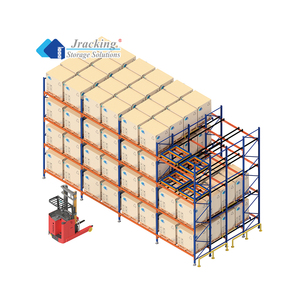
Jracking Push Back Racking Push-in Pallet Storage System
Inclined structural track system using precision sealed steel bearings. Eliminates dedicated drive-in aisles to maximize warehouse cubic utilization up to 75%.
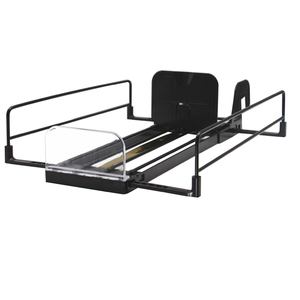
Supermarket Foldable Automatic Magnetic Shelf Pusher System
Modular magnetic-mount auto-facing tray with coiled spring pusher. Keeps beverages, boxed goods, and FMCG perfectly fronted without continuous labor restocking.
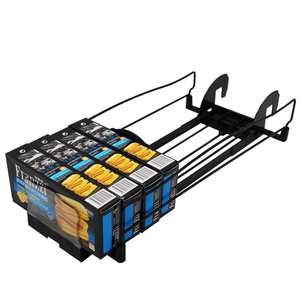
Auto Feed Heavy Duty Foldable Plastic Shelf Pusher System
8-tier freestanding grocery pusher setup. High-resilience polyacetal guide rails with variable tension springs designed for heavy bottles, canned goods, and dairy.
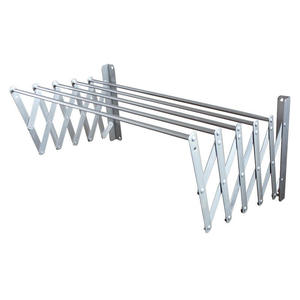
Aluminum Alloy No-Drill Push Pull Five Rod Sliding Rack
Anodized 6063-T5 aluminum sliding push-pull track with telescopic linkage. Ideal for light indoor hardware storage, balcony utilities, and compact retail displays.
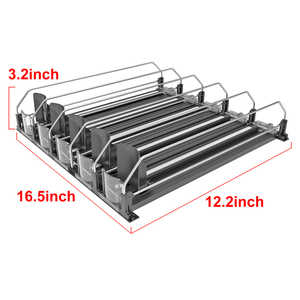
Automatic Spring Loaded Slow Motion Retail Pusher Rack
Damped slow-motion glide prevents product tipping and bottle shock. Adjustable width dividers suit pharmaceuticals, snack packages, and premium beverages.
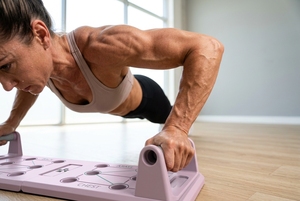
Portable Non-Slip Strength Training Push Up Rack
Reinforced ABS structural composite chassis with anti-slip base elastomeric pads. High-load joint engineering for commercial fitness and institutional training centers.
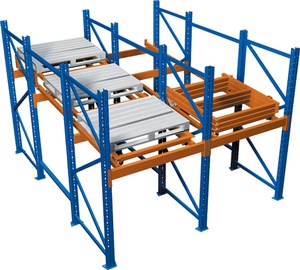
URGO 2023 Heavy Duty Push Back Pallet Intensive Rack System
Heavy duty nested rolling carts on structural steel incline channels. Designed to store multiple SKUs across 2-to-5 lane depths without forklift entry inside the rack body.
Structural Mechanics of Push-Back Racking: Physics, Tolerances & Rail Incline
A rigorous engineering breakdown of nested cart push-back dynamics, kinetic gravity braking, and warehouse cubic optimization for B2B procurement managers and logistics architects.
1. Kinematic Principles of Nested-Cart Push Back Storage
Industrial push-back pallet racks operate on an inclined nested carriage arrangement where gravity functions as the dynamic transport vector. Unlike traditional drive-in racking—where forklifts must enter deep, unprotected aisles risking column collision—push-back systems restrict forklift operation strictly to the access aisle. When an operator loads the initial pallet, it sits on the topmost nested cart. Loading the subsequent pallet requires pushing back the first pallet against a controlled incline of 1.5% to 2.5% (approximately 0.85° to 1.43°). Upon retrieval, when the front pallet is lifted and backed away, the natural gravity component decomposes along the incline plane, gently rolling the rear pallets forward to the pick face at an ergonomically controlled speed.
F_push = M_total * g * (sin(θ) + μ_r * cos(θ)) + F_bearing_friction
// Where:
• M_total = Total mass of active nested carts plus seated cargo pallets [kg]
• θ = Structural rail inclination angle [Typically 1.5° ≤ θ ≤ 2.5°]
• μ_r = Rolling friction coefficient between hardened steel wheels & structural C-rail (≈ 0.005 to 0.012)
• Critical Design Constraint: If θ > 3.0°, kinetic velocity exceeds safe end-stop bumper damping limit (> 0.35 m/s impact velocity).
If the inclination slope is set too shallow (< 1.2%), pallets can hang up mid-track due to dirty wheel bearings or slight pallet deflections. Conversely, if the gradient is too steep (> 3.0%), excessive kinetic acceleration creates dangerous impact spikes against front bumper stops, damaging goods or dislodging lower structural beams. At HEDA Shelves, our roll-formed heavy C-channel tracks are calibrated with micro-adjusted shims, using CNC laser cut cart wheels mounted with double-sealed precision deep-groove ball bearings (6204-2RS rating) that guarantee smooth, predictable translation even in -28°C cold room deep freezes.
2. Structural Steel Metallurgy & Cold-Formed Channel Specifications
Push back racking demands superior yield stress integrity. While standard selective racking primarily handles static vertical axial compression on uprights, push-back frameworks absorb continuous eccentric dynamic thrusts, brake torque, and repeated lateral loading. HEDA Shelves fabricates structural carts and rails using premium grade Q235B and Q355B structural steel coils. Upright frames are roll-formed into continuous 90mm x 68mm or 120mm x 95mm omega profiles with 12 distinct cold-bent reinforcement ribs, achieving exceptional torsional rigidity under ANSI MH16.1 (RMI) and European EN 15512 structural building codes.
| High-Density System Type | Storage Density (Floor Space %) | SKU Selectivity Level | Inventory Principle | Forklift Collision Risk | Average Capex per Pallet |
|---|---|---|---|---|---|
| Selective Pallet Racking | 40% – 50% Low | 100% Direct Access | FIFO / LIFO | Moderate Aisle Friction | $45 – $75 (Baseline) |
| HEDA Push-Back Racking | 70% – 78% Very High | High (1 SKU per lane) | LIFO Rotation | Zero Interior Risk | $130 – $195 |
| Drive-In / Drive-Thru | 65% – 72% High | Low (1 SKU per bay) | Strict LIFO / FIFO | High (Truck inside rack) | $85 – $120 |
| Radio Shuttle Automation | 80% – 88% Maximum | Medium (Lane based) | FIFO or LIFO | Zero (Robot Carrier) | $260 – $420 |
As indicated by the engineering matrix above, push-back systems provide the optimal financial and operational compromise between high cubic density and fast turnover. In contrast to drive-in racking—where rack frame repairs account for up to 18% of annualized warehouse operational expenditure—push-back racks isolate the forklift truck exclusively within the central gangway, completely protecting intermediate upright columns and bracing diagonals from mast impact.
Future Procurement Trends in Dynamic Push Systems
Strategic analysis of shifting global supply chains, automated fulfillment integration, and green metallurgical standards impacting racking import-export.
1. Cold Chain Densification in Southeast Asia & Gulf
Refrigerated warehouse real estate costs 2.5x to 4x more per cubic meter than ambient facilities due to insulation and power consumption. Importers in Vietnam, Indonesia, the UAE, and Saudi Arabia are rapidly abandoning selective racking in favor of 4-to-5 deep galvanized push-back racks, saving up to 45% in ongoing refrigeration energy per pallet footprint.
2. Hybridization with Automated Guided Vehicles (AGVs)
The transition toward 24/7 dark warehouses requires push-back entry faces to match laser-guided AGV tolerances. Modern carriages now incorporate precision optical retro-reflectors, tapered cart entry guides, and zero-play rail stops, enabling automated counterbalanced forklifts to push and retrieve pallets without manual driver intervention.
3. Retail Smart-Facing & Micro-Fulfillment
In modern commercial supermarkets and rapid e-grocery dark stores, labor costs associated with manual shelf fronting are unsustainable. Spring-loaded pushers equipped with integrated load-cell sensors and RFID tags are becoming standard, notifying inventory ERP networks the instant a front-facing beverage, medicine, or cosmetic package drops below buffer limits.
4. Circular Metallurgy & Low-VOC Powder Finishes
European and North American buyers increasingly enforce ESG metrics on imported steel fixtures. Modern manufacturing demands RoHS-compliant pre-treatment lines where toxic chromates are replaced with environmentally safe zirconium-based nano-ceramic conversion coatings, paired with low-cure thermosetting epoxy-polyester powder coats.
5. Seismic Dynamic Damping Architectures
In seismically active regions such as the Philippines, Japan, and Western South America, unrestrained carts on inclines pose catastrophic surging risks during an earthquake. 2025 engineering standards mandate mechanical lift-off safety brackets, cart interlock retention latches, and velocity-sensitive hydraulic dampers along carriage rails.
6. Container Loading Optimization & Knock-Down Assemblies
With ocean freight rates fluctuating, leading Chinese exporters design push-back carriages as precision bolted modular sub-assemblies. This modularity increases 40ft High Cube container payload efficiency by up to 35%, ensuring heavy steel components max out container weight limits (26–28 metric tons) rather than wasting cubic sea volume.
Why Tier-1 Contractors & Logistics Integrators Partner With Us
Combining heavy industrial roll-forming muscle with bespoke CAD/FEA engineering precision from our Guangzhou production base.
25 Years Industrial Authority
Established in 2001, Guangzhou Heda Shelves Co., Ltd. operates a high-capacity 30,000 square meter factory staffed by over 300 experienced engineers, structural technicians, and international project consultants.
- 30,000 metric tons monthly steel throughput
- Over 10,000 logistics projects completed
- Private label OEM/ODM for global distributors
Full-Spectrum Certified Quality
Exporting structural steel demands rigorous compliance. We supply complete test certification packages verified by internationally accredited inspection bodies for effortless regional building permit clearance.
- CE Certification No. 2435-CPR-8605159
- ISO 9001:2015 Quality Management Certified
- RoHS compliant eco-friendly surface coatings
Complete 10-Step In-House Production
We eliminate outsourced subcontractor variance by managing every manufacturing stage on our proprietary CNC rolling, robotic welding, and automated powder coating lines.
- Automated continuous punching & cold profiling
- Multi-stage chemical pickling & phosphating
- Free 2D CAD & 3D layout renderings within 24h
Frequently Asked Questions: Sourcing Push Racks from China
Detailed engineering, logistical, and commercial answers for international procurement managers, structural consultants, and warehouse directors.
What are the key technical differences between Cart-on-Rail Push Back Racks and Pallet Roller Flow Racks?
- Cart-on-Rail Push Back Racks: Employ a set of nested structural steel carriages rolling on inclined C-channel rails (typically 2 to 6 deep). Goods operate on a LIFO (Last-In, First-Out) inventory cycle. Loading and unloading are performed at the same front aisle. Push-back is significantly more forgiving of lower-quality or slightly warped wooden pallets, as the pallet rests entirely flat upon a welded steel cart rather than riding across spinning roller wheels. Maintenance is minimal because the cart bearings are sealed and protected from debris.
- Pallet Roller Flow Racks (Gravity Flow): Consist of full-length inclined roller beds equipped with internal centrifugal brake rollers and speed controllers. They operate on a strict FIFO (First-In, First-Out) inventory cycle requiring two separate dedicated access corridors: a rear loading aisle and a front discharge picking face. Roller flow systems require uniform, high-grade GMA or Euro pallets to avoid snagging, and initial capital costs are typically 30%–50% higher due to hundreds of moving roller components.
How does HEDA prevent carriage binding or pallet jamming in 4-deep and 5-deep push back systems?
- Flanged Wheel Geometry & Trapped Track Design: Carts utilize heavy-duty CNC-turned steel wheels with dual outer guide flanges that run inside structural steel C-channels. The wheels are mechanically trapped within the rail profile, rendering lateral derailment physically impossible.
- Staggered Low-Profile Nested Height: Each subsequent cart nests inside the outer cart, maintaining a minimal vertical stacking height (often under 125mm total nest height). This maintains a low center of gravity, minimizing dynamic tipping moments during rapid forklift push movements.
- Anti-Skew Mechanical Linkages: For lane depths beyond 4 pallets, HEDA integrates dual-axle synchronization cross-ties and rear cart catch pins. This ensures that even if a forklift driver deposits a pallet slightly off-center (within ±50mm eccentricity), the dynamic force distributes symmetrically to both side rail bearings, preventing uneven wheel drag.
Can push back pallet systems be designed for cold storage facilities down to -30°C?
- Low-Temperature High-Yield Steel: Standard carbon steel exhibits a ductile-to-brittle transition below 0°C. We specify impact-tested structural steels (such as Q355D or Q355E) with certified Charpy V-notch impact toughness tested down to -40°C.
- Cryogenic Synthetic Greasing: All wheel bearings are flushed and vacuum-injected with specialized low-viscosity fluorinated synthetic greases (such as Mobil SHC Polyrex or Klüberlub) that resist gumming, freeze-locking, and moisture condensation.
- Hot-Dip Galvanizing (HDG): For warehouses cycling between cold and thawing cycles, cold-formed steel frames, carts, and rails can be specified with EN ISO 1461 hot-dip galvanizing (>75 μm zinc coat thickness) to guarantee lifetime defense against condensation rust.
What building parameters and forklift specifications must buyers submit to receive a customized CAD design?
- Warehouse Architectural Drawing: Clear internal roof height to underside of purlins, concrete slab thickness and reinforcement specs, building column grid centers, and overhead obstacle locations (sprinkler pipe drops, LED luminaires, ventilation ducts).
- Pallet Specification Profile: Pallet dimension (Depth × Width × Height including cargo), bottom runner style (GMA two-way, Euro 4-way, block or stringer pallet), maximum gross weight per unit load, and maximum allowable product overhang.
- MHE (Material Handling Equipment) Profile: Forklift truck type (Standard Counterbalance, Reach Truck, or articulated forklift), maximum lift mast height, turning radius (AST), and total forklift mast tilt capacity.
- Seismic & Environmental Factors: Project installation location (City/Country) to determine statutory peak ground acceleration (PGA) seismic design coefficients and building fire egress clearances.
How are supermarket shelf pusher systems packaged to ensure zero damage across sea freight routes?
- Component Sub-Assembly: Plastic push heads and guide tracks are nested with shock-absorbing EPE (expanded polyethylene) foam wraps to prevent surface marring and acrylic hairline cracks.
- Moisture-Proof Barrier: Stainless steel constant-force springs are sealed inside vapor corrosion inhibitor (VCI) polybags with silica gel desiccants to counter sea container condensation across tropical equator transits.
- Heavy 5-Ply Corrugated Cartons on Pallets: Goods are boxed in 5-ply kraft export cartons (crush test rating > 250 lbs/in²), stacked onto fumigated heat-treated wooden or molded plastic export pallets, tightly bound with PET strapping, and fully wrapped with 5 layers of waterproof stretch film.
What are the statutory warranty terms, load safety factors, and after-sales field support?
- Structural Safety Factors: All beam deflection calculations conform strictly to a minimum factor of safety of 1.5 relative to steel yield strength, with maximum allowable vertical beam deflection held to L/200 under fully distributed working loads (UDL).
- Standard Warranty: We issue a comprehensive 5-year structural warranty on roll-formed columns, beams, and dynamic cart assemblies against manufacturing weld flaws, excessive deflection, or paint peeling under normal usage conditions.
- Installation Documentation & Field Supervision: Every container shipment is accompanied by a full numbered packing list, exploded 3D assembly shop drawings, and step-by-step video installation tutorials. For large-scale distribution centers in Southeast Asia and the Middle East, our certified site engineers can be deployed on-site to direct local installation teams and conduct final load test sign-offs.