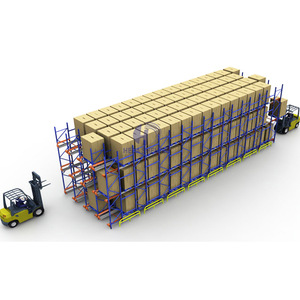
Heda Shelves Four Way Shuttle Rack Warehouse Racking Shuttle Automatic 4-Way Shuttle Racking Pallet Racking System
Explore System →
Manufactured under strict ISO 9001 and CE quality guidelines, our heavy-duty warehouse racking solutions serve Tier-1 logistics hubs, cold storage networks, and industrial manufacturing plants worldwide.
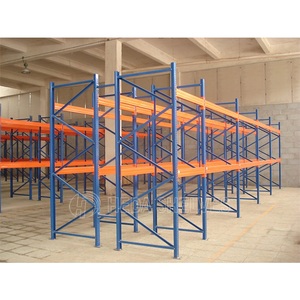
Founded in 2001, Guangzhou HEDA Shelves Co., Ltd. operates a certified 30,000 m² modern manufacturing facility equipped with advanced automated roll-forming lines, robotic CNC beam welding, and environmental electrostatic powder coating facilities.
Every dynamic push back cart, guide rail, and upright column is engineered from structural Q235B/Q355B steel, backed by CE Certificate No. 2435-CPR-8605159, ISO 9001:2015 audit regimes, and full RoHS eco-compliance.
Our senior mechanical design engineers calculate structural payload ratings, forklift maneuvering clearances, and aisle turn radii, generating comprehensive 3D warehouse designs and finite element stress analysis reports within 24 to 48 hours.
Shipping directly from South China major deep-water ports (Guangzhou, Shenzhen), we tailor upright profiles, baseplates, and dynamic mechanical interlocks to international building codes, including seismic resilience across ASEAN and Middle Eastern regions.
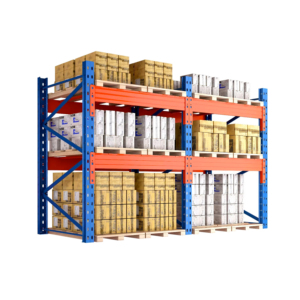
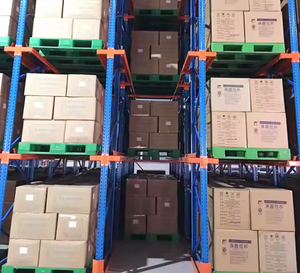
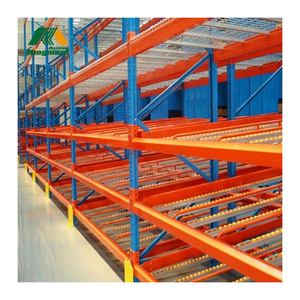
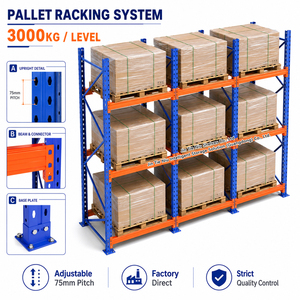
Push back racking operates on a nested-cart carriage system riding on inclined structural rails. Combining the high-density footprint of Drive-In systems with significantly faster handling speeds, it optimizes Last-In, First-Out (LIFO) warehousing without forklifts ever having to enter the physical rack structure.
| Evaluation Parameter | Push Back Racking System | Drive-In Pallet Racking | Pallet Flow (Gravity) Rack | Selective Pallet Racking |
|---|---|---|---|---|
| Storage Density | Very High (Up to 75% Footprint) | Extreme (Up to 85% Footprint) | Very High (Up to 80% Footprint) | Moderate (35-40% Footprint) |
| Inventory Rotation | LIFO (Per Lane / Channel) | LIFO (Per Deep Bay) | FIFO (Strict Batch Rotation) | 100% Random Access |
| Loading Depth Range | 2, 3, 4, 5 & 6 Pallets Deep | Up to 10+ Pallets Deep | Up to 20+ Pallets Deep | Single or Double Deep |
| Forklift Mast Exposure | Zero Internal Entry (Low Damage) | High Risk (Mast Enters Lane) | Zero Internal Entry | Zero Internal Entry |
| Lane Picking Selectivity | High (Each Level Acts Independently) | Low (Entire Bay Blocked by SKU) | High (Independent Channels) | Absolute (Direct Access) |
| Cold Storage Feasibility | Superior Efficiency & Reliability | Good (Cold Draft Issues) | Moderate (Roller Lubricant Freezing) | Poor Energy Density |
Procurement teams are shifting capital investments away from static racking toward dynamic, low-maintenance mechanical systems that resolve rising square-meter costs, high energy tariffs, and labor turnover.
With refrigerated logistics facilities consuming up to 60% of operational expenditure in electricity, operators prioritize 4-deep and 5-deep push back systems. Eliminating redundant access aisles directly minimizes refrigerated cubic dead space, slashing energy cost per stored metric ton.
While fully automated robotic systems present complex PLC troubleshooting and high upfront capex, push back setups utilize gravity-fed multi-tier nesting carriages. Procurement executives seek push back systems to attain up to 80% pallet density without microchip dependencies, electrical downtime, or programming costs.
Unlike Very Narrow Aisle (VNA) or articulated forklifts that demand hefty equipment lease rates and laser-flat floors, modern push back racking integrates seamlessly with counterbalanced and standard reach trucks, lowering overall supply chain cap requirements.
Continuous mechanical enhancements by HEDA engineering teams have made modern push back systems more durable, quieter, and capable of handling non-standardized or composite pallet platforms safely.
By nesting steel carrier carts below 120 mm total stacking clearance, modern designs recapture vertical building headroom, allowing an extra pallet beam tier in warehouses with limited clear ceiling heights.
Equipped with precision-machined, sealed stainless steel flanged ball bearings, the carts resist dust, debris, and -30°C freezing conditions, eliminating lane jamming and cart jumping risks completely.
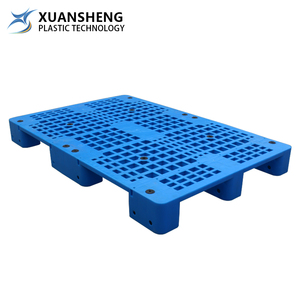
Full steel cart beds adapt to diverse pallet types: whether utilizing wood Euro pallets (800x1200), US stringer pallets (40x48), or HDPE hygienic plastic platforms, bottom sag is fully mitigated.
Integral mechanical stops and dynamic centrifugal braking dampers ensure that when the front pallet is retrieved, the subsequent rear loads glide forward steadily without impact surges.
Comprehensive engineering clarifications addressing floor loads, tilt angles, cycle times, and customs compliance for global supply chain managers and project engineers.
Send our senior engineers your warehouse blueprint, pallet dimensions, and throughput specs. Receive a tailored 2D CAD layout, 3D dynamic rendering, and factory-direct load calculations within 24 hours.