Featured Industrial Shelving & Intralogistics Storage Systems
Every rack profile is precision cold-formed, CNC-punched, pickled, phosphated, and electrostatic powder-coated at our Guangzhou manufacturing facility to meet rigorous commercial load-bearing thresholds.
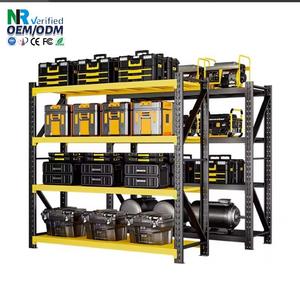
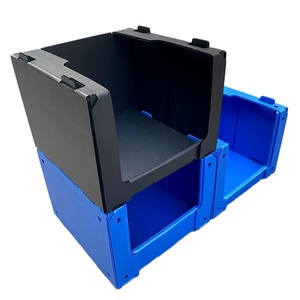
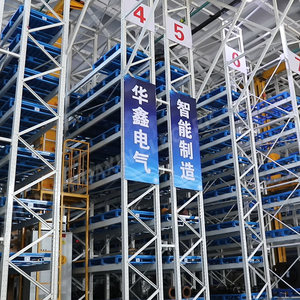
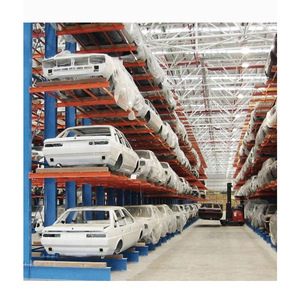
HEDA Shelves Guangzhou: Verified Enterprise Benchmark
Backed by 25+ years of dedicated intralogistics manufacturing, 30,000 square meters of production infrastructure, and structural compliance with European (CE) and global quality (ISO 9001:2015) standards.
Executive Whitepaper: The Strategic Landscape of China Long Span Shelving Manufacturing
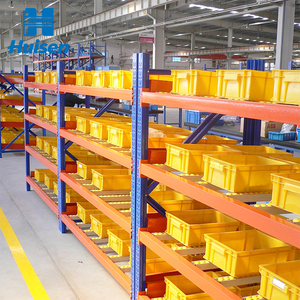
In modern distribution logistics, e-commerce fulfillment hubs, and heavy industrial facilities, long span shelving represents the operational sweet spot between light-duty slotted angle boltless racking and heavy-duty structural pallet racks. Characterized by wide clear-span bays (typically 1,200 mm to 2,700 mm), variable loading capacities ranging from 200 kg to over 1,000 kg per level uniformly distributed load (UDL), and hand-loaded multi-tier accessibility, long span systems serve as the structural backbone for split-case picking, archive document preservation, automotive spare parts staging, and industrial component kitting.
For international procurement directors, supply chain engineers, and regional distributors across Southeast Asia, Europe, North America, and the GCC, sourcing long span shelving from China is no longer merely a low-cost play. It has matured into a calculated search for high-precision cold-roll forming lines, advanced automated pre-treatment surface chemistry, seismic-engineered baseplates, and rigorous factory-direct quality assurance systems capable of meeting European FEM 10.2.02, EN 15512, and American RMI (Rack Manufacturers Institute) standards.
Information Gain Benchmark: The true structural integrity of long span shelving lies in the cold-rolled coil's yield strength (typically Q235B vs. Q355B steel), the precision punch pitch of upright columns, and the three-point hook claw geometry of connector brackets. Deflection must never exceed L/200 under maximum uniformly distributed load (UDL) to maintain beam stability and prevent catastrophic dynamic fatigue.
As one of South China's premier racking hubs, Guangzhou Heda Shelves Co., Ltd. (founded in 2001) operates a state-of-the-art 30,000 m² facility with 300+ technical personnel and automated roll-forming lines. Producing over 30,000 tons of structural racking per month, HEDA Shelves addresses the core challenges that cause overseas projects to falter: improper seismic bracing calculations, paint flaking caused by poor phosphate pre-treatment, and high shipping freight caused by unoptimized container cubic volume planning.
Technical Engineering Deep Dive: Structural Anatomy & Material Standards
Industrial long span shelving systems consist of three structural building blocks: cold-formed vertical upright frames, stepped or box horizontal load beams, and rigid shelf decking panels. Engineering each component to exact metallurgical and geometric tolerances is essential to prevent permanent yield deformation.
Omega Upright Profiles
Roll-formed from continuous prime cold-rolled steel coils into multi-bend "Omega" (Ω) profiles (e.g., 55×47 mm or 60×50 mm) with 50 mm or 75 mm pitch perforations. The return flanges deliver superior torsional rigidity under horizontal cross-aisle loads.
Stepped & P-Beams
Engineered with dual cold-formed stepped shoulders to seat steel decking, wire mesh, or particle board flush with the beam edge. Multi-claw welded end-connectors equipped with safety locking pins eliminate accidental dislodgement from manual impacts.
Tri-Stage Pre-Treatment
Before automated electrostatic powder coating, components pass through rigorous pickling, degreasing, and zinc phosphating. This chemically bonds the polyester resin finish, resisting salt-spray, high monsoon humidity, and abrasion up to 500+ hours.
Structural Performance Comparison Table
To assist warehouse planners in specifying the correct shelving configuration for their SKU load profile and material handling workflows, the table below provides an engineering benchmark across light, medium, and heavy-duty long span categories:
| Classification | Bay Width (Clear Span) | Bay Depth | UDL Capacity / Level | Decking Substrate | Recommended Application Scenarios |
|---|---|---|---|---|---|
| Long Span Light (LS-L) | 1,000 mm – 1,500 mm | 400 mm – 600 mm | 150 kg – 250 kg | 0.6 mm Steel Shelf / 12 mm MDF | Apparel fulfillment, pharmaceutical retail staging, carton sorting |
| Long Span Medium (LS-M) | 1,500 mm – 2,100 mm | 500 mm – 800 mm | 300 kg – 500 kg | 0.7 mm – 0.8 mm Steel / Wire Mesh | Automotive assembly spare parts, hardware retail, electronics distribution |
| Long Span Heavy (LS-H) | 1,800 mm – 2,700 mm | 600 mm – 1,200 mm | 600 kg – 1,000 kg | 1.0 mm Reinforced Steel / Wire Deck | Industrial chemical drums, casting molds, heavy pump storage |
| Rack-Supported Multi-Tier | 1,800 mm – 2,400 mm | 600 mm – 1,000 mm | 350 kg – 600 kg (Walkway: 300 kg/m²) | Perforated Steel Planks / Grating | High-density vertical distribution centers, regional e-commerce mega-hubs |
The 10-Stage In-House Quality Assurance Protocol at HEDA Shelves
Unlike trading intermediaries that subcontract production across unverified workshops, Tier-1 Chinese manufacturers consolidate fabrication under strict quality management systems (ISO 9001:2015 and CE EN 1090 / EN 15512). At HEDA Shelves Guangzhou, every export order follows an audited 10-stage process:
1. Raw Coil Metallurgy Inspection: Inspection of continuous strip steel coils from premier mills (such as Baosteel or Shougang). Tensile testing verifies yield strength ($\ge 235 \text{ N/mm}^2$ for Q235B) and chemical composition to ensure elongation stability without micro-fractures during tight-radius cold forming.
2. High-Precision Slitting: Automated coil slitting lines shear master coils into exact ribbon widths within $\pm 0.1 \text{ mm}$ tolerances, ensuring continuous roll-forming tracking without camber distortion.
3. CNC Multi-Station Punching: High-speed servo mechanical presses punch teardrop, butterfly, or diamond pitch patterns at 50 mm / 75 mm intervals. Exact hole-pitch synchronization is crucial for level beam installation across continuous multi-bay runs.
4. Progressive 18-Station Cold-Roll Forming: Heavy-gauge upright profiles and step beams are shaped across 18 sequential hardened roller dies. Gradual deformation reduces internal residual stress and prevents cross-sectional distortion.
5. Beam Profile Folding & Seam Closure: Step beams and box beams undergo automatic robotic rolling with continuous high-frequency seam locks, maximizing torsional resistance under eccentric loading.
6. Precision Robotic Welding: Upright baseplates, beam connector claws, and column splices are welded on ABB robotic welding cells using continuous shielding gas ($80\% \text{ Ar} / 20\% \text{ CO}_2$), producing deep weld penetration with zero spatter or inclusions.
7. Automated Surface Finishing: Components undergo automatic deburring, polishing, and chemical immersion through alkaline degreasing, acid pickling, rinse tanks, and zinc phosphating baths to prevent oxidation.
8. Electrostatic Powder Coating: Automated reciprocal spray booths apply lead-free, RoHS-compliant thermoset epoxy-polyester powder coats ($60 \text{ to } 90 \, \mu\text{m}$ dry film thickness) cured in gas ovens at $190^\circ\text{C}-210^\circ\text{C}$ for superior gloss and scratch resistance.
9. Mechanical Deflection & Destructive Testing: Batch samples undergo hydraulic load test beds. Beams are loaded to $1.5\times$ rated safe working load (SWL) to measure elastic recovery and verify deflection limits ($\le L/200$).
10. Export Packaging & Container Loading Optimization: Components are bundled using high-tensile PET strapping, corrugated edge protectors, plastic wrap, and custom fumigated timber dunnage. Computer-simulated loading plans maximize container utilization up to 98% volume.
Evolution of Long Span Shelving: Historical Phases to Smart Intralogistics
The industrial shelving industry has undergone major transformations over the past four decades, driven by rising warehouse land costs, changing SKU profiles, and intralogistics automation:
Phase 1: Slotted Angle Iron & Fully Bolted Frameworks (1980s – 1990s): Characterized by manual nut-and-bolt assembly, low load limits ($<100 \text{ kg/level}$), and labor-intensive reconfigurations. Deflection was common, and dynamic loads often caused frame racking.
Phase 2: Modular Boltless Clip-In Systems (2000s – 2012): The introduction of precision roll-formed Omega uprights and multi-claw stepped beams revolutionized installation. Clip-in shelf levels enabled rapid tool-free height adjustments. Standardized bay capacities jumped to $300-500 \text{ kg}$, paving the way for multi-tier hand-loaded picking systems.
Phase 3: High-Bay Mezzanine & Narrow-Aisle Integration (2013 – 2022): Driven by global e-commerce and rising urban real estate costs, long span shelving evolved upward. Facilities built 3-tier and 4-tier rack-supported mezzanines reaching 8 to 12 meters clear height. These setups featured integrated staircases, pallet drop gates, slide chutes, and carton flow roller tracks for high-throughput picking.
Phase 4: Autonomous Mobile Robot (AMR) & Digital Hybrid Racking (Present – Future): Modern long span shelving now integrates with smart warehouse management systems (WMS). Upright frames are engineered to support pick-to-light LED channels, overhead sensor cables, and structural guidance rails for autonomous mobile picking robots (AMRs) and automatic guided vehicles (AGVs).
Future Procurement Trends: What Global Buyers Must Plan For (2025–2035)
Procurement directors and warehouse operations leaders must anticipate structural and logistical shifts when specifying long span shelving for upcoming capital projects:
1. Demand for Low-Carbon Steel & Eco-Certified Coatings: As multinational corporations implement Scope 3 ESG supply chain mandates, Chinese manufacturers are shifting to electric arc furnace (EAF) low-carbon steel coils and zero-VOC, heavy-metal-free powder coatings with full RoHS and REACH compliance.
2. Structural Engineering for Extreme Climate & Seismic Hazards: Warehousing hubs across Southeast Asia (Indonesia, Philippines), Japan, Taiwan, and the Pacific Rim require advanced seismic baseplate engineering. Racking exporters now provide finite element analysis (FEA) reports verifying dynamic load dissipation, floor anchor shear limits, and sway resistance during seismic events.
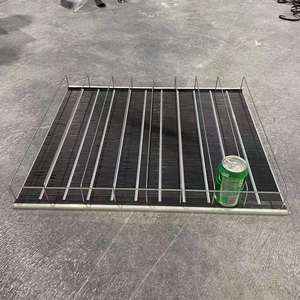
3. Rise of Carton-Flow & Gravity Roller Hybridization: Hand-picked e-commerce retail requires first-in, first-out (FIFO) inventory rotation. Standard long span frames are increasingly configured with modular drop-in roller tracks, transforming static bays into dynamic carton flow lanes that cut operator travel time by up to 40%.
4. Digital Twin BIM Integration: Traditional 2D paper blueprints are giving way to 3D Building Information Modeling (BIM). Tier-1 exporters like HEDA Shelves supply native Autodesk Revit and IFC files within 24 to 48 hours, enabling architects and logistics consultants to model rack placements, sprinkler clearances, and forklift turning radiuses before metal is cut.
Frequently Asked Questions (FAQ) for Overseas Buyers & Importers
For industrial warehouse conditions, Q235B cold-rolled structural carbon steel (equivalent to European S235JR and American ASTM A36) is the industry standard. It provides a balanced combination of yield strength ($\ge 235 \text{ MPa}$), elongation ($>25\%$), and weldability. For heavy-duty high-bay installations or multi-tier mezzanine columns, high-yield Q355B (equivalent to S355JR) can be specified to handle higher compressive loads without increasing profile thickness.
Under European FEM 10.2.02 and EN 15512 codes, maximum beam deflection must not exceed $1/200\text{th}$ of the clear bay span ($L/200$) under maximum uniformly distributed load (UDL). For example, a 2,000 mm clear beam span will deflect no more than 10 mm at rated capacity. Upright frames are engineered with a minimum structural safety factor of 1.5 to 1.65 against ultimate yield stress.
In humid coastal or tropical markets across Southeast Asia and the GCC, standard single-coat paint will fail rapidly. HEDA Shelves utilizes a multi-stage pre-treatment line featuring alkaline degreasing, acid rust-pickling, and zinc phosphating. This is followed by an electrostatic thermoset epoxy-polyester powder coat ($60-90\,\mu\text{m}$) cured at $200^\circ\text{C}$. For outdoor storage, walk-in coolers, or corrosive chemical areas, full hot-dip galvanizing (HDG compliant with ISO 1461) is available.
Galvanized or powder-coated steel decking provides high durability, easy sanitization, and strong fire safety resistance for non-palletized cartons. Wire mesh decking is required by NFPA fire safety standards in facilities with ceiling sprinkler systems, as it allows water penetration and overhead illumination. Particle board or melamine-faced MDF is cost-effective for dry retail, garment storage, and cleanrooms, but is sensitive to damp environments.
Uprights and beams are bound into rigid bundles with steel-reinforced PET strapping, surrounded by heavy-duty corrugated cardboard edge guards and multi-layer stretch wrap. Steel decking panels are nested and crated onto heavy wooden base runners. Custom container loading diagrams ensure dense, balanced weight distribution within standard 40ft High Cube (40HQ) ocean containers, preventing cross-cargo shifts and crushing in transit.
Yes. Over 40% of our production volume supports private-label distribution partners in Europe, North America, Australia, and the Middle East. We provide custom profile cold-rolling, brand-specific RAL powder coating color matching, bespoke upright punching patterns, private-label box carton branding, and barcoded part marking for easy warehouse receipt.