Certified High-Density Racking & Pallet Support Systems
Explore our heavy-duty engineering solutions built specifically for international distribution hubs, cold storage chambers, and automated fulfilment centers. Every configuration meets stringent FEM 10.2.02, EN 15512, and AS4084 standards.
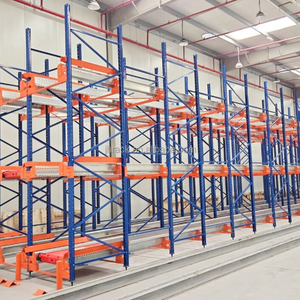 Automated Shuttle
Industrial Heavy-Duty Shuttle Car Racks for Automated Pallet Warehouse
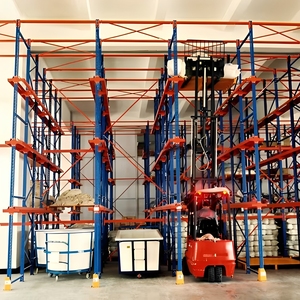 Drive-Through Core
Top Quality Warehouse Drive-In & Drive-Through Pallet Racking System
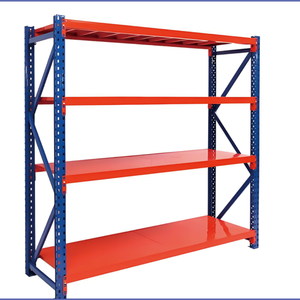 Heavy Duty Tier
Guijie High Load Capacity 4-Layer Drive-Through Steel Warehouse Rack
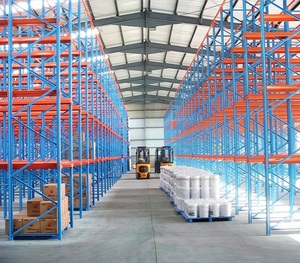 High Density
Heavy Duty Warehouse Pallet Storage Drive-In / Drive-Through System
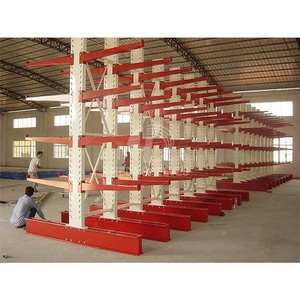 Long Goods
Heavy Duty Cantilever Racking for Industrial Raw Material Storage
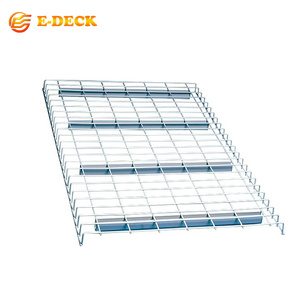 Safety Component
Custom Warehouse Storage U-Channel Wire Mesh Decking System
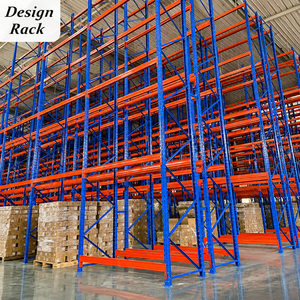 Selective Pallet
Certificated Large Heavy Duty Material Racking & Pallet Storage Unit
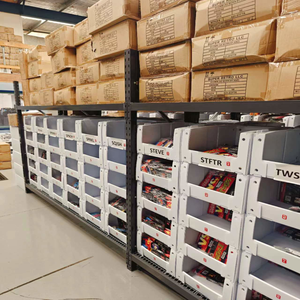 Fulfillment Accessory
Custom Modular Stackable Warehouse Storage Picking Bins & Totes
Drive-Through vs. Drive-In Mechanics: The Structural & Throughput Paradox
In modern supply chain architecture, spatial economy directly dictates operational margins. While standard selective pallet racking affords 100% individual pallet selectivity, it consumes up to 60% of gross warehouse floor area exclusively in access aisles. High-density accumulative storage configurations overcome this physical restriction by consolidating pallet positions into continuous deep lanes. However, an essential structural and logistical distinction separates Drive-In Racking from true Drive-Through Racking.
Critical Engineering Axiom: Drive-In systems operate on a Last-In, First-Out (LIFO) protocol where forklifts enter and exit through a solitary aisle face, terminating against a rigid cross-braced rear wall. Conversely, Drive-Through systems feature separate entry and exit access aisles, enabling true First-In, First-Out (FIFO) stock rotation. This dual-access topology demands specialized top-tie portal beams and rigid horizontal frame ties because traditional full-height X-bracing cannot be deployed across the bay ends without obstructing transit.
From an engineering standpoint, eliminating structural rear cross-bracing in Drive-Through systems introduces torsional elasticity and lateral sway vulnerabilities along the down-aisle vector. When forklifts navigate inside narrow structural channels (typically offering mere 75mm to 100mm clearances on either side of the pallet load), dynamic column deflection must be rigorously constrained. China’s premier engineering exporters address this by integrating oversized baseplates, heavy cold-formed upright profiles ranging from 90mm to 140mm face width, and floor-anchored structural angle guide rails (commonly 100x75x6mm or 120x80x8mm structural steel) to absorb horizontal impact loads before kinetic energy transfers to the vertical uprights.
| Evaluation Parameter | Selective Pallet Racking | Drive-In Pallet Racking | Drive-Through Pallet Racking | Radio Shuttle Racking |
|---|---|---|---|---|
| Inventory Flow Protocol | Universal (FIFO & LIFO) | Strictly LIFO | Strictly FIFO | Configurable (FIFO / LIFO) |
| Storage Volumetric Density | Low (~40% Floor Utilization) | Very High (~75-80%) | Very High (~70-78%) | Maximum (~80-85%) |
| Aisle Requirement | Aisle between every rack run | Single operating aisle | Two operating aisles (Entry/Exit) | Operating aisles at perimeter |
| Forklift Entry into Racks | No entry (Aisle operations) | Direct mast entry inside lanes | Direct mast entry inside lanes | No entry (Shuttle travels lane) |
| Structural Sway Sensitivity | Standard (Continuous Beams) | Moderate (Rear Bracing intact) | High (Requires Top Portal Ties) | Low (Full horizontal bracing) |
| Ideal SKU Profile | High SKU count, Low Volume | Low SKU count, High Volume | Perishable Goods, Batch Dating | High-throughput FMCG & Cold Chain |
For international procurement teams operating within FMCG distribution, cold chain logistics, pharmaceutical packaging, and food processing, Drive-Through systems provide the missing structural link between hyper-density and non-negotiable expiration-date compliance. Because stock is loaded from the entry aisle and discharged through the picking aisle, batch traceability is maintained without having to shuffle pallets—a major source of labor waste and rack damage in standard drive-in configurations.
Metallurgical Purity & Advanced 10-Step Quality Governance
The longevity and seismic resilience of high-density Drive-Through racking depend fundamentally on steel mill purity, roll-forming tolerances, and chemical pre-treatment integrity. In structural systems where intermediate beam ties are eliminated to make room for forklift passage, individual upright columns must carry unbraced vertical lengths of up to 10 to 12 meters under high axial loads.
Leading Chinese exporters manufacture Drive-Through uprights exclusively from high-tensile hot-rolled steel coils conforming to Q235B and Q355B structural grades (equivalent to European S235JR and S355JR under EN 10025). The continuous cold roll-forming process produces upright profiles featuring 8 to 12 longitudinal cold-worked bends per profile, substantially multiplying the moment of inertia and buckling resistance compared to standard commercial channel sections.
Automated CNC Punching
Precision teardrop, diamond, or continuous 50mm/75mm pitch slot patterns punched before roll-forming guarantee absolute vertical alignment of load brackets and cantilever rail arms without localized stress fractures.
Heavy-Gauge Pallet Rails
Continuous one-piece cold-formed support rails (thickness 2.5mm to 3.5mm) with tapered lead-in flares guide pallets smoothly into deep lanes, protecting both pallets and structural uprights from shearing friction.
Phosphating & Powder Adhesion
Every component undergoes automatic acid pickling, alkaline degreasing, and zinc phosphating prior to electrostatic powder application (60-80 microns thickness), achieving superior salt-spray corrosion resistance.
Our factory's 10-step production protocol governs every stage: Raw Material Coil Inspection → Precision Slitting → CNC Automated Column Punching → Multi-Stage Cold Roll-Bending → Robotic Rail Profile Forming → Deburring & Mechanical Polishing → Certified Robotic Seam Welding → Multi-Stage Chemical Pickling & Phosphating → Electrostatic Powder Curing (200°C) → Dimensional QA, Load Deflection Verification & Containerization Planning.
Next-Generation Procurement Trends in Industrial Racking (2025–2030)
The international supply chain is navigating structural shifts driven by escalating land rents, cold storage energy costs, and warehouse labor constraints. As logistics engineers and chief procurement officers plan long-term capital investments, four structural trends are redefining the China racking export landscape:
Hybrid Shuttle-Ready Topologies
Warehouses are increasingly commissioning Drive-Through structures pre-engineered with dual-purpose support rails that can house standard forklift loads today or easily integrate semi-automated 2D/4D pallet shuttles tomorrow without dismantling base uprights.
Seismic Finite Element Modeling (FEM)
Procurement teams across seismic zones—including Japan, Indonesia, the Philippines, Chile, and New Zealand—now mandate site-specific structural dynamic calculations (FEM 10.2.08) accounting for local ground acceleration coefficients before placing fabrication orders.
Thermal Efficiency Optimization
With cold-storage power consumption representing up to 70% of refrigerated warehouse OPEX, high-density Drive-Through configurations are being engineered with tighter clearances to compress refrigerated cubic volume, cutting refrigeration overheads by up to 35%.
Digital Factory Acceptance Testing (FAT)
Global buyers no longer rely solely on third-party post-shipment surveys. Leading Chinese exporters now host live dimension tracking, spectrometer steel grade verification, and powder adhesion cross-hatch testing via high-definition video feeds directly from the plant floor.
Guangzhou HEDA Shelves: 25 Years of Factory Direct Engineering Dominance
Founded in 2001 in Guangzhou, Guangzhou Heda Shelves Co., Ltd. has evolved from a specialized tooling manufacturer into an internationally recognized industrial storage machinery powerhouse. Spanning a modern 30,000-square-meter integrated production campus equipped with automated continuous roll-forming lines, computerized multi-station punching presses, and robotic welding cells, HEDA delivers an annual production capacity exceeding 360,000 tons.
Comprehensive International Credentials: HEDA operations comply strictly with the European Construction Products Regulation, holding CE Certification No. 2435-CPR-8605159 and an accredited ISO 9001:2015 Quality Management System Certificate (No. 18624Q00169R0M). In addition, all architectural surface treatments are 100% compliant with European RoHS environmental coating standards.
Unlike export trading intermediaries, HEDA integrates every stage in-house—from primary structural design to container packing plans. Over 25 years, our engineering department has completed more than 10,000 heavy-duty warehouse projects across 120+ countries, including the ASEAN region, the Middle East (GCC), Europe, Australia, and the Americas. By working directly with our factory, EPC contractors, systems integrators, and distribution companies eliminate middleman markups while securing free 2D layout planning, 3D structural modeling, and formal load capacity calculation reports stamped by senior structural engineers within 24 to 48 hours.
Frequently Asked Questions: Global Procurement & Engineering Specifications
Technical, metallurgical, and logistics answers compiled by our chief structural engineers for global procurement managers and warehouse project teams.
What critical warehouse dimensions are required to engineer a Drive-Through layout?
How does Drive-Through racking maintain structural stability without back cross-bracing?
What steel grades and anti-corrosion treatments are applied for refrigerated/cold chain installations?
Can HEDA supply seismic structural calculations for local council or municipal building permits?
How do you optimize 40ft High Cube container loading to minimize international ocean freight costs?
Request Your Engineered Layout & Factory Quote
Partner directly with China's leading warehouse storage manufacturer. Submit your facility dimensions or pallet specifications to receive a free 2D CAD floor plan, 3D architectural rendering, and verified load calculation report within 24 hours.