Featured Industrial Racking & Warehouse Infrastructure
Precision cold-formed systems engineered in our specialized Guangzhou production plant. Certified to international FEM, CE, and ISO 9001 quality specifications.
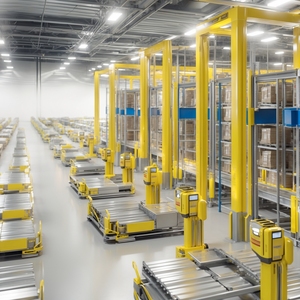
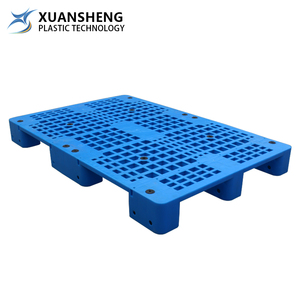
HDPE Grid Nine Foot Forklift-Compatible Pallet
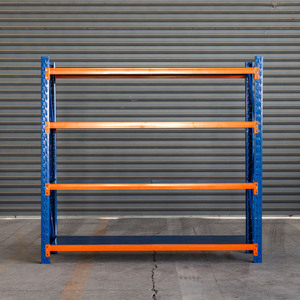
Industrial Adjustable Medium Duty Long Span Shelving
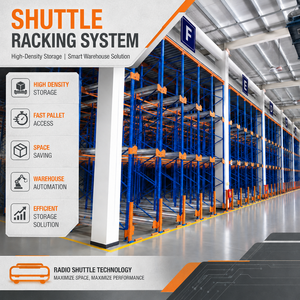
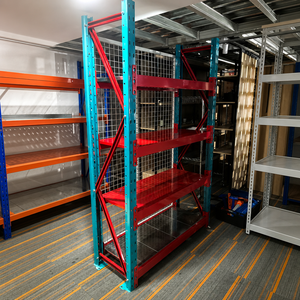
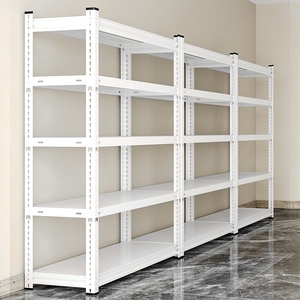
Industrial Warehouse Steel Pallet Storage Rack
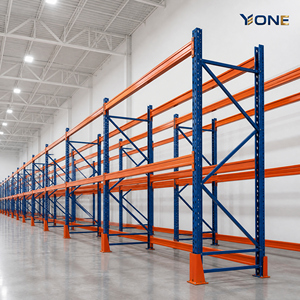
Heavy Duty Double Deep Freight Distribution Rack
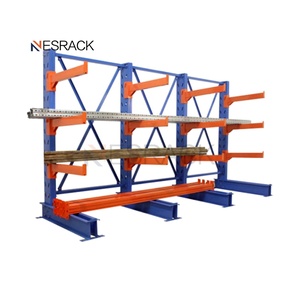
Customized Heavy Duty Industrial Cantilever Rack
Engineering Whitepaper: The Strategic Role of Double Deep Pallet Racking
In modern supply chain engineering, balancing land acquisition capital, cubic storage volume, and handling cycle efficiency represents the central optimization challenge. Double deep pallet racking systems—created by deploying two rows of selective racking back-to-back—eliminate 50% of the operational aisles required in standard selective configurations. Operated via specialized pantograph reach forklifts or articulated narrow-aisle equipment, double deep configurations increase warehouse storage density by 30% to 50% without demanding the astronomical capital investment associated with fully automated crane storage systems.
As a leading China double deep pallet racking manufacturer, HEDA Shelves optimizes cold-formed structural upright profiles (such as 90×68mm, 100×68mm, and 120×95mm profiles with thicknesses up to 2.5mm) utilizing premium-grade Q235B and Q355B structural steel. This structural depth requires strict attention to horizontal deflection, beam torsional rigidity, and floor slab anchoring shear calculations. Because pallets are stored two positions deep from a single operating aisle, structural safety pins and pallet support crossbars become vital load-bearing safety components rather than optional accessories.
| System Configuration | Floor Space Utilization | Direct Selectivity | Forklift Equipment Compatibility | Capex per Pallet Location |
|---|---|---|---|---|
| Standard Selective Rack | 35% – 40% (High aisle ratio) | 100% Immediate Access | Standard Counterbalance, Reach Trucks | Low baseline |
| Double Deep Racking | 55% – 65% (Optimal density) | 50% (FILO / Batch Rotation) | Pantograph Reach, Deep-Reach Mast | Economical (+15-20% vs Selective) |
| Drive-In / Drive-Through | 65% – 75% (Maximum bulk) | < 15% (Strict LIFO) | Standard Counterbalance (Enters Bays) | Moderate |
| Radio Shuttle Automation | 75% – 85% (High volume cube) | Indexed semi-automation | Standard forklift + Radio Shuttles | High technical capex |
Cubic Optimization
Reduces aisle requirements by up to 40%, freeing up hundreds of square meters of expensive ambient or temperature-controlled floor space.
Batch Handling Speed
Ideal for 2 to 4 pallet quantities per SKU. Enables rapid replenishment and dispatch cycles without moving multiple intermediate pallets.
Cold Chain Savings
Massively reduces the refrigerated cubic volume needed per pallet, slashing refrigeration electrical power costs in deep freeze facilities.
Rapid Conversion
Readily reconfigurable from existing standard selective bays by installing tie-bars and re-indexing guide beams to suit evolving fleet operations.
Future Procurement Trends & Technological Evolution in Warehouse Storage
Procurement departments in multinational 3PL operators, cold chain distribution hubs, and chemical logistics complexes are no longer assessing racking purchases solely on structural steel weight. The global material handling landscape is experiencing rapid tectonic shifts driven by real estate pressures, autonomous mobile robots (AMRs), climate adaptability, and environmental regulations.
Vision-Guided Automated Reach Fleets
The traditional bottleneck of double deep racking—operator visibility when inserting the rear pallet at 10-meter elevations—is disappearing. The rapid implementation of mast-mounted HD cameras and vision-guided Automated Guided Vehicles (AGVs) allows high-speed placement in double deep aisles with sub-millimeter positional tolerance.
High-Durability Nano Finishing in Tropical Zones
Cross-border supply chains in Southeast Asia and the Middle East expose storage racks to extreme relative humidity, salt mist, or extreme thermal fluctuation. Electrostatic powder coating preceded by rigorous multi-stage pickling and phosphating is replacing basic enamel dips, extending operational lifespans beyond 20 years.
Hybrid Cold-Formed High-Tensile Structural Hybrids
To reduce shipping weight while increasing dynamic seismic safety, manufacturers are adopting high-tensile Q355B coils roll-formed with scientific stiffening ribs. This maximizes structural bending resistance while significantly decreasing sea freight shipping container volume.
Furthermore, ESG mandates are steering engineering teams away from lead-containing paints toward environmentally benign, RoHS-compliant thermosetting powders. At HEDA Shelves, digital integration begins at the layout design stage: our engineering department outputs DWG and BIM models matching international rack safety codes (EN 15512, RMI, and AS 4084-2012), allowing EPC general contractors to conduct digital twin simulations prior to physical steel roll-forming.
10-Stage Precision Production & Quality Engineering Process
Under strict ISO 9001:2015 protocol, every component undergoes in-line non-destructive testing, precise hole punch indexing, and chemical bath treatments in our 30,000 m² factory.
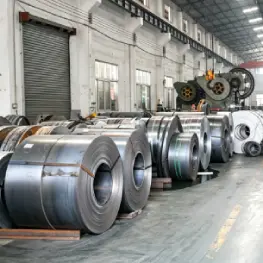
Raw Steel Assay
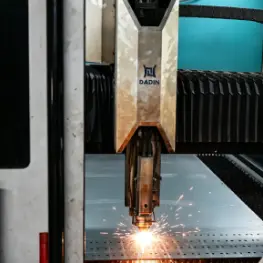
CNC Slitting
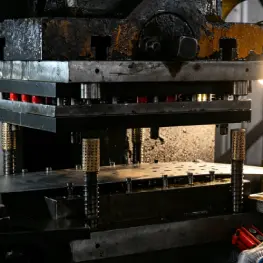
Punch Indexing
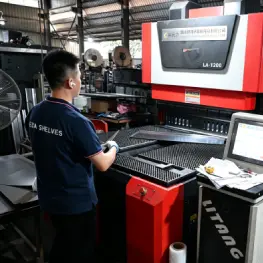
Cold Bending
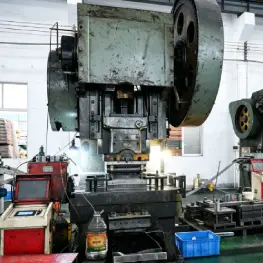
Roll Forming
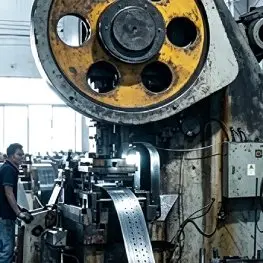
Automated Polish
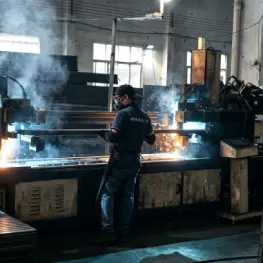
Robotic Welding
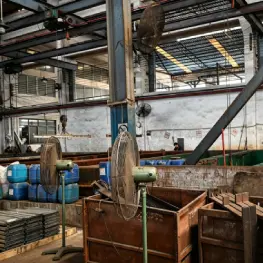
Phosphating Bath
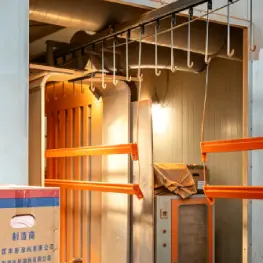
Powder Coating
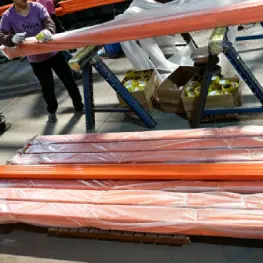
QC & Seaworthy Pack
Why Global Importers Partner with HEDA Shelves
Operating since 2001 from Guangzhou, China, our team delivers complete accountability from structural calculations to on-site commissioning.
Free 2D/3D Engineering CAD
Within 24 to 48 hours, our in-house engineering group outputs certified CAD floor drawings, static load calculations, and full 3D layout renderings for client sign-off.
Verified Seismic Design
Specialized calculation dossiers developed specifically for seismic fault zones in Indonesia, Philippines, Japan, and Taiwan, including base-plate enlargement and heavy floor anchors.
Comprehensive Certifications
Certified CE (No. 2435-CPR-8605159) and ISO 9001:2015 compliant (No. 18624Q00169R0M). Every project includes formal steel material test reports (MTR) and coating thickness certifications.
Optimized Container Logistics
Direct proximity to South China shipping hubs (Guangzhou, Shenzhen, Hong Kong). Customized nesting bundle packaging maximizes container fill rate, reducing freight costs by up to 22%.
Frequently Asked Questions by Industrial Buyers
Key technical, mechanical, and logistical criteria to review before issuing a Purchase Order for double deep systems.
What specialized forklift equipment is required for double deep racking?
Double deep configurations require reach trucks equipped with double-reach pantographs, deep-reach telescopic forks, or articulated narrow-aisle masts. Operators must verify that the forklift's residual capacity at maximum operating lift height accounts for the extended horizontal center of gravity on rear pallet placements.
How does HEDA Shelves prevent pallet fall-through on rear bays?
Because forklift operators position rear pallets across extended distances, we integrate structural pallet support bars, full-depth rear guide angle channels, or heavy-gauge galvanized wire mesh decking. These components create positive physical seating surfaces that eliminate accidental misplacement.
Can existing single selective racking be converted to double deep?
Yes. If warehouse floor slab depth and rebar specifications meet concentrated anchor pull-out limits, single rows can be re-spaced into double deep pairs using heavy row spacers, reinforced beam connectors, and revised aisle spacing to match your reach truck turn radius.
What warehouse data is needed to generate a free layout quotation?
We require the building CAD architectural drawing (indicating clear height, column spacing, and doors), pallet exterior dimensions (width x depth x total load height), unit weight per loaded pallet, forklift mast profile and turn radius, and target SKU velocity parameters.
How are structural racks protected in coastal or high-humidity regions?
Components undergo an automated multi-stage chemical wash (degreasing, acid pickling, and iron phosphating) followed by a 180°C to 200°C cured electrostatic polyester powder coat. For cold-storage or outdoor applications, full hot-dip galvanization conforming to ASTM A123 is available.
What documentation accompanies international shipments?
Each shipment includes mill test certificates (MTR) verifying raw steel chemistry, tensile strength test reports, complete assembly instruction dossiers with numbered 3D part calls, container loading packing lists, and certified structural load capacity certificates for local fire and municipal permit approval.
Transform Your Warehouse Cubic Capacity Today
Consult with our senior structural storage engineers for a comprehensive warehouse space analysis, certified static load calculation, and custom 2D/3D CAD design layout within 24 hours.