Featured Heavy-Duty & Double Deep Pallet Racking Systems
Manufactured in strict adherence to EN 15512, RMI, and AS4084 standards. Explore our modular configurations engineered for 100% pallet accessibility, ultra-dense cube utilization, and automated stacker crane integrations.
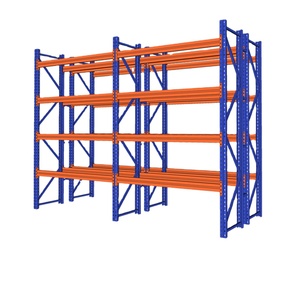
Heavy Duty Storage Rack Pallet Rack System Shelf For Industrial Storage Rack
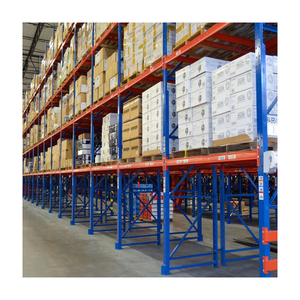
Wholesale Price Heavy Duty Storage Racks Warehouse Stacking Racks Selective Steel Pallet Rack
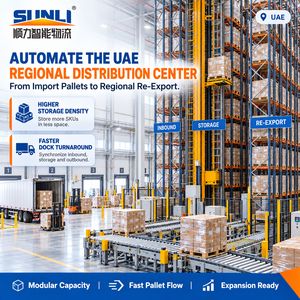
SHUNLI SL-AS004 Heavy Duty Automated AS/RS Pallet Stacking Rack OEM
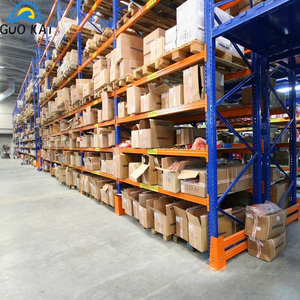
EU Standard Corrosion Protection Stacking Shelving Pallet Racking System
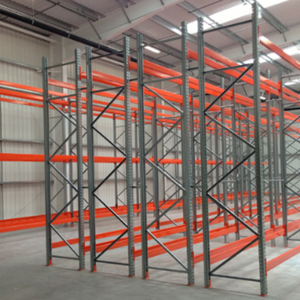
Double Deep Heavy Duty Pallet Storage Racking System 500kg-3000kg
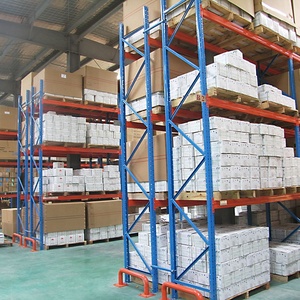
Customizable Warehouse Steel Storage Double Deep Selective Pallet Racking
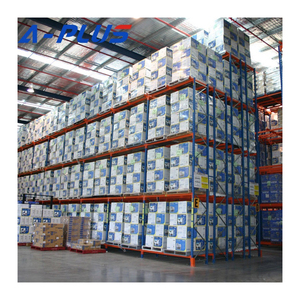
Warehouse High Density Metal Steel Customize Double Deep Racking System
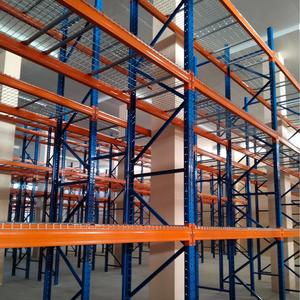
OEM ODM Heavy Duty Industrial Double Deep Stacking Selective Racking
Guangzhou HEDA Shelves: 25 Years of Precision Cold-Formed Racking
Unlike trading intermediaries, Guangzhou Heda Shelves Co., Ltd. (founded 2001) operates a vertically integrated industrial campus. From slit coil receiving through automatic roll forming, robotic dual-torch welding, multi-stage acid phosphating, and thermoset electrostatic polyester powder coating, we control tolerances to sub-millimeter precision.
Rigid Certified Metallurgy
We source prime hot-rolled structural strip steel conforming to Q235B and high-yield Q355B (equivalent to ASTM A572 Grade 50 and EN 10025 S355). Mill test certificates (MTC) verify tensile yield strength, chemical trace control, and impact resistance for every steel batch entering fabrication.
International Certifications
Full conformance with European Standard CE (No. 2435-CPR-8605159) under Construction Products Regulation, ISO 9001:2015 Quality Management (No. 18624Q00169R0M), and RoHS environmental safety compliance for our curing resins and anti-static coatings.
Turnkey 3D & Seismic Engineering
Equipped with proprietary load modeling and finite element analysis (FEA) software, our project engineering team drafts bespoke 2D CAD floor plans, pallet layout elevations, and 3D virtual walkthroughs within 24 to 48 hours, fully calibrated against local seismic PGA values.
Automated 10-Step In-House Production & QC Regime
How Guangzhou HEDA Shelves guarantees 0.05% dimensional tolerance across every upright frame, connector lug, and interlocking box beam.
Deep Pallet Racking Architecture: Volumetric Density vs. Selectivity
An analytical comparison of single-selective, double deep, push back, and automated deep-lane radio shuttle topologies for contemporary logistics engineers.
In modern industrial warehouse planning, land acquisition rates and cold-chain thermal preservation costs have fundamentally upended conventional aisle spacing paradigms. Standard single-selective pallet racking (Selective APR) offers 100% direct picking access to every Stock Keeping Unit (SKU) but expends between 55% to 65% of available footprint purely on forklift transit aisles. For operations characterized by multi-pallet SKU batching—such as fast-moving consumer goods (FMCG), beverage bottling lines, cold storage distribution centers, and tier-1 automotive manufacturing plants—deep pallet storage systems represent the premier approach to escalating volumetric cube efficiency.
Kinematics and Structural Physics of Double Deep Pallet Racking
Double deep pallet racking stacks pallets two-deep in a back-to-back layout, condensing four storage rows into a single operational aisle. This structural shift eliminates 50% of the interior access corridors, immediately unlocking a 30% to 40% surge in overall warehouse floor-space storage capacity. The configuration requires pantograph-fitted reach trucks or articulating double-reach telescopic forks capable of extending deep into the second rack row.
Design Insight: Because the outer pallet must be clear to access the rear position, double deep racking functions on a Last-In, First-Out (LIFO) inventory cycle per lane. It achieves optimal balance when SKU profiles consist of 2 to 10 pallets per SKU, maintaining high storage density without inducing excessive pallet honeycombing.
From an applied structural load perspective, double deep layouts impose concentrated bending moments on the beam profiles. In conventional racking, beam deflection is constrained under EN 15512 or ANSI/RMI MH16.1 to span/200. In double deep assemblies, however, reach truck mast oscillations and extended horizontal load centers require strict adherence to deflection limits of span/300 to span/400. Guangzhou Heda Shelves solves this through continuous cold-rolled omega-section upright profiles (up to 120mm web with internal stiffener lips) paired with heavy-duty structural twin-C interlocking box beams secured by 5-hook connector brackets and spring steel safety locks.
Comparative Engineering Matrix: High-Density Pallet Racking Typologies
| Racking Topology | Storage Density | Selectivity | Picking Inventory Cycle | MHE Equipment Required | Capital Expenditure (CapEx) |
|---|---|---|---|---|---|
| Selective (Single-Deep) | Baseline (100%) | 100% Direct | FIFO (First-In, First-Out) | Standard Counterbalance / Reach | Low (Baseline) |
| Double Deep Racking | 130% – 140% | 50% Immediate | LIFO per Slot | Pantograph Reach / Double Reach | Low-to-Moderate |
| Push Back Racking (2-6 Deep) | 140% – 165% | Per Lane | LIFO (Gravity Cart / Roller) | Standard Forklift | Moderate-to-High |
| Radio Shuttle Deep-Lane | 180% – 220% | Per Channel | FIFO or LIFO Switchable | Any Forklift + AGV/Shuttle Car | High (Automated) |
| AS/RS Stacker Crane System | 220% – 260% | 100% Automated | Software WMS Dynamic FIFO | Fully Automated Stacker Crane | Industrial Scale CapEx |
Future Procurement Trends in Deep Racking Systems
Over the next decade, industrial storage procurement is navigating three massive industry evolutions:
1. Convergence of Deep Storage with Automated Guided Vehicles (AGVs) and Shuttles: Procurement teams are transitioning from manual reach trucks to hybrid semi-automated radio shuttle channels. By integrating motorized pallet carriers running along heavy-gauge galvanized steel tracks inside deep tunnels (up to 30 pallets deep), operators reduce forklift entry risks, lower labor costs by up to 60%, and drastically suppress structural collision incidents.
2. Cold Chain Thermal Efficiency Demands: With global temperature-controlled logistics experiencing unprecedented expansion, refrigerated and deep-freeze facilities (-25°C to -35°C) face massive kilowatt-hour electricity costs per cubic meter. High-density double deep and automated shuttle systems compress air volume requirements, maximizing thermal mass stability. High-yield steel alloys with zero low-temperature ductile-to-brittle transition, hot-dip galvanization (HDG ≥85μm), or specialized frost-resistant epoxy finishes have shifted from optional upgrades to baseline mandatory procurement specs.
3. Dynamic Seismic Resilience and Structural Calculation Portfolios: In seismic active areas across the Pacific Rim, Middle East, and South America, racking systems must function as dynamic structural towers capable of dissipating harmonic base shear. Procurement officers increasingly demand full finite element analysis (FEA) reports verifying base plate anchor ductile yielding, upright cross-bracing nodal integrity, and soil foundation interaction data prior to placing mill deposits.
Frequently Asked Questions: Sourcing Deep Racking from China
Critical technical, logistics, and quality assurance questions answered by our chief structural engineers and export directors.
What exact steel specifications and yield certificates does HEDA provide?
How does double deep racking design account for forklift reach and pallet clearance?
Can HEDA Shelves engineer racking systems for active seismic zones?
What are the surface treatment anti-corrosion options for tropical or cold-room facilities?
What is the standard production lead time and container packing efficiency?
Ready to Optimize Your Cube Density?
Send your warehouse architectural CAD drawing, clear height limits, and pallet weight specifications. Our licensed storage engineers will generate your free 2D layout, 3D render, and structural quotation within 24 hours.