Featured Warehouse Pallet & Gravity Flow Systems
Cold-roll formed from high-yield structural steel, calibrated for heavy-payload distribution, cold storage, and rapid FIFO rotation. Engineered directly at our Guangzhou plant.
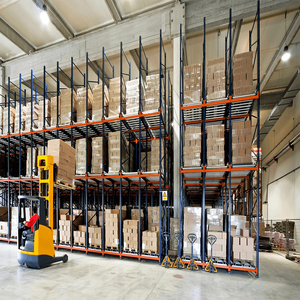
Warehouse High Density Gravity Roller Pallet Flow Rack
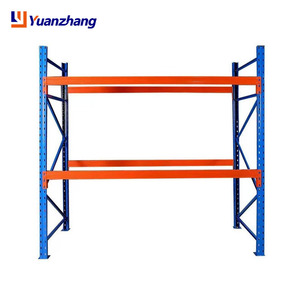
Warehouse Metal Modular Heavy Duty Pallet Shelving System
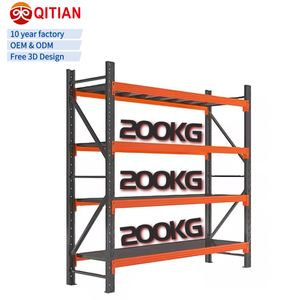
Factory Customized Steel Light Duty 4 Layer Warehouse Rack System
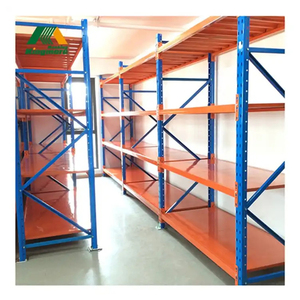
CE Certified Safe Heavy Duty Selective Bolted Pallet Rack Shelving
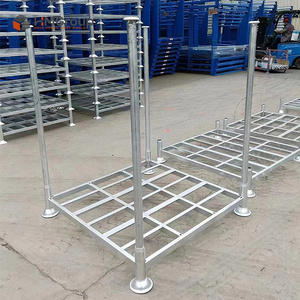
Heavy Duty Galvanized Metal Steel Storage Stacking Pipe Stillages
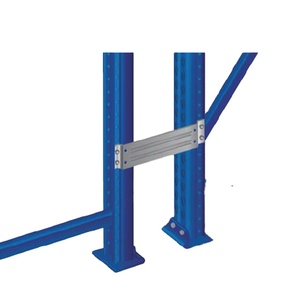
Metal Row Spacers for Supermarket Warehouse Pallet Racking
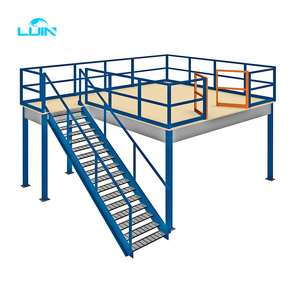
Platform Rack Multi-functional Mezzanine Heavy Duty Storage System
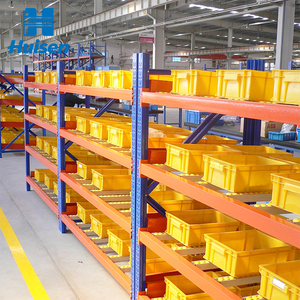
Customized Steel Carton Gravity Flow Industrial Storage Racks
The Physics & Structural Architecture of Pallet Flow Storage
Demystifying kinetic velocity regulation, lane declination geometry, and continuous line-pressure abatement in high-throughput distribution hubs.
In modern industrial warehousing, pallet flow systems—frequently referred to as gravity live dynamic storage racks—represent the pinnacle of space-density and operational velocity. Operating on a strict First-In, First-Out (FIFO) stock rotation schedule, pallet flow replaces conventional operating aisles with inclined dynamic roller lanes. Pallets are deposited at the higher replenishment face (charging end) and navigate down a precision-graded trajectory toward the discharge face via earth's gravitational pull.
While conceptually straightforward, designing a reliable pallet flow system involves intricate mechanical engineering. Unlike static selective pallet racking, where loads remain motionless on horizontal twin-beams, gravity dynamic racking introduces continuous kinetic energy, rolling friction variability, and catastrophic runaway load risks. System failure directly impacts personnel safety and produces costly supply chain shutdowns.
Declination Pitch Calibration
Centrifugal Speed Controllers
Hydro-Mechanical Pallet Separators
A properly engineered system achieves an instant 60% to 75% volumetric footprint reduction compared to standard selective layouts by eliminating intervening forklift access aisles. Forklift operators operate exclusively at two exterior perimeter aisles: one dedicated to loading and the opposite reserved for picking. This physical segregation halves internal warehouse traffic collisions while creating a continuous buffering zone essential for FMCG, cold storage, pharmaceutical, and high-velocity automotive distribution centers.
Top 10 Global Pallet Flow System Factories & Suppliers
A comparative procurement benchmark evaluating manufacturing capacity, engineering metallurgy, patent innovations, and geographic project delivery capability.
| Rank / Enterprise | Headquarters | Core Strengths & Roller Engineering | Primary Standards | Typical Lead Time | Direct Inquiries |
|---|---|---|---|---|---|
|
#1 HEDA Shelves Guangzhou Heda Shelves Co., Ltd. |
Guangzhou, China | Integrated in-house roll forming, multi-stage pickling/phosphating, tailored cold-chain & seismic design, direct factory supply | CE (2435-CPR), ISO 9001:2015, RoHS | 15–25 Days | Send an Inquiry |
|
#2 Interroll Group Interroll Holding AG |
Sant'Antonino, Switzerland | Global pioneer in proprietary speed controllers, high-durability polymer rollers, and modular lane assemblies | EN 15512, ISO 14001, TÜV | 8–12 Weeks | Send an Inquiry |
|
#3 SSI Schaefer SSI Schäfer Group |
Neunkirchen, Germany | Full turnkey automated material handling, integrated live storage modules, and high-bay clad rack engineering | FEM 10.2.02, DIN EN ISO 9001 | 10–14 Weeks | Send an Inquiry |
|
#4 Bito-Lagertechnik BITO-Lagertechnik Bittmann |
Meisenheim, Germany | Patented twin-roller dynamic tracks, ergonomic order-picking trays, and high-rigidity boltless frame profiles | RAL-RG 614, CE, ISO 9001 | 8–10 Weeks | Send an Inquiry |
|
#5 Mecalux Mecalux, S.A. |
Barcelona, Spain | Dynamic flow storage systems with motorized transfer car integration, proprietary Easy WMS software pairing | EN 15620, ISO 9001 | 6–10 Weeks | Send an Inquiry |
|
#6 Frazier Industrial Frazier Industrial Company |
Long Valley, NJ, USA | 100% structural steel channel uprights, high abuse-resistant pallet flow lanes designed for demanding North American distribution | RMI Standards, AISC | 12–16 Weeks | Send an Inquiry |
|
#7 Stow Group Stow Storage Systems |
Spiere-Helkijn, Belgium | Heavy-duty dynamic live racking, high-precision automated lane tracking, and extensive European distribution operations | EN 15512, ISO 9001, VDI 4453 | 8–11 Weeks | Send an Inquiry |
|
#8 NEDCON B.V. NEDCON (BrandSafway) |
Doetinchem, Netherlands | Precision cold-formed high-tensile steel racking with custom pallet flow sub-assemblies for automated multi-tier warehouses | EN 15512, CE, ISO 14001 | 10–13 Weeks | Send an Inquiry |
|
#9 Apex Warehouse Apex Storage Systems Ltd. |
Milton Keynes, UK | Pallet live storage solutions engineered for dense UK logistics facilities, featuring bespoke speed control tracks | SEMA Code of Practice, ISO | 7–9 Weeks | Send an Inquiry |
|
#10 Gonvarri Material Gonvarri (Constructor/Dexion) |
Madrid, Spain | Extensive product portfolio across Dexion and Constructor brands; robust roller bed assemblies with anti-rollback safety pawls | FEM, EN Standards, ISO 9001 | 9–12 Weeks | Send an Inquiry |
1. Direct Factory vs System Integrator
Procuring directly from the source manufacturer (such as HEDA Shelves) cuts tier-2 middleman margins by 22%–35%, ensuring immediate access to custom mill lengths, bespoke roller spacing, and rapid engineering change orders.
2. Roller Track Metallurgy
Demand galvanized steel rollers with precision shielded ball bearings (6002-RS/2Z series). Avoid unprotected carbon steel or cheap plastic rollers in high-load applications (>1,000kg) to mitigate structural cracking and flat-spotting.
3. Speed Controller Longevity
Centrifugal brakes must feature maintenance-free internal planetary gearings sealed in synthetic cold-chain grade lubrication (-30°C certified) to prevent lubricant crystallization and intermittent lane jamming.
4. Certified Deflection Allowables
Ensure compliance with EN 15512 and RMI standards: beam deflection under maximal load must not exceed L/200, and frame deflection under combined gravity/seismic loads must remain strictly within safe operational limits.
Factory-Direct Advantage: Guangzhou Heda Shelves Co., Ltd.
Since 2001, providing structural storage engineering, automated CNC fabrication, and certified supply chain resilience for international markets.
Headquartered in Guangzhou, China, Guangzhou Heda Shelves Co., Ltd. has established an industry-leading benchmark over the past 25 years. Operating an expansive modern plant exceeding 30,000 square meters staffed by over 300 experienced engineers, CNC technicians, and structural planners, HEDA delivers an unyielding monthly output capacity of 30,000 tons of cold-formed structural steel storage systems.
International Certifications
Complete compliance verification including CE Certification (No. 2435-CPR-8605159), ISO 9001:2015 Quality Management (No. 18624Q00169R0M), and certified RoHS environmentally compliant powder formulations. Full mill test reports and structural calculations are provided with all shipments.
10-Step Anti-Corrosion Finishing
Unlike low-tier suppliers using unwashed steel, every component undergoes an exhaustive 10-step treatment cycle: raw material testing, CNC cutting, punching, roll forming, polishing, robotic welding, multi-stage acid pickling & phosphating, electrostatic thermoset powder application, and high-temp curing.
Seismic & Climate Specialization
Custom-engineered for active seismic belts across Indonesia, the Philippines, Japan, and Taiwan. Frame bracing gauges, base plate dimensions, and anchor embedment depth are strictly computed to absorb lateral seismic shockwaves without buckling.
With strategic manufacturing facilities situated minutes from South China’s prime ocean terminals, HEDA Shelves offers regional buyers in Southeast Asia, the Middle East (GCC), Europe, and the Americas accelerated shipping transit times and maximized 40HQ container load-out plans, reducing landed freight costs per pallet position by up to 18%.
Future Procurement Trends & Technology Advancements (2026–2030)
Where gravity dynamic storage intersects with intelligent intralogistics, cold-chain energy optimization, and digital warehouse automation.
Autonomous Mobile Robot (AMR) / AGV Interfacing
The transition from manual counterbalance forklifts to autonomous reaching trucks and AMRs demands hyper-accurate pallet entry guidance and automatic pallet alignment sensors at both the charge and discharge heads, ensuring sub-5mm pick-and-place precision.
Cryogenic Cold-Chain Optimization
With global frozen food and bio-pharma demands accelerating, pallet flow systems are replacing static aisles in cold stores down to -30°C. By condensing cooling cubic meters by 70%, energy consumption plummets drastically, generating measurable operational carbon savings.
Contactless Magnetic Eddy-Current Braking
Emerging solid-state magnetic braking rollers eliminate internal friction gears entirely. Utilizing electromagnetic induction (eddy currents), braking resistance scales dynamically with pallet mass, creating a frictionless, wear-free deceleration curve with zero maintenance cycles.
Total Cost of Ownership (TCO) Procurement
Enterprises have shifted focus from initial CapEx to lifecycle OpEx. Procurement RFQs now mandate calculations detailing annual maintenance labor, roller replacement availability, and pallet degradation rates across standard 10-year operational horizons.
Integrated IoT Smart Lane Monitoring
Next-gen flow lanes incorporate embedded optical sensors at each brake roller position, transmitting real-time velocity metrics, temperature conditions, and lane occupancy counts directly to warehouse execution systems (WES) to detect hangs proactively.
Zero-Carbon Eco Powder Formulations
Industrial buyers demand certified ESG compliance. Low-bake, zero-VOC polyester powder coatings cured with solar-assisted induction ovens significantly decrease embodied carbon metrics across structural cold-formed profiles.
Frequently Asked Questions (FAQ) on Pallet Flow Procurement
Essential technical answers compiled by HEDA’s senior structural engineers to resolve critical friction points before issuing an RFQ.
1. What crucial engineering variables are required to calculate pallet flow incline and roller spacing?
- Pallet Bottom Construction: True Euro-pallets (800x1200mm) with chamfered bottom boards roll smoothly, whereas GMA pallets (40x48 inch) with broken or missing bottom deck boards can stall. Plastic pallets with irregular perimeter runners require continuous full-width steel roller tracks.
- Weight Variance: The minimum and maximum gross weight per pallet. If pallets vary between 300kg and 1,500kg in the same lane, hybrid dual-action brake rollers are mandatory so light loads do not stall and heavy loads do not over-accelerate.
- Environmental Temperature: Ambient (+20°C) versus cold storage (-25°C) determines roller bearing lubricant viscosity. Standard grease thickens in freezing temps, necessitating low-temp synthetic grease.
- Clear Deflection Limits: Ensuring frame deflections under load do not distort lane pitch angles away from the engineered 3.0%–3.5% target.
2. How do centrifugal brake rollers differ from magnetic hysteresis speed controllers?
3. How does the pallet separator work, and why is it mandatory in deep-lane flow racks?
4. What seismic engineering checks are necessary for Asian and Pacific warehouse sites?
5. How does HEDA Shelves protect pallet flow racks from humidity and coastal corrosion?
6. What is the typical lead time, packing method, and installation support for overseas projects?
Request a Custom Pallet Flow Engineering Layout & Free 3D CAD Design
Provide our structural team with your warehouse dimensions, pallet specifications, and target throughput. We will furnish a full structural load check, bill of materials, and direct factory quotation within 24–48 hours.