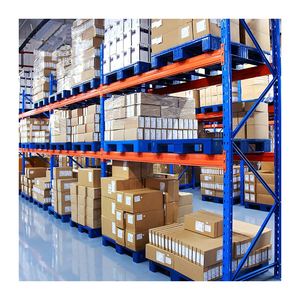
 5 Ton / Level
Direct Factory Engineering
Featured Heavy Duty Racking & High-Density Storage Solutions
Precision-formed cold-rolled profiles, structural I-beam integrations, and robotic dual-fillet welding designed to exceed FEM 10.2.02, RMI MH16.1, and AS4084 structural criteria.
5 Ton / Level
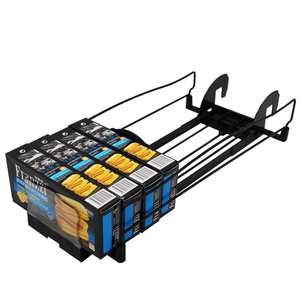 Dynamic Gravity
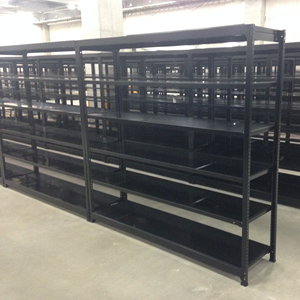 300-800 kg/Tier
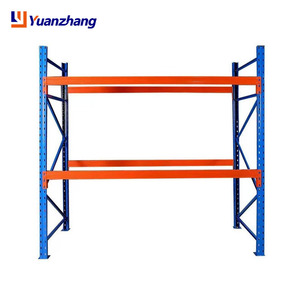 High-Bay Modular
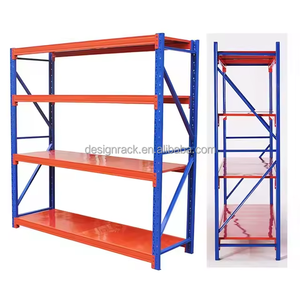 Fast Assembly
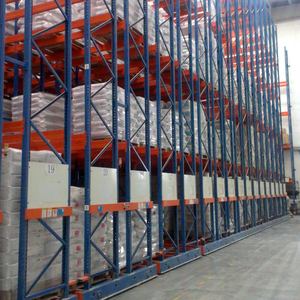 High-Density Mobile
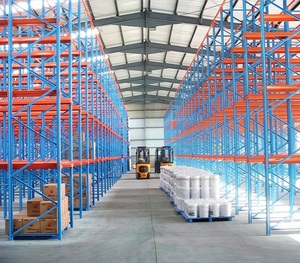 Bulk LIFO / FIFO
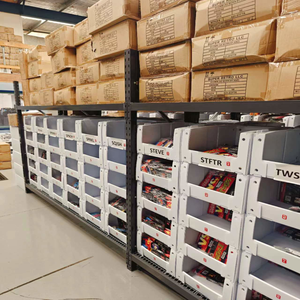 Picking Logistics
Engineering Analysis: What Defines "Extra Heavy Duty" in Industrial Pallet Racking?
In modern high-throughput logistics terminals, chemical distribution vaults, cold chain freezers, and industrial manufacturing plants, standard pallet racks rated for 1,000 kg to 2,000 kg per beam level fall short of operational safety and structural survival thresholds. Extra Heavy Duty Pallet Racks are engineered structural systems calculated to withstand working payloads ranging from 3,000 kg up to 6,000 kg per pair of beams, with total bay column capacities routinely exceeding 20,000 kg to 35,000 kg under static and dynamic cyclic loading.
True heavy-duty performance is determined at the metallurgical and structural level. While budget manufacturers utilize re-melted scrap steel with erratic carbon, sulfur, and phosphorus content, world-class racking factories rely exclusively on primary hot-rolled structural steel coils—predominantly Q235B, Q355B (equivalent to European S235JR and S355JR), and ASTM A572 Grade 50. The steel's yield strength (σs ≥ 235 to 355 MPa) and ultimate elongation (δ ≥ 21%) establish the structural margin before plastic deformation or catastrophic rupture can occur under sudden dynamic forklift impacts.
Information Gain Insight: The ultimate failure point in extra heavy duty racking rarely stems from mid-span beam rupture; rather, it results from torsional-flexural buckling of the upright columns and weld shear detachment at the beam end-connectors. Premium factories mitigate this by deploying multi-point claw brackets (4 to 5 hooked locking tabs per connector) coupled with CNC automated roll-forming machines containing 22 to 28 sequential roller stations to cold-form complex Omega (Ω) profiles without inducing residual micro-fracture stresses.
Structural Comparison: Cold-Rolled Formed Profiles vs. Structural Hot-Rolled Channels
Procurement directors must distinguish between two primary structural paradigms when specifying extra heavy installations:
- Roll-Formed Omega Profiles (High-Yield Cold-Formed Steel): Offers the highest strength-to-weight ratio, manufactured via high-precision CNC multi-stage roller lines. The proprietary ribbing, multi-bend return lips, and cold-worked strain hardening yield extreme torsional stiffness while remaining economically viable for expansive warehouses spanning tens of thousands of pallet positions.
- Structural Steel Racks (Hot-Rolled C-Channels and I-Beams): Utilizes heavy hot-rolled structural sections joined by structural grade bolts. Primarily specified in harsh, high-impact environments (such as lumber yards, heavy casting facilities, and drive-in racks with intense reach-truck traffic), offering extreme resistance to forklift impact at a higher raw-material deadweight.
Top 10 Extra Heavy Duty Pallet Racks Factories Worldwide (2026/2027 Benchmark)
To provide clear procurement intelligence for engineering procurement teams, 3PL infrastructure leads, and warehouse developers, the following matrix benchmarks the world's preeminent extra heavy-duty pallet rack manufacturers based on cold-forming automation, metallurgical integrity, seismic design compliance, and regional production scale.
| Manufacturer / Brand | HQ Location | Primary Steel Grades | Max SWL per Beam Pair | Engineering Compliance | Best Suited For |
|---|---|---|---|---|---|
| HEDA Shelves | Guangzhou, China | Q235B, Q355B Solid Steel | Up to 5,500 kg | CE (CPR-8605159), ISO 9001, RoHS | Factory-direct custom heavy racks, cold chains, SE Asia/GCC projects |
| SSI Schaefer | Neunkirchen, Germany | High-Grade European S-Series | Up to 5,000 kg | FEM 10.2.02, EN 15512, DIN | Fully automated AS/RS high-bay distribution hubs |
| Mecalux | Barcelona, Spain | S235JR, S355JR | Up to 4,800 kg | EN 15512, RMI MH16.1 | Standardized logistics distribution across Europe & Americas |
| Dexion (Gonvarri) | Madrid, Spain | Structural High-Tensile S355 | Up to 4,500 kg | FEM, EN, AS4084 | Automotive manufacturing & longspan cantilever integration |
| Stow Group | Dottignies, Belgium | High-Strength Micro-Alloyed | Up to 5,000 kg | FEM 10.2.09, EN 15620 | High-density shuttle racks and European automated silos |
| Daifuku Co., Ltd. | Osaka, Japan | JIS G3101 SS400, SM490 | Up to 4,500 kg | JIS, Seismic Zone 4 Guidelines | Intralogistics automation and seismic-resilient mega hubs |
| Jungheinrich AG | Hamburg, Germany | S235, S355 European Profiles | Up to 4,500 kg | EN 15512, FEM Standard | Integrated AGV fleets and VNA narrow-aisle terminals |
| Frazier Industrial | Long Valley, NJ, USA | ASTM A36, A572 Grade 50 | Up to 6,000+ kg (Structural) | RMI MH16.1, AISC 360 | Heavy structural channel racks for North American cold storage |
| Ridg-U-Rak | North East, PA, USA | High-Tensile Cold Formed | Up to 4,500 kg | RMI, ANSI MH16.1 | Seismic base-isolation systems in the US market |
| Interlake Mecalux | Chicago, IL, USA | Commercial High Yield | Up to 4,200 kg | RMI MH16.1, ISO 9001 | Teardrop-compatible industrial warehouse distribution |
Among global tier-1 manufacturers, Guangzhou Heda Shelves Co., Ltd. (HEDA Shelves) provides a highly compelling balance of heavy industrial fabrication capacity, comprehensive CE/ISO structural compliance, agile CAD/3D engineering turnarounds, and competitive factory-direct pricing for international EPC contractors and regional supply chain operators.
Future Procurement Trends: 2026 to 2030 Structural Racking Outlook
Warehouse logistics is transitioning through an unprecedented convergence of vertical height expansion, rapid robotics integration, and rigorous carbon emissions accounting. Engineering teams procuring heavy-duty pallet racking systems over the next five years must prepare for the following four disruptive shifts:
1. Sub-Millimeter AGV/AMR Tolerances
Autonomous mobile robots and turret automated cranes demand floor-to-beam deflection ratios tightened from conventional L/200 to L/350 or L/500. Structural tolerances on beam deflection and column plumbless can no longer rely on manual shimming; they mandate precision roll-forming and laser-aligned anchoring.
2. Performance-Based Seismic Engineering
With massive supply chains operating along the Pacific Rim and Middle Eastern seismic faults, static equivalent lateral force models are giving way to dynamic response-spectrum calculations. High-ductility baseplates, oversized seismic anchor studs, and specialized cross-aisle energy dissipators are becoming standard requirements in tender specifications.
3. Eco-Duplex & Galvanized Anti-Corrosion
Tropical warehouses in Southeast Asia and sub-zero blast freezers accelerate chemical corrosion at condensation joints. Future specifications prioritize a ten-step surface treatment consisting of chemical pickling, micro-crystalline phosphating, and lead-free electrostatic epoxy-polyester coatings, supplemented by hot-dip galvanizing for coastal and sub-zero zones.
4. Smart Structural Health Telemetry
Next-generation extra heavy duty installations incorporate integrated strain-gauge sensors and wireless displacement transponders within the most critical upright sections. These telemetry nodes provide real-time alerts if an unseen forklift collision causes eccentric loading or micro-buckling beyond allowable elastic limits.
Direct Factory Foundation
Why Industrial Procurement Leaders Partner with HEDA Shelves
Operating since 2001 in Guangzhou, China, HEDA Shelves operates a modern 30,000 square meter plant delivering 30,000 tons of monthly capacity. Our full-cycle in-house fabrication guarantees tight tolerances, rapid turnarounds, and direct engineering ownership.
100% In-House 10-Step QC
From primary steel coil ultrasonic flaw testing and automatic CNC punching to robotic beam welding and automated powder coating, every step is rigorously monitored under ISO 9001:2015 controls.
Free 24-48h CAD/3D Layouts
Our senior warehouse engineers evaluate clear building height, forklift radii, column grids, and pallet metrics to generate 2D CAD layouts, 3D photorealistic renderings, and static load certificates.
Global Certifications & Permits
Holding official CE certification (No. 2435-CPR-8605159), ISO 9001:2015 (Certificate 18624Q00169R0M), and RoHS compliance, we supply comprehensive calculation packages for building permit sign-offs.
Engineered Seismic Mitigation
Custom structural calculations, heavy-gauge baseplates, anchored bracing, and ductile connection designs adapted for high seismic hazard regions including Indonesia, the Philippines, Japan, and Taiwan.
Tropical Anti-Corrosion Process
Rigorous pre-coating chemical pickling and phosphating lines remove mill scale and oil, providing superior powder adhesion and corrosion resistance against high-humidity, high-salinity ambient air.
Export Container Optimization
Over 10,000 installations shipped across 120+ nations. Custom steel nesting and container packing plans maximize 40HC cube density, reducing trans-oceanic freight costs per pallet location.
Comprehensive Extra Heavy Duty Racking Buyer's FAQ
Technical guidance direct from our chief structural design engineers to address critical procurement and compliance questions:
1. What distinguishes Q235B from Q355B steel in heavy-duty racking load calculations?
Q235B possesses a nominal yield strength of 235 MPa, offering excellent ductility and formability, making it the premier choice for standard to heavy selective beam tiers up to 3,500 kg per pair. Q355B (yield strength ≥ 355 MPa) contains micro-alloying elements (manganese and silicon) that provide approximately 50% greater yield resistance without brittle fracture risk. Q355B is utilized for bottom-tier columns, seismic vertical framing, and 4,000–6,000 kg ultra-heavy load bays, allowing lighter section weights while maintaining superior safety factors.
2. How does HEDA Shelves ensure safety compliance with international rack design codes?
Our systems comply with European Standards (EN 15512, EN 15620, EN 15629), the American RMI MH16.1 standard, and Australian Standard AS4084. We maintain certified factory production control under CE Certification No. 2435-CPR-8605159. Beam designs are structurally calculated with a minimum safety factor of 1.5 against ultimate yield, with beam deflections held strictly to ≤ L/200 under 100% uniformly distributed load (UDL).
3. What data must a client provide to receive an engineered CAD warehouse layout?
To produce a millimeter-accurate design, we require: (1) Warehouse architectural drawings (CAD or dimensioned PDF) indicating column grids, fire doors, and overhead obstructions; (2) Clear underside height to the lowest roof truss or sprinkler pipe; (3) Pallet specifications: Width × Depth × Total Height (including goods) and gross weight per pallet; (4) Forklift specifications: Model, minimum turning aisle width (AST), and maximum mast lift height; (5) Daily inventory turnover rates and preferred FIFO/LIFO workflow.
4. How do you prevent progressive collapse if a heavy forklift impacts an upright column?
Progressive rack collapse is prevented through three redundant engineering lines: First, column base sections are reinforced with wrap-around heavy-gauge steel upright protectors or external polymer shock buffers anchored directly into the slab. Second, upright baseplates feature four anchor bolt holes rather than two, distributing shear loads. Third, top portal tie-beams connect double-entry rows across aisles to distribute lateral impact energy throughout the entire structural block.
5. What surface pre-treatment is utilized to prevent rust in high-humidity tropical or cold-store environments?
Raw cold-formed steel accumulates oils and oxidation. We utilize an automated multi-stage immersion pre-treatment consisting of alkaline degreasing, acid pickling to eliminate mill scale, neutralization, and zinc phosphating. This produces an inert crystalline layer ensuring mechanical bonding for our electrostatic polyester powder coating (60–90 μm thickness cured at 180–200°C). For blast freezers (-30°C) or coastal installations, we provide full hot-dip galvanizing per ISO 1461 with minimum coating thickness exceeding 70 μm.
6. What are the typical manufacturing and sea shipping lead times for a full warehouse order?
A standard warehouse project (5 to 15 forty-foot high cube containers, approx. 1,000–5,000 pallet positions) is manufactured within 15 to 25 business days from CAD drawing sign-off. Our factory in Guangzhou is situated near major South China export ports (Nansha, Huangpu, Shenzhen, Hong Kong). Direct maritime transit takes 3–7 days to ASEAN destinations, 14–20 days to the Middle East and India, and 25–35 days to European or North American ports.
7. Can your engineering team provide installation supervision for international projects?
Yes. Every project includes comprehensive 3D component installation manuals, exploded node diagrams, and high-definition video walkthroughs. For large-scale projects, we can dispatch senior HEDA installation supervisors to your jobsite to direct local rigging crews, or conduct live interactive remote video inspection checks to verify vertical alignment and torque specifications prior to commissioning.
Ready to Engineer Your High-Density Heavy Warehouse?
Submit your warehouse dimensions and payload specifications. Receive a certified 2D CAD layout, 3D rendering, and detailed factory quotation within 24 to 48 hours.
Inquire Now