Heavy-Duty
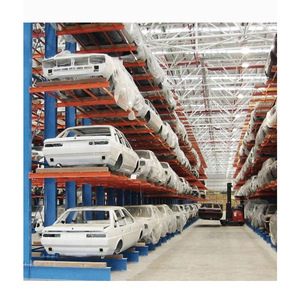
Automotive Vehicle Storage Cantilever Rack
Multi-tier structural steel rack engineered for auto dismantlers, scrap yards, and dealership fleet density with up to 3,000 kg arm limits.
Explore factory-engineered cantilever towers, automated shuttles, and specialized transport racks fabricated in accordance with rigorous CE Certification (No. 2435-CPR-8605159) and ISO 9001:2015 precision manufacturing protocols.
Multi-tier structural steel rack engineered for auto dismantlers, scrap yards, and dealership fleet density with up to 3,000 kg arm limits.
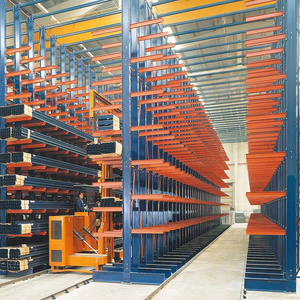
Phosphated and electrostatically finished column uprights designed to house extruded aluminum, plastic PVC conduits, and copper pipe packs.
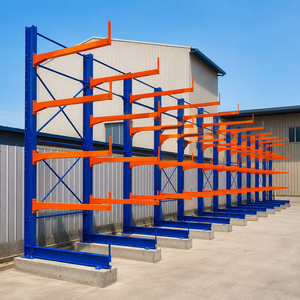
Specialized modular storage for irregular lengths, lumber sheets, steel bars, and hardware bundles featuring bolt-connected pivot arm safety joints.
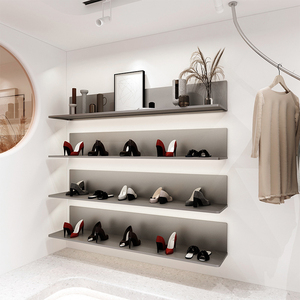
Corrosion-resistant floating architectural framework for textile distribution, apparel back-of-store sorting, and hygiene-demanding facilities.
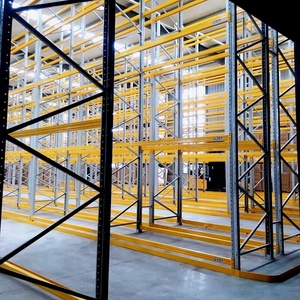
VNA engineered selective pallet framework granting immediate 100% SKU access while integrating side-guide rails for wire-guided turret trucks.
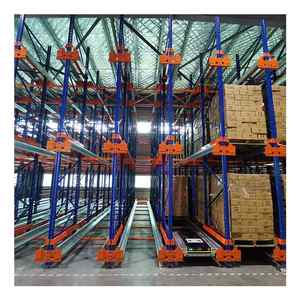
Sub-zero operational wireless radio shuttle carrier system designed to maximize cubic cold room density and eliminate forklift entry collisions.
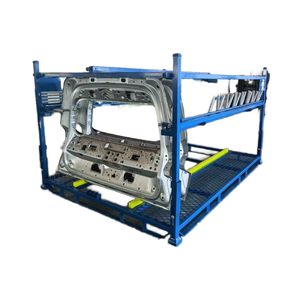
Foldable heavy-duty steel transport equipment fitted with industrial casters and protective dunnage lining for vehicle assembly lines.
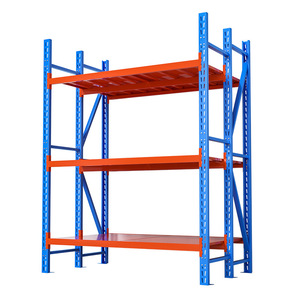
Interlocking beam profiles treated with zinc-rich pickling and phosphating for aggressive marine air, humid climates, and bulk chemical warehouses.
In logistics engineering, handling non-standard, long-span structural materials—such as structural steel beams, extruded PVC tubes, engineered timber packs, and automotive chassis—presents geometric challenges that standard pallet racking cannot accommodate. Traditional racks rely on front vertical columns that impede uninterrupted horizontal positioning. Cantilever racking solves this structural constraint through a self-supporting base, vertical column uprights, dynamic pivot or bolted arms, and cross-bracing assemblies that establish clear longitudinal accessibility.
A rigorous vendor evaluation begins with structural deflection limits. Under global storage codes including ANSI MH16.2 and EN 15512, cantilever arm deflection must be calibrated to avoid product slippage while preventing cumulative plastic deformation on the vertical tower. In premium manufacturing plants, upright columns are constructed from either roll-formed high-tensile carbon steel (such as Q235B or Q355B) or hot-rolled heavy structural H-sections. While roll-formed sections deliver superior cost-efficiency for medium loading (500 kg to 1,500 kg per arm), hot-rolled structural steel towers are essential for high-impact applications such as scrap automobile recycling and thick bar stock storage exceeding 3,000 kg per arm.
Furthermore, connection engineering between the column and arm represents the primary mechanical failure zone. Top-tier manufacturers utilize pivot arm designs secured via heat-treated steel pins. When accidental contact from rough-terrain forklifts or side loaders occurs during elevation, the pivot arm swings upward instead of shearing the column flange, isolating impact shock and protecting the warehouse's structural integrity.
Direct factory execution from our 30,000 m² Guangzhou production facility. We maintain zero-tolerance structural control from hot-rolled raw coil to finished powder coating.
Multi-station computer-controlled cold rolling lines profile up to 120×95mm upright columns with consistent flange thickness, reducing residual internal stress and enhancing axial compressive capacity.
Uprights are punched with 75mm or 100mm pitch patterns using synchronized hydraulic punches, ensuring arm adjustability, positive wedge locking, and perfect bolt alignment across tall spans.
Arm connection plates and heavy structural base flanges are joined using robotic CO2 gas shielded welding, eliminating manual porosity and achieving full-penetration structural joints.
Every steel component undergoes an automated 8-bath chemical dip sequence to remove rust, scale, and oil, depositing an amorphous phosphate surface that prevents sub-film rust creeping.
Automated Swiss Gema powder application guns deposit thermosetting epoxy-polyester coatings, cured at 180°C–200°C for superior abrasion resistance in tropical or coastal environments.
Factory export engineering involves custom steel strapping, nested pallet bundles, and container load plans that maximize sea freight tonnage while protecting powder coatings during transit.
Enterprise procurement managers are navigating rising industrial land values, changing environmental regulations, and automation mandates. Over the next decade, the cantilever racking sector is evolving from passive steel shelving into intelligent storage structures.
Warehouses are reducing cantilever aisle widths down to 1.8–2.2 meters using mechanical bottom floor rail guides and inductive magnetic wire navigation for multi-directional side loaders, increasing footprint storage density by over 45%.
High-bay installations exceeding 15 meters now incorporate automated crane stackers fitted with telescopic fork extractors to manage long profiles, eliminating manual forklift operations in timber and pipe centers.
With warehouse footprint construction costs surging, buyers are shifting bulk pipe, lumber, and raw coil staging to external outdoor yards, necessitating heavy ISO 1461 batch hot-dip galvanization (minimum 65–85μm) for decades of corrosion resistance.
For installations in seismic zones across Southeast Asia, Japan, and the Middle East, cantilever design incorporates nonlinear pushover structural modeling, enlarged dual-anchor base assemblies, and high-ductility carbon steel alloys.
Integration of IoT strain-gauge sensors along column roots and main cantilever joints enables real-time weight tracking and alerts logistics safety directors to unbalance or structural overload conditions.
Enterprises are combining cantilever structures with overhead rack-supported mezzanine floors and exterior roof truss extensions, creating hybrid warehouses that combine cantilever storage with enclosed pick-and-pack modules.
Technical answers to help engineering contractors, project managers, and logistics consultants evaluate structural cantilever racking configurations.
Roll-formed cantilever racking is fabricated by cold-bending carbon steel coils into open C or omega profiles. It is best suited for uniformly distributed loads ranging up to 1,000 kg per arm, offering adjustable clip or bolt configurations. Structural H-beam cantilever racks utilize heavy hot-rolled steel shapes welded together. They are engineered for demanding industrial environments, including timber yards, scrap vehicle stacking, and steel processing mills where arms must support point-impact loads exceeding 2,000 to 4,000 kg per position.
To deliver an accurate 2D CAD layout and 3D FEA load calculation, factory engineers require: (1) Warehouse building footprint with clear internal ceiling height and obstacle locations; (2) Product specifications including bundle length, width, depth, and weight; (3) Loading method (forklift side-loader, counterbalanced forklift, overhead crane, or manual); (4) Desired arm pitch adjustments; and (5) Local geographic seismic ratings or floor slab concrete compressive strength (such as 20MPa to 30MPa).
Unlike selective pallet racks supported at two points, cantilever arms are fixed only at the column, creating a classic cantilever beam moment. Under full load, elastic deflection occurs along the arm length. According to ANSI MH16.2 and EN 15512 specifications, manufacturers engineer arms with an upward slope (typically 2 to 4 degrees) so that when maximum capacity is reached, the arm deflects to a horizontal plane rather than angling down, preventing products from rolling or sliding off.
For indoor, climate-controlled warehousing, electrostatic powder coating applied over pickling and phosphating provides a durable, smooth finish. However, for outdoor yards, open canopies, or high-humidity tropical sites across Southeast Asia, hot-dip galvanization (HDG) is recommended. HDG forms an iron-zinc alloy layer that resists corrosion even if scratched by forklift tines, preventing structural degradation and premature replacement.
Single-sided cantilever racks feature columns supported by a forward-extending base placed directly against warehouse walls. Double-sided cantilever racks utilize a central upright tower with arms extending symmetrically on both sides from a central spine. Double-sided racks provide balanced load distribution across the column centerline, enabling taller configurations and lowering steel weight per pallet position compared to two separate single-sided runs.
Yes. In operations with varying cargo lengths, small bundles, or non-rigid loads that sag between arms, solid steel shelves, heavy wire mesh decks, or bar gratings can be mounted across the arms. This creates continuous shelf levels, transforming the system into a continuous storage bay while retaining front-access advantages.
Connect with our technical design office to receive a free 2D CAD floor plan layout, 3D structural rendering, and certified structural load check within 24 to 48 hours.
Get Catalog