Precision-engineered gravity flow roller tracks, carton live storage, and structural heavy-duty pallet flow racking systems certified to CE, ISO 9001:2015, and FEM standards for high-throughput global logistics.
Enterprise Product Portfolio
Engineered Roller & Warehouse Storage Systems
From dynamic FIFO gravity roller beds to heavy-duty selective uprights and modular stacking platforms, our factory delivers complete, fully customized OEM/ODM intralogistics hardware.
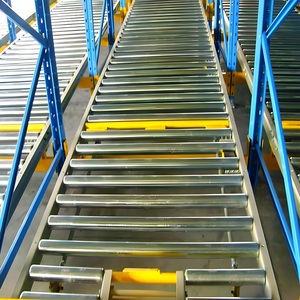
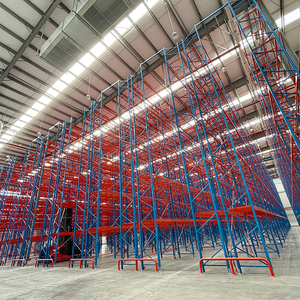
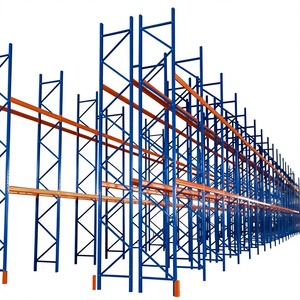
Roller racking storage—frequently engineered as gravity flow racking, pallet flow systems, or dynamic live carton storage—operates as an unpowered, kinematic inventory buffering system. By utilizing an engineered incline gradient alongside precision roller beds, goods move seamlessly from the loading (replenishment) face to the picking (unloading) face under gravity. This architecture fundamentally isolates forklift circulation corridors from manual picking channels, creating an impenetrable safety barrier and elevating order-fulfillment productivity by over 45% compared to conventional static selective racking.
Kinematic Integrity Rule: The optimal gravitational gradient for pallet flow systems strictly ranges between 3.0% and 4.5% (a 1.7° to 2.6° slope). Slopes beneath 3% introduce systemic friction stalling—particularly under ambient temperature variances in cold-storage freezers—while inclinations above 4.5% induce excessive pallet acceleration that compromises beam structural integrity and product safety.
Dynamic Flow Control Components & Structural Mechanics
A resilient roller racking system demands significantly tighter dimensional tolerances than static shelving. The dynamic shock load generated during pallet entry requires calculated structural compensation across the upright profiles and horizontal cross-ties:
Centrifugal Speed Controllers
Directly coupled within the roller bed at 1-pallet intervals, magnetic or geared centrifugal brake rollers govern downward descent velocity to a constant, controlled speed below 0.3 m/s, neutralizing runaway momentum regardless of pallet mass variations (from 250 kg to 1,500 kg).
Mechanical Pallet Separators
Critical for forklift extraction safety, load separators physically isolate the leading discharge pallet from trailing lane pressure. By arresting downstream line pressure, operators lift the lead unit free from back-pressure binding, mitigating mast kickback and racking deflection.
Full-Width Dual Flanged Rollers
Formed from continuous high-grade carbon steel tubes with zinc plating or impact-resistant polymer sleeves, our roller assemblies incorporate lubricated precision 6204/6001 ZZ double-sealed bearings engineered for sub-zero (-30°C) pharmaceutical and deep-freeze operations.
Kinematic & Structural Comparative Matrix
System Dimension
Carton Flow Roller System
Heavy-Duty Pallet Flow Racking
Push-Back Cart / Roller Hybrid
Target Storage Medium
Totes, plastic bins, corrugated cartons
EUR (1200x800), GMA (48x40"), Industrial Skids
Mixed pallets, medium-rotation bulk units
Load Rating Limits
15 kg to 100 kg per linear meter
500 kg to 1,800 kg per pallet position
Up to 1,200 kg per lane position
Inventory Rotation Logic
Strict FIFO (First-In, First-Out)
Strict FIFO (First-In, First-Out)
LIFO (Last-In, First-Out)
Lane Depth Capability
Up to 12 meters (multi-track skate wheels)
Up to 30 meters (incorporating brake rollers)
2 to 6 pallets deep
Steel Metallurgy Specification
Cold-rolled SPCC / Q235B Cold Strip
Q235B / Q355B Hot-rolled structural micro-alloy
Structural hollow tubular profile (Q235B)
Primary Application Environments
E-commerce fulfillment, assembly pick lines
Cold storage, FMCG, beverage production plants
Buffer distribution, dry raw material holding
Global Sourcing & Procurement Trends: Strategic B2B Shifts
The procurement of industrial warehouse systems has shifted from commoditized spot purchasing toward high-performance structural engineering partnerships. Global supply chain disruptions, soaring logistics square-meter costs, and ESG reporting requirements are radically changing the procurement lifecycle for multinational distribution operations.
1. High-Density Retrofitting
Industrial real estate prime lease yields in metropolitan supply nodes have increased 30–60%. Chief procurement officers now bypass floor extensions in favor of vertical cubic densification, driving a 300% surge in dynamic roller flow and multi-tier mezzanine procurement.
2. Hybrid Automation Readiness
Procurement specifications now explicitly demand dual compatibility: roller racking must support standard counterbalanced forklifts today while remaining dimensionally aligned with automated guided vehicles (AGVs) and autonomous mobile robots (AMRs) for 2027 deployments.
3. Traceable Metallurgy & ESG
Global tenders now enforce audited low-carbon steel sourcing. Manufacturers must provide mill test certificates (MTCs), documented scrap-recycled steel ratios, and lead-free, non-toxic thermoset powder coating certified under RoHS and REACH protocols.
4. Turnkey OEM/ODM Engineering
Tier-1 system integrators are consolidating vendors, relying on specialized Chinese manufacturers capable of handling initial 3D finite element analysis (FEA), kinematic slope simulations, tooling fabrication, and container-optimized export packaging in one contract.
Next-Gen Technological Developments in Dynamic Roller Systems
Modern dynamic storage has evolved beyond passive steel frameworks. Recent breakthroughs in metallurgy, synthetic polymers, and predictive sensing have elevated roller racking into an active component of high-velocity warehouse execution systems (WES).
Self-Damping Viscous Rollers
Traditional friction-brake mechanisms are being replaced by eddy-current and sealed hydraulic viscous dampening rollers. These components deliver non-wearing, progressive braking torque directly proportional to the incoming velocity, eliminating mechanical wear surfaces and lasting 5x longer.
Optical & Smart ANPR Integration
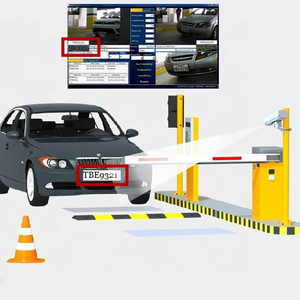
Modern flow lanes now integrate smart ANPR optical recognition and industrial barcode scanning arrays directly into discharge entry gates. This allows automated tracking of batch numbers, production timestamps, and expiration cycles during gravity transit.
Sub-Zero Cryogenic Anti-Corrosion
For -30°C cold chain environments, steel uprights and roller channels are pre-treated with zinc-phosphate micro-crystalline layers before electrostatically receiving a 70–90 micron thermoset architectural polyester coating, preventing micro-flaking and moisture corrosion.
Founded in 2001, Guangzhou HEDA Shelves Co., Ltd. is an established manufacturer and exporter of warehouse logistics systems in South China. Backed by 25 years of engineering experience, our industrial production hub in Guangzhou is purpose-built to deliver complete OEM and ODM fulfillment for regional distributors, engineering contractors, and Fortune 500 intralogistics projects.
Every single beam, upright column, roller axle, and bracket is produced entirely in-house. We do not outsource critical structural steps, ensuring complete control over metal tolerances, hole pitch consistency, and mechanical load performance.
01
Raw Material Check
Mill inspection of Q235B/Q355B coils for yield strength & elongation.
02
Precision Slitting
CNC longitudinal steel coil decoiling, leveling, and tolerance slitting.
Multi-stand roller forming to ensure zero residual profile stress.
05
Laser Profiling
Automated 3D laser cutting of structural connection hooks & brackets.
06
Surface Finishing
Automated weld seam grinding, deburring, and surface polishing.
07
Robotic Welding
Dual-arm Panasonic robotic shielding gas welding for beam connectors.
08
Chemical Pretreatment
9-stage industrial acid pickling and zinc-phosphating wash tunnels.
09
Powder Coating
Nordson automated electrostatic epoxy coating cured at 200°C.
10
Export Crating
Steel-banded bundling, foam wrap, and custom container loading plans.
Certified Quality Standard: HEDA Shelves holds official CE Certification (Certificate No. 2435-CPR-8605159), ISO 9001:2015 Quality Management System Certification (Certificate No. 18624Q00169R0M), and full RoHS compliance documentation. Our structural calculations rigorously conform to European FEM 10.2.02 standards and American RMI (Rack Manufacturers Institute) design standards.
Clear, definitive answers directly from our senior engineering and export logistics divisions to streamline your project validation.
1. What crucial engineering variables determine the slope of a pallet roller racking system?
The inclination angle is determined by four primary factors: bottom board configuration (two-way vs. four-way Euro pallets, perimeter base vs. 3-skid base), total pallet gross weight (light pallets require slightly steeper angles than 1,200 kg units), bottom runner deflection under load, and operating ambient temperature. In cold chain facilities (-25°C), grease viscosity in roller bearings increases rolling friction, requiring an engineered gradient of 3.8% to 4.2%, compared to 3.2% in ambient dry distribution centers. HEDA Shelves conducts physical roll-testing on your specific pallet samples before fabrication.
2. How do you prevent dynamic shock loads from damaging the picking-face uprights?
Dynamic impact is managed through a three-stage mechanical buffer: heavy-duty structural steel entry guides that align off-center pallets upon entry, full-width floor-anchored upright protectors, and mechanical end-stop shock absorbers located at the discharge terminal. Furthermore, mechanical pallet separators absorb the kinetic inertia of trailing pallets, ensuring the lead discharge pallet rests quietly against the retrieval stops with zero residual backpressure.
3. What OEM/ODM branding customization can regional material handling distributors request?
As a true manufacturing partner, we provide comprehensive white-label OEM/ODM services. This includes customized upright profile roll-forming (matching your proprietary tear-drop or diamond slot patterns), precision electrostatic RAL powder-coating matching your corporate brand livery, laser-cut logo branding on end-frame safety cladding, customized steel safe-load signage plates, and tailored export packaging with your company’s branded packing lists and installation manuals.
4. Can roller flow systems operate reliably with damaged or non-standard wooden pallets?
Gravity roller flow tracks require consistent, continuous contact between the pallet base and the roller surfaces. Missing lower deck boards, cracked skids, or protruding nails will cause pallet stalling or lane wedging. For operations handling mixed-quality wood skids, we engineer triple-track roller configurations or full-width steel rollers rather than twin-wheel lanes, and we recommend heavy-duty slave pallets, steel turnover skids, or dynamic plastic carrier trays to ensure continuous flow.
5. How does HEDA Shelves ensure seismic compliance for facilities in active earthquake zones?
For seismic projects in countries like Indonesia, the Philippines, Japan, and New Zealand, our structural engineers model finite element calculations based on local spectral acceleration coefficients (Ss and S1). We integrate oversized seismic base plates, heavy-duty floor anchor bolts (Hilti / Fischer), reinforced cold-rolled column web profiles, and multi-tier diagonal back-plane horizontal portal bracing to safely dissipate cyclic seismic forces without joint shear failure.
6. What is the typical lead time for an OEM manufacturing order of 10 to 50 container loads?
Our Guangzhou manufacturing plant produces up to 30,000 tons of racking per month. For standard heavy-duty roller racking or selective systems spanning 10 to 20 40ft High Cube containers, our standard production cycle is 20 to 28 working days following final CAD sign-off. We operate continuous automated roll-forming and robotic welding shifts to meet fast-track construction schedules.
7. How do you protect structural steelwork against tropical humidity and sea freight salt-fog corrosion?
Before coating, our steel undergoes a 9-stage chemical wash, including multi-bath acid descaling, water rinsing, and high-density zinc-phosphating. This creates a crystalline anti-corrosion barrier that enhances powder adhesion. Our automated powder lines apply lead-free pure polyester powder coating cured at 200°C, providing over 500 hours of continuous salt-spray resistance. For open-air or coastal environments, full hot-dip galvanizing conforming to ISO 1461 (yielding 60–85 microns of zinc) is available.
8. What project information must an engineering procurement team provide to obtain a turnkey layout design?
To provide an accurate 2D CAD layout, 3D structural rendering, and engineering quote within 24–48 hours, our design team requires: (1) Architectural DWG floor plan showing building columns, clear height under trusses, and fire egress routes; (2) Pallet specifications including WxDxH dimensions, maximum gross weight, and bottom runner layout; (3) Forklift model, turning radius, and maximum lift elevation; (4) Operating environmental conditions (ambient, chilled, or -30°C freezer); and (5) SKU rotation throughput requirements.
9. How does HEDA Shelves optimize container packing to reduce international ocean freight costs?
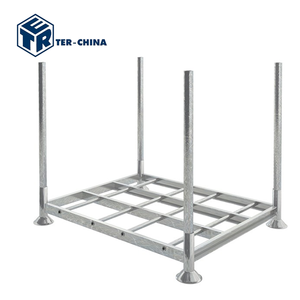
Shipping high-volume steel racking requires precise container stowage engineering. Our logistics division uses 3D container packing software to calculate loading sequences. Heavy upright frames and nested beams form the container base, while roller beds, accessories, and small hardware occupy the upper cubic spaces. By combining structural nesting and custom-welded steel transport pallets, we regularly achieve 24 to 26 metric tons per 40ft HC container, reducing freight cost per pallet position by 18–25%.
10. What on-site installation and field-commissioning support do you supply to overseas buyers?
Every shipment includes detailed 3D step-by-step assembly drawings, component part marking lists, and bolt torque specifications. For major distribution centers and multi-tier mezzanine projects across Southeast Asia, the Middle East, and Europe, HEDA Shelves deploys experienced structural installation engineers to supervise local installation teams, oversee laser surveying alignments, calibrate brake roller speeds, and conduct certified on-site static load testing.
Ready to Engineer Your High-Density Storage Solution?
Connect with our Guangzhou engineering headquarters for free 2D/3D CAD layouts, structural FEA calculations, and factory-direct OEM/ODM manufacturing quotes within 24 hours.