Heavy Duty
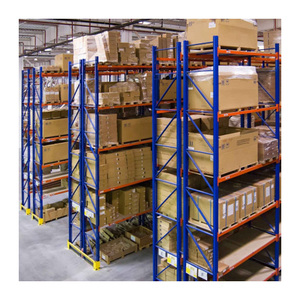
Precision cold-roll formed structural profiles engineered for global logistics hubs, manufacturing supply chains, cold storage facilities, and high-throughput distribution centers.
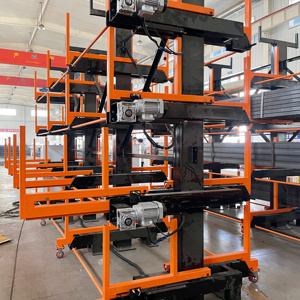
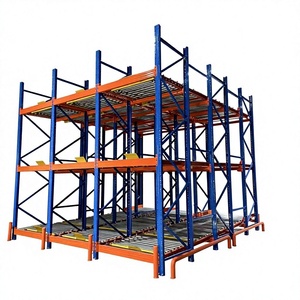
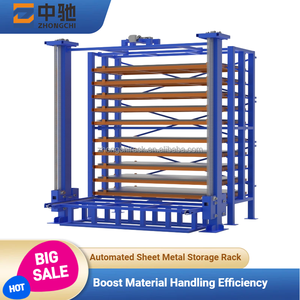
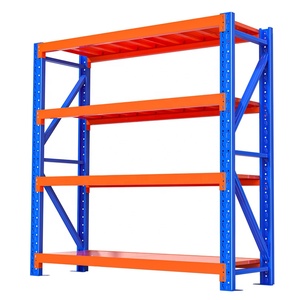
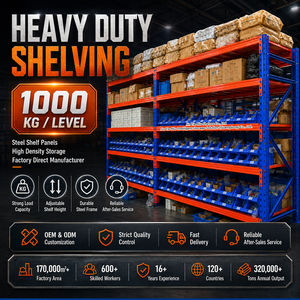
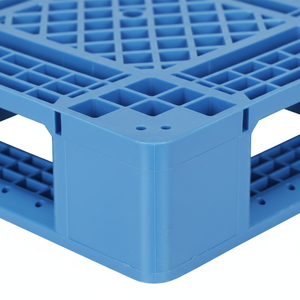
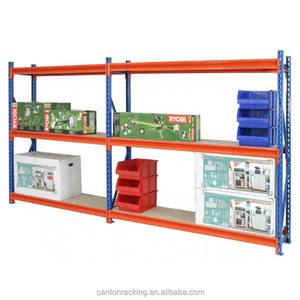
Choosing an industrial shelf rack OEM/ODM partner is an engineering calculation, not a commodity purchase. Below is the structural matrix cross-referencing global racking standards with material yields.
| Racking Topology | Standard Structural Grade | Safety Factor Limit | Seismic Mitigation Options | Primary Use Cases |
|---|---|---|---|---|
| Selective Pallet Racking | Q235B / Q355B Hot-Rolled Strip | 1.5 to 1.65 (EN 15512 / RMI) | Thick baseplate, reinforced anchoring, back-to-back ties | FMCG, 3PL Distribution, Multi-SKU warehouses |
| Drive-In / Drive-Through | Cold-Formed High-Tensile Steel | 1.6 (Top & Back Bracing Required) | Portal beam bracing, 3D cross ties, guide rail anchors | Cold storage, Seasonal buffer, Single-SKU batches |
| Gravity Pallet Flow (FIFO) | High-Yield Structural Uprights + Galvanized Rollers | 1.65 Continuous Dynamic Load | Brake roller integration, end-stop impact absorption | Perishables, Pharmaceuticals, High-velocity staging |
| Motorized Cantilever Systems | Heavy Welded I-Beams / Hollow Sections | 1.8 Arm Deflection Restricted (<L/250) | Floor-mounted dual guide rails, interlocking torque tubes | Steel tubing, Timber packs, Extruded aluminum stock |
| Rack-Supported Mezzanines | Cold-formed columns + C/Z Purlin Stringers | 2.0 Live Load Design Standard | Horizontal diaphragm bracing, anti-sway cable arrays | E-commerce multi-tier picking, garment hanging, archive sorting |
Procurement executives are pivoting away from generic catalogues toward integrated systems engineering. Sourcing evaluations over the next decade will hinge on the following four core vectors.
Global supply chains demand verified Environmental Product Declarations (EPDs) and low-embodied carbon mill run certificates. Procuring from an OEM with strict coil mill sourcing and low-VOC powder finishing minimizes supply chain ESG liabilities.
Warehouse logistics expansions across earthquake-prone belts (the Pacific Rim, Middle Eastern rifts, Southeast Asia) demand site-specific finite element analysis (FEA). Blanket designs fail compliance; custom upright punching and baseplate configurations are now baseline tender mandates.
Procuring uprights from one source, decking from another, and mezzanine steel from a third introduces hazardous tolerance stacking and split warranty liability. Buyers now prioritize single-source manufacturers handling structural steel, wire decks, and safety accessories under one CE audit certificate.
Uncontrolled ocean freight charges destroy project margins. Next-generation procurement evaluates the factory's structural nesting blueprints—how column profiles, nesting beams, and bundled sub-assemblies maximize 40ft High Cube container volumetric capacity.
From passive structural steel to active, intelligent automated storage cells—the engineering boundary between racking and automation has dissolved.
Modern beam connections and ground profiles must tolerate precision robotics. Rack design now incorporates magnetic guidance tracks, floor leveler tolerances within ±1.5mm, and optical scanner clearances for Autonomous Mobile Robots.
Moving from manual forklifts to 24/7 semi-automated shuttle systems eliminates in-aisle collision hazards. High-tensile steel tracks allow multi-deep pallet runs exceeding 40 meters with automated retrieval cycles linked directly to warehouse WMS networks.
With warehouse industrial land rents surging globally, single-level storage has become economically unviable. Rack-supported mezzanine structures utilize cold-rolled uprights as main building columns to quadruple usable picking floor space without expanding physical facility footprints.
Thermal condensation in -30°C blast freezers and rapid oxidation in coastal tropical regions demand metallurgical defense. Breakthroughs in hybrid zinc-aluminum coatings and 7-stage chemical immersion pretreatments extend rack operating lifespans beyond 20 years.
Guangzhou HEDA Shelves maintains complete vertically integrated control over every manufacturing milestone within our 30,000m² factory compound.
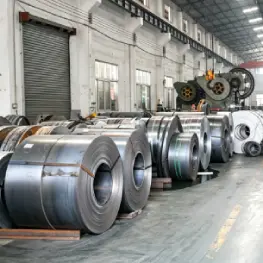
Spectrometric assay & tensile yield testing of every master coil.
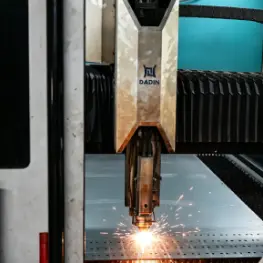
CNC slitting lines guarantee micro-tolerances across web widths.
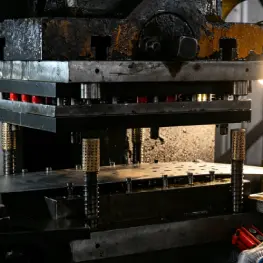
Automated high-speed punch dies create consistent diamond/teardrop pitches.
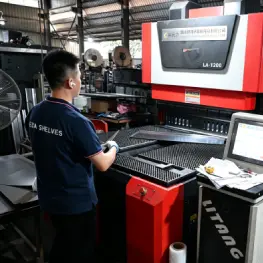
Multi-stand roll mills form multi-rib uprights without residual shear.
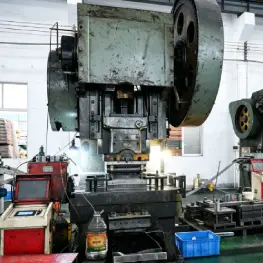
Beam and column profile trueing checks prevent structural camber.
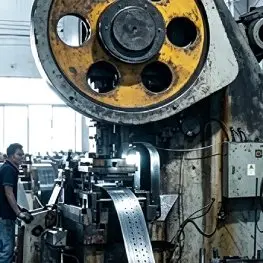
De-burring and robotic edge dressing ready surfaces for bonding.
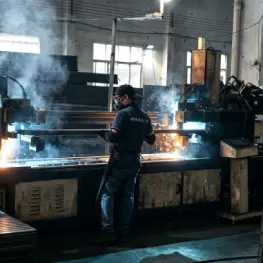
Automated 3-claw & 4-claw beam connector welding ensures deep throat weld penetration.
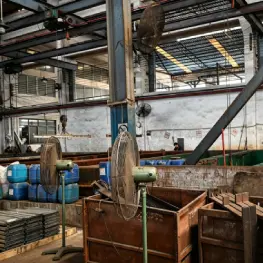
Immersion acid pickling, rinsing, and zinc phosphating defeat subsurface rust.
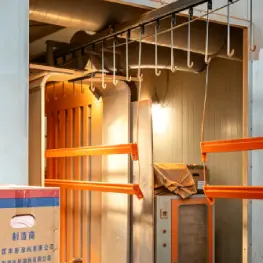
Automatic powder booth with 200°C curing creates impact-resistant resin shells.
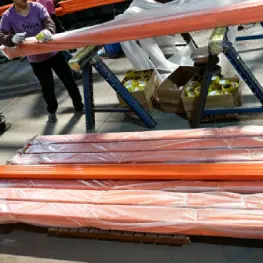
Coating thickness audit, test-assembly, protective foam wrap, and bundle strap.
Straightforward technical answers to critical engineering, pricing, logistics, and certification questions asked by international project procurement directors.
To produce an exact 2D CAD layout and 3D FEA structural report, our engineering department requires: (1) Architectural floor plan showing concrete slab compressive strength (MPa) and column obstructions, (2) Clear internal building height under roof girders and sprinkler drops, (3) Exact pallet footprints including cargo overhang (W x D x H) and total gross weight, (4) Reach truck or counterbalanced forklift turning radius and mast lift elevation, and (5) Local seismic zone acceleration values.
Humidity and salt spray are fatal to inferior coatings that apply powder directly to mill-scale oil. HEDA utilizes an 8th-stage chemical bath protocol featuring heated acid pickling and immersion zinc phosphating. This chemically converts the microscopic steel surface into an inert crystalline phosphate barrier before applying electrostatic polyester resin cured at 200°C. For extreme outdoor or coastal port applications, full hot-dip galvanization to EN ISO 1461 is available.
Yes. Approximately 40% of our production volume operates as private-label ODM/OEM manufacturing for racking distributors and material handling contractors across North America, Europe, Australia, and ASEAN. We can manufacture proprietary hole punching configurations, unique connector claw stampings, customized upright ribbing profiles, specific RAL color matches, and provide private-label load plates and carton packaging.
Every industrial project export dossier includes: (1) Raw steel mill test certificates (MTC) proving yield and tensile elongation, (2) Factory calibration and weld penetration NDT check records, (3) CE Declaration of Performance (DoP) under EN 1090-1 / EN 15512, (4) Complete 3D installation blueprints with color-coded component markers, and (5) Step-by-step assembly sequence manuals to ensure fast, safe job-site erection by local contractors.
From initial site CAD assessment to final container stuffing, our centralized Guangzhou factory removes layers of trading company markups and miscommunication.
Founded in 2001, Guangzhou Heda Shelves Co., Ltd. has resolved structural challenges across more than 10,000 installations globally. Our licensed in-house engineering team converts rough warehouse sketches into optimized 2D/3D layouts within 24–48 hours.
Our 30,000m² manufacturing facility maintains a monthly capacity of 30,000 tons. Multiple continuous automated roll-forming lines, automated laser-pipe profilers, and robotic gantry welding systems ensure rigid delivery timelines for large-scale tenders.
Situated in Guangzhou with direct access to Guangzhou and Shenzhen maritime hubs, we offer rapid ocean shipping routes to ASEAN, South Asia, the Middle East, Europe, and the Americas, complete with custom dunnage and container-packing plans to eliminate shipping damage.