High-Density Warehouse Racking Systems
Explore our heavy-duty, factory-direct industrial storage solutions. Precision roll-formed with certified structural steel, tested to international FEM, RMI, and AS4084 structural performance standards.
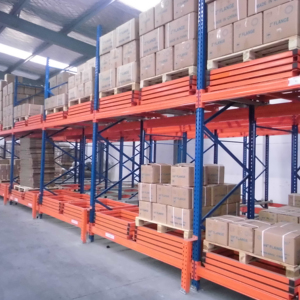
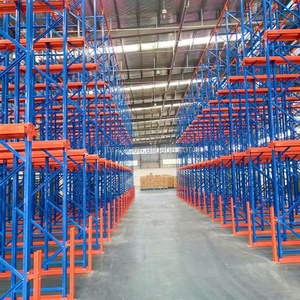
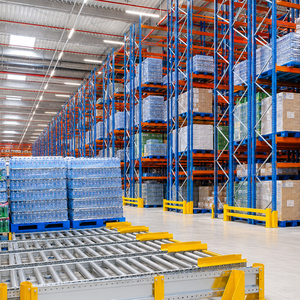
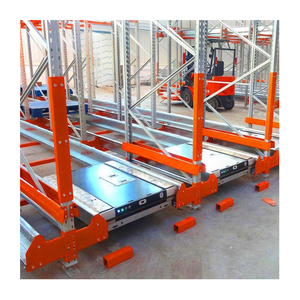
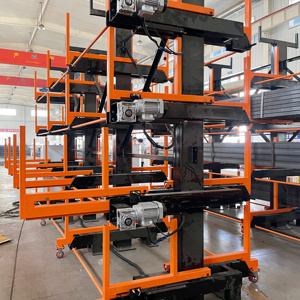
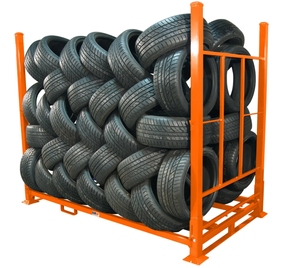
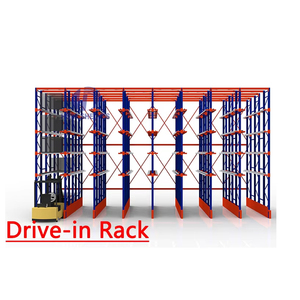
Drive Through vs. Drive In: The Structural Mechanics of FIFO High-Density Racking
In modern industrial warehousing, cube utilization often conflicts directly with stock rotation efficiency. While conventional single-selective racking provides 100% individual pallet selectivity, it squanders over 60% of gross floor footprint on operational forklift corridors. Conversely, classic Drive-In racking maximizes floor density by removing operating aisles, yet binds material flow to a Last-In, First-Out (LIFO) inventory sequence. This restriction makes standard Drive-In configurations unviable for perishable goods, date-sensitive pharmaceuticals, and batch-stamped manufacturing supplies.
Drive Through Pallet Racking systems resolve this bottleneck by establishing true First-In, First-Out (FIFO) movement within ultra-high-density storage blocks. Configured with distinct entry loading aisles and exit unloading aisles, pallet loads advance progressively through dedicated storage tunnels. However, opening both longitudinal faces eliminates the rear vertical cross-bracing that gives Drive-In racks their structural rigidity. Engineering a stable Drive Through structure requires meticulous mathematical modeling of frame deflection, torsional column shear, and horizontal sway mitigation.
As an OEM/ODM industrial manufacturer with over 25 years of structural roll-forming expertise, Guangzhou Heda Shelves Co., Ltd. designs and manufactures Drive Through systems using cold-formed Q235B and high-yield Q355B carbon steel. Our certified engineers run full finite element analyses (FEA) to confirm stability according to European FEM 10.2.02, American RMI MH16.1, and Australian AS4084 building codes.
Overhead Portal Bracing
Because Drive Through racks lack interior back-bracing, our engineers incorporate continuous top longitudinal beams and structural cross-portal trusses. These heavy-duty trusses transmit operational sway forces down through reinforced anchor lines, maintaining upright plumbness across 12-meter bay heights.
Cantilever Rail Support Arms
Pallet loads rest upon heavy-gauge continuous steel guide rails supported by one-piece formed cantilever arms. Our cold-stamped wrap-around arm brackets feature multiple load-locking lugs that resist torsional twisting moments induced when forklifts lower pallets off-center.
Floor Track Guidance
To prevent material handling equipment from striking delicate upright columns inside blind channels, our systems feature heavy structural floor guide rails. Anchored directly to concrete slabs, these rails align the forklift safely while isolating columns from vehicle impact forces.
High-Density Pallet Storage Topologies: Architectural Benchmark
Choosing the right warehouse storage system requires weighing volume efficiency against hourly SKU throughput, initial capital expenditure, and stock rotation rules. Review the engineering differences across core high-density configurations below.
| System Architecture | Stock Rotation Rule | Floor Space Utilization | Throughput Speed | Lift Truck Compatibility | Capital Investment Factor |
|---|---|---|---|---|---|
| Standard Selective Rack | FIFO (100% Selectivity) | 35% – 42% (Aisle Heavy) | Very High (Direct Access) | Standard Counterbalance / Reach | Baseline (1.0x) |
| Drive-In Racking System | LIFO (Last-In, First-Out) | 70% – 78% (Aisles Eliminated) | Moderate (Single Aisle In/Out) | Narrow Mast Counterbalance | 1.3x – 1.5x |
| Drive Through Pallet Rack | FIFO (First-In, First-Out) | 65% – 75% (Twin Operational Faces) | High (Continuous Staging) | Narrow Mast with Overhead Guard | 1.4x – 1.6x |
| Push Back Pallet Rack | LIFO (Nested Carts) | 60% – 68% (Gravity Return) | Fast (Aisle Pick Face) | Standard Counterbalance | 1.8x – 2.2x |
| Radio Shuttle Cart Racking | FIFO & LIFO (Semi-Automated) | 75% – 85% (Max Density Automation) | Extremely Fast (Autonomous Shuttle) | Standard Reach / Forklift Carrier | 2.6x – 3.2x |
*Note: Data benchmarks derive from baseline ISO 1200x1000mm pallet footprints in standard 10,000 m² industrial logistics centers. Capital investment factors account for structural steel tonnage, precision roll-forming components, and anchoring systems.
Global Procurement & Engineering Trends (2025–2030)
The global logistics and warehousing landscape is undergoing unprecedented transformation. Surging industrial land values, climbing commercial power costs in temperature-controlled warehouses, and stricter ESG emissions goals have reshaped how procurement teams source storage equipment. Over the coming decade, industrial racking procurement will move far beyond simple cost-per-ton pricing to prioritize lifecycle durability, automated vehicle compatibility, and modular upgradeability.
International procurement directors, 3PL managers, and supply chain design engineers are focusing their equipment specifications on several critical developments:
AGV & AMR Integration
Facilities are rapidly moving from manually driven narrow-aisle forklifts toward Autonomous Guided Vehicles (AGVs). Modern Drive Through racks must be manufactured with sub-millimeter rail straightness tolerances, laser-guided target reflectors, and specialized entry chamfers to support driverless navigation.
Cold Chain Decarbonization
Refrigerating open air wastes huge amounts of electrical energy. Modern cold chain hubs demand high-density Drive Through systems that store maximum chilled pallets within compact thermal footprints. These environments require specialized sub-zero steel chemistry that avoids low-temperature brittle fractures.
Seismic Resilience Standards
Warehouses across the Pacific Rim, ASEAN, and the Middle East now enforce rigorous dynamic seismic compliance. Structural engineering tenders require high-ductility baseplates, oversized chemical epoxy wedge anchors, and custom vertical upright column profiles designed to absorb lateral ground accelerations.
Modular Shuttle Conversions
Modern warehouse planners protect their capital investments by sourcing modular structures. Forward-thinking companies specify Drive Through upright configurations that can later be converted into semi-automated 4-way Radio Shuttle systems as pallet throughput grows.
OEM/ODM Manufacturing Precision: From Steel Coil to Container Stowage
A heavy-duty Drive Through racking system endures substantial dynamic loading. Forklift mast vibrations, localized wheel friction on ground guide channels, and uneven pallet weights place continuous strain on every connection point. Producing equipment that survives these operating conditions year after year requires strict quality control across every phase of manufacturing.
Guangzhou Heda Shelves Co., Ltd. controls the complete production chain in-house at our specialized Guangzhou manufacturing facility. We manage raw coil verification, high-speed multi-stage continuous roll-forming, robotic CNC bracket welding, precision pickling, and automated electrostatic powder coating under unified ISO 9001:2015 quality control protocols.
Certified Structural Metallurgy
We source prime hot-rolled and cold-rolled carbon steel coils exclusively from premier domestic mills. Steel chemistry is tested to ensure precise yield (ReH ≥ 235 to 355 N/mm²) and tensile strengths, complete with verified mill 3.1 inspection certificates for every production batch.
Multi-Stage Anti-Corrosion Treatment
Components undergo an automated 8-stage pre-treatment wash featuring immersion pickling, surface degreasing, and nanotech phosphating. Components are then cured with thermosetting epoxy-polyester powder coats (60–90μm thickness) or hot-dip galvanized (EN ISO 1461) for coastal warehouses and sub-zero cold rooms.
Export Container Packing Optimization
International shipping efficiency directly affects your landed cost per pallet position. Our logistics engineers build custom 3D container stuffing models for every project. Components are bundled with protective steel strapping, corner protectors, and moisture-barrier wrap to prevent transit abrasion across long sea voyages.
Enterprise Strengths & Factory Capabilities
Founded in 2001, Guangzhou Heda Shelves Co., Ltd. provides reliable storage manufacturing for material handling equipment dealers, warehouse developers, and commercial project contractors worldwide.
Free 2D CAD & 3D Modeling
Our engineering office prepares dimensioned CAD floor layouts, dynamic 3D warehouse renderings, and structural calculation reports within 24 to 48 hours of receiving your warehouse architectural drawings.
International Certifications
All factory processes follow audited CE (Certificate No. 2435-CPR-8605159), ISO 9001:2015 quality management, and RoHS compliant finishing protocols, providing full compliance for international tenders.
South China Maritime Access
Strategically situated near Guangzhou, Shenzhen, and Hong Kong ports, our factory offers frequent, cost-effective container shipping schedules to Southeast Asia, the Middle East, Europe, and the Americas.
Full OEM/ODM Private Labeling
We supply custom upright column punch pitches, unique RAL powder-coat colors, branded load labels, and custom component profiles tailored to regional distributors' proprietary system lines.
Bilingual Technical Support
Our dedicated international project engineers provide clear communication in English, delivering complete assembly packages, bolt-tightening torque tables, and on-site or remote installation guidance.
Proven Global Track Record
With more than 10,000 successful warehouse installations globally, our systems safely store critical inventory for logistics centers, multinational cold chains, automotive plants, and pharmaceutical distributors.
Frequently Asked Questions: Industrial Procurement & Specification
Comprehensive engineering guidance to assist procurement officers, system integrators, and logistics managers in preparing tender documents and layout plans.
Request Your Custom Warehouse Layout & Engineering Design
Send our senior warehouse engineering team your building floor plan (CAD or dimensioned PDF), pallet sizes, clear ceiling heights, and forklift specifications. We will provide a complete 2D layout, 3D dynamic rendering, and structural load report within 24 to 48 hours.