[email protected] Serving Southeast Asia, South Asia & the Middle East
EN
Engineering Authority • Global Manufacturing Exporter

OEM/ODM Conventional Pallet Racking Factory & Exporter

Certified Heavy-Duty Industrial Warehouse Racking Systems Engineered to International FEM 10.2.02, EN 15512, and RMI Structural Standards.

Engineering Whitepaper

Structural Anatomy of Conventional Pallet Racking

Conventional pallet racking (selective racking) remains the backbone of global supply chains. Below is a rigorous analysis of mechanical parameters, structural steel selection, and critical connection tolerances.

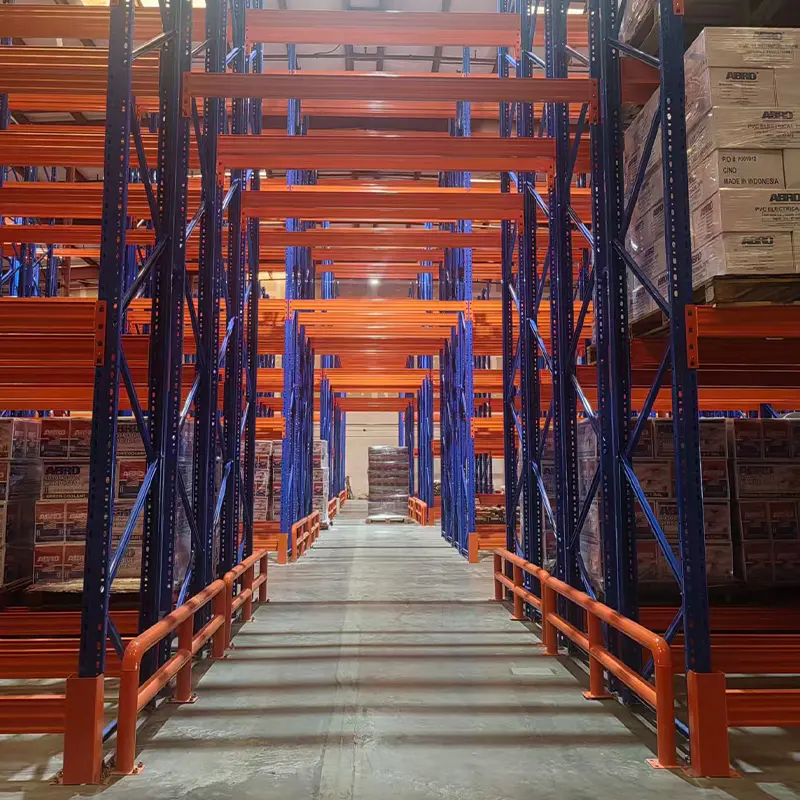
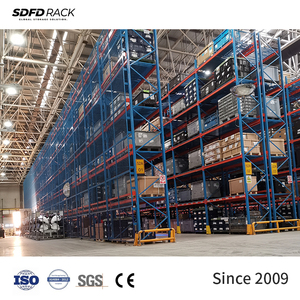
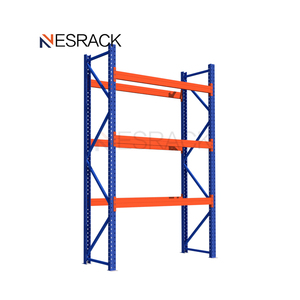
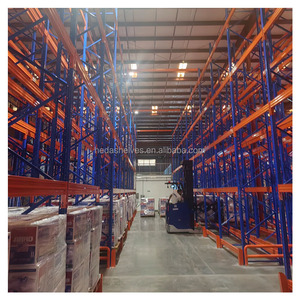
In contemporary warehousing architecture, conventional pallet racking functions as an unbraced or partially braced skeletal steel frame configured with cold-formed vertical upright frames and horizontally interlocked cross beams. The primary architectural benefit is 100% individual selectivity: every single pallet position is immediately accessible by standard material handling equipment (counterbalance forklifts, reach trucks, and narrow-aisle articulated stackers) without shifting adjacent stock units.

"The mechanical stability of a conventional racking structure relies entirely on beam-to-column connector rigidity, moment resistance at the footplate-to-slab anchor interface, and controlled elastic-plastic deformation under dynamic seismic loading." — HEDA Structural Engineering Group.

To eliminate systemic failures such as torsional buckling, local flange crippling, or beam clip detachment under catastrophic forklift impact, our factory employs certified prime Q235B and high-yield Q355B cold-rolled coiled steel. Upright columns feature continuous multi-bend omega (Ω) open cross-sections with 11 to 13 structural folds, substantially multiplying moment of inertia and radius of gyration relative to conventional channel profiles.

Structural Component Material Specification Standard Dimension Range Forming & Connection Technology Yield / Tensile Strength
Upright Columns (Omega Profile) Certified Q235B / Q355B Structural Steel 80×60mm to 140×120mm (Thickness: 1.5 - 3.0mm) Continuous multi-roll cold forming with 75mm / 50mm CNC punching Yield ≥ 235-355 MPa / Tensile 375-510 MPa
Horizontal & Diagonal Bracing C-Section Cold-Formed Steel 32×1.5mm to 40×2.0mm structural gauge Bolted triangulation with grade 8.8 M8/M10 high-tensile hardware Shear force resistance ≥ 28 kN per node
Interlocking Box Beams Twin C-channel inter-locked nested box 80×50mm to 160×50mm (Thickness: 1.5 - 2.5mm) Robotic CO2 shielded automatic seam welding with 3/4/5-claw end connectors Deflection limited to ≤ L/250 (EN 15512 standard)
Seismic Heavy Baseplates Hot-rolled structural plate steel 120×120×6mm to 200×200×12mm Dual or quadruple anchor penetrations with M12/M16 chemical/mechanical expansion bolts Designed against horizontal shear ≥ 15 kN
Surface Protection System Thermoset polyester epoxy powder Dry Film Thickness (DFT): 65 – 90 μm 10-stage immersion pickling, degreasing, zinc phosphating & 200°C baking Adhesion cross-cut Class 0; Salt spray test ≥ 500h
25+ Years
Global Manufacturing Experience
30,000m²
Guangzhou Modern Factory Facility
30,000Tons
Monthly Cold-Forming Capacity
120+ Countries
Exported Installations Worldwide
Strategic Procurement Forecasting

Global Procurement Trends Shaping Industrial Pallet Racking (2025–2030)

Procurement directors and 3PL asset managers are moving past simple price-per-tonne sourcing. Discover the four mega-trends driving competitive advantage in logistics infrastructure investments.

1. Decarbonized Steel Sourcing & Scope-3 Transparency

Global supply chain compliance increasingly mandates lifecycle carbon footprint declarations. Enterprise buyers are contracting with factories utilizing EAF (Electric Arc Furnace) refined steel, solar-powered powder coating lines, and RoHS-compliant heavy-metal-free thermoset polymers. Verification through certified ISO 14001 and Environmental Product Declarations (EPD) has transitioned from an optional bonus to a baseline tender qualification.
2. Hybrid Modularity Ready for Robotic Integration

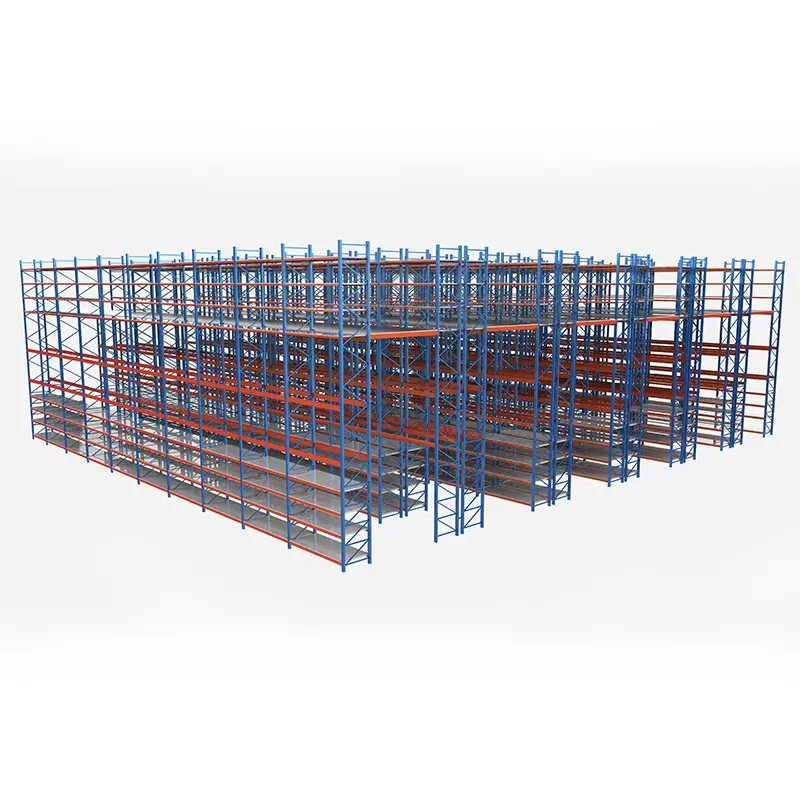
Future-proof warehouse engineering now requires selective pallet racking structures capable of transitioning into semi-automated and automated systems. Uprights are pre-punched with high-precision CNC pitch tolerances to allow the modular integration of Radio Shuttle rails, automated guided vehicle (AGV) floor guides, and picking mezzanines without requiring costly full-facility decommissionings.

3. High-Density Consolidation Amid Rising Industrial Rents

Prime industrial real estate rents in international logistics hubs have surged. Buyers are optimizing conventional layouts through Narrow Aisle (NA) and Very Narrow Aisle (VNA) configurations with reach elevations exceeding 12 to 15 meters. This compresses operating aisle clearances from 3.5m down to 1.7m, driving a 45% to 60% surge in volumetric cubic utilization without forfeiting pallet selectivity.

Next-Gen Material Handling Tech

Technological & Design Evolution in Racking Systems

How advanced cold-roll forming, sensor telemetry, and high-performance metallurgy are redefining structural safety, durability, and operational ROI.

Finite Element Analysis (FEA) & Seismic Modeling

Static structural capacity calculations have been superseded by 3D non-linear dynamic FEA modeling under earthquake spectrums (compliant with Eurocode 8, AS 4084, and UBC/IBC). Engineers simulate cyclic stress distribution, baseplate plastic hinge formation, and progressive collapse scenarios to customize upright profiles for earthquake-prone zones across Southeast Asia, Japan, and the Americas.

Advanced Anti-Corrosive Chemical Pre-Treatments

In high-humidity, marine, and sub-zero cold-storage facilities, conventional single-stage spray lines fail rapidly. Modern manufacturing standardizes on 10-step immersion pickling and phosphating followed by thermoset hybrid zinc-rich primers. For harsh chemical and coastal conditions, factory-direct hot-dip galvanizing (HDG to ISO 1461) delivers maintenance-free lifespans extending beyond 30 years.

Continuous Roll-Forming with In-Line QC Sensors

Precision engineering demands zero cumulative tolerance drift over 12-meter upright runs. Modern production implements multi-station roll-formers fitted with automated optical and laser micrometers. Column twist, straightness deviation, and hole center tolerances are restricted to ±0.5mm across entire frame lengths, ensuring rapid bolt-together erection on site.

Enterprise Core Competencies

Why Global Contractors & Distributors Partner with Us

Guangzhou Heda Shelves Co., Ltd. brings 25 years of tier-one manufacturing pedigree. From turnkey 3D design to precision export packaging, here is how our Guangzhou manufacturing base guarantees project success.

25 Years Industry Experience

25+ Years Industrial Mastery

Established in 2001, our engineering team has engineered and commissioned over 10,000 logistics, cold-chain, automotive, and retail warehouse installations globally.

Free CAD and 3D Layout Design

Complimentary 24-48h CAD/3D Design

Submit your building blueprints and receive complete 2D architectural warehouse layouts, 3D photorealistic renderings, and pallet capacity audits within 48 hours.

Certified Heavy Duty Steel Racking

Certified Quality & Load Verification

Accredited with CE Certification (No. 2435-CPR-8605159) and ISO 9001:2015 (No. 18624Q00169R0M). Every batch undergoes beam deflection and connector shearing audits.

Full Customized Storage Solutions

Full OEM/ODM Customization

Bespoke section geometries, specialized RAL color powder finishes, custom load plaques, brand silk-screening, and engineered container loading plans for distributors worldwide.

Procurement Knowledge Base

Frequently Asked Questions by Industrial Buyers

Technical specifications, seismic codes, custom OEM manufacturing, and export shipping logistics explained by senior warehouse engineers.

What essential parameters are required for our engineers to design a custom warehouse layout?

To produce an exact 2D/3D layout and structural calculation sheet, please provide: (1) Warehouse architectural drawings (CAD or dimensioned PDF) displaying building columns, clear ceiling heights under sprinkler pipes, dock doors, and fire exits; (2) Pallet dimensions including overall width, depth, and total cargo height (W × D × H); (3) Maximum total pallet gross weight; (4) Forklift specifications, specifically mast minimum collapsed height, maximum lift elevation, and required turning radius aisle width (AST); and (5) Ambient operating temperature (ambient, air-conditioned, or cold room).

Which international structural engineering and quality standards do your racking systems satisfy?

Our racking systems are fully engineered and tested in compliance with European Standard EN 15512:2020 (Steel static storage systems – Adjustable pallet racking systems – Principles for structural design), FEM 10.2.02 guidelines, American RMI (MH16.1) specifications, and Australian standard AS 4084-2023. We hold factory-certified CE documentation (Certificate No. 2435-CPR-8605159), ISO 9001:2015 Quality Management certification, and third-party laboratory tensile/shearing test verification reports.

How do you protect pallet racking against severe humidity, tropical condensation, and coastal salinity?

All structural steel members undergo an intensive 10-step immersion chemical pre-treatment cycle: degreasing, ultrasonic water rinsing, acid rust pickling, neutralising, and zinc phosphating. This forms a crystalline phosphate conversion layer ensuring maximum molecular adhesion. Components then pass through automated electrostatic powder lines utilizing architectural-grade thermoset polyester-epoxy powders (cured at 180–200°C). For deep-freeze cold storage or coastal outdoor yards, we supply fully hot-dip galvanized steel components conforming to ISO 1461 with minimum 65–85 μm zinc thickness.

Can your uprights and bracing be designed to withstand high seismic hazard levels?

Yes. For seismic-active regions (e.g., Indonesia, the Philippines, New Zealand, Japan, Chile, and western USA), our structural engineers run finite element non-linear response analyses. We increase upright gauge thickness, employ widened seismic footplates with dual anchor bolts, configure reinforced K-bracing or X-bracing trussing, and supply top-tie overhead portal ties across operational aisles to distribute lateral ground acceleration without progressive structural collapse.

What are the lead times for custom manufacturing and container export packaging?

Standard lead times for full container loads (20GP, 40HQ) average 15 to 25 calendar days depending on tonnage and custom color requirements. With an output capacity of 30,000 tons per month, our Guangzhou plant handles mega-projects efficiently. All upright frames and beams are strapped onto specialized steel Dunnage pallets with protective corrugated buffers, corner shields, and stretch wrap to prevent maritime transit scratching and enable rapid forklift container discharge.

Do you offer OEM private-label production for international racking distributors?

Yes. Over 40% of our production volume supports private-label OEM/ODM partnerships across Europe, North America, the Middle East, and Australia. We manufacture to your existing punch patterns (50mm, 75mm, 76.2mm / 3-inch pitch, teardrop compatibility), provide custom color-matched powder coatings, apply your branded load plaques, and package with neutral or custom client-branded labels.

Request Your Engineered Layout & Factory-Direct Quotation

Connect directly with our Guangzhou engineering department. Receive custom 2D CAD layouts, 3D system simulations, and structural load calculations tailored to your exact warehouse footprint.

Contact Us