[email protected] Serving Southeast Asia, South Asia & the Middle East
EN
Engineering Grade OEM / ODM Storage Systems

Custom OEM Warehouse Racking Equipment Factories & Suppliers

Direct factory manufacturing certified to CE & ISO 9001:2015. High-density structural pallet racking, multi-tier mezzanines, and automated shuttle systems engineered for global supply chains.

Direct Factory Catalog

Featured Industrial Warehouse Storage Systems

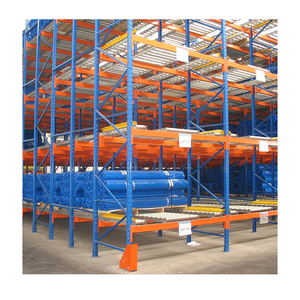
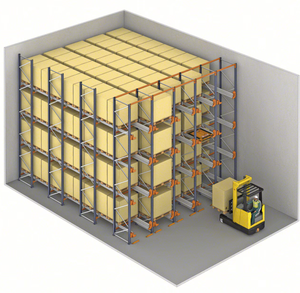
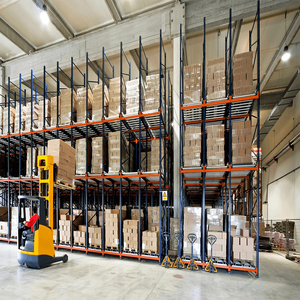
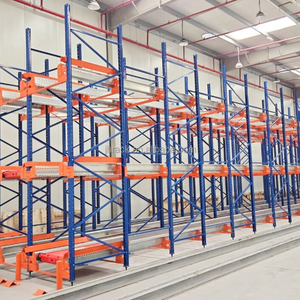
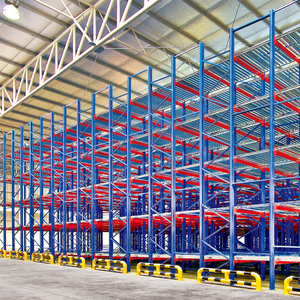
From structural selective racks to automated shuttle carriers and high-density gravity roller assemblies, our Guangzhou facility engineers cold-formed steel racking built to international load safety protocols.

Manufacturing Powerhouse

Guangzhou HEDA Shelves: 25 Years of Global OEM/ODM Mastery

Established in 2001, Guangzhou Heda Shelves Co., Ltd. is an internationally certified enterprise delivering precision cold-formed steel racking, structural multi-tier mezzanine floors, and robotic automated warehouse systems directly from our factory floor to distribution hubs across 120+ nations.

2001EST.
Over 25 Years Engineering Expertise
30,000m²
Dedicated Production Facility
30,000TONS
Monthly Structural Output Capacity
10,000+
Turnkey Projects Commissioned

Verified Certifications

Full CE execution under Certificate No. 2435-CPR-8605159 and ISO 9001:2015 Quality Management certification (No. 18624Q00169R0M). Compliant with RoHS non-toxic powder coating protocols.

Rapid 2D/3D CAD Modeling

In-house structural engineering teams deliver comprehensive CAD layout schematics, BIM integrated models, and photorealistic 3D warehouse renderings within 24–48 hours of initial brief submission.

Custom OEM/ODM Branding

Complete OEM manufacturing for overseas racking suppliers, system integrators, and distributors. Custom upright perforations, private label stamping, custom RAL epoxy finishes, and specialized packing.

Global Export Readiness

Direct maritime dispatch via South China container hubs (Guangzhou / Shenzhen). Optimized container packing schematics minimize transit damage and lower ocean freight costs per pallet location.

10-Step Proprietary Manufacturing & Metallurgical Quality Protocol

To satisfy the rigorous deflection tolerances and dynamic seismic criteria dictated by EN 15512:2020, FEM 10.2.02, and ANSI MH16.1 specifications, every batch of structural steel undergoes our verified end-to-end QA pipeline in Guangzhou:
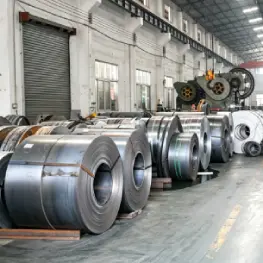
Raw steel inspection
STEP 01

Q235B/Q355B Steel Inbound Spectrometry
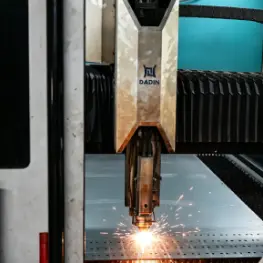
Precision cutting
STEP 02

High-Precision CNC Coil Slitting & Cutting
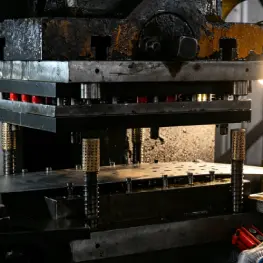
Column punching
STEP 03

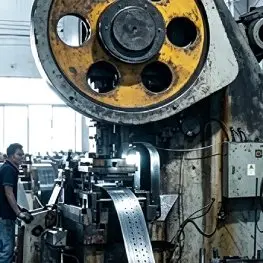
Automated Continuous Multi-Die Punching
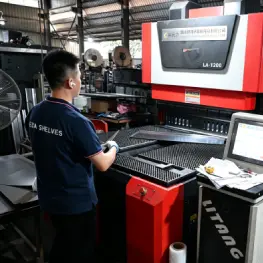
Cold bending
STEP 04

Multi-Station Precision Cold Roll-Forming
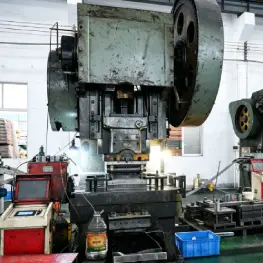
Profile forming
STEP 05

Structural Omega Profile Calibration

Steel polishing
STEP 06

Edge Deburring & Robotic Weld Prep

Robotic welding
STEP 07

Robotic CO2 Shielded Automatic Welding
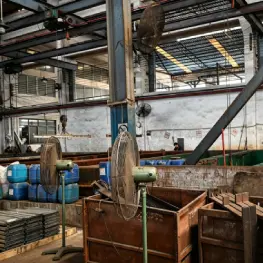
Pickling and phosphating
STEP 08

8-Phase Chemical Pickling & Phosphating
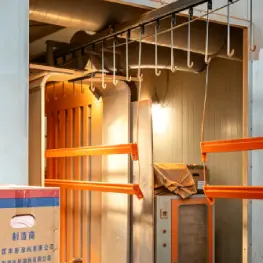
Electrostatic powder coating
STEP 09

Thermoset Electrostatic Powder Coating
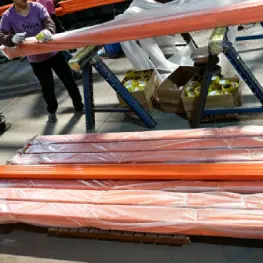
QC and shipping
STEP 10

Ultrasonic Weld Scan & Export Stowing

Engineering Assurance: Our surface treatment line features 180°C to 200°C curing ovens, applying non-toxic TGIC-free epoxy-polyester coatings between 60–90 µm. This guarantees adhesion exceeding ISO 2409 Class 0 and salt-spray corrosion resistance beyond ASTM B117 standards.
Engineering Whitepaper

Structural Architecture & System Selection Matrix

Choosing the right warehouse racking system requires balancing storage density, picking selectivity, material handling equipment (MHE) kinematics, and lifecycle CAPEX.

Technical Comparison: High-Density vs. High-Selectivity Racking Frameworks

The mathematical trade-off between aisle space and volumetric utilization governs warehouse ROI. Standard counterbalanced reach trucks require aisle widths of 3.2m to 3.8m, consuming up to 60% of total warehouse footprint simply for transit corridors. Below is an engineering evaluation across primary industrial configurations:

Racking Architecture Aisle Space Efficiency Selectivity Index Rotation Logic MHE Vehicle Dependency Typical CAPEX / Position
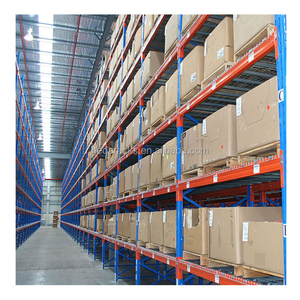
Selective Pallet Racking 40% – 50% 100% Direct FIFO / LIFO Arbitrary Standard Counterbalance / Reach $35 – $55 (Baseline)
Double Deep Racking 55% – 65% 50% Semi-Direct LIFO Lane Dependent Pantograph Double-Reach Truck $45 – $68
Drive-In / Drive-Through 75% – 85% 15% – 20% Bulk Strict LIFO (FIFO if Drive-Thru) Narrow Chassis Drive-In Mast $60 – $85
Gravity Roller Pallet Flow 75% – 85% Lane-Front 100% Strict Automatic FIFO Standard Forklift (Separated In/Out) $130 – $190
Automated 4-Way Shuttle Racking 85% – 92% Dynamic 100% Algorithmic FIFO / LIFO Automated Shuttle + Vertical Lifter $280 – $420 (Integrated)
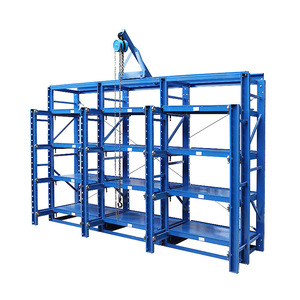
Pull-Out Tool & Mold Racking 60% – 70% 100% Tool Access Independent Tool Pull Overhead Crane / Monorail Hoist $450 – $950 / Bay

Cold-Formed Structural Mechanics & Steel Chemistry

The structural strength of heavy-duty industrial racking is defined by its column section geometry and steel mechanical properties. HEDA Shelves utilizes cold-rolled structural steel coils corresponding to Q235B (yield strength $\ge 235 \text{ MPa}$, tensile strength $370–500 \text{ MPa}$) and high-performance Q355B (yield strength $\ge 355 \text{ MPa}$) for high-bay configurations exceeding 12 meters in height.

Our continuous roll-formed upright columns feature an engineered multi-ribbed Omega ($\Omega$) cross-section. These internal stiffening returns dramatically enhance the column's radius of gyration ($r_x, r_y$) and torsional moment of inertia, preventing premature local buckling and torsional-flexural buckling modes under asymmetric heavy loading. Beams are cold-formed as dual-C interlocking box beams with robotically seam-welded 3- or 4-claw connector plates, delivering high moment connection stiffness that limits deflection to less than $L/250$ under full static load conditions.

Industry Foresight

Global Procurement & Technological Trends in Warehouse Racking

As warehouse operations evolve with robotics, ESG compliance mandates, and land value increases, storage equipment procurement is shifting from standalone steel frames to intelligent automation-ready assets.

Robotics & AGV Integration

AS/RS & Autonomous Mobile Robot (AMR) Convergence

Modern procurement demands rack systems engineered to interface directly with dynamic robotic carriers. Rigid tolerance standards ($\pm 1.0\text{ mm}$ beam sag tolerances) are required to avoid optical sensor errors in 4-Way Shuttles and Autonomous Mobile Robots (AMRs). Future-ready factories specify standardized racking with embedded floor-level fiducial markers, inductive charging bays, and automated vertical lifts.

Sustainability & ESG

Decarbonized Steel & Eco-Responsible Powder Finishes

Global supply chain directors are tracking Scope 3 upstream emissions. Procurement mandates in the EU, US, and APAC increasingly require racking fabricated using steel derived from Electric Arc Furnaces (EAF) with recycled scrap content. Heavy metal-free electrostatic powder coatings that eliminate VOC off-gassing and provide low-energy thermal curing are rapidly replacing conventional solvent-based wet painting.

Advanced Engineering

Seismic Resilience & Real-Time IoT Load Telemetry

With distribution hubs expanding into seismically active zones across the Pacific Rim, Middle East, and Latin America, static load charts are no longer sufficient. Enterprise procurement now specifies dynamic response spectrum analysis under FEMA 460 and Eurocode 8. Concurrently, IoT strain-gauge sensors embedded within beam connectors are emerging to detect real-time overloading and forklift impact damage before failure occurs.

Procurement Knowledge Base

Frequently Asked Technical Questions (FAQ)

Detailed technical, structural, and logistics clarity provided directly by our manufacturing engineering and export dispatch team.

What specific engineering inputs are required for HEDA to generate a complete warehouse layout and CAD quote?
To generate an accurate 2D CAD layout, 3D visualization, and structural load analysis, our engineering team requires: (1) Warehouse architectural drawings (DWG, DXF, or dimensioned PDF) indicating column grid positions, ceiling clear height below sprinkler heads, building egress doors, and floor slab load capacity; (2) Pallet specifications including overall width, depth, height, and gross load weight (including pallet tare); (3) Operating model and specifications of material handling equipment (MHE) or forklifts, especially overall collapsed mast height, maximum fork elevation, and minimum aisle turning radius ($A_{st}$); (4) Inventory turnover profiles (SKU counts, daily picking cycles, FIFO vs. LIFO logistics preference). Layouts and BOM cost estimates are typically returned within 24 to 48 hours.
How does HEDA Shelves ensure seismic compliance for facilities in active earthquake regions?
For projects located in seismic zones (e.g., Japan, Philippines, Indonesia, New Zealand, West Coast Americas), our structural engineers perform Finite Element Analysis (FEA) based on the local ground acceleration parameters ($S_s, S_1$) and seismic importance factors defined by EN 1998 (Eurocode 8) or ASCE 7 / RMI MH16.1. We adjust structural sections by increasing the upright steel gauge thickness (from 1.8mm up to 2.5mm or 3.0mm), designing heavy-duty oversized baseplates with dual concrete mechanical/chemical anchor bolts, adding transverse back-bracing systems, and integrating top aisle portal ties that absorb cross-aisle and down-aisle dynamic kinetic forces.
What surface coatings are recommended for sub-zero cold chain and marine coastal environments?
For standard ambient distribution warehouses, our 8-stage pre-treated electrostatic polyester powder coating (60–90 µm) provides exceptional durability and scratch resistance. For commercial deep-freeze cold storage (-25°C to -35°C), standard paint can become brittle; we formulate specialized cold-resilient powder resins or recommend pre-galvanized cold-formed components. For coastal, high-humidity, or marine port warehouses subjected to airborne salt mists, we supply components hot-dip galvanized in accordance with ISO 1461, yielding a zinc layer thickness of 65–85 µm that delivers decades of maintenance-free cathodic corrosion protection.
What are the structural beam deflection safety limits applied during rack calculation?
HEDA adheres strictly to the FEM 10.2.02 and EN 15512 standards. Under maximum static safe working load (SWL), maximum vertical beam deflection must not exceed $L/200$ (where $L$ is the clear distance between column faces). For automated systems such as Radio Shuttle or AS/RS environments where robotic vision sensors require ultra-stable horizontal planes, our engineers design to tighter limits of $L/300$ or $L/400$. Uprights are calculated with an overall safety factor of 1.65 to 1.8 against ultimate yield stress.
Can HEDA manufacture OEM customized racking profiles to match our existing installed systems?
Yes. As an OEM/ODM factory, we frequently manufacture custom roll-formed profiles, upright hole configurations (including teardrop, diamond, hexagonal, keyhole, and 50mm/75mm/76.2mm pitch slots), and beam end connectors compatible with legacy European, North American, or Australian racking installations. Custom tooling dies can be commissioned in-house for proprietary cross-sections, and custom RAL color matching is standard for private-label distributor partnerships.
How does HEDA handle export packaging to prevent maritime transit rust and structural deformation?
Every export shipment is palletized and strapped using pneumatic tensioners. Upright frames and beams are nested with non-abrasive corrugated spacers, bundled with high-tensile steel strapping, and fully wrapped in industrial multi-layer stretch film and moisture-barrier air-bubble sheeting. Timber dunnage blocks and custom steel transport skids are placed inside shipping containers to prevent bundle shifting during heavy seas. Container load planning software is utilized for every consignment to maximize cube utilization and balance container gross axle weight limits.
What is the standard manufacturing lead time for full container load (FCL) orders?
Standard production lead time for 1 to 3 forty-foot high cube containers (40’HQ) is approximately 15 to 20 working days following structural approval and deposit receipt. For complex automated shuttle systems, multi-tier mezzanine floors, or customized hot-dip galvanized components, lead times range between 25 and 35 working days. Accelerated manufacturing schedules can be coordinated for urgent facility commissioning projects.
Direct Factory Engagement

Ready to Engineer Your High-Density Warehouse System?

Connect directly with our senior racking structural engineering department in Guangzhou. Get comprehensive 2D CAD layouts, structural calculations, and factory-direct volume pricing within 24 to 48 hours.

CE & ISO 9001 Certified
24h CAD & 3D Turnaround
Direct Factory Pricing
Worldwide Port Dispatch

Request Technical Layout

Send your building dimensions, pallet load parameters, and project location to start your structural quote.

Get a Quote