Precision-Engineered Modular Pallet Racking Systems
Constructed from high-tensile Q235B and Q355B structural steel, our modular systems are finite-element optimized for maximum weight distribution, dynamic material handling compatibility, and flexible warehouse reconfigurations.
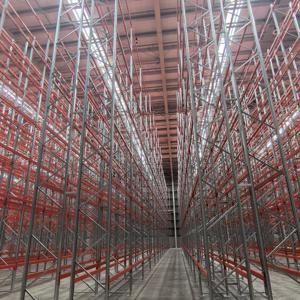
Jracking Industrial Vertical Warehouse Racks Heavy Duty Steel Pallet Racking System for Cold Storage
Engineered for blast freezers down to -30°C. Thermally stable steel profiles eliminate low-temperature embrittlement while maximizing cubic refrigeration density.
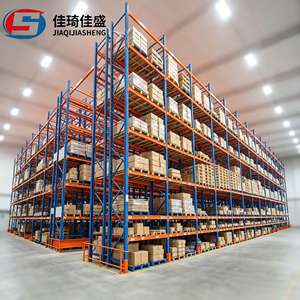
Custom Surface Finish OEM Heavy Loading Modular Assembled Beam Type Heavy Duty Pallet Racking for Production Workshop Storage
Heavy loading beam configuration optimized for active manufacturing cells. Features impact-resistant electrostatic finishes and seamless boltless beam connectivity.
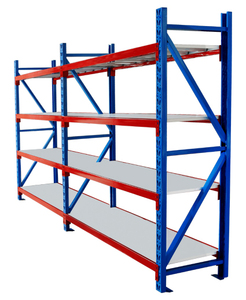
Modular Industrial Grade Steel 5-Layer Adjustable Storage Rack for Factory
Versatile 5-tier industrial shelving engineered with 50mm/75mm pitch increments. Ideal for mixed cargo storage, staging buffers, and maintenance assembly lines.
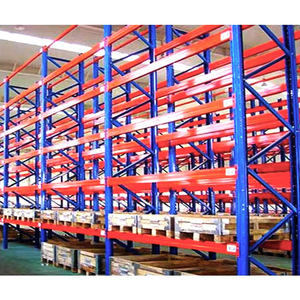
Easy Assembly Heavy Duty Pallet Racking Modular Warehouse Storage System International Standard Industrial Racks
Standardized modular framework built to international warehouse safety norms. High-precision laser-punched uprights enable accelerated erection and field modifications.
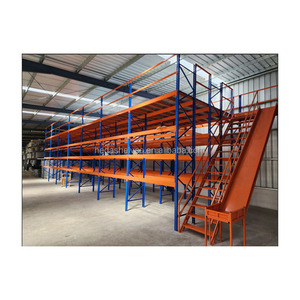
Warehouse Equipment Steel Platform Mezzanine Floor Pallet Racking Shelves Pallet Racking Stacking Racks
Integrates heavy pallet storage on ground bays with full elevated structural picking mezzanines. Multiplies usable floor footprints without expanding building shell boundaries.
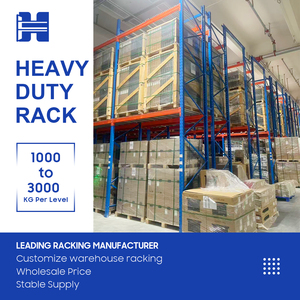
Modular Adjustable Pallet Rack Heavy Duty Steel Warehouse Storage Racking System
Heavy structural box-beam selective racking. Compatible with counterbalanced, reach trucks, and VNA equipment for 100% immediate pallet selectivity across all tiers.
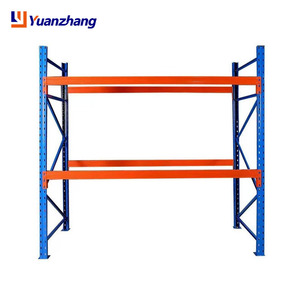
Warehouse Metal Modular High Shelf Heavy Duty Pallet Shelving Industrial Garage Cabinets Storage Stacking Racks & Shelves System
High-bay shelving system combining solid steel decking with pallet supports. Tailored for aerospace components, heavy machinery spares, and high-SKU distribution.
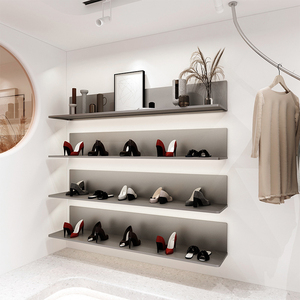
Easy to Assemble Multilayer Stainless Steel Floating Shelves Wall Mounted Clothing Display Rack
Precision grade stainless steel (304/316) commercial and industrial modular shelving. Excellent corrosion resistance for sanitary, cleanroom, retail, and commercial display storage.
Guangzhou HEDA Shelves: Tier-1 OEM/ODM Manufacturing Facility
Established in 2001, Guangzhou Heda Shelves Co., Ltd. operates a single-source manufacturing campus in South China. From primary steel slit-coiling to precision continuous cold roll-forming, robotized GMAW welding, and dual-tunnel electrostatic polyester powder coating, we guarantee structural dependability without intermediate contractor markups.
Certified Mill-Test Quality
We source exclusively from top-tier primary domestic steel mills (such as Baosteel and Shougang). Raw carbon steel batches undergo continuous yield-strength validation, chemical composition spectrometry, and elongation verification before entering slitting lines.
Robotic Automated Roll-Forming
Our facility houses 18 automated roll-forming profile production lines with multi-station inline hydraulic punching dies. Uprights are cold-formed in continuous single passes, eliminating structural internal stresses and maintaining pitch alignment within ±0.5mm across 12-meter continuous sections.
Free 3D CAD & Structural Load Checks
Our 40+ project engineering division produces comprehensive 2D CAD layouts, realistic 3D spatial models, structural load calculation reports, and simulated forklift aisle clearances within 24 to 48 hours. Every bay design is tailored to local seismic zones and floor slab constraints.
9-Stage Surface Pre-Treatment
Racks undergo automated degreasing, ultrasonic cleaning, acid descaling, water rinsing, chemical phosphating, and deionized passivation before powder coating. This prevents internal blistering and delivers 500+ hours of ASTM B117 neutral salt spray corrosion protection.
Containerized Ocean Stacking
Exporting to 120+ countries demands optimized export packing. Our automated banding systems, anti-scratch corrugated interleaving, heavy-duty custom steel skids, and computer-calculated 40HQ container stuffing diagrams lower ocean freight cost per pallet position by up to 22%.
CE & ISO 9001 Regulatory Certifications
HEDA products carry CE Certification (No. 2435-CPR-8605159), ISO 9001:2015 Quality Management certification (No. 18624Q00169R0M), and environmental RoHS qualification. We provide verified documentation for regional municipal building permits worldwide.
Mechanical Mechanics, Deflection Limits & Finite Element Verification of Industrial Pallet Racks
Industrial pallet racking systems function as cold-formed, thin-walled, unbraced or partially braced multi-story steel frameworks. Because columns feature open cross-sections with perforations for beam connector locks, traditional structural steel beam formulas cannot model their actual load-carrying capacities. Design requires empirical testing and advanced non-linear second-order Finite Element Analysis (FEA).
EN 15512 & RMI MH16.1 Standards Compliance
Global logistics engineering requires alignment with regional code mandates. In the European Union, EN 15512:2020 specifies limit state design and global system safety factors (γM), governing torsional buckling, torsional-flexural buckling, and floor connection rotational stiffness. For North American sites, ANSI MH16.1 (RMI standard) determines allowable stresses and post-impact residual capacities. HEDA racking systems are certified against both methodologies, allowing systems integrators to specify configurations worldwide with validated load charts.
Beam Deflection Limits & Moment Connections
Pallet rack beams operate under combined vertical deadweight, dynamic pallet placement, and horizontal forklift forces. Beam design must obey deflection limits of L/200 (standard industrial allowance) or L/300 (for automated shuttle and automated guided vehicle systems) to prevent pallet dislodgement and connector distortion. HEDA's 3-claw, 4-claw, and 5-claw cold-stamped end connectors provide high joint rotational stiffness, transforming standard simply supported beam behavior into semi-rigid framing that reduces upright mid-span bending moments.
Seismic Engineering in Active Geotechnical Zones
Installing racking systems in seismically active regions—including Japan, the Philippines, Indonesia, New Zealand, and California—requires comprehensive dynamic response spectrum analysis. Earthquakes exert lateral inertia forces that trigger sway instability and pull-out stress on concrete anchor studs. HEDA engineers oversize upright cross-sections (e.g., 100mm, 120mm profiles with 2.5mm–3.0mm wall thickness), integrate ductile diagonal frame bracing, and incorporate enlarged seismic base plates with dual Hilti wedge anchoring.
Total Cost of Ownership (TCO) & Galvanic Protection
Long-term operational expenditure is governed by structural durability and resistance to harsh environmental conditions. In humid coastal distribution centers and sub-zero blast freezers, micro-condensation rapidly corrodes unconditioned steel surfaces. HEDA provides specialized hot-dip galvanized finishes conforming to ISO 1461 (65–85μm zinc thickness), providing sacrificial galvanic corrosion protection that extends service lifespans to over 20 years in aggressive cold chains.
Pallet Racking Procurement Trends: 2025–2035 Roadmap
Modern distribution hubs are moving away from passive, isolated racking frameworks. Today's procurement leaders must future-proof storage systems for automated material handling equipment, tighter carbon footprint mandates, and scalable modular reconfigurations.
Convergence with Autonomous Intralogistics
The global shortage of qualified warehouse labor is driving transitions from conventional reach trucks to Autonomous Mobile Robots (AMRs), Automated Guided Vehicles (AGVs), and Radio Shuttle car carriers. Racking procurement now demands tighter structural fabrication tolerances (±1.0mm upright verticality), standardized bottom-clearance openings, integrated optical retro-reflective targets, and durable guide rail profiles that facilitate automated navigation.
Decarbonization & Green Steel Mandates
Multinational 3PLs and Fortune 500 enterprises are auditing Scope 3 supply chain greenhouse gas emissions. Racking procurement contracts now prioritize manufacturers utilizing Electric Arc Furnace (EAF) low-carbon recycled steel coils and volatile-organic-compound-free (Zero-VOC) thermosetting powder coatings. HEDA actively reduces embodied manufacturing energy, providing verified carbon content documentation for LEED and BREEAM industrial facility certifications.
Structural Health Monitoring & IoT Sensing
Forklift impacts remain the leading cause of catastrophic warehouse racking collapses. Modern modular systems are integrating strain-gauge load cells, three-axis MEMS impact accelerometers, and acoustic emission sensors directly onto critical upright base sections. These telemetry arrays monitor real-time beam deflections, alert managers to unrecorded vehicle impacts, and feed digital twin models in warehouse management systems (WMS).
Hybrid Mezzanines for E-Commerce Densification
Skyrocketing industrial real estate lease costs across Tier-1 logistics nodes make horizontal warehouse expansion financially unsustainable. Procurement teams are turning to multi-tier, rack-supported mezzanine floors and high-bay narrow-aisle (VNA) systems. These designs utilize the building's complete vertical clear height, integrating automated tote lifts, gravity spiral chutes, and multi-tier picking aisles within a unified modular footprint.
Supply Chain Nearshoring & Modular Portability
Geopolitical supply chain disruptions have spurred regional manufacturing reshoring and dynamic localized warehousing. Importers and warehouse operators prioritize demountable, modular racking that can be quickly disassembled, containerized, and reassembled in new regional facilities without structural cutting or torch alterations, preserving asset valuations over multiple operational life cycles.
Turnkey OEM Private-Label Alliances
Regional warehouse systems distributors, forklift dealerships, and automated storage integrators are reducing overhead by forming direct alliances with verified OEM manufacturers. Partnering directly with HEDA provides custom beam and column roll profiles, proprietary branding colors, client-specific labeling, and containerized factory-direct shipping that maximizes competitive profit margins.
Frequently Asked B2B Procurement Questions
Clear technical insights from our structural engineering and export logistics departments to assist project managers, structural consultants, and purchasing directors.
What primary parameters do your engineers need to prepare a free 2D/3D layout?
To deliver an optimized CAD layout within 24 to 48 hours, our engineering office requires: (1) Architectural DWG/PDF drawings indicating building clear heights, structural column grids, and fire egress locations; (2) Pallet specifications (width, depth, overall load height including wooden/plastic pallet, and maximum loaded weight); (3) Forklift models and lift limits (e.g., counterbalance, reach truck, VNA); and (4) Facility operating ambient temperatures.
How does HEDA guarantee steel structural integrity across large OEM production runs?
Every steel coil used at our Guangzhou manufacturing facility arrives with certified mill test reports (MTR) verifying yield strength, tensile limits, and elemental chemistry (C, Si, Mn, P, S). In-house quality engineers execute continuous mechanical coupon pull tests, automated 3D coordinate hole-pitch inspections, and laser weld penetration audits before components proceed to surface preparation and powder coating.
Can your modular pallet racking comply with high-risk regional seismic building codes?
Yes. We routinely engineer racking for severe seismic regions across Southeast Asia, Australasia, the Middle East, and the Americas. By analyzing site-specific soil classifications and seismic ground acceleration values (Ss, S1), we configure heavy-gauge uprights, reinforced bracing configurations, high-strength grade 8.8 structural hardware, and engineered base plates designed to transfer seismic shear into the concrete foundation slab.
What is the standard production lead time and export delivery schedule?
Standard OEM project manufacturing cycles typically span 15 to 25 calendar days, depending on total tonnage, finish requirements, and custom tooling needs. Situated close to major South China ocean ports (Guangzhou, Shenzhen, Hong Kong), we offer rapid feeder vessel connections to international trade lanes, providing real-time container tracking from port departure to final destination arrival.
What finish should be specified for high-humidity or cold chain environments?
For standard temperature-controlled warehouses, our 60–90 micron electrostatic epoxy-polyester thermosetting powder coat delivers superior scratch resistance. For blast freezers, ambient cold storage, coastal sites, or outdoor handling yards, we recommend our hot-dip galvanized coating (ISO 1461, min 65µm zinc thickness) or specialized low-temperature flexible epoxy powders that resist brittle fracture down to -30°C.
Do you supply detailed assembly blueprints and on-site installation guidance?
Every completed project is supplied with comprehensive, step-by-step CAD component assembly manuals, 3D exploded layout views, color-coded beam elevation schedules, and torque specification tables. For large-scale multi-tier mezzanine and high-bay projects, we can deploy seasoned installation site supervisors or conduct remote digital video engineering reviews with your regional installation crews.