Engineered Live Pallet Storage Systems
Cold-formed structural steel profiles, customized speed-brake controllers, and dynamic roller beds manufactured in-house to accommodate diverse pallet formats across cold chains, distribution hubs, and chemical logistics.
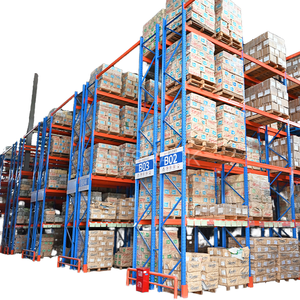
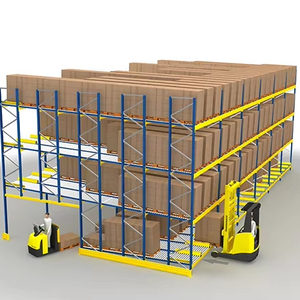
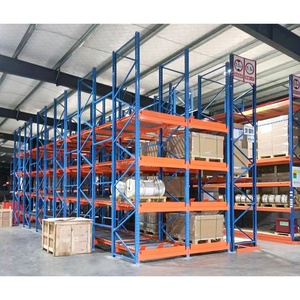
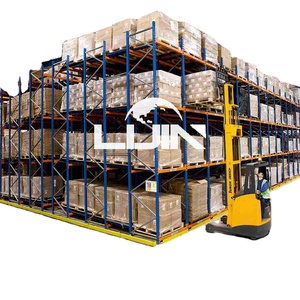
Engineering Dynamics of Live Pallet Racking Systems
A deep dive into zero-energy gravity mechanics, dynamic friction coefficient management, and the engineering principles underpinning automated FIFO pallet sequencing.
Principles of Kinematic Gravity Flow & Acceleration Control
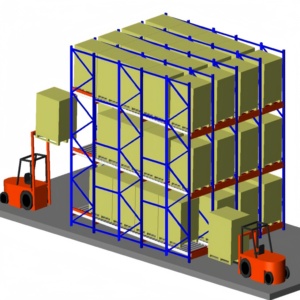
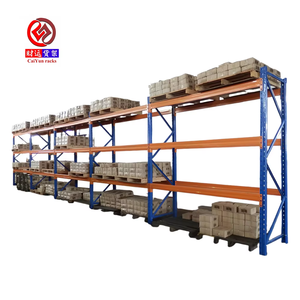
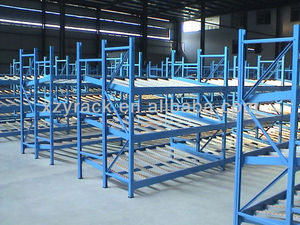
Live Pallet Racking (also classified as Pallet Flow or Gravity Roller Racking) is a dynamic, ultra-high-density storage technology operating purely on gravitational potential energy. Channels are engineered at a micro-calculated downward slope—typically between 3.0% and 4.0% gradient (1.7° to 2.3°) depending on the pallet bottom runner material (solid timber, skid-runner plastic, or pressed composite), total pallet mass (ranging from 300 kg to over 1,500 kg per position), and operational ambient temperatures.
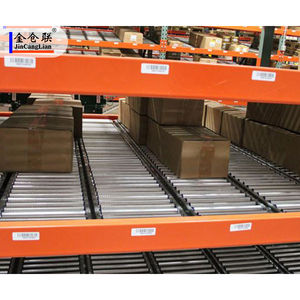
Unlike static drive-in or selective racking arrays, live pallet racking eliminates intermediary internal access aisles by utilizing dedicated charging (loading) and discharging (unloading) faces. As a pallet is loaded at the elevated rear end, it rolls smoothly along precision zinc-plated steel or polyurethane-coated roller lanes toward the retrieval face under controlled terminal velocity.
| System Dimension | Live Pallet (Gravity Flow) | Drive-In Racking | Radio Shuttle Racking | Standard Selective |
|---|---|---|---|---|
| Inventory Flow Principle | Strict FIFO (First-In, First-Out) | LIFO (Last-In, First-Out) | FIFO or LIFO Selectable | Selective (Random Access) |
| Aisle Surface Efficiency | Up to 75% Floor Utilization | 65% - 70% Utilization | 70% - 80% Utilization | 35% - 45% Utilization |
| Operating Energy Cost | 0 kWh (Pure Gravity Operated) | 0 kWh (High Forklift Fuel) | Rechargeable Lithium Batteries | 0 kWh (Moderate Fuel) |
| Forklift Aisle Travel | Low (Perimeter handling only) | High (Enters structural tunnel) | Low (Front dock handling) | Very High (Traverses every row) |
| Structural Collision Risk | Negligible (External mast contact only) | High (Internal mast collisions) | Low (Shuttle handles interior) | Moderate (Turning radius impacts) |
The core mechanical reliability of a long-run gravity flow bed (often extending up to 25 pallets deep in buffer cold stores) rests upon two vital engineered subsystems: Centrifugal Speed Controller Rollers and Mechanical Pallet Load Separators.
- Centrifugal Speed Controllers: Embedded within the roller bed at calibrated intervals (usually every 1 to 2 pallet lengths), these internal planetary-geared or magnetic eddy-current brake assemblies govern downhill travel velocity to a safe, constant 0.25 to 0.30 m/sec. This completely prevents catastrophic kinetic acceleration, load toppling, and structural impact surges.
- Automatic Pallet Separation Separators: At the front discharge face, the lead pallet encounters a spring-actuated mechanical catch. The safety separator holds back the entire following line of pallets behind it, removing line back-pressure. When the forklift operator elevates the front pallet, the separator automatically releases, permitting the queue to roll forward by exactly one position in a controlled, fail-safe step.
Why Global Distributors & 3PL Operators Source from HEDA Shelves
With over two decades of heavy structural fabrication experience, Guangzhou Heda Shelves Co., Ltd. delivers vertically integrated manufacturing from raw certified coil steel to finished, seaworthy dynamic storage systems.
Certified Structural Integrity (CE & ISO 9001)
Manufactured under strict ISO 9001:2015 quality management with European CE Certification (No. 2435-CPR-8605159). All upright column profiles and beam connectors undergo rigorous finite element analysis (FEA) and physical yield-strength load testing aligned with EN 15512 and RMI standards.
Full OEM & ODM Custom Engineering
We do not constrain clients to off-the-shelf catalog configurations. Our 300+ engineering and technical team members customize roller diameters (Ø50mm, Ø60mm, Ø80mm), track lengths, column profile gauges (1.8mm to 3.0mm Q355B high-tensile steel), and beam connector hook locks to your exact pallet load profile.
8-Stage Anti-Corrosion Surface Finishing
Critical for tropical humidity and cold storage condensation, our automated continuous finishing line executes complete chemical degreasing, multi-stage water washing, acid pickling, and phosphating before electrostatic thermoset powder application (RoHS compliant) or continuous hot-dip galvanization.
Complimentary 2D/3D CAD & Structural Simulation
Within 24 to 48 hours of receiving your warehouse architectural drawings, our engineering team supplies complete AutoCAD layouts, clearance simulations, pallet throughput calculations, and seismic load verifications formatted for municipal permitting approval in your target jurisdiction.
Optimized Sea Freight Packaging Engineering
Shipping dynamic roller beds internationally requires structural protection. Rollers, brake drums, and frame segments are bundled with protective corrugated cushioning, heavy-gauge steel banding, and corner shields, bundled with CAD container load diagrams (CLP) that maximize 40ft HQ volume while slashing unloading times.
Seismic-Zoned Engineering (Pacific Rim Compliance)
We configure upright cross-sections, base plate footings, and structural heavy-duty floor chemical anchoring systems explicitly designed to resist seismic moment forces across active earthquake regions, including Japan, the Philippines, Indonesia, and New Zealand.
10-Step In-House Production & Quality Control
From metallurgical coil inspection to final trial assembly, every single component of our gravity flow racking systems is audited against exacting engineering tolerances.
Raw Materials Inspection
Spectral testing of certified Q235B & Q355B hot-rolled coil steel for carbon yield compliance.
Precision CNC Slitting
Laser and CNC slitting lines ensure exact ribbon width tolerances for consistent profile formation.
Automated Punching
Continuous hydraulic stamping lines punch 50mm/75mm pitch teardrop or diamond upright patterns.
Cold-Roll Forming
Multi-stand roller forming dies shape heavy omega upright columns without inducing micro-fractures.
Profile Straightening
Online computerized sensors correct camber, bow, and twist to maintain strict DIN structural tolerances.
Robotic Arc Welding
Robotic welding arms execute deep-penetration welds connecting beam claw connectors and base plates.
Roller Bed Calibration
Individual testing of roller bearings, centrifugal brake torque thresholds, and separation latches.
Pickling & Phosphating
Full chemical immersion removes all mill scale, rust, and surface grease to prep steel pores.
Electrostatic Powder Line
Nordson automated spray booths coat steel with 70–90µm epoxy-polyester cured at 190°C.
Factory Test Assembly
Full trial bay erection and dynamic pallet roll-tests before packing into labeled export bundles.
Future Live Pallet Racking Procurement Trends (2025–2030)
How warehousing macroeconomic pressures, real estate escalation, and automation economics are reshaping pallet flow procurement decisions globally.
1. Passive Energy Prioritization in High-Density Logistics
With industrial energy tariffs rising worldwide, distribution center developers are deliberately moving away from continuously powered chain-driven conveyors for bulk staging lanes. Gravity live pallet systems provide identical FIFO automation with zero kilowatt-hour consumption throughout their entire 20-year structural operational lifespan. For cold chain facilities running sub-zero blast freezers, eliminating heat-generating electric motors from interior storage bays yields double-digit refrigeration compressor power savings.
2. Urban Logistics Hubs & Industrial Real Estate Compression
In logistics gateways such as Singapore, Tokyo, Rotterdam, Sydney, and Dubai, warehouse lease rates per square meter have escalated drastically. Logistics procurement officers can no longer justify the 60% floor space consumption typical of conventional wide-aisle selective racking. Live storage racking consolidates between 10 to 30 pallet positions along a single inclined lane, transforming footprint square meter costs into high-yield volumetric cubic capacity without sacrificing FIFO traceability.
3. Hybrid Integration with Autonomous Mobile Robots (AMRs) & AGVs
Modern live pallet racking is no longer an isolated manual forklift module. Procurement directors are specifying live rack systems engineered with robotic interface dockings. Autonomous guided forklifts (AGVs) charge pallets onto the high-elevation loading face, while automated guided reach trucks pick from the discharge face. This creates a fully lights-out buffer storage matrix where gravity handles internal horizontal pallet transfers seamlessly without complex WCS software layers.
4. Direct-from-Source OEM Supply Chains over Intermediaries
Enterprise procurement departments are increasingly bypassing local Western distributor markups (which typically add 35% to 55% in distributor margins) to contract directly with large-scale certified Chinese manufacturers like HEDA Shelves. By partnering directly with our Guangzhou manufacturing base, EPC contractors and logistics integrators acquire custom-branded OEM colorways, custom column rollings, and certified structural packages at significant cost advantages.
Technological Horizons in Dynamic Gravity Flow Hardware
Our ongoing product development roadmap introduces cutting-edge metallurgical coatings, smart roller telemetry, and advanced impact-dampening components.
Permanent-Magnet Eddy Current Brakes
Transitioning from mechanical friction brake pads to non-contact eddy current magnetic braking. Because magnetic braking experiences zero physical contact wear, maintenance intervals are eliminated, and performance remains constant in -30°C frozen storage environments without hydraulic oil viscosity freezes.
Quick-Snap Modular Roller Modules
Our latest generation of live flow beds features quick-snap modular track assemblies. Rather than unbolting entire framework bays to service a damaged roller, operators can release and replace individual roller tracks in under 90 seconds, slashing facility downtime by over 70% during peak distribution cycles.
Polyurethane Impact Shield Rollers
At the charging entry position, heavy forklift drops generate substantial shock loads. We engineer the first two roller positions with high-elasticity polyurethane sleeves vulcanized to thick-walled steel tubes, absorbing impact energy and preserving pallet bottom runners from cracking.
Frequently Asked Questions by Industrial Warehouse Buyers
Direct, highly technical answers covering structural engineering criteria, roller bed calculations, pallet compatibility, and international project execution.
What specific warehouse data is required to design and quote an OEM Live Pallet Racking system?
- Warehouse Architectural Floor Plan: Showing clear building heights under haunches, column grids, fire sprinkler piping clearance, and dock door locations.
- Pallet Profile & Dimensions: Exact length, width, overall height including cargo overhang, and maximum pallet weight (tare + net). Crucially, we need the runner orientation (2-way or 4-way entry, perimeter base, or skid runners).
- Operating Temperature: Ambient (+20°C), air-conditioned (+10°C to +15°C), chilled (+2°C to +4°C), or deep freeze (-20°C to -30°C), which dictates steel grade, roller grease, and coating formulations.
- Material Handling Equipment (MHE): Forklift model, maximum mast lift height, turning radius, and chassis chassis width.
- Throughput Metrics: Daily rotation speed and pallets per hour to calculate required lane depths and buffer zones.
How do you guarantee pallets won't accelerate uncontrollably down deep gravity lanes?
Can your Live Pallet Racking handle poor-quality or damaged wooden pallets?
How does HEDA Shelves protect live racking steel against corrosion in cold chain freezers and tropical ports?
What international building code certifications accompany your export shipments?
What is the typical production lead time and container shipping arrangement?
Request an Engineered Live Pallet Layout & Project Estimate
Consult with our senior logistics engineering team today. Send us your warehouse floor plan, pallet dimensions, and operational throughput to receive a free 2D CAD layout, 3D simulation, and direct factory pricing within 24 hours.