Factory-Direct Portfolio
Engineered High-Density Racking Systems
Every profile is cold-formed, punched, treated, and powder-coated under stringent ISO 9001:2015 controls to ensure structural integrity across dynamic logistics environments.
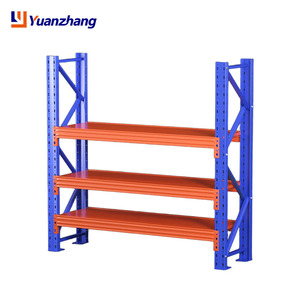
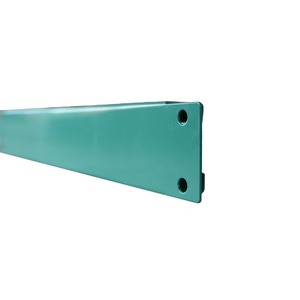
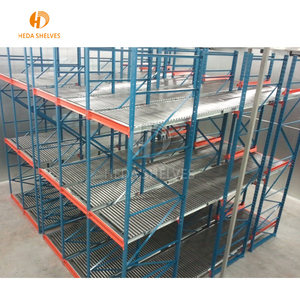
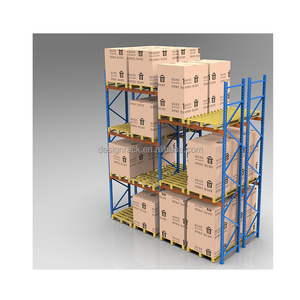
2001
Established Manufacturing Authority
30,000m²
Dedicated Production Facility
30,000t
Monthly Cold-Formed Steel Capacity
120+
Countries & Territories Exported
OEM & Engineering Edge
Direct Manufacturing Competence & Quality Governance
Operating from Guangzhou, our facility consolidates metallurgical analysis, automated roll-forming, robotic continuous welding, and multi-stage powder finishing under single-point engineering accountability.
Certified Structural Compliance
Fabricated strictly under CE Certification (No. 2435-CPR-8605159) and ISO 9001:2015 quality frameworks. Every batch undergoes tensile verification, yield point checking, and EN 15512/RMI structural load compliance testing.
Parametric CAD & 3D Modeling
Our in-house design engineering desk produces precise 2D warehouse layout diagrams, structural static calculation sheets, and immersive 3D renderings within 24 to 48 hours to validate pallet clear heights and aisle turning radii.
Full OEM / ODM Customization
From customized upright hole patterns (teardrop, diamond, hex) and custom connector tab metallurgy to client-specific RAL powder coating color palettes and private-label packaging for regional racking distributors.
Procurement Intelligence
Future Procurement Trends in High-Density Storage (2026–2030)
Industrial logistics is shifting away from low-efficiency wide-aisle setups. Understanding these global procurement shifts ensures long-term return on capital expenditure.
Densification Over Footprint Expansion
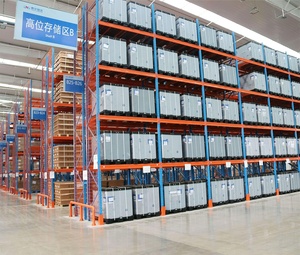
Rising industrial land leasing costs across Southeast Asia, the Gulf, and Europe are forcing operators to maximize vertical envelope utilization. Double Deep, Drive-In, and Radio Shuttle configurations reduce dedicated aisle square footage by 40% to 65%.
Automation-Ready Static Profiles
Procurement teams increasingly specify racking tolerances that accommodate future conversion to Autonomous Mobile Robots (AMRs), Automated Guided Forklifts (AGFs), or 4-way radio shuttles without requiring structural tear-downs.
Seismic & Environmental Engineering
Tenders across seismic corridors (Indonesia, Philippines, Japan) now mandate baseplate engineering rated for Peak Ground Acceleration (PGA) factors, alongside RoHS-certified non-toxic finishes resilient to tropical relative humidity.
| Racking Topology | Floor Space Utilization | Selectivity Ratio | Inventory Logic | Best Industry Application |
|---|---|---|---|---|
| Selective Pallet Rack | 35% – 45% | 100% Immediate | FIFO (First-In, First-Out) | High-SKU 3PL, Retail Distribution Hubs |
| Double Deep Racking | 55% – 65% | 50% Semi-Selectivity | LIFO (Last-In, First-Out) | Manufacturing Buffers, Cold Chain Facilities |
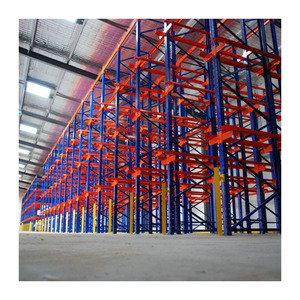
| Drive-In / Drive-Thru | 70% – 80% | Low (Lane-Dependent) | LIFO / FIFO | Beverage Bottlers, Bulk Homogeneous Goods |
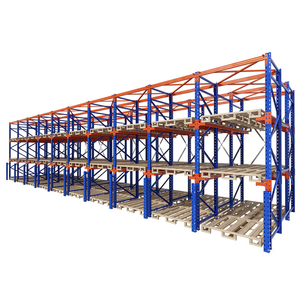
| Gravity Flow Racking | 65% – 75% | Lane Face Automatic | Strict FIFO | Perishable Food, Pharmaceutical Logistics |
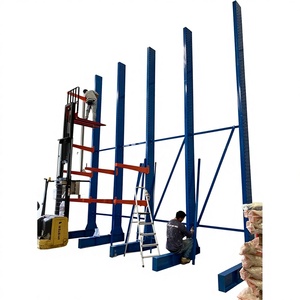
| Heavy Duty Cantilever | Specialized Linear | 100% Long Profiles | Selective Handling | Pipes, Extrusions, Sheet Timber, Structural Steel |
Technological Evolution
Technological Trajectories in Industrial Storage Systems
High-density racking is evolving from passive steel shelving into high-precision, structural-mechatronic infrastructure.
High-Yield Steel Alloy Formulations
By transitioning from generic hot-rolled plates to cold-formed Q235B and Q355B modified micro-alloy coils, manufacturers achieve up to 25% higher load capacities per upright section while cutting deadweight tonnage, reducing shipping freight costs per container.
Advanced Anti-Corrosion Surface Engineering
Modern applications mandate 12-stage chemical pickling and silane-based phosphating before electrostatic polyester-epoxy hybrid powder deposition. For high-salinity ports and sub-zero blast freezers, continuous hot-dip galvanizing provides decades of oxidation resistance.
Integrated Structural Sensor Systems
Emerging high-bay systems integrate wireless strain gauges and vertical plumb-line deflection sensors directly onto critical upright bases. This feeds real-time impact alerts to maintenance teams when MHE collisions compromise structural safety limits.
Certified Production
10-Step Quality Control & Fabrication Sequence
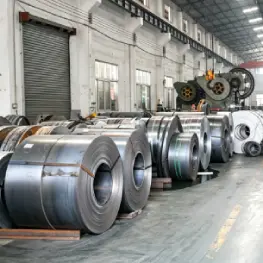 STEP 01
Steel Coil Testing
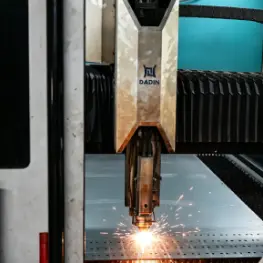 STEP 02
Precision Slitting
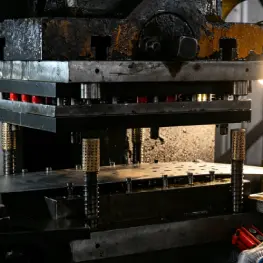 STEP 03
Auto Punching
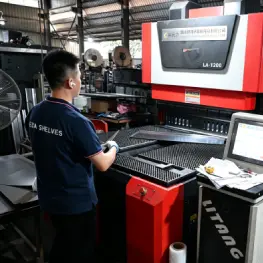 STEP 04
Cold Roll-Forming
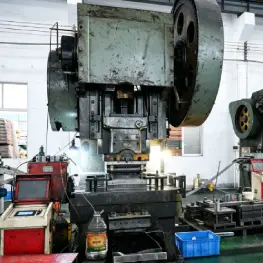 STEP 05
Profile Forming
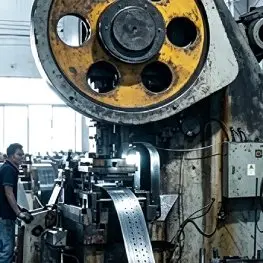 STEP 06
Surface Deburring
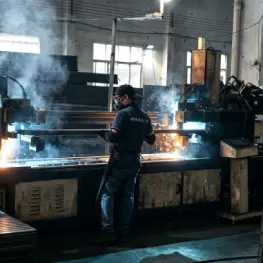 STEP 07
Robotic Welding
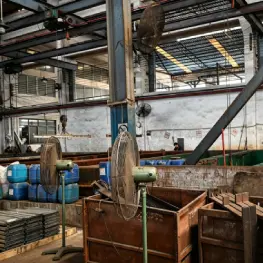 STEP 08
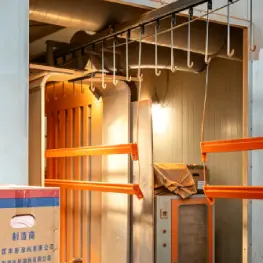
Phosphating Dip
 STEP 09
Powder Coating
 STEP 10
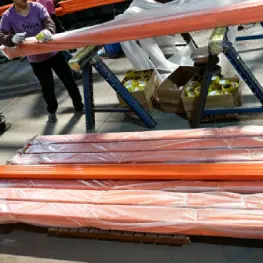
QC & Bundling
Procurement Knowledge Base
Frequently Asked Questions for Sourcing & Engineering Teams
Clear, authoritative technical answers addressing load certification, earthquake resistance, logistics packing, and factory compliance.
How does your factory verify structural load-bearing capacity and safety factors?
Every upright profile and box beam configuration is engineered against EN 15512:2020 (European Standard for Steel Static Storage Systems) and ANSI/RMI MH16.1 specifications. We calculate maximum bending moments, torsional buckling, and connector shear values using finite element analysis (FEA). Physical hydraulic pressure crush tests and coupon pull tests are recorded for every production run, ensuring minimum safety factors between 1.5 to 1.95 depending on regional building mandates.
Can you provide engineering design calculations for seismic zones across Asia and Latin America?
Yes. For installations in seismic corridors such as the Philippines, Indonesia, Japan, New Zealand, and Chile, our structural engineers model seismic response spectra based on peak ground acceleration (PGA) data. We adapt structural sections by specifying thicker baseplate footings, high-tensile mechanical wedge anchors, cross-aisle spine bracing, and heavy-gauge diagonal column lacing, delivering verifiable calculation packets ready for local municipal permitting.
What surface treatments protect steel racking against rust in tropical and cold-room warehouses?
Standard atmospheric installations receive automated degreasing, acid pickling, and zirconium/iron phosphating followed by an electrostatic thermo-hardened epoxy-polyester powder coat (60–80 microns), passing standard 500-hour salt spray evaluations. For blast-freezers (-25°C to -40°C), condensing cold rooms, or coastal marine warehouses, we provide ISO 1461 hot-dip galvanizing with 70–120 micron zinc coatings to prevent under-film corrosion and zinc peeling over long operating lifespans.
What minimum documentation is required to initiate a custom layout design and quote?
To return an optimized layout within 24–48 hours, our project engineers require: 1) Architectural floor plan (DWG CAD or clear dimensioned sketch showing columns, doors, and clear height under sprinkler pipes); 2) Unit pallet parameters (Width x Depth x Height inclusive of cargo overhang, plus gross pallet weight); 3) Material Handling Equipment (MHE) specification (forklift model, minimum right-angle stacking aisle, mast lowered height, and maximum fork elevation); and 4) Temperature conditions and SKU turnover rotation requirements.
How do you optimize container loading to prevent damage and minimize international ocean freight costs?
Our logistics department uses specialized 3D container packing simulation software to maximize 40ft HQ cubic capacity while remaining strictly within road weight limits. Upright frames are systematically nested with corrugated spacers and polyester strapping, while beams are banded on heavy wooden dunnage with protective edge angles. Small accessories (baseplates, safety drop pins, row spacers) are packed in reinforced wooden crates, preventing transit scraping and simplifying onsite unloading.
Can you provide custom OEM hole pitch and private labeling for regional racking distributors?
Yes, a significant share of our Guangzhou manufacturing capacity is dedicated to private-label OEM partnerships. We manufacture upright tooling matching 50mm, 75mm, 76.2mm (3-inch), and tear-drop pitch patterns to integrate seamlessly with your regional product lines. OEM branding options include custom roll-stamped logos on beam faces, branded warning load plaques, customized installation assembly guides, and neutral packaging.