Featured Gravity Flow Storage & Accessory Solutions
Custom-engineered carton flow beds, heavy-duty pallet roller conveyors, and precision structural safety components manufactured to precise European (FEM) and American (RMI) warehousing tolerances.
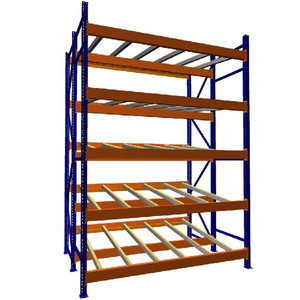
Picking Flow Racking Carton Flow Rack Logistics Storage Racks
- Aluminum roller tracks with nylon wheels
- Ergonomic picking tray integration
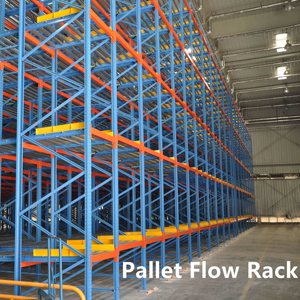
Customized Gravity Flow Pallet Roller Shelf System Heavy Duty Pallet Flow Rack
- Heavy structural steel frame (up to 1,500kg/pallet)
- Centrifugal speed brake controllers
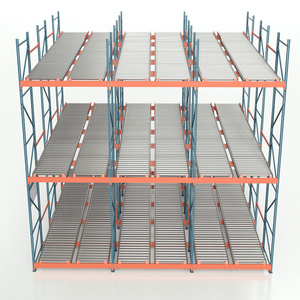
Gravity Pallet Flow Rack Shelf Heavy Duty Selective Rack Steel Carton Customized ISO9001/CE
- Full European CE & ISO 9001 production compliance
- Automatic pallet stop & back-pressure separators
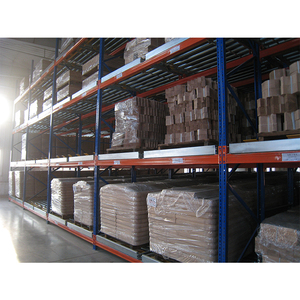
Factory Made FIFO Gravity Flow Roller Racking System Gravity Flow Rack Systems
- Strict FIFO inventory rotation design
- Pre-galvanized high-torque roller tracks
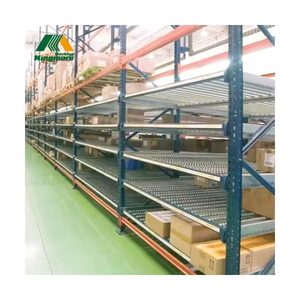
Durable Steel Warehouse Gravity Flow Roller Racking Systems Carton Flow Racks
- Q235B cold-rolled structural steel profiles
- Drop-in adjustable shelf track pitch (50mm increments)
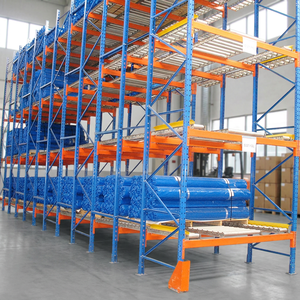
First in First Out Design Perishable Goods FIFO Gravity Flow Racking
- Engineered for cold storage down to -30°C
- Zero energy gravity-fed operation
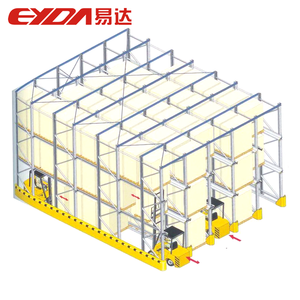
Heavy Duty 5 Layer Drive-in Pallet Storage Racking System FIFO/LIFO Adjustable
- Maximized floor cubic utilization (up to 85%)
- Heavy-duty structural guide rails and floor anchors
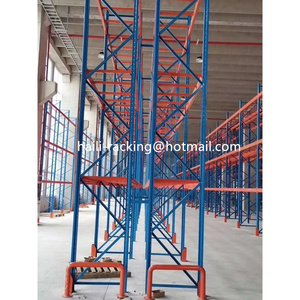
Row Spacer for Pallet Rack Parts Accessories of Warehouse Racks
- Heavy galvanized or epoxy powder-coated steel
- Structural rigidity reinforcement for back-to-back runs
Engineering Principles & Operational Dynamics of Pallet Flow Racks
A definitive technical manual for warehouse planners, supply chain integrators, and industrial procurement managers evaluating gravity-fed dynamic storage systems.
Gravity flow racking systems, universally recognized across modern logistics as dynamic live storage, represent one of the most mechanically elegant and energy-efficient solutions for high-density warehousing. Unlike static selective pallet racking—which demands extensive dedicated aisle square footage—gravity flow systems operate on an inclined roller track bed (typically calibrated at a slope between 2.5° to 3.5° or approximately 35 mm to 50 mm per linear meter). Utilizing the natural force of Earth's gravity, palletized loads or carton totes travel smoothly from the rear loading (replenishment) face down to the front unloading (picking) face.
This automated flow guarantees an absolute First-In, First-Out (FIFO) product turnover cycle. In industries plagued by product degradation, tight expiry date matrices, or rapid batch-controlled distribution schedules (such as dairy processing, FMCG retail, frozen seafood preservation, and pharmaceuticals), eliminating SKU obsolescence via mechanical FIFO is non-negotiable. Loading operations remain entirely decoupled from picking corridors, mitigating forklift transit interference, eliminating traffic bottlenecks, and dramatically elevating warehouse occupational safety standards.
Critical Dynamic Components: Centrifugal Speed Controllers & Load Separators
The operational safety of a pallet flow system relies entirely on kinetic deceleration mechanics. When heavy pallet loads (often ranging between 500 kg to 1,500 kg) descend down deep storage lanes (up to 15–20 pallets deep), runaway acceleration presents catastrophic risk to racking uprights and operational personnel. High-performance gravity flow engineering counteracts this via calibrated centrifugal brake rollers embedded into the roller bed at calculated intervals. These friction controllers limit pallet speed to a safe terminal velocity of approximately 0.25 to 0.3 meters per second. Concurrently, heavy-duty back-pressure safety separators isolate the lead picking pallet from the hydrostatic weight of upstream descending pallets, guaranteeing effortless and safe forklift extractions.
From a financial standpoint, capital expenditure (CapEx) in gravity flow infrastructure yields substantial operational expenditure (OpEx) amortization within 14 to 26 months. Because replenishment forklifts are completely isolated to dedicated loading aisles while picking equipment traverses opposite corridors, internal warehouse travel distances are slashed by up to 45%. Forklift wear-and-tear, battery charging intervals, and facility carbon emissions plummet, providing significant bottom-line advantages for large distribution centers.
| Technical Parameter | Pallet Gravity Flow System | Carton Flow Picking System | Structural Heavy Duty Flow |
|---|---|---|---|
| Payload Range | 300 kg – 1,500 kg per pallet position | 10 kg – 150 kg per linear meter / tote | 1,500 kg – 2,500 kg specialized coils/dies |
| Roller Track Pitch | 2.8% to 3.5% (approx. 35mm per meter) | 3.0% to 5.0% depending on carton base | Custom calculated per test protocol |
| Deceleration Mechanism | Centrifugal internal brake rollers | Surface friction wheels / end stops | High-friction hydraulic shock absorption |
| Lane Depth Potential | 2 to 25 pallets deep | Up to 10 meters continuous run | 2 to 10 deep customized channels |
| Standard Steel Material | Q235B / Q355B high-tensile cold-rolled | Aluminum alloy rail + nylon rollers | Hot-rolled structural I-beam channels |
| Applicable Environments | Ambient (-10°C) to Deep Cold (-30°C) | Standard fulfillment retail / e-commerce | Manufacturing heavy fabrication bays |
Future Procurement Trends in Industrial Storage (2025–2030)
How international corporate buyers, general contractors, and logistics REITs are restructuring their supply chain procurement strategies for dynamic racking.
Wholesale Factory-Direct Consolidation
Tier-1 logistics developers are moving away from local intermediary brand markups, preferring factory-direct relationships with certified Chinese manufacturers who provide end-to-end CAD structural validation, custom roll-forming, and unified ISO containerization.
Automation (AMR/AGV) Interfacing
Modern gravity flow beds are increasingly customized with precision optical sensors, robotic end-position indexers, and specialized entry guides to interface directly with Autonomous Mobile Robots (AMRs) and AGV reach trucks for zero-human lights-out facilities.
Cold-Chain Energy Optimization
With the global surge in temperature-controlled pharmaceutical and frozen food logistics, gravity flow racking procurement is skyrocketing due to its ability to compress refrigerated cubic volume by 50%, slashing commercial compressor electrical overhead drastically.
Full Lifecycle Traceability & ESG
Multinational procurement mandates now demand verified low-VOC electrostatic powder coatings (RoHS compliance), certified structural raw materials (Q235B mill certificates), and modular reconfigurability to meet corporate ESG and environmental sustainability metrics.
Technological Innovations in Modern Dynamic Racking
Discover how cutting-edge metallurgy, smart kinetic dampening, and modular roller track engineering are transforming warehouse throughput and structural safety.
Contactless Eddy-Current Magnetic Brakes
Traditional friction brake rollers suffer from mechanical wear and tear over decades of heavy operational cycles. Next-generation systems feature non-contact magnetic eddy-current rollers that apply dynamic resistance proportional to pallet speed without mechanical friction parts, eliminating long-term maintenance costs and operating flawlessly down to -30°C without hydraulic freezing.
Universal Pallet-Runner Adaptive Trackbeds
Historical gravity flow systems required pristine wooden Euro-pallets to avoid roller jamming. Contemporary developments by leading Chinese manufacturers utilize modular split-roller cassette tracks and staggered multi-wheel configurations that effortlessly accommodate wooden, plastic, and perimeter-base metal runners with irregular underside deflective contours.
Drop-In Structural Modularity & Pick Bins
Modern engineering now incorporates universal beam clip attachments and slotted channel designs. Warehouses can rapidly convert static selective beam levels into high-throughput carton flow or pallet flow lanes in under 30 minutes without welding or structural cutting, providing immense agility for seasonal order spikes and omnichannel retail peaks.
Why Global Contractors Partner with HEDA Shelves
Founded in 2001, Guangzhou HEDA Shelves Co., Ltd. provides over 25 years of engineering pedigree, certified mass production, and export logistics to over 120 countries worldwide.
25+ Years Industrial Pedigree
With an established history dating back to 2001 and over 10,000 global projects delivered, our engineering veterans have resolved virtually every structural layout, floor variance, and seismic load challenge imaginable.
30,000 m² Facility & 30,000t Output
Our centralized Guangzhou manufacturing complex operates automated roll-forming lines, automated CNC column punching, robotic beam welding, and multi-stage pickling/phosphating electrostatic powder coating lines.
Rigorous Certifications & Seismic FEA
Certified under CE (No. 2435-CPR-8605159), ISO 9001:2015, and RoHS safety protocols. Our engineering department delivers full Finite Element Analysis (FEA) reports and seismic load calculations for local permitting.
South China Port Export Efficiency
Strategically situated near South China's deep-water ports, we provide rapid shipping lead times to Southeast Asia, the Middle East, Europe, and the Americas, complete with optimized container loading plans to reduce freight costs.
Frequently Asked Questions by Industrial Sourcing Directors
In-depth technical answers addressing pitch calibrations, pallet compatibility, structural seismic requirements, and international project execution.
How do you calculate the optimal incline gradient and roller density for mixed pallet weights?
Can gravity pallet flow racks operate safely inside cold chain and blast freezer environments?
What prevents dynamic pallets from crashing into the extraction face in deep-lane systems?
Can you provide seismic load engineering calculations for permits in earthquake zones?
What pallet types are compatible with gravity roller tracks?
What is the standard production lead time and international containerization protocol?
What information is required to receive a comprehensive 2D CAD layout and load proposal?
Request a Free Dynamic Storage Layout & Structural Calculation
Connect directly with HEDA Shelves' technical sales engineering team in Guangzhou. Receive a tailored 2D/3D warehouse layout plan, pallet capacity optimization study, and factory-direct wholesale pricing within 24 hours.