Featured Warehouse Storage & Industrial Racking Systems
Engineered to FEM 10.2.02 and RMI specifications using premium grade Q235B and Q355B structural steel. Delivered factory-direct to global distribution centres, logistics hubs, and cold-storage facilities.
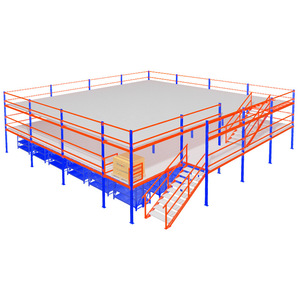
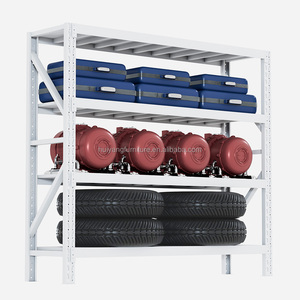
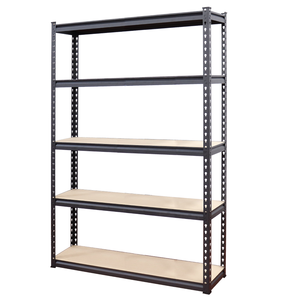
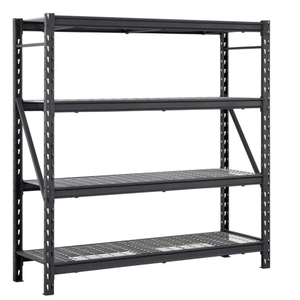
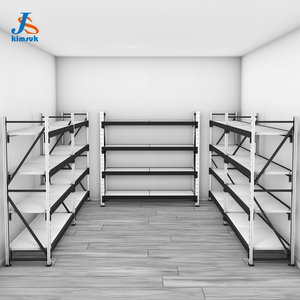
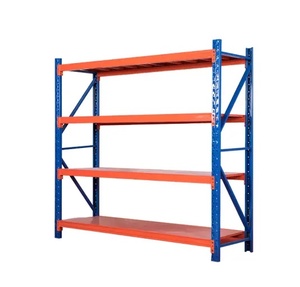
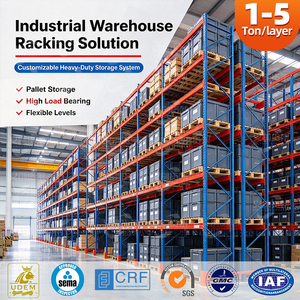
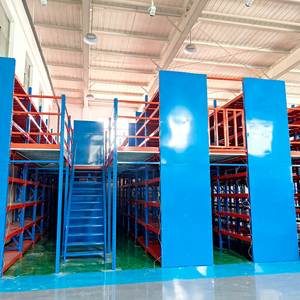
Engineering Architecture & Mechanics of Drive-In Racking Systems
Drive-in racking represents one of the most mechanically demanding and space-efficient storage topologies engineered for contemporary intralogistics. By eliminating intermediate working aisles required in conventional selective pallet systems, drive-in racking converts up to 75% to 80% of warehouse floor footprint into usable storage volume. Unlike standard pallet racks where horizontal load beams continuously bridge upright frames, drive-in structures utilize continuous cantilevered pallet support rails. This continuous lane configuration allows counterbalance and reach forklifts to physically drive inside the racking bays to position or retrieve pallets on continuous supporting runners.
Because structural beams cannot span across the drive-in operational aisles at intermediate pallet levels, the system’s overall torsional rigidity and horizontal displacement resistance depend entirely on top horizontal tie-beam trusses, vertical back-plane diagonal bracings (configured in Last-In, First-Out / LIFO arrangements), and heavy-duty portal frame ties. Guangzhou Heda Shelves Co., Ltd. implements precision structural roll-forming protocols using premium certified Q235B and high-yield Q355B cold-rolled structural steel, ensuring upright sections withstand both static gravitational loads and dynamic forklift approach collisions.
Cantilever Rail Profiles
Formed from single-pass continuous hot-dip galvanized or electrostatic powder-coated structural steel coils up to 2.5mm–3.0mm thickness. The asymmetric flared lead-in geometry self-centers pallets, mitigating lateral friction and preventing load hang-ups when reach trucks reverse out of deep lanes.
Portal Top & Spine Bracing
Because drive-in lanes lack horizontal pallet beams along the lower working heights, horizontal seismic stresses and lateral lean are absorbed by heavy-duty top portal bracing beams (box profile) and spine diagonal X-bracing, keeping lane deflection strictly within FEM 10.2.02 tolerances (delta < 1/200).
Ground Guidance Channels
Heavy structural angle floor rails (typically 100×75×8mm or cold-formed channels with high-visibility safety polyurethane finishes) bolted firmly with mechanical wedge or chemical capsule anchors. These protect upright posts from side impact while guiding the truck down lanes exceeding 10 meters deep.
Drive-In Racking vs. Alternative Industrial Pallet Storage Systems
Selecting the ideal high-density storage technology requires evaluating SKU diversity, accessibility requirements, cycle throughput velocities, and CAPEX expenditure per pallet position.
| Storage System Type | Space Utilization | Stock Rotation | SKU Selectivity | Forklift Interaction | Relative Cost / Position | Ideal Storage Application |
|---|---|---|---|---|---|---|
| Drive-In Pallet Racking | 75% – 85% | LIFO (Last-In, First-Out) | Low (Homogeneous SKUs) | Forklift enters inside rack | Low to Moderate (Optimal) | Cold storage, beverage, bulk seasonal goods |
| Drive-Through Pallet Racking | 70% – 80% | FIFO (First-In, First-Out) | Low (Dedicated batch lots) | Forklift enters dual access lanes | Moderate | Raw material staging, fast-turn expiration dates |
| Radio Shuttle Cart Racking | 80% – 90% | FIFO or LIFO | Moderate | Forklift stays on aisle perimeter | High (Electromechanical system) | Automated cold stores, FMCG mega-hubs |
| Push-Back Nested Cart Racking | 65% – 75% | LIFO | Moderate (2–6 deep) | Forklift stays in primary aisle | Moderate to High | Medium batch staging, multi-client 3PLs |
| Standard Selective Pallet Rack | 35% – 45% | 100% Direct Access | Maximum (100% immediate) | Operates exclusively in aisles | Lowest upfront CAPEX | Multi-SKU e-commerce fulfillment, general 3PL |
Engineering Insight: The Structural Deflection Threshold
Under International Federation of Materials Handling (FEM 10.2.02) and European Standard EN 15512 guidelines, drive-in systems operate under severe dynamic eccentric loads. As a forklift deposits a 1,200kg unit load onto cantilever arm rails 8 levels high, instantaneous downward bending moment is transferred entirely into the outer column flange. Our factory executes strict roll-forming cold-work hardening on proprietary 90mm, 100mm, and 120mm Omega upright profiles with multi-bend stiffening ribs, guaranteeing deflection ratios remain within 1/200 under maximal rated payload conditions.
Future Procurement Trends in Industrial Drive-In Racking (2025–2030)
Strategic procurement teams and global supply chain directors are adapting their warehouse infrastructure investments to address rising land costs, energy expenses, and automation integration.
Cold-Chain Footprint Consolidation
With electricity rates comprising up to 60% of total operational expenditure in temperature-controlled warehouses (-25°C to -30°C blast freezers), minimizing chilled air volume per stored pallet is mission critical. Drive-in systems maximize cubic refrigeration density better than nearly any manual system. Procurement demands are pivoting heavily toward galvanized cantilever arms and cold-rated high-tensile steels that resist low-temperature embrittlement without micro-fracturing under impact.
Semi-Automated AGV Interfacing
Traditional drive-in aisles rely on manual forklift drivers navigating tight dimensional tolerances (often only 75mm–100mm total clearance between pallet edge and upright column). Forward-looking enterprises are designing hybrid drive-in systems featuring magnetic, laser, or vision-guided automated forklift (AGV) interfaces. This requires roll-forming fabricators to hold structural tolerances within ±0.5mm over a 12-meter upright run, eliminating cumulative installation drift.
Rigorous Structural Traceability
Corporate ESG mandates and strict structural safety audits (such as EN 15635 warehouse rack inspection standards) are ending the era of non-certified steel sourcing. Global buyers now mandate mill test certificates (MTC), verifiable yield strengths (minimum 235 N/mm² up to 355 N/mm²), third-party weld testing to ISO 15614, and powder coatings completely compliant with RoHS / REACH standards.
Engineering Evolutions in Modern Drive-In Rack Construction
How Guangzhou Heda Shelves Co., Ltd. solves high impact vulnerability, structural fatigue, and complex seismic loading challenges.
Deep Stiffened Baseplates
Traditional thin baseplates twist under cyclic forklift impact. We engineer heavy 8mm–12mm CNC-punched dual-anchor baseplates with welded gusset side brackets, dissipating baseline kinetic force directly into the concrete foundation slab without cracking the anchor bolts.
Single-Piece Flanged Arms
Our drive-in cantilever arms are stamped from high-strength structural plate with robotic multi-point weldments. The 3-claw or 4-claw hook profile locks firmly into the upright column teardrop/diamond pitch, eliminating arm tilting even when side-scuffed by entering masts.
Dynamic Seismic Bracing
Engineered specifically for active seismic regions (such as the Pacific Rim and Middle Eastern fault boundaries). Our structural calculation packages incorporate node damping joints, expanded horizontal plan bracing, and custom foundation embedment calculations adhering to ASCE 7 and IBC codes.
Dual Pretreatment Surface Coating
Prior to electrostatic powder coating, all steel components pass through a continuous automated 7-stage pickling, zinc phosphating, and deionized water wash. This increases molecular resin adhesion, achieving 1,000+ hours salt spray test resistance for tropical and humid coastal zones.
Why Tier-1 Importers & EPC Contractors Partner with Us
Established in 2001, Guangzhou Heda Shelves Co., Ltd. has developed into an internationally recognized industrial storage equipment manufacturer, operating state-of-the-art production lines in South China.
Rigorous Quality Certifications
Our manufacturing operations operate under strict audited compliance with international standards:
- CE Certification: Certificate No. 2435-CPR-8605159
- ISO 9001:2015: Certificate No. 18624Q00169R0M
- Environmental Coating: Fully RoHS and REACH compliant
- Structural Design Standard: FEM 10.2.02, EN 15512, RMI MH16.1
South China Shipping Advantage
Headquartered in Guangzhou with direct proximity to Guangzhou (Nansha) and Shenzhen (Yantian/Shekou) major ocean terminals, we provide direct container sailings across Southeast Asia, the Middle East, Europe, and the Americas. Our engineering team prepares customized 3D container packing layouts using automated software to maximize 40ft High Cube container volumetric capacity (saving 15%–25% in freight expense per pallet position).
Full OEM/ODM Private Labeling
We partner extensively with local racking suppliers, material handling equipment (MHE) distributors, and industrial contractors worldwide. We offer custom powder coating color matching (RAL classic standards), private label brand embossing on column protectors and beams, customized engineering load charts, and bilingual installation manuals for rapid on-site erection.
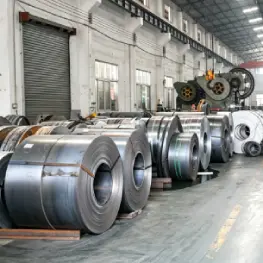
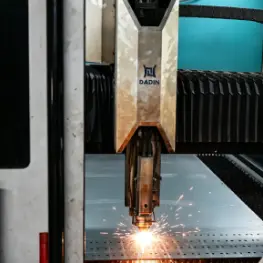
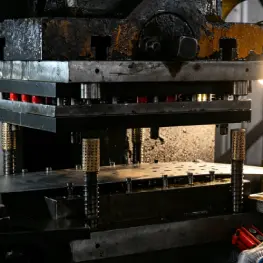
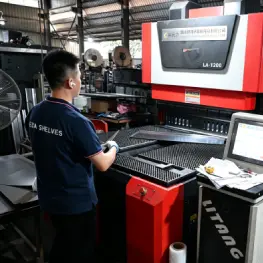
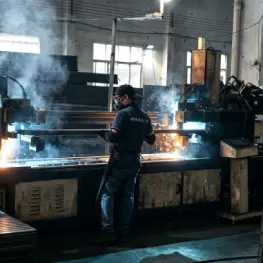
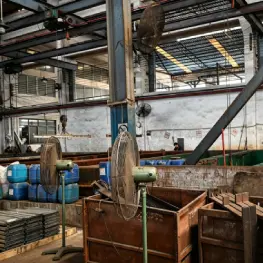
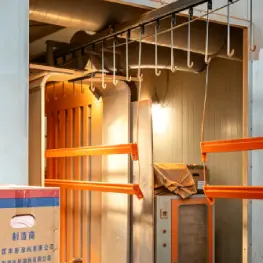
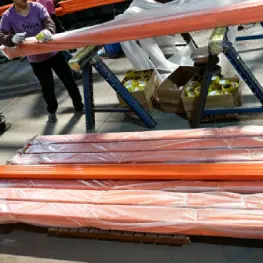
Integrated 10-Stage Precision Manufacturing Flow
From certified high-grade steel coil slitting to robotic welding and automated packaging, every single stage is maintained in-house under continuous ISO 9001 quality audits.
Frequently Asked Technical & Procurement Questions (FAQ)
Clear engineering answers addressing the operational risks, installation tolerances, and load dynamics of drive-in racking projects.