State-of-the-Art Pallet Shuttle Systems
Explore high-density automated racking configurations designed, cold-formed, and tested by China's leading warehouse infrastructure manufacturers.
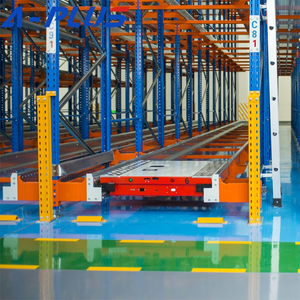
Warehouse Storage Automated Pallet Runner Shuttle Racking System
View Details →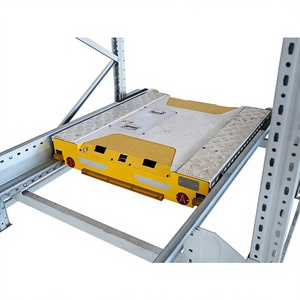
Pallet Shuttle Racking Automatic 4-Way Cold Storage Shuttle Rack
View Details →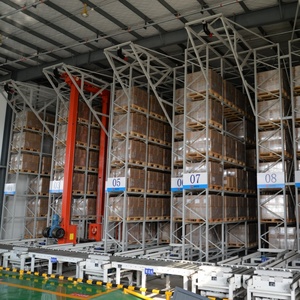
Customized Automatic Storage Retrieval System ASRS Pallet Racking
View Details →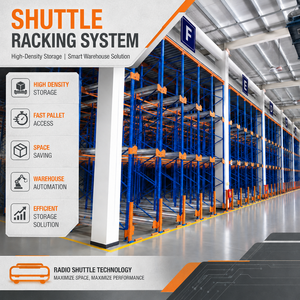
Factory Supply Radio Shuttle Rack Heavy Duty Pallet Shuttle System
View Details →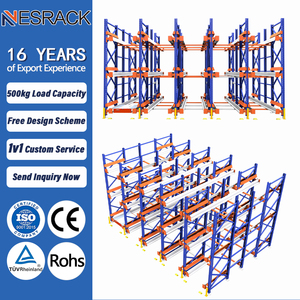
High Density Durable Radio Shuttle Rack Heavy Duty Pallet Shelves
View Details →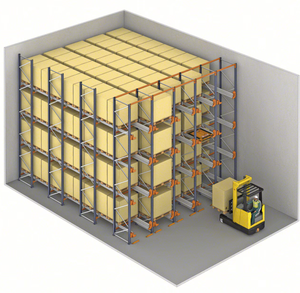
Intelligent Pallet Rack System 4-Way Automated Storage Shuttle Rack
View Details →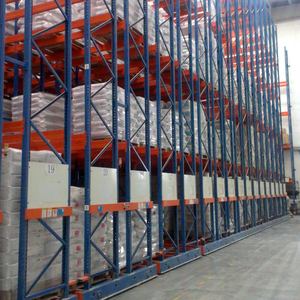
Heavy Duty Automated Electric Movable Pallet Racking System
View Details →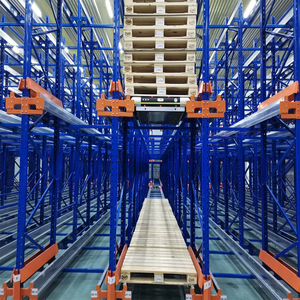
Robotics Radio Pallet Shuttle Racking System With CE Certificate
View Details →The Strategic Role of China’s Pallet Shuttle Systems in Global Supply Chains
As industrial land costs escalate globally and omnichannel consumer demands necessitate rapid order fulfillment, modern warehouse architecture is experiencing an unprecedented structural shift. Traditional static storage mediums—such as selective rack arrays and standard drive-in configurations—are encountering significant physical limitations. Standard selective racks require up to 60% of total warehouse floor area exclusively for forklift operational aisles, whereas drive-in systems present inherent risks of collision damage, compromised structural stability at high elevations, and sluggish operator cycle times. In response, modern intralogistics planners rely on the advanced pallet shuttle racking system as a fundamental engineering solution.
China has firmly established itself as the preeminent manufacturing epicenter and technology exporter for industrial pallet shuttle infrastructure. By coupling vertically integrated precision metallurgy, robotic roll-forming technology, and cutting-edge mechatronic robotics, leading Chinese manufacturers deliver semi-automated and fully automated storage systems that conform strictly to European FEM (Fédération Européenne de la Manutention) codes, American RMI standards, and international CE quality directives. Operating from world-class manufacturing bases in Guangzhou and South China, Tier-1 exporters provide end-to-end capabilities spanning structural static calculations, 3D parametric CAD modeling, seismic load profiling, and global container-optimized export logistics.
Key Engineering Value Proposition
A pallet shuttle racking installation increases volumetric warehouse storage density by 60% to 200% compared to conventional selective pallet racking. Because automated radio runners navigate within deep storage channels via laser guidance and photoelectric sensing arrays, heavy forklifts are restricted solely to the perimeter operating bays, virtually eliminating in-rack structural collision risks while slashing cycle handling times by up to 50%.
Technological Paradigms: 2-Way Semi-Automated vs. 4-Way Fully Autonomous Shuttles
Understanding the operational dichotomy between bidirectional (2-way) radio shuttles and multidirectional (4-way) autonomous carriers is vital for supply chain directors, procurement teams, and material handling systems integrators.
2-Way Radio Shuttle
The system utilizes a battery-powered motorized carrier transferred between channel depths by standard counterbalanced or reach forklifts. Excellent for high-volume, low-SKU batch logistics operating on either FIFO (First-In, First-Out) or LIFO (Last-In, First-Out) inventory flows.
4-Way Multi-Tier Autonomous
Equipped with intelligent dual-wheel drive sets, 4-way shuttles travel longitudinally and laterally across the entire racking matrix. Integrated with automated vertical reciprocating conveyors (lifts), they eliminate forklift intervention inside the rack perimeter completely.
ASRS Stacker-Crane Integration
Combines heavy-duty stacker cranes running along high-speed central aisles with shuttle runners executing ultra-deep channel extraction. Engineered for extreme clear ceiling heights from 18 to over 35 meters in high-density automated distribution centers.
Engineering & Performance Benchmark Matrix
The table below summarizes performance criteria across conventional storage solutions and modern shuttle systems engineered by Chinese export leaders:
| Evaluation Metric | Selective Pallet Rack | Drive-In Pallet Rack | 2-Way Radio Shuttle System | 4-Way Autonomous Shuttle System |
|---|---|---|---|---|
| Volumetric Utilization | 40% – 50% | 60% – 70% | 80% – 88% | 90% – 95% |
| Direct Pallet Accessibility | 100% Individual Access | Very Low (Lane Blocked) | Channel Selective (High) | System-Managed Dynamic Routing |
| Inventory Strategy | FIFO & LIFO | Primarily LIFO | Dual: FIFO & LIFO Supported | Automated Matrix FIFO / LIFO |
| Operating Labor Cost | High (Forklift per pallet) | High (Slow in-rack travel) | Low (Perimeter handling only) | Minimal (Fully automated AS/RS) |
| Rack Impact Damage Risk | Moderate | Very High (Direct vehicle entry) | Extremely Low (Perimeter stop) | Zero Internal Collision |
| Cold Room Thermal Efficiency | Poor (High air volume) | Moderate | Exceptional (Dense thermal mass) | Superior (Unmanned dark warehouse) |
Future Procurement Trends in Pallet Shuttle Systems (2025–2030)
Procurement directors and commercial contractors are modernizing their international bidding criteria. The procurement landscape for automated pallet shuttle systems is moving beyond basic steel tonnage evaluation toward holistic operational capability metrics:
1. Cold-Chain Optimization and Sub-Zero Battery Chemistries: Global demand for frozen food, pharmaceuticals, and temperature-controlled logistics has pushed pallet shuttle systems to operate reliably in continuous temperatures down to -25°C or even -30°C. Modern procurement mandates high-density lithium iron phosphate (LiFePO4) or supercapacitor energy systems with built-in internal heating circuits, ensuring consistent operational uptime without thermal degradation or condensation failure during multi-shift cross-docking.
2. WCS/WMS Cloud-Native Protocol Interoperability: Proprietary closed architectures are being phased out. Enterprise procurement demands standard API interfaces (such as REST, MQTT, and OPC-UA) connecting shuttle microcontrollers and optical PLC modules directly to Tier-1 Warehouse Management Systems (SAP EWM, Manhattan Associates, Blue Yonder). China's leading exporters now offer plug-and-play middleware that simulates material movements via 3D Digital Twin visualization prior to physical commissioning.
3. Low-Carbon Metallurgy and Galvanized Anti-Corrosion Finishes: Environmental compliance standards require certified low-carbon steel coils (such as high-tensile Q235B and Q355B equivalents), roll-formed with optimized profile geometries that conserve material volume while delivering superior moment of inertia and load-bearing stiffness. Pre-treatment regimens must incorporate non-toxic phosphating and lead-free electrostatic powder coatings that satisfy international RoHS and REACH directives, with heavy hot-dip galvanizing available for humid tropical regions and coastal distribution facilities.
Technological Trajectories: The Next Phase of Pallet Shuttle Evolution
The industrial warehouse equipment sector is undergoing rapid digital and mechanical transformation. Forward-thinking manufacturers are advancing several core technical frontiers:
First, the fusion of Autonomous Mobile Robots (AMRs) with pallet shuttle rails is eliminating fixed aisle infrastructure. Next-generation hybrid autonomous shuttles can disembark from pallet storage channels, board vertical reciprocating hoists, and transition directly onto flat warehouse floors to transport palletized loads directly to sorting and staging lanes.
Second, AI-powered fleet balancing algorithms analyze order velocity trends in real time, automatically repositioning fast-moving SKUs to lower, aisle-adjacent levels during system idle periods (dynamic slotting optimization). These autonomous micro-adjustments reduce peak-hour pick latency by up to 35%.
Third, predictive vibration and ultrasonic telemetry integrated directly into the shuttle chassis enables proactive condition-based maintenance. Onboard sensor packages track rail alignment, wheel wear, and motor current draws, alerting off-site engineering teams to anomalous conditions weeks before an unscheduled mechanical outage can occur.
Why Global Buyers Partner with Guangzhou Heda Shelves Co., Ltd.
With a manufacturing heritage dating back to 2001, Guangzhou Heda Shelves Co., Ltd. represents the highest standard of Chinese racking manufacturing and engineering precision. Serving enterprise clients across Southeast Asia, South Asia, the GCC, Europe, and the Americas, Heda Shelves provides distinct industrial manufacturing advantages:
Verified Certifications
Fully compliant with international safety and quality standards, holding official CE Certification (No. 2435-CPR-8605159) and ISO 9001:2015 Quality Management Accreditation (No. 18624Q00169R0M).
In-House 10-Step QC
Every structural profile undergoes strict internal tracking: raw steel coil verification, automated column punching, cold-bending profiling, robotic welding, pickling, phosphating, and powder curing.
Seismic & Climatic Adaptability
Engineered to adapt to local building codes: seismic calculations for earthquake zones (Indonesia, Philippines, Japan) and anti-corrosive finishes for humid tropical microclimates.
Our 30,000 square meter plant produces over 30,000 metric tons of precision warehouse racking each month. Global clients benefit from zero intermediary markups, comprehensive container consolidation engineering that maximizes shipping volume, and dedicated English-speaking technical project teams who provide detailed 2D CAD layouts, structural calculations, and 3D exploded assembly diagrams within 24 to 48 hours of your inquiry.
Frequently Asked Questions by Global Racking Buyers
What parameters are required to calculate an accurate pallet shuttle racking layout?
- Architectural warehouse floor plan (CAD or dimensioned drawing) detailing column grids, door openings, clear ceiling height, and floor slab load capacity.
- Pallet dimensions (Width x Depth x Height, including product overhang) and maximum gross weight per pallet.
- Pallet base structure (e.g., Euro-pallet, standard GMA, Australian perimeter-base) to verify shuttle rail interface geometries.
- Temperature specifications (ambient, chilled, or -25°C cold storage).
- Expected throughput rates (inbound/outbound pallets per hour) and preferred stock turnover logic (FIFO or LIFO).