25+
Years Industry Expertise (Est. 2001)
30,000m²
Guangzhou Modern Factory Footprint
30,000T
Monthly Cold-Formed Steel Output
120+
Export Nations Across ASEAN, GCC & Global
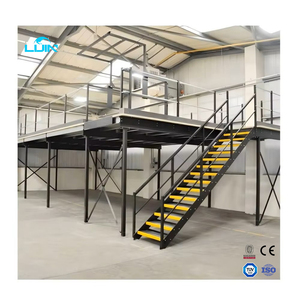
Multi-Level
300-1000kg/m²
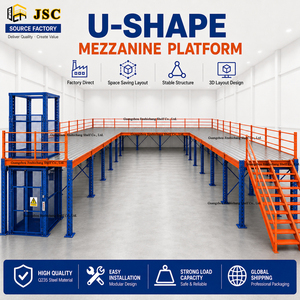
Expands vertical warehouse cubage by building freestanding, high-load picking decks without requiring civil alterations.
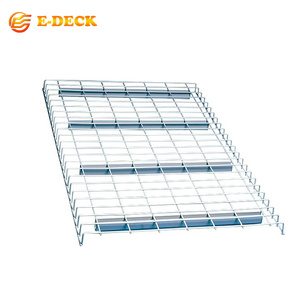
Fire Safety
Galvanized
Heavy-gauge welded mesh with reinforced U-channels, compliant with NFPA standards to optimize overhead sprinkler flow.
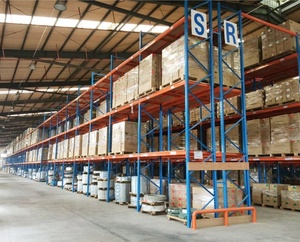
Standard Beam
Up to 4500kg/Level
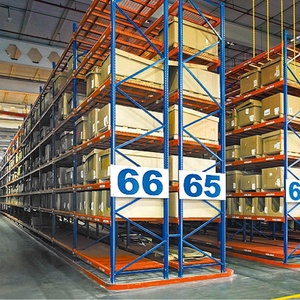
Precision-engineered continuous roll-formed uprights and connector lock pins designed for heavy pallet loads and rough logistics.
100% Selectivity
Direct Access
Versatile selective layout allowing unhindered forklift access to each individual SKU across diverse distribution centres.
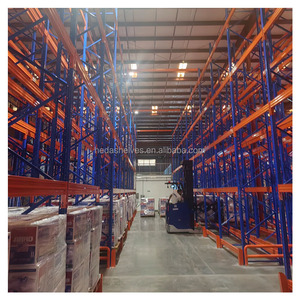
High-Bay
Narrow Aisle
Maximizes vertical volume up to 15+ meters with compact aisle geometry, designed for guided turret trucks and AGVs.
Dynamic Flow
FIFO Rotation
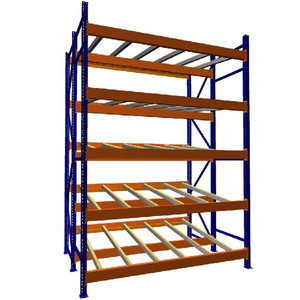
Gravity-driven aluminum or steel roller tracks ensure dynamic FIFO carton replenishment, accelerating order fulfillment.
Structural Steel
Modular Deck
High-clearance beam and column engineering providing massive ground clearance for packing, office, or secondary racking lines.
Portable Frame
Hot-Dip Option
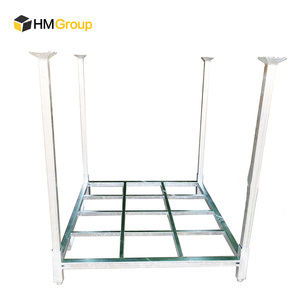
Demountable post frames delivering versatile seasonal storage and cold-storage resilience without bolting to floor slabs.
In-House Manufacturing Authority
Operating over 30,000 square meters of production area in Guangzhou with automated continuous roll-forming lines, computerized punching stations, and robotic gas metal arc welding (GMAW). No trading middlemen; direct factory pricing and QA trace records.
Rigorous International Standards
Manufactured according to EN 15512, FEM 10.2.02, and ANSI MH16.1 specifications. Certified under CE (No. 2435-CPR-8605159) and ISO 9001:2015 (No. 18624Q00169R0M). Every project includes steel certificate tracings and verified yield strength tests.
Custom Engineering & Seismic Design
Free 2D CAD layout and 3D architectural rendering delivered within 24–48 hours. Structural calculations tailored for regional seismic zones (Indonesia, Philippines, Japan) and marine tropical corrosion with customized pickling, phosphating, and powder coatings.
Strategic Racking Procurement: Aligning Capital Expenditure with Warehouse Operational Demands
In modern industrial logistics, selecting between conventional selective pallet racking, narrow aisle (VNA) systems, and multi-deep high-density solutions requires a deep assessment of warehouse velocity, SKU diversity, and handling equipment. Warehouse real estate expenses continue to appreciate globally, forcing engineering directors and facility managers to transition from horizontal footprint expansion to maximizing volumetric cube utilization. When evaluating suppliers from China, global procurement teams must scrutinize the chemical composition of raw cold-rolled steel, the integrity of profile roll-forming, and structural load simulation data under static and dynamic stress states.
"Optimum storage efficiency is achieved when rack profile modulus, clear building ceiling heights, forklift mast deflection limits, and pallet handling safety tolerances are calculated as a single, unified mechanical system."
Future Procurement Trends: Automation Readiness & Dynamic Intralogistics
As Automated Guided Vehicles (AGVs) and Autonomous Mobile Robots (AMRs) become integral to contemporary fulfillment centers, racking specifications are shifting dramatically:
Sub-Millimeter Deflection Tolerances
High-bay VNA and shuttle lanes require strict verticality and beam deflection limits (exceeding 1:200 to 1:300) to ensure zero sensor fault trips for robotic pickers.
Sustainable Pre-Treatment & High-Durability Coatings
Transition toward heavy metal-free zirconium pre-treatments, accompanied by epoxy-polyester powder coats rated for harsh ambient salt-spray and cold chain condensation.
Modular Mezzanine Integration
Combining rack-supported pick modules with autonomous sortation conveyors to process rapid-cycle micro-e-commerce parcel flows within established industrial perimeters.
Furthermore, climate-resilient manufacturing is non-negotiable. Installations in coastal regions or equatorial climates demand high-temperature phosphating and hot-dip galvanization options to mitigate oxidation from relative humidity levels exceeding 85%. At HEDA Shelves, continuous testing on finite element structural analysis ensures every upright frame and shelf beam achieves the optimal balance between steel weight and maximum certified loading stability.
1
Steel Coil Testing
Spectrometric tensile and yield strength inspection of raw Q235B/Q355B coils.
2
Slitting & Cutting
Computerized automated shear lines maintain dimension tolerances within ±0.2mm.
3
Upright Punching
Continuous mechanical high-speed press lines ensure precise pitch spacing.
4
Cold Roll-Forming
Multi-station rolling dies produce rigid structural profiles without stress cracks.
5
Robotic Welding
Shielded arc robotic welding joints ensuring complete penetration on beam connectors.
6
Surface Polishing
Mechanical deburring, shot blasting, and edge finishing for optimal paint adhesion.
7
Chemical Pre-Treat
Multi-stage acid pickling, ultrasonic cleaning, and rust-inhibiting phosphating wash.
8
Powder Coating
Automatic electrostatic powder deposition with 200°C curing for scratch resistance.
9
Load Verification
Random batch testing checking deflection rates and weld structural integrity.
10
Protective Packing
Steel-strapped bundles with corrugated cushions optimized for maritime container export.
What engineering information is required to formulate an accurate warehouse layout?
To prepare an optimized CAD drawing and bill of materials, our engineering office requires: the building CAD floor plan indicating column grids, door locations, and obstruction heights; pallet dimensions (W×D×H) including packaging overhang and gross weight; clear warehouse eaves height; forklift model, minimum turning radius, and maximum reach height; along with the total SKU count and environmental conditions (such as cold room temperatures or seismic hazard ratings).
Can HEDA Shelves manufacture racking according to regional seismic building codes?
Yes. For earthquake-prone regions such as Japan, the Philippines, Indonesia, and Taiwan, our structural engineering team calculates seismic load parameters according to local building legislation. We reinforce column baseplates, utilize heavy-gauge upright steel thicknesses, modify cross-aisle bracing patterns, and supply structural calculation reports for local municipality permit submissions.
How do you prevent corrosion on warehouse racking in tropical and coastal climates?
All structural carbon steel components pass through a mandatory pre-treatment cycle consisting of chemical degreasing, acid pickling to strip mill scale, clean water neutralizing, and phosphating. This is followed by an automated electrostatic powder coat with environmentally friendly polyester resins cured at 200°C. For coastal installations, marine facilities, or low-temperature cold rooms, hot-dip galvanization is available to ensure long-term rust prevention.
What are the differences between roll-formed and structural steel racking systems?
Roll-formed racking is manufactured from high-yield cold-rolled steel coils, punched with teardrop or diamond slot patterns for rapid adjustability. It offers a cost-effective, high-load solution suitable for standard warehouses. Structural racking is made from hot-rolled structural C-channels bolted together, providing high resistance to forklift impact in ultra-demanding environments such as heavy timber yards or dynamic bulk food hubs.
What third-party certifications and credentials accompany international shipments?
Guangzhou HEDA Shelves Co., Ltd. holds CE certification (No. 2435-CPR-8605159), ISO 9001:2015 quality management accreditation (No. 18624Q00169R0M), and RoHS environmental compliance for surface treatments. Upon contract execution, clients receive full mill test certificates (MTC), load testing certificates, container loading plans, and step-by-step structural installation manuals.
How does HEDA handle container loading optimization and maritime export logistics?
Our shipping engineering team utilizes 3D container packing software to maximize the volumetric and weight limits of 40HQ containers, preventing ocean freight waste. Upright frames, beams, and platforms are packaged with protective bubble wrap, plastic banding, and custom timber skids to prevent transit abrasions during multi-week ocean journeys from Guangzhou or Shenzhen ports.
Ready to Optimize Your Industrial Storage Capacity?
Speak directly with our engineering department. Share your warehouse blueprints to receive a complimentary 2D CAD architectural plan, 3D structural visual rendering, and container freight estimate within 24 hours.