Industrial Storage Rack Engineering Systems
Certified steel profiles custom-manufactured in Guangzhou, China. Sized according to clear warehouse height, forklift mast limitations, seismic coefficients, and throughput profiles.
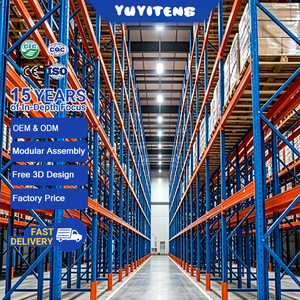
Drive in Pallet Rack High Density Storage System OEM Customized From Professional Factory
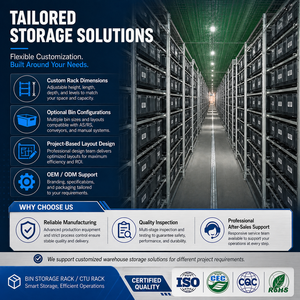
Mini Load ASRS Tote Storage Rack Automated Bin Warehouse Racking System for Small Parts
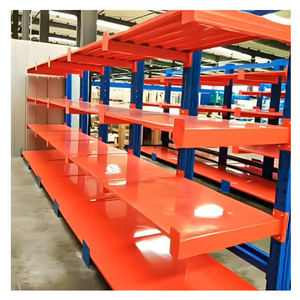
DJ Cantilever Racking Single Double-Sided Wood Hardware Aluminum Steel Shelf Arm Rack Storage Warehouse Heavy Duty
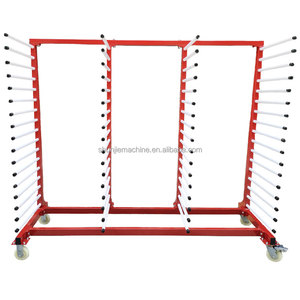
Customizable 2 Meter Length Durable Cantilever Storage And Drying Rack With Four Wheels For Lightweight Panels
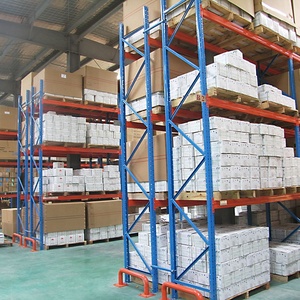
Customizable Boltless Shelving Steel Storage Stacking Racks Shelves Double Deep Selective Pallet Racking for Warehousing
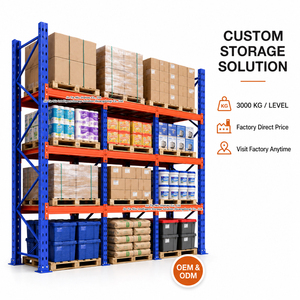
1000KG-3000KG Per Levels Heavy Duty Selective Racking System Industrial Pallet Storage Rack
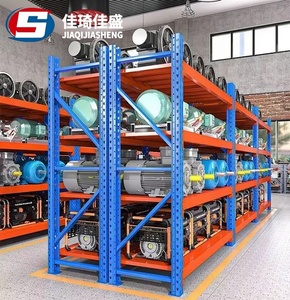
Multi-Level Long Span Boltless Warehouse Rack 500kg Capacity Industrial Steel Shelving Anti-Corrosion Boltless Pallet Racking
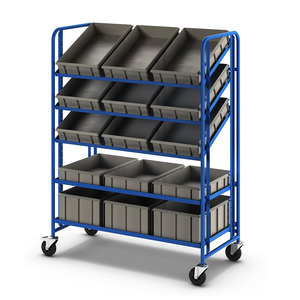
Order Picking Trolley Warehouse Euro Container Shelf Truck 5-level Inclined Shelf Trolley
Manufacturing Rigor & Enterprise Advantages
Why leading multinational distributors, engineering contractors, and fulfillment aggregators source directly from our Guangzhou production facilities.
Verified International Compliance
Our structural production strictly conforms to EN 15512:2020, EN 15620, RMI MH16.1, and AS 4084-2012 standards. We hold accredited CE Certification (No. 2435-CPR-8605159) and an active ISO 9001:2015 Management System (No. 18624Q00169R0M).
All powder-coating formulations are verified under RoHS directives, ensuring heavy-metal-free and chemically inert contact surfaces across food processing, pharmaceutical, and high-cleanliness consumer supply operations.
Full-Spectrum Parametric CAD/3D Design
We believe no warehouse operator should commit capital without verifying volumetric utilization. Our senior structural engineering team prepares free, comprehensive 2D CAD architectural layouts, 3D parametric renderings, and finite-element structural deflection calculations within 24 to 48 hours.
Every proposal evaluates turning radius curves, counterbalance reach mast clearances, and building column setbacks to maximize pallet footprint efficiency without creating operating bottlenecks.
Seismic-Resilient Structural Engineering
Operating in active seismic belts such as Japan, the Philippines, Indonesia, and New Zealand requires calculated ductility rather than rigid inertia. Our structural engineers incorporate localized seismic acceleration data (Ss, S1) directly into our upright moment-resisting frame analyses.
We specify high-capacity base plates, dual floor anchors, and heavy-gauge cross-aisle portal bracings capable of dissipating lateral seismic loads without structural collapse.
10-Step In-House Production Process
Total manufacturing transparency from raw cold-rolled steel coils to ocean container staging.
Steel Coil Inspection
Q235B and Q355B tensile testing & mill certification logging.
Precision Slitting
CNC slitting lines produce uniform coil widths within ±0.1mm.
Continuous Punching
Automated punch lines cut teardrop, diamond, or butterfly pitches.
Multi-Pass Roll Forming
18 to 24 progressive roll stages ensure optimal load retention.
Laser Profile Cut-off
High-speed traveling saws deliver clean, burr-free perpendicular cuts.
Robotic Welding
Gas-shielded robotic arm cells ensure full joint weld penetration.
Chemical Pretreatment
Pickling, degreasing, and iron-phosphating for corrosion resistance.
Electrostatic Coating
Automated powder application cured in 200°C baking tunnels.
CMM & Deflection QA
Load-test verification and cross-cut coating adhesion checks.
Export Packaging
Protective corrugated strapping, steel frames, & moisture barriers.
Future Industry & Technological Trends
Transformative structural evolutions redefining modern warehouse racking procurement.
1. The Convergence of Rack Structures & Autonomous Robotics (AMRs/ASRS)
Traditional static storage is rapidly integrating with automated intralogistics ecosystems. We are seeing sustained growth in hybrid rack configurations that interface directly with autonomous mobile robots (AMRs), automated guided vehicles (AGVs), and multi-shuttle automated storage and retrieval systems (ASRS).
Engineering these installations requires precise millimeter-grade fabrication tolerances across vertical rail planes, floor tie-ins, and anti-bounce beam attachments. A deflection variance of only 2mm over an upright frame can trigger an emergency safety stop in a high-speed mini-load shuttle crane.
2. Advanced Nano-Polymer Coatings & Cold-Chain Durability
With rapid expansions in frozen food processing, biologics, and temperature-controlled logistics, industrial racking faces extreme humidity cycling and sub-zero condensation. Standard paint finishes crack under repeated freeze-thaw cycles, leading to hidden subsurface oxidation.
Modern export specifications favor continuous pre-treatment systems utilizing nano-ceramic phosphate conversion coatings paired with thermosetting anti-microbial epoxy powders. For deep-freeze environments dropping to -30°C, hot-dip galvanization conforming to ISO 1461 delivers complete zinc alloy metallization that resists corrosion for decades.
3. Real-Time Structural Health Monitoring (IoT Deflection Sensors)
Industrial racking systems operate under heavy static loads while enduring occasional forklift impact events. The future of racking safety lies in smart, connected structural systems. We are co-developing integrated sensor arrays that embed strain gauges, tilt meters, and accelerometers directly within column footings and primary beam pins.
These arrays deliver real-time operational telemetry to warehouse management systems (WMS), instantly signaling micro-displacements, seismic stress overloads, or undocumented mast collisions before structural failure can occur.
Future Sourcing Trends: Strategic Total Cost of Ownership
Evaluating long-term economic efficiency, carbon metrics, and ocean freight logistics in global racking sourcing.
Direct Manufacturer vs. Intermediary Trading
Global project contractors are reducing their reliance on domestic trading intermediaries in favor of factory-direct relationships with certified Chinese manufacturers. Direct mill sourcing yields 25% to 40% in initial capital equipment savings while streamlining customized engineering revisions.
By communicating directly with our structural engineering desk in Guangzhou, technical revisions to beam span profiles, seismic baseplates, or sprinkler flub clearances are resolved in hours rather than weeks.
Containerization & Cube Optimization
International ocean freight volatility requires calculated container stowage engineering. Unbundled structural components can result in high empty-volume ocean fees if not systematically nested during manufacturing.
Our packaging engineers utilize 3D container packing simulations to design beam nesting combinations, custom dunnage brackets, and flat-packed upright configurations that achieve over 92% container volume utilization, significantly lowering freight cost per pallet location.
Modularity & Second-Life Adaptability
Modern supply chain footprints expand and adjust dynamically. Facility managers increasingly prioritize modular, knockdown bolted configurations over fully welded structures. Boltless teardrop and omega-beam connectors permit flexible shelf re-profiling at 50mm or 75mm increments as SKU packaging changes.
This structural modularity protects long-term capital investments, enabling warehouses to transition smoothly from selective pallet racks to pick-modules or multi-tier mezzanines without scrapping primary components.
Storage System Performance Characteristics
Comparative structural parameters to align your SKU profile with optimal storage geometry.
| Racking Architecture | Space Utilization | Pallet Accessibility | Inventory Rotation | Typical Floor Load | Capital Expense Tier |
|---|---|---|---|---|---|
| Selective Pallet Racking | 40% – 50% | 100% Immediate | FIFO / LIFO Dynamic | 1,000 – 4,000 kg/level | Cost-Effective Baseline |
| Drive-In Pallet Racking | 75% – 85% | 20% – 30% Lane Selectivity | Strict LIFO (FIFO Drive-Thru) | 1,000 – 1,500 kg/pallet | Economical High-Density |
| Radio Shuttle Racking | 80% – 90% | Batch Lane Selective | Software Configured FIFO/LIFO | 500 – 2,000 kg/pallet | Intermediate Automation |
| Mini Load ASRS Totes | 85% – 95% | 100% Automated Picker Access | Digital WMS Directed FIFO | 30 – 100 kg/tote | Advanced Capital Automation |
| Heavy-Duty Cantilever | 55% – 65% | 100% Unobstructed Longitudinal | Direct Access Selectivity | 500 – 3,000 kg/arm | Application Specialized |
| Rack-Supported Mezzanine | 100% Multiplied Vertically | Integrated Manual Carton Access | Batch / Wave Picking Systems | 300 – 1,000 kg/m² floor | High ROI Space Expander |
Frequently Asked Questions on Heavy-Duty Racks
Detailed engineering, manufacturing, and international trade answers for procurement directors.
How do you calculate structural load limits and safety factors for industrial racking?
Structural calculation is performed in strict compliance with EN 15512 (European Standard for Steel Static Storage Systems) and RMI MH16.1. We incorporate dead load (the weight of the steel components), live load (stored pallet weights), impact factor loads (counterbalance forklift placement dynamics, typically evaluated at 25% of maximum rated pallet load), and lateral frame deflection coefficients (limited to span/200).
Upright frame configurations undergo finite element analysis (FEA) to assess torsional-flexural buckling modes based on raw steel yield properties (Q235B with fy ≥ 235 N/mm² or Q355B with fy ≥ 355 N/mm²). Baseplate shear pin capacities and anchor rod pull-out loads are matched precisely against concrete slab compressive strength ratings (minimum C20/25 or 3,000 PSI).
What parameters are required to generate an accurate warehouse layout and price quote?
To produce an engineering-grade layout and commercial quotation, our application desk requires the following critical project parameters:
• Architectural Floor Plan: CAD DWG or fully dimensioned layout indicating column center-lines, perimeter clear heights, overhead roof truss drops, dock door layouts, and sprinkler header clearances.
• Pallet Geometry & Weight: Pallet dimension (W × D × H including overhang), maximum entry orientation, and gross load weight per pallet (average vs. maximum).
• Material Handling Equipment (MHE): Specific forklift make/model, overall mast lowered height, maximum lift height, and minimum right-angle aisle stacking width requirements.
• Site Specifics: Seismic zone rating, ambient temperature profile (ambient dry vs. cold room conditions), and required finish specifications.
How do you safeguard against surface oxidation and corrosion in humid tropical regions?
Steel profiles installed across equatorial and high-humidity climates (such as Southeast Asia, coastal Middle East, and Latin America) undergo our automated chemical pre-treatment sequence. This includes hot alkaline degreasing, multi-stage acid pickling to eliminate mill scale, cold rinsing, and an iron-phosphate immersion wash that establishes a microscopic crystalline barrier against atmospheric oxidation.
Following pre-treatment, components enter our automated electrostatic powder line where high-adhesion polyester powders are applied at 60 to 90 microns thickness and oven-cured at 200°C. For severe chemical exposures, coastal salinities, or sub-zero blast-freezer setups, we supply complete hot-dip galvanizing per ASTM A123 / ISO 1461, providing sacrificial zinc protection of 70 to 100 microns that prevents corrosion even if scratched during forklift operation.
What third-party certifications and mill test documentation accompany export shipments?
Every commercial production batch is accompanied by comprehensive engineering and metallurgic dossiers. This includes EN 10204 Type 3.1 Mill Test Certificates covering carbon, manganese, phosphorus, and sulfur chemical breakdowns alongside mechanical tensile and elongation performance.
We supply official CE conformity documentation under Construction Products Regulation No. 305/2011, factory production control documentation under ISO 9001:2015, and cross-hatch coating adhesion test reports (ISO 2409). If required by municipal permitting bodies, project-specific calculation reports stamped by licensed third-party structural engineers can be integrated into your procurement package.
What are your production lead times, shipping milestones, and installation support options?
Standard export orders between 1 to 5 forty-foot high cube containers (40'HQ) feature typical factory production cycles of 15 to 22 working days following engineering shop-drawing approval. Major engineering projects spanning 10 to 50 containers operate on phased rolling schedules aligned with container vessel bookings out of Guangzhou or Shenzhen deep-water ports.
Every container is loaded according to a color-coded packing manifest with digital loading photos. We supply complete 3D installation blueprints, step-by-step erection manuals, and anchor torque specifications. For complex multi-tier mezzanine and ASRS projects, we can deploy seasoned installation supervisors to the site or conduct live video-based installation audits with your local labor crew.
Ready to Optimize Your Warehouse Layout & Floor Capacity?
Connect directly with our Guangzhou engineering and export team. Receive a zero-obligation 2D CAD architectural proposal, 3D spatial visualization, and precise project quotation within 24 to 48 hours.