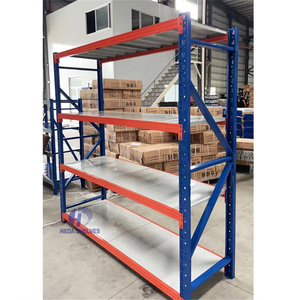
 Workshop Modular
Export-Grade Portfolio
Heavy-Duty Warehouse Shelving & Structural Racking Systems
Factory-direct structural steel storage solutions cold-formed from high-tensile Q235B and Q355B certified steel, engineered to optimize cubic storage density and pallet throughput.
Workshop Modular
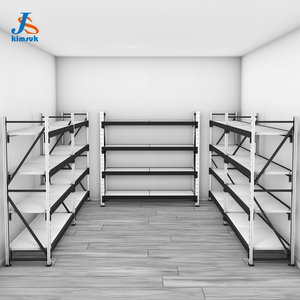 High Versatility
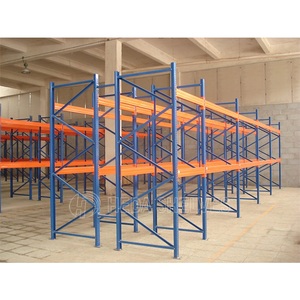 FEM 10.2.02
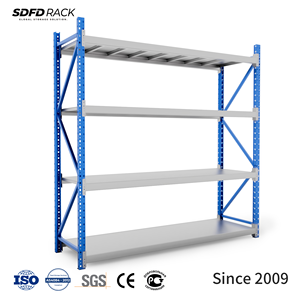 E-Commerce Ready
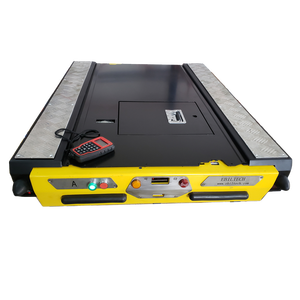 Semi-Automated
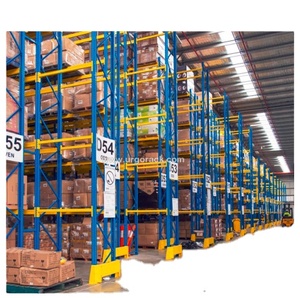 Max Volume
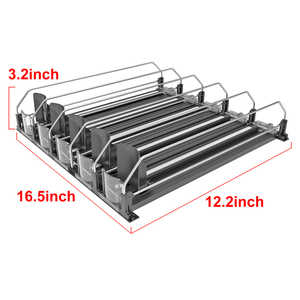 Dynamic Facing
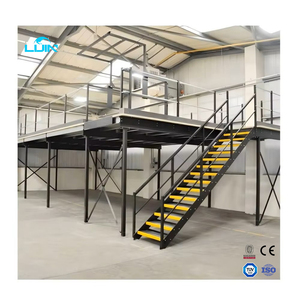 Space Multiplier
Enterprise Manufacturing Authority
Engineered Reliability Backed by 25 Years of Factory Direct Precision
Guangzhou Heda Shelves Co., Ltd. (established in 2001) operates a state-of-the-art 30,000 m² production base delivering fully certified heavy-duty storage racking solutions to global logistics operators, EPC contractors, and distributors.
30,000 m² Facility
Equipped with 12 automatic continuous roll-forming lines, 1000-ton CNC mechanical stamping presses, and robotic laser welding cells.
- Strict dimensional tolerances (±0.5mm)
- In-house tooling & roll design
Stringent Compliance
Certified under CE Certification (No. 2435-CPR-8605159), ISO 9001:2015 (No. 18624Q00169R0M), and environmental RoHS directives.
- Structural FEA stress simulations
- Yield strength certification per batch
30,000 Ton Output
Massive monthly throughput guarantees raw coil hedging, stable lead times for mega-distribution hubs, and direct ocean freight dispatch.
- Short sea routes from Guangzhou ports
- Optimized container packing software
Free 3D CAD/BIM
Licensed structural engineers create custom 2D layout plans, full 3D visual renders, and seismic calculations within 24 to 48 hours.
- Pallet throughput optimization
- Aisle turn radius verification
Industry Whitepaper Analysis
Global Procurement Trends & Structural Innovations in Industrial Shelving (2025–2030)
The modern logistics and supply chain sector is witnessing an unprecedented architectural shift. Skyrocketing commercial industrial land costs across primary global hubs—from Singapore, Tokyo, and Dubai to Rotterdam and Los Angeles—have transformed warehouse racking from simple static storage steelwork into high-tolerance, structural engineering platforms. Procurement directors and supply chain engineers can no longer evaluate industrial shelving solely by price-per-kilogram. Structural survivability, dynamic load deflection ratios, automated material handling compatibility, and life-cycle anti-corrosion properties now dominate specification tenders.
Key Engineering Metric: Modern high-bay racking systems must comply with structural deflection ratios stricter than L/200 under full design loads, while AS/RS interface uprights require lateral plumb tolerances within ±1.5mm per 10 vertical meters to prevent automated crane jamming and pallet extraction trip-outs.
1. Semi-Automated Shuttle Systems and AS/RS Convergence
Traditional static drive-in racking is rapidly being supplanted by semi-automated Radio Shuttle platforms. While drive-in racks offer density, they exhibit high structural vulnerability due to forklifts constantly entering upright channels, leading to high maintenance costs and upright buckling risks. In contrast, Radio Shuttle Racking isolates forklift travel entirely to external access aisles. High-precision self-guided shuttle carts traverse specialized cold-formed galvanized rails inside deep bays (exceeding 30 pallet depths), controlled via RF remotes or integrated warehouse management systems (WMS). This shift increases throughput speeds by up to 240% while dramatically reducing rack impact damage.
2. Seismic-Resilient Nonlinear FEA Engineering
In seismically active regions across the Pacific Ring of Fire—including Indonesia, the Philippines, Japan, New Zealand, and western South America—industrial shelving systems must be treated as critical building structures. Chinese top-tier manufacturers now employ advanced nonlinear Finite Element Analysis (FEA) to simulate P-Delta second-order moments, dynamic base-plate rocking, and beam-to-column connector torsional stiffness under spectral acceleration forces. Structural designs incorporate heavy-gauge anchor baseplates, custom bracing patterns, and ductility-engineered teardrop or box-beam connectors that dissipate earthquake kinetic energy without progressive frame collapse.
3. Climate-Specific Corrosion Pre-treatment: Pickling & Phosphating vs. HDG
Industrial storage environments often expose steel racks to extreme environmental degradation. Cold-storage freezers running at -30°C induce severe condensation and thermal contraction cycles, while chemical warehouses and coastal equatorial fulfillment centers in Southeast Asia suffer high relative humidity (RH > 85%) combined with saline atmospheric chlorides. High-end Chinese exporters utilize comprehensive automated 7-stage surface pre-treatment lines (alkaline degreasing, acid pickling, zinc phosphating, and deionized water rinsing) prior to electrostatic powder coating with thermosetting polyester-epoxy powders (minimum 60-80 microns). For open-air timber yards, corrosive chemical storage, or humid cold chains, structural components undergo hot-dip galvanization (HDG) per ASTM A123, yielding a bonded zinc metallurgical barrier exceeding 85 microns that resists red rust for over 25 years.
4. Structural Comparison: Industrial Storage Platforms
To assist logistics facility planners, the comparative technical evaluation below details performance indicators across primary structural storage typologies manufactured in our Guangzhou production facility:
| Racking Topology | Aisle Width (mm) | Volumetric Utilization | Pallet Selectivity | Floor Slab Loading Requirement | Ideal Application Profile |
|---|---|---|---|---|---|
| Selective Pallet Racking | 3,000 – 3,800 | 40% – 45% | 100% (Direct Access) | 2.5 – 4.5 Ton / Upright | General 3PL, FMCG, Diverse Fast-Moving SKUs |
| Very Narrow Aisle (VNA) | 1,600 – 1,900 | 60% – 70% | 100% (Direct Access) | 5.0 – 9.0 Ton / Upright | High-Bay E-Commerce, High-Rent Urban DCs |
| Radio Shuttle System | 2,800 – 3,200 | 80% – 85% | LIFO or Strict FIFO | 6.0 – 12.0 Ton / Upright | Cold Chain (-30°C), Beverage Bottling, Bulk Raw Goods |
| Drive-In Storage Rack | Drive-in Lanes | 65% – 75% | Low (LIFO Exclusive) | 4.0 – 8.0 Ton / Upright | Uniform SKUs, Seasonal Agricultural Depots |
| Multi-Tier Mezzanine Platform | Custom Walking Aisles | Up to 250% (Multiplied) | 100% Manual Bin Access | 300 – 1,000 kg/m² Slab | Automotive Spare Parts, E-Commerce Apparel Picking |
5. Digital Twin Modeling & Structural Health Monitoring
The forward-looking procurement trend for 2026 and beyond is the integration of Building Information Modeling (BIM - Level 2) and IoT structural health telematics into industrial racking installations. By exporting native Revit and IFC files during the initial design cycle, structural engineers coordinate rack column layouts with warehouse fire suppression sprinkler lines, HVAC ductwork, and automated AGV guidance wire paths. Furthermore, smart impact telemetry sensors mounted to perimeter upright guards now detect forklift collisions in real time, notifying facility management of internal structural stress excursions before localized steel deformation can compromise overall bay equilibrium.
Manufacturing Integrity
10-Step Quality-Controlled Manufacturing Protocol
Every beam, column, and bracing strut produced at our facility undergoes stringent traceability protocols from raw mill coil certification to container stuffing.
01
Prime Coil Inspection
Certified prime hot-rolled and cold-rolled steel coils (Q235B, Q355B) from top domestic mills are tested for tensile yield strength, elongation, and carbon chemistry.
02
CNC Slitting & Cutting
Coils are slit to precision strip widths via high-speed automated slitting shears with minimal edge burr, maintaining strict cross-sectional symmetry.
03
Automated Multi-Punching
Continuous CNC mechanical presses punch pitch-precise teardrop, butterfly, or diamond adjustment slots along the vertical column profile with ±0.1mm indexing.
04
Continuous Roll-Forming
High-precision 18-to-24-stand roller mills incrementally bend flat strips into complex multi-ribbed upright cross-sections, maximizing moment of inertia.
05
Box Beam Seam Forming
Double-C profile interlock welding forms rigid tubular box beams engineered to minimize vertical sag deflection under uniform pallet loads.
06
Robotic Connector Welding
Multi-axis Panasonic industrial robotic welding arms bond multi-claw beam end connectors with consistent penetration, shielding gas, and zero weld splatter.
07
Mechanical Deburring & Polish
All cut profiles, weld joints, and baseplates undergo mechanical edge rounding and rotary abrasive deburring to eliminate micro-fracture stress points.
08
Chemical Phosphating Bath
A continuous 7-stage immersion line cleans residual rolling oils, pickles scale, and deposits a crystalline zinc-phosphate conversion coating for superior paint adhesion.
09
Electrostatic Powder Coating
Automated Gema powder spray booths apply lead-free, environmentally compliant epoxy-polyester powder, followed by 200°C convection curing for high scratch resistance.
Engineering Knowledge Base
Frequently Asked Technical Questions by Global Procurement Teams
Transparent insights into material specifications, international shipping logistics, seismic compliance, and installation engineering.
What steel grades are used in your racking, and how do you verify load ratings? +
We exclusively utilize high-yield certified steel grades: Q235B (yield strength ≥ 235 MPa, comparable to ASTM A36 / EN S235JR) for standard pallet rack beams and shelving decks, and high-tensile Q355B (yield strength ≥ 355 MPa, comparable to ASTM A572 Grade 50 / EN S355JR) for heavy-load upright columns and multi-tier structural mezzanine columns. Every heat lot of raw steel comes with Mill Test Certificates (MTC) verifying chemical carbon-equivalent and mechanical elongation parameters. In addition, our engineering department performs full physical destruct tests on beam-connector assemblies using 50-ton hydraulic test rigs, ensuring our load capacity tables provide a minimum safety factor of 1.5 to 1.65 in conformance with FEM 10.2.02 and ANSI MH16.1.
How do you engineer industrial shelving for seismic and earthquake zones? +
For projects located in seismically active regions such as the Philippines, Indonesia, Japan, New Zealand, and Chile, standard gravity-load engineering is insufficient. We conduct site-specific seismic reviews utilizing local response spectra data (such as Eurocode 8, IBC, or NZS 1170.5). Our structural modifications include increasing upright column cross-sections, augmenting steel thickness (from 1.8mm up to 2.5mm or 3.0mm), designing heavy-duty cast baseplates with dual M12/M16 chemical epoxy anchor studs, integrating horizontal spine portal ties, and optimizing diagonal K-bracing or X-bracing geometries. We can supply complete engineering calculation packages signed by certified structural engineers for local municipal building permit approvals.
What information is required from the client to receive a free 2D/3D layout design within 24-48 hours? +
To enable our CAD engineering team to generate an optimized warehouse layout and bill of materials (BOM), we require: (1) Architectural floor plan in DWG/CAD or dimensioned PDF showing building clear height, column grids, and dock door locations; (2) Pallet specifications including overall width, depth, height (including goods), and maximum gross weight per pallet; (3) Material handling equipment (MHE) parameters—specifically forklift model, turning radius, and maximum mast lift height; (4) Storage temperature conditions (ambient vs. chilled or -30°C cold storage); and (5) SKU velocity profiles (FIFO vs. LIFO requirements).
How do you protect racking components against salt-mist corrosion during ocean container transit? +
Ocean transport across tropical or humid sea lanes can induce severe sweating and condensation within maritime containers. To counteract this, all finished components are completely cured at 200°C to eliminate micro-porosity in the electrostatic polyester coating. Upright frames and beams are bundled with industrial high-density corrugated board interleaving, protected with heavy polyethylene stretch film, and bound with high-tensile composite strapping. Upright feet and beam claws are fitted with impact-resistant corner cushions. Furthermore, we place continuous desiccants inside high-cube containers and generate rigorous container weight-distribution loading plans to ensure easy, damage-free unloading via counterbalance forklifts at the destination port.
Can you support OEM and private-label manufacturing for overseas racking distributors? +
Yes. A significant percentage of our Guangzhou factory output is dedicated to OEM and ODM contracts for regional material handling distributors, systems integrators, and rack engineering firms across North America, Europe, Australia, and the Middle East. We can customize upright hole punching profiles (including European 50mm pitch, American 76.2mm teardrop pitch, or Australasian slotted patterns), match custom RAL color palettes, apply private brand laser-cut logos or metallic labels, and generate white-label installation manuals and packing slips tailored to your brand identity.
What floor slab specifications and anchor pull-out ratings are necessary for installation? +
For standard heavy-duty selective pallet racking with up to 3 tiers of 2,000kg pallet loads, the concrete floor slab should have a minimum compressive strength of 25 to 30 MPa (C25/C30 or 3,500-4,000 psi) with a slab thickness not less than 150mm to 200mm, reinforced with welded rebar mesh. For high-bay VNA racking or heavy industrial mezzanines, a minimum slab thickness of 200mm to 250mm is required. We furnish concrete anchor bolt specifications (typically grade 8.8 expansion anchors or chemical anchor capsules) with calculated characteristic shear and pull-out tension values to match your warehouse concrete specifications.
Request Your Free Structural Engineering Consultation & 3D Warehouse Design
Connect directly with our Guangzhou factory engineering team. Send your building floor plan or storage challenge to receive a custom 2D layout, high-resolution 3D simulation, and direct factory pricing within 24 hours.