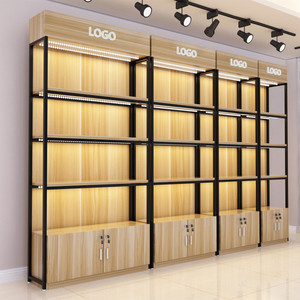
Engineered Product Portfolio
Featured Industrial Warehouse & Display Rack Roster
Standard and customized racking systems certified under CE and ISO 9001:2015 requirements, cold-roll-formed directly in our 30,000 m² Guangzhou production facility.
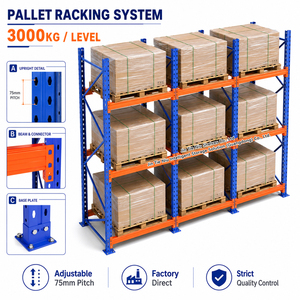
3 Pallet Levels Heavy Duty Selective Pallet Racking (3000KG)
View Specifications →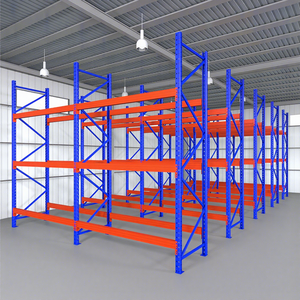
Heavy Duty Stackable Industrial Warehouse Pallet Racking
View Specifications →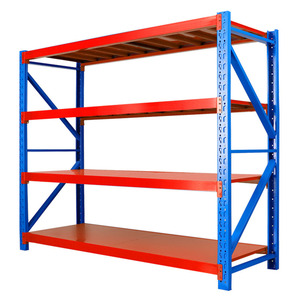
Powder-Coated Steel Medium/Heavy Duty Storage Systems
View Specifications →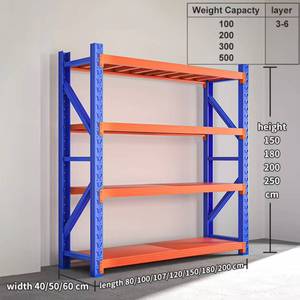
Adjustable Boltless Industrial Garage Warehouse Pallet Shelving
View Specifications →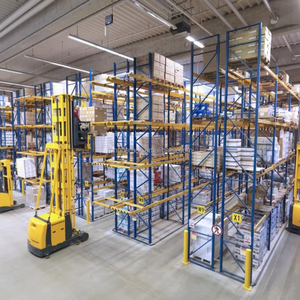
Galvanized Euro VNA (Very Narrow Aisle) High-Bay Storage
View Specifications →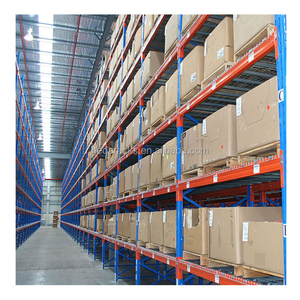
Heavy Duty Modular Pallet Storage Frame Infrastructure
View Specifications →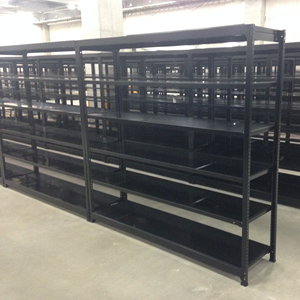
Custom Medium-Duty Multi-Tier Workshop Metal Shelving
View Specifications →2001
Year Established in Guangzhou
30,000 m²
Automated Manufacturing Base
30,000 t
Monthly Structural Output Capacity
120+
Global Export Destinations
Engineering Whitepaper
Industrial Cantilever Racking: Structural Anatomy & Engineering Thresholds
Unlike standard pallet racks constrained by front vertical columns, cantilever racking is purpose-built with central vertical uprights and extended horizontal arms. This unobstructed open-front architecture makes it the indispensable industrial asset for storing linear, long, sheeted, and irregular profile stock.
Roll-Formed vs. Structural I-Beam
Light to medium configurations leverage cold-roll-formed profiles (C/U profiles) suitable for capacities between 300 kg to 800 kg per arm. For extreme heavy-duty logistics—such as cast-iron piping, plate steel coils, and dense lumber—hot-rolled structural H/I-beams (Q235B/Q355B steel) are deployed, offering load capacities up to 3,000 kg per arm without elastic deformation.
Deflection Tolerance & Arm Incline
Under ANSI MH16.2 / FEM 10.2.09 racking specifications, the horizontal arm design incorporates a built-in 2° to 4° upward incline. This intentional camber compensates for calculated flex and natural mechanical deflection when fully loaded, effectively preventing tubular stock or loose bundles from rolling forward off the edges.
Torsional Bracing Geometry
Longitudinal rigidity is achieved via high-tensile X-bracing and horizontal strut assemblies connecting upright columns. Correct bracing spacing directly neutralizes lateral forces imparted by heavy side-loader forklifts and overhead cranes during loading cycles, guaranteeing longitudinal frame equilibrium.
Base-to-Column Moment Connection
Cantilever uprights function as vertical cantilevers fixed at their base. Our factory designs heavy-gauge gusset-reinforced base plates anchored via multi-point M16–M24 chemical anchor bolts into minimum 250mm reinforced concrete slabs (30 MPa+), eliminating the hazard of overturning moments.
Procurement Insights
Future Procurement Trends for Industrial Cantilever Systems
International warehouse operations and steel inventory management are transitioning toward precision engineering, enhanced lifecycle durability, and automated handling compatibility.
TREND 01
Integration with Autonomous Cranes & AS/RS
Global supply chains are progressively phasing out wide-aisle manual counterbalanced forklifts in favor of automated stacker cranes and guided 4-directional narrow-aisle side-loaders. Consequently, procurement officers require cantilever configurations with tighter engineering tolerances (±1.0mm per column axis), laser-calibrated arm pitch slots, and dedicated guide rail interfaces embedded into warehouse flooring.
TREND 02
Pre-Engineered Galvanization for Outdoor Yards
With urban land leasing costs escalating throughout Southeast Asia, the Middle East, and Europe, bulk steel distributors and lumber yards are moving long-material storage to external concrete pads. Cantilever procurement is shifting sharply from standard indoor powder coatings to BS EN ISO 1461 hot-dip galvanized finishes (≥85μm zinc layer thickness), delivering 25+ years of corrosion immunity against monsoon downpours and aggressive saline coastal environments.
TREND 03
Cladding-Rack Integrated Superstructures (Rack Clad)
Rather than constructing a separate pre-engineered metal building (PEB) and then fitting racking inside, forward-looking developers are procuring cantilever rack-supported buildings. In these integrated systems, heavy-duty cantilever structural columns serve double duty: supporting material loads internally while simultaneously bearing the warehouse's external wall panels and pitched roof trusses, slashing capital civil expenditure by up to 35%.
R&D Evolution
Technological Milestones in Modern Cantilever Manufacturing
Engineering breakthroughs implemented across our Guangzhou roll-forming and CNC machining lines to address historic vulnerabilities in long-material warehousing.
High-Strength Micro-Alloy Steel
Transitioning from plain carbon structural steel to vanadium/titanium micro-alloyed Q355B and Q460 high-tensile steels. This metallurgical advancement increases yield strength without adding unmanageable deadweight, preserving factory floor load ratings.
Articulated Safety Pivot Pins
Rigidly welded arms historically cracked under accidental vertical impacts from forklift forks. Modern cantilever arms feature high-grade shear pin pivot joints that safely rotate upward if struck during lifting, absorbing collision kinetic energy and preventing catastrophic frame buckle.
Parametric 3D FEA Verification
Every customized project undergoes Finite Element Analysis (FEA) using ANSYS and SolidWorks Simulation. Stress concentrations around column perforation patterns and arm connection brackets are mapped under static, dynamic, and localized shock-load parameters prior to factory cutting.
Modular Accessory Ecosystem
Cantilever racks have moved beyond simple naked arms. Advanced modular adaptations include wire mesh decking platforms for interrupted short packs, curved saddle cradles for cylindrical cable drums, steel pipe retaining end-stops, and roof canopies for sun/rain deflection.
Authority & Capability
Guangzhou HEDA Shelves: Enterprise Competence & Factory Heritage
Established in 2001, Guangzhou Heda Shelves Co., Ltd. has spent over two decades engineering world-class warehouse logistics hardware, providing factory-direct reliability across Southeast Asia, South Asia, the GCC, and European markets.
Full In-House Industrial Ecosystem
Our 30,000 m² Guangzhou production facility operates fully integrated production stages under one roof: uncoiling, cold-roll profile forming, high-precision hydraulic column punching, automatic robotic beam welding, continuous pickling-phosphating pre-treatment tanks, and high-adhesion electrostatic powder coating lines. By managing all processing internally, we eliminate third-party subcontractor variance and provide unmatched dimensional tolerance control.
Compliant Structural Certifications
Procurement safety demands legal compliance. HEDA Shelves maintains formal CE Factory Production Control Certification (Certificate No. 2435-CPR-8605159), ISO 9001:2015 Quality Management System Certification (Certificate No. 18624Q00169R0M), and stringent RoHS testing for our powder-coating polymers, ensuring complete safety and frictionless submission for official municipal building code approvals.
Dedicated Seismic & Layout Engineering
Supported by over 300 experienced technical staff and senior structural engineers, we deliver free professional CAD floor plans, comprehensive 3D warehouse renderings, and structural engineering calculation dossiers within 24 to 48 hours. For customers in seismic zones like Indonesia, the Philippines, Japan, and Taiwan, our engineers adjust base shear anchoring calculations to safeguard systems against seismic shocks.
Procurement FAQ
Industrial Cantilever Racking Procurement FAQ
Clear, definitive technical answers to assist procurement officers, project managers, and logistics contractors in making well-informed structural equipment investments.
What fundamental parameters are required to calculate cantilever arm capacities accurately?
To correctly engineer the system, our engineering team requires: (1) Total dimensions of the stored material (Length × Width/Depth × Height); (2) Maximum and average unit weight per load bundle; (3) Number of support arms per material bundle (preventing material sag); (4) Maximum forklift lift height and mast collapsed profile; and (5) Operational context (indoor dry warehouse or open yard with wind and seismic exposure).
How do you prevent long timber or steel bundles from deflecting between cantilever arms?
Material deflection (sagging) is prevented by establishing the correct distance between adjacent upright columns. As an engineering benchmark, the overhang of the stored product at either end should not exceed one-half of the distance between the supporting arms. If the load is flexible (e.g., thin PVC conduit, flexible timber sheets), three or four supporting arms must be deployed across the load bundle, or continuous heavy-duty wire mesh or steel plate decking can be installed across the arms.
What is the structural difference between Single-Sided and Double-Sided Cantilever Racks?
Single-sided cantilever racks feature arms projecting from only one side of the central upright column and are typically anchored directly against perimeter walls. Double-sided cantilever columns have arms mounted on both opposing faces, creating freestanding central storage rows. Structurally, double-sided systems provide superior stability because loads placed on both sides act as counterweights, canceling out eccentric bending moments on the vertical column.
How does HEDA Shelves address shipping container packing efficiency for heavy, long-profile racking?
Cantilever components present high aspect ratios. Our factory develops automated 3D container loading simulation schemes for every shipment (typically 40HQ containers). Upright columns are packed with protective steel saddles, arms are bundled on palletized cradles, and hardware is boxed in weather-sealed crates. This approach protects surface powder-coat finishes from ocean friction while maximizing internal container cubic volume to minimize the landed freight cost per metric ton.
What surface pre-treatments are deployed to safeguard against coastal moisture and rust?
Before powder application, our components undergo an automated 5-stage immersion chemical bath: degreasing, acid pickling to eliminate scale, water rinsing, phosphating for microscopic bonding, and passivation. Afterwards, thermosetting epoxy-polyester powder is electrostatically applied and cured at 180°C–200°C. For harsh environments (coastal ports, chemical storage, outdoor yards), we offer full hot-dip galvanization compliant with EN ISO 1461 standards.
Transform Your Warehouse Floor Density Today
Connect directly with HEDA Shelves engineering consultants. Provide your warehouse layout or material dimensions, and receive a complete CAD drawing, structural capacity dossier, and factory-direct quotation within 24 hours.
Contact Us