High-Performance Warehouse Systems & Technical Specifications
Explore our export-certified slotted angle profiles, high-load selective racks, and dynamic storage configurations engineered for rigorous distribution hubs and logistics terminals.
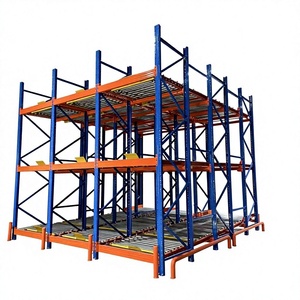
Pallet Flow Racking Gravity Roller FIFO High Density Metal Steel System
- Gravity Rollers
- Strict FIFO
- Corrosion Proof
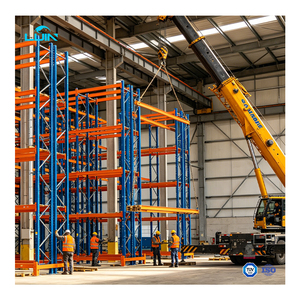
High Strength Structural Heavy Duty Racking For Industrial Warehousing
- Hot-Rolled Steel
- Seismic Certified
- Heavy Impact
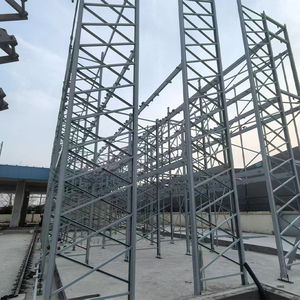
Mine Bulk Materials Anti-Pressure 5-Layer Rack 1000-4000kg Load
- 1000-4000kg/Layer
- Q235B/Q355B
- Mining Grade
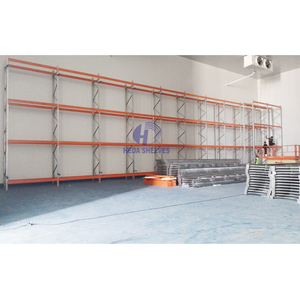
Double Deep Pallet Storage Racking 1000kg-3000kg Per Layer
- High Bay Access
- Space Maximizer
- Custom Depth
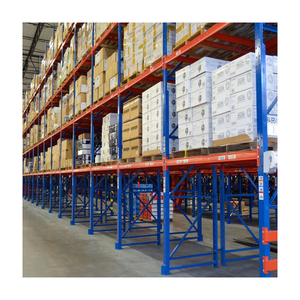
Selective Steel Pallet Storage Racks Industrial Heavy-Duty Racking
- 100% Direct Access
- Flexible Pitch
- Versatile Beams
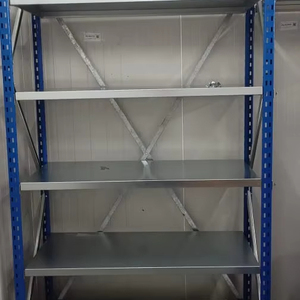
High Load Capacity 5 Layer Adjustable Industrial Boltless Shelving
- Slotted Angle Base
- Tool-Free Assembly
- Powder Coated
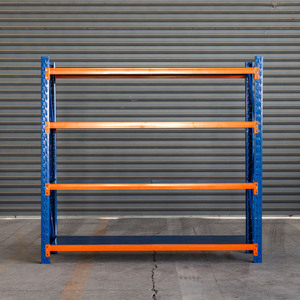
Industrial Adjustable High Performance Medium Duty Long Span Shelving
- Wide Span Access
- Manual Loading
- Modular Add-ons
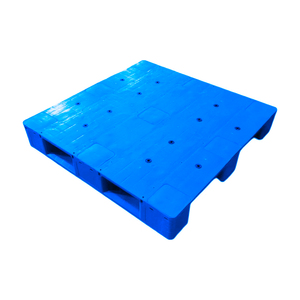
4-Way Solid HDPE/PP Euro Industrial Pallet Rack Skid Single Faced
- Food-Grade Safety
- Rack-Compatible
- Heavy Duty Glides
Engineering Insights: The Evolution of Slotted Angle & Warehouse Racking
A technical assessment of cold-formed structural integrity, robotic fabrication accuracy, and how macro supply-chain shifts are impacting heavy-duty slotted angle systems globally.
Cold-Formed Metallurgy & Structural Yield
Slotted angle systems rely fundamentally on cold-rolled steel (predominantly Q235B to Q355B grades) subjected to continuous progressive punching and roll-forming. The precise positioning of the slotted pitch (standardized across 50mm, 75mm, or dual slotted configurations) dictates torsional resistance. Advanced factories employ automated roll-forming lines that eliminate micro-fracturing along the 90-degree internal bend, preventing premature metal fatigue under cyclic manual pick-and-place loads.
Future Sourcing Trends: Modular Micro-Hubs
Global procurement teams are shifting away from rigid, single-purpose static shelving. The rapid expansion of localized e-commerce micro-fulfillment centers requires multi-tier, reconfigurable slotted angle frameworks capable of evolving into boltless shelving or integrating directly with lightweight roller-track mezzanines. Industrial buyers are prioritizing suppliers providing modular add-on accessories, allowing facilities to increase vertical volumetric density without rebuilding structural footprints.
Corrosion Prevention & Green Powder Line
Tropical and coastal facilities face extreme humidity challenges. Traditional angle racking often rusts along internal slot edges. Modern tier-one Chinese factories have substituted basic solvent dip coatings with a rigorous 10-stage preparation protocol: automatic acid pickling, zinc phosphating, and electrostatic epoxy-polyester thermosetting powder coating. This ensures over 500 hours of salt spray resistance (ASTM B117) and eliminates toxic volatile organic compound emissions.
Technical Comparison: Industrial Slotted Angle vs. Traditional Boltless Systems
A reference engineering matrix evaluating mechanical load profiles, customization parameters, and seismic stability.
| Engineering Attribute | Standard Slotted Angle (Bolted) | Heavy-Duty Industrial Angle | Boltless Long-Span Shelving |
|---|---|---|---|
| Material Spec | Commercial Cold-Rolled Steel (SPCC) | High-Yield Structural Q235B / Q355B | High Tensile Structural Grade (Q235B) |
| Slot Pitch & Adjustability | Universal 50mm / 75mm slotted punching | Precision CNC punched tear-drop / slot | 50mm recessed keyhole pitch |
| Load Capacity Per Shelf | 80 kg – 180 kg (Uniformly Distributed) | 200 kg – 500 kg (Reinforced gusseted) | 300 kg – 1000 kg (Double-beam support) |
| Lateral Rigidity Factor | Corner gusset plates + M8 structural bolts | Triangulated cross-bracing + corner gussets | Integrated welded frame connectors |
| Surface Pretreatment | Standard degreasing & basic dip | 10-step pickling, phosphating, electrostatic | Continuous automated powder line |
| Primary Application | Parts bins, hardware stores, archival depots | Industrial tool cribs, assembly sub-stations | Heavy parts storage, picking hubs, e-commerce |
Why Tier-1 Importers Rely on HEDA Shelves Guangzhou
Combining 25 years of metallurgical proficiency, high-volume automated rolling lines, and customized export logistics from Guangzhou's major deep-water ports.
Integrated In-House Fabrication
From primary steel uncoiling and precision slit-cutting to multi-station robotic column punching, cold-roll forming, and automated welding—every mechanical component is built in our 30,000 m² Guangzhou production facility without third-party outsourcing.
Full Structural CAD/3D Validation
We do not just ship steel parts; we provide verified spatial planning. Within 24 to 48 hours, our structural engineering team delivers free 2D CAD floor plans, volumetric capacity counts, and complete 3D visualization models factoring in beam deflection and clear ceiling allowances.
Seismic & Environmental Engineering
Exporting to over 120 nations means accommodating demanding geographic parameters. We supply specialized baseplate gussets, heavy floor anchor calculations for seismic active zones, and specialized hot-dip galvanized or multi-layer powder treatments for tropical monsoon climates.
Streamlined Export & Loading Plans
Strategically positioned near major South China container ports (Nansha, Huangpu, Shenzhen), we execute precise 3D container packing simulations. This eliminates shipping dead space, preserves surface finishes, and significantly slashes ocean freight costs per unit.
Frequently Asked Questions on Sourcing Slotted Angle & Industrial Racks
Authoritative technical guidance compiled by our senior project engineers to answer critical commercial, structural, and logistical questions.