Heavy-Duty Roller Racking & Pallet Flow Assemblies
Constructed from premium certified Q235B and Q355B structural steel, our dynamic roller systems optimize cubic warehouse volume, reduce internal forklift transit cycles, and maintain 100% continuous First-In-First-Out (FIFO) stock turnover.
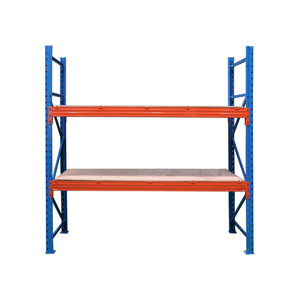
Xinanda S001 Factory Heavy Duty Pallet Rack Industrial Steel Shelving
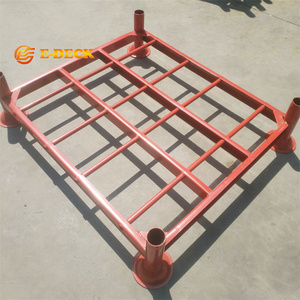
Heavy-Duty Steel Metal Logistic Stackable Storage Post Pallet Racks
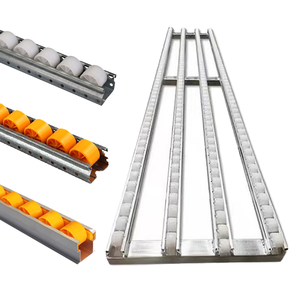
Industrial Aluminium Roller Track Large Load Rolling Rails Flow Rack
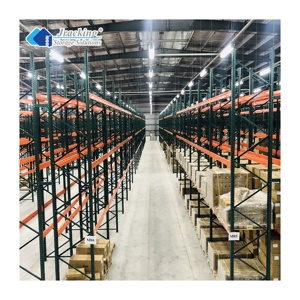
Jracking US Standard Teardrop Heavy-Duty Vertical Pallet Racking
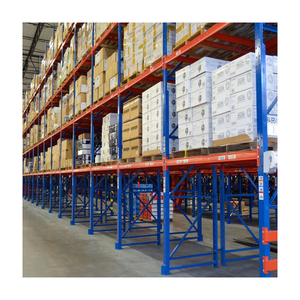
Wholesale Heavy Duty Selective Steel Pallet Storage Stacking Racks
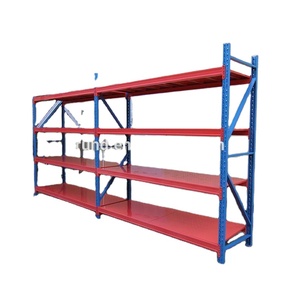
Warehouse Rack System 300kg Metal Iron Storage Holders & Shelves
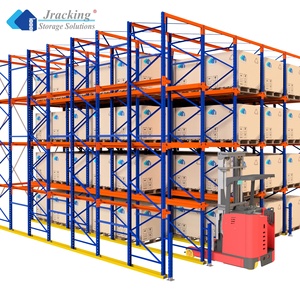
Heavy Duty Industrial Steel EU Blue & Orange Selective Pallet Racking
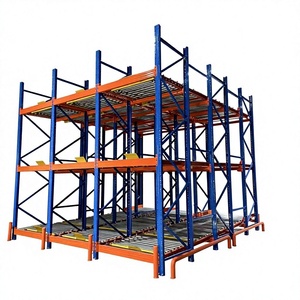
Pallet Flow Racking Gravity Roller Flow Through Rack FIFO High Density
Kinematic Principles & Structural Architecture of Gravity Roller Systems
Roller racking systems, commonly known as Pallet Flow or Gravity Flow Racking, transform passive static shelving into automated dynamic conveyor conduits without continuous electrical consumption. This technical guide explores the kinetic engineering, load tolerances, and mechanical speed governing that dictate long-term system integrity.
Incline Gradient & Kinetic Velocity
Proper pallet flow requires balancing initial static friction against steady sliding momentum. Our standard systems are engineered with a slope gradient precisely between 2.8% and 3.5% (approx. 30mm to 38mm of drop per linear meter of lane depth).
- Under-sloped lanes (<2.5%) cause pallets to stall prematurely.
- Over-sloped lanes (>4.2%) lead to runaway velocity and impact damage.
- Custom gradient profiles for cold-store grease viscosity.
Centrifugal Brake Retarders
To keep flow speeds under a safe threshold of 0.3 meters per second regardless of payload weight (300kg to 1,500kg), integrated magnetic or centrifugal brake rollers are spaced strategically down each gravity channel.
- Speed-proportional retardation prevents pallet collision.
- Hermetically sealed bearings block moisture and dust.
- Configured for both timber pallets and plastic slip-sheets.
Pallet Separation Separators
At the pick face, hydrostatic back-pressure from accumulating upstream pallets can pin the discharge unit, preventing safe forklift extraction. Mechanical load separators physically isolate the leading pallet from trailing loads.
- Reduces line pressure on forklift tines to zero.
- Automatic reset pedal triggers only when pallet is cleared.
- Protects operators and automated guided vehicles (AGVs).
| Storage Methodology | Space Utilization | Inventory Protocol | Throughput Velocity | Forklift Travel In-Rack | Capital Cost Ratio |
|---|---|---|---|---|---|
| Gravity Roller Pallet Flow | High (~85%) | Strict FIFO (100%) | Fast / Continuous | None (Aisle only) | Moderate to High |
| Selective Pallet Racking | Low (~40%) | Random / FIFO / LIFO | Direct 100% Access | Continuous aisle transits | Baseline (1.0x) |
| Drive-In / Drive-Thru | High (~75%) | Strict LIFO (Drive-in) | Slow (Deep Maneuver) | High (Inside bays) | Low to Moderate |
| Carton Flow (Roller Track) | Optimal for Piece/Case | Strict FIFO | Rapid Manual Picking | Pedestrian Picking Lane | Moderate |
| Radio Shuttle System | Maximum (~90%) | Flexible FIFO / LIFO | Semi-Automated | None (Outer face only) | High (Automated) |
Future Procurement Trends in Warehouse Roller & Flow Systems
Warehouse logistics is navigating a structural transition driven by escalating land acquisition costs, autonomous mobile robotics, and carbon border adjustment mechanisms. Enterprise procurement managers are reassessing storage architectures based on total cost of ownership (TCO) and adaptive automation.
1. Convergence with Autonomous Mobile Robots (AMRs)
Traditional gravity roller racking is being redesigned at the intake and outfeed apertures to support robotic handling. Pallet flow exits now incorporate precision optical docking fixtures, magnetic guidance locators, and automated mechanical pallet release actuators. These features allow AMRs and autonomous counterbalance stackers to dock seamlessly without human intervention, bridging low-cost gravity accumulation with unmanned warehouse networks.
2. Cold-Chain Energy Optimization
Refrigerated and flash-freeze (-28°C) facilities represent some of the highest operational expenditures per cubic meter in logistics. High-density roller racking condenses pallet storage into unified cold thermal blocks, eliminating redundant heated access aisles. Modern procurements demand synthetic polyalphaolefin (PAO) low-temperature bearing greases that prevent freeze-locking, paired with hot-dip galvanized or zinc-rich coatings that resist condensation-induced corrosion.
3. Decarbonized Steel Sourcing & Life Cycle Audits
International corporate supply chain directives require certified traceability of raw materials. Tier-1 enterprise buyers evaluate supplier bids based on the embodied carbon of structural sections. Sourcing cold-formed high-strength Q355B micro-alloyed structural steel enables thinner section profiles with higher yield strengths. This reduces total project steel weight by up to 14% without compromising load deflection limits specified under EN 15512 standards.
Technological Trajectories Shaping High-Capacity Dynamic Storage
From material science breakthroughs in roller polymer composite formulations to computational finite element analysis (FEA) for seismic stabilization, roller racking systems continue to advance in safety and mechanical durability.
Polymer Composite & Dual-Material Rollers
Traditional galvanized steel tubular rollers generate notable acoustic noise and can splinter softwood pallet runners over repeated runs. Leading roller designs incorporate high-impact polyoxymethylene (POM) and polyurethane compounds directly over precision carbon steel cores. This dual-material design dampens acoustic emissions below 65 dB in enclosed pick modules while maintaining dynamic load resistance up to 250 kg per individual roller cylinder.
Dynamic Digital Simulation & Pitch Calibration
Roller lane failure is rarely caused by structural beam buckling; it stems from pallet deflection, warped bottom runners, and uneven loads. Advanced engineering utilizes digital kinematic simulators to model how real-world pallets behave on varying roller spacings (e.g., 50mm, 75mm, 100mm, or 125mm). By predicting pallet sag before factory production, manufacturers can position full-width versus split-roller tracks to prevent pallet stalling.
Seismic Engineering & Dynamic Damping
In active seismic regions like the Pacific Rim and Middle East, live dynamic storage systems behave differently during an earthquake than rigid static racks. The rolling mass of pallets can shift back and forth, transferring dynamic lateral loads into upright frame columns. Modern designs use reinforced multi-anchor footplates, diagonal tie-rod trusses, and self-locking brake clutches to prevent runaway loads during seismic tremors.
Why Global Supply Chains Trust Guangzhou HEDA Shelves Co., Ltd.
Established in 2001, Guangzhou Heda Shelves Co., Ltd. has developed into a premier South China designer, manufacturer, and exporter of heavy-duty industrial storage systems, serving global warehouse projects across 120+ countries.
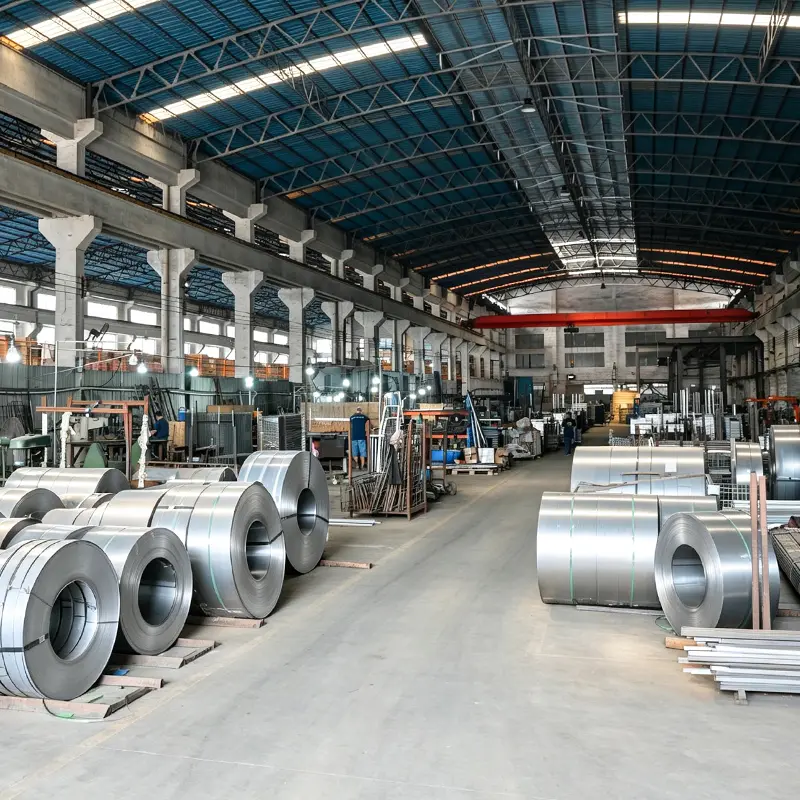
25+ Years Manufacturing Heritage
Founded in 2001, operating over 30,000 m² of smart fabrication facilities with continuous roll-forming lines, automated punching arrays, and precision robotic welding cells.
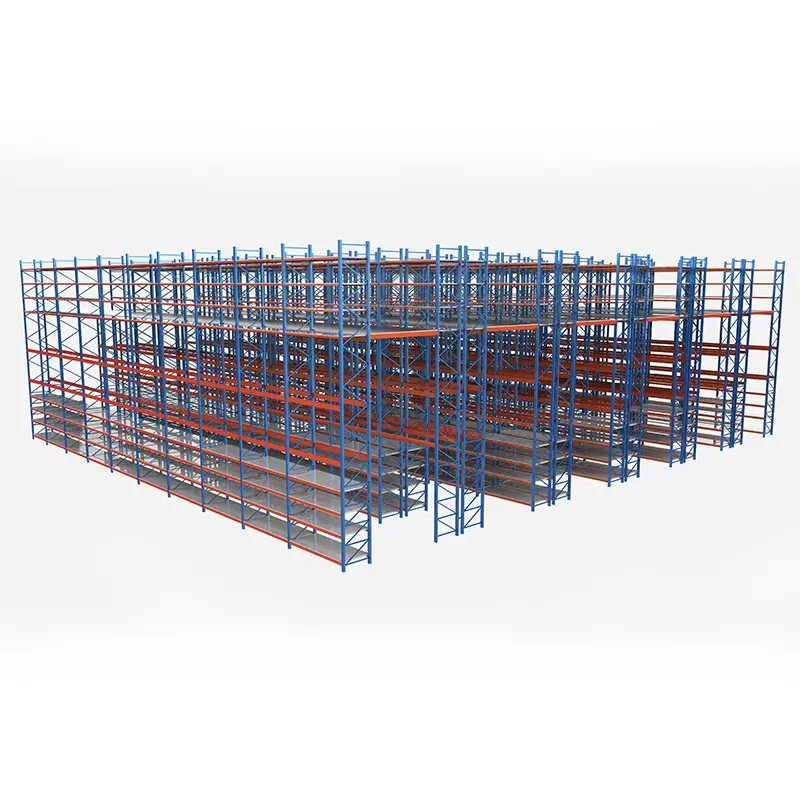
Free 24-48h CAD/3D Layouts
Our senior structural team provides full warehouse CAD floor designs, 3D architectural renderings, and structural loading checks based on your specific pallet sizes and building height.
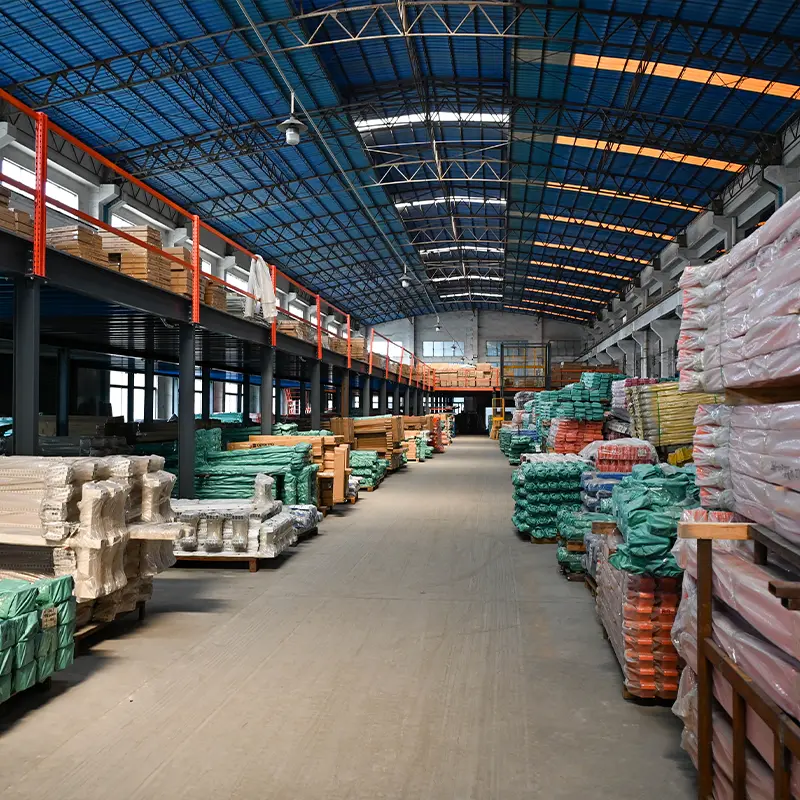
CE & ISO 9001:2015 Certified
Certified under CE No. 2435-CPR-8605159 and ISO 9001:2015. Every production run undergoes automated pickling, phosphating, and electrostatic powder coating for lasting corrosion resistance.
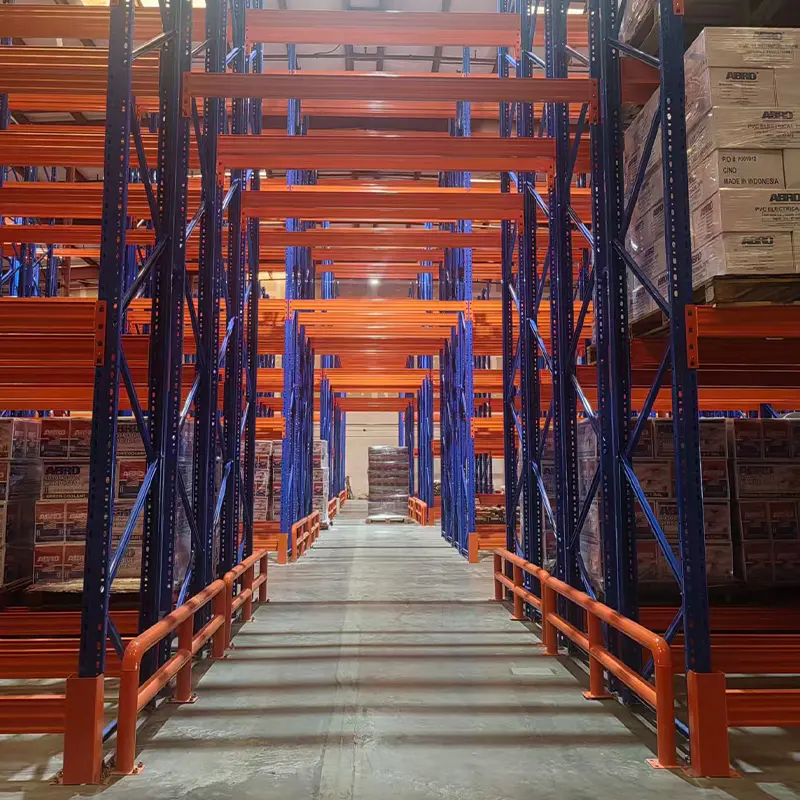
Complete Engineering Customization
Tailored column profiles, beam dimensions, roller materials, and custom OEM colors for international systems integrators, regional distributors, and 3PL warehouse operations.
Frequently Asked Questions: Roller & Pallet Flow Racking
Clear, engineering-focused answers to the technical questions supply chain managers and project engineers raise when procuring gravity flow systems.
What are the key technical differences between full-width steel roller tracks and multi-lane wheel tracks?
Full-width steel roller tracks use continuous, heavy-wall cylindrical steel rollers extending across the entire pallet track width. This configuration is recommended for heavy pallets (800kg to 1500kg), uneven wooden skid runners, metal stillages, or plastic pallets that lack continuous bottom contact surfaces. The continuous roller surface distributes the load evenly, preventing pallet runner edges from dropping into gaps.
Multi-lane skate wheel or polycarbonate wheel tracks use two to three parallel rows of staggered wheels. This arrangement is well-suited for lighter loads, standardized carton-flow picking racks, and premium wooden pallets with consistent, smooth runners. Wheel tracks offer a more economical price point and lower shipping weight, but require high pallet uniformity to prevent tracking divergence.
How do you calculate the correct roller pitch and brake roller spacing for a pallet flow lane?
Roller pitch is determined by the minimum pallet length in the direction of travel. As a fundamental engineering rule, a moving pallet must be supported by at least three individual rollers simultaneously at all times ($Pitch \le Length_{pallet} / 3$). For standard 1200mm deep GMA or Euro pallets, a roller pitch of 100mm to 125mm is commonly specified to prevent surface washboarding and stalling.
Brake roller spacing depends on unit pallet mass, lane depth, and overall slope gradient. For standard 3.0% inclines with 1,000 kg pallet loads, an indirect or direct gear centrifugal speed controller is typically installed at every one to two pallet positions (approximately every 1.5 to 2.5 meters of lane length). This ensures pallets re-accelerate smoothly without exceeding safe speeds of 0.3 m/s.
How does HEDA Shelves protect outdoor or cold-storage roller systems from corrosion and grease freezing?
Corrosion protection is integrated at every step of manufacturing. All upright columns and load beams undergo a 10-step surface treatment process, including chemical degreasing, acid pickling, zinc phosphating, and automatic electrostatic powder curing at 180°C–200°C. For humid tropical environments or wet washdown areas, components can be specified with hot-dip galvanizing according to ISO 1461, delivering a minimum zinc layer thickness of 65 to 85 microns.
For blast-freezer applications down to -30°C, all roller assemblies are fitted with low-temperature synthetic PAO greases rated to -45°C. This prevents standard petroleum lubricants from congealing, ensuring rollers spin freely without added friction.
Can your gravity racking systems be integrated with AS/RS cranes and Automated Guided Vehicles (AGVs)?
Yes. Our engineering department regularly designs gravity roller staging lanes for automated AS/RS dispatch and robotic picking systems. For automated interfaces, the discharge ends of roller lanes feature reinforced pallet stop plates, photoelectric sensor brackets, and precise mechanical centering guides.
Because automated stacker cranes and AGVs require repeatable pallet positioning within tight tolerances (±3mm), our designs integrate pneumatic or mechanical escapement separators. These hold back trailing pallets, ensuring the leading pallet is presented cleanly at the pickup face without back-pressure.
What structural engineering design codes does HEDA Shelves follow for international export projects?
Our structural design calculations comply with international regional requirements. For European, Middle Eastern, and Asian tenders, systems are calculated under EN 15512 (Steel static storage systems – Adjustable pallet racking systems – Principles for structural design) and FEM 10.2.02. For the North American market, our teardrop frames meet ANSI/RMI MH16.1 standards.
For projects in active seismic zones (such as the Philippines, Indonesia, Japan, New Zealand, or western South America), our engineers run finite element seismic modeling based on local building codes. We adjust base plate dimensions, upright gauge thickness, and anchor bolt configurations to meet required ground acceleration spectra.