Engineered Warehouse Storage Racks & System Components
From robust cantilever configurations for long-load handling to heavy-duty selective pallet frameworks and automated intralogistics accessories, every unit is manufactured in accordance with strict ISO 9001:2015 and CE quality protocols.
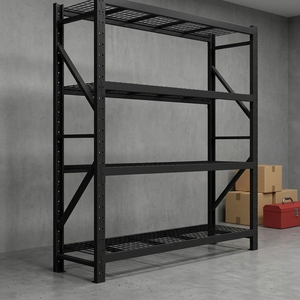
Heavy Duty 4 Tier Cold Rolled Steel Anti-corrosion Powder Coated Shelving Unit
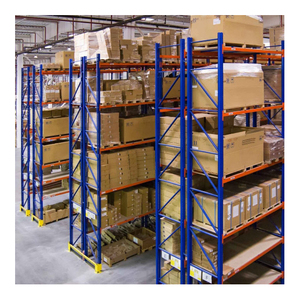
Peterack CE Certified Warehouse Storage Steel Heavy Duty Stacking Pallet Racks
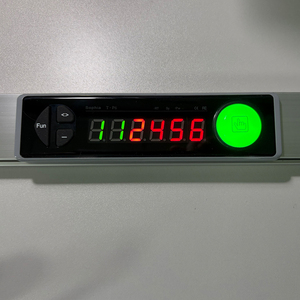
Sophia 6 Digit Display Pick to Light Picking Tag Electronic Tag T-P6 for Racks
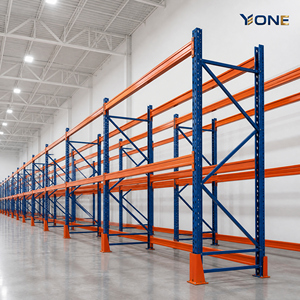
Heavy Duty Pallet Racking Warehouse Storage System Q235B Steel Freight Distribution
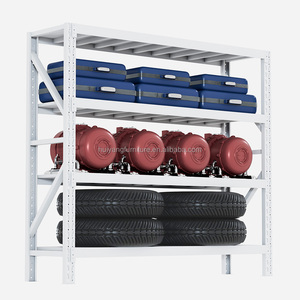
HY Manufacture Boltless Rack Divider High Quality Pallet Racking Metal Storage Unit
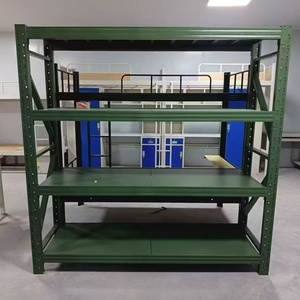
Heavy Duty Long Span Shelving Boltless Steel Storage Rack 4-Layer Adjustable
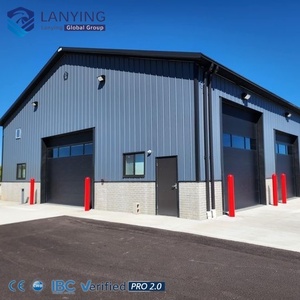
One-Stop Supplier Light Steel Structure Warehouse Prefab Industrial Storage Building
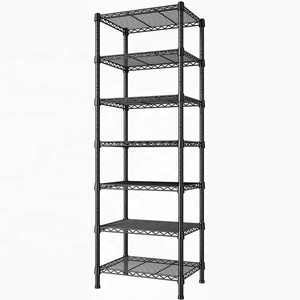
Wire Shelving Rack Rolling Steel Storage Shelf Heavy Duty Wheeled 4-Tier Unit
Engineering Architecture of Heavy-Duty Industrial Cantilever Racks
Cantilever storage racks represent the pinnacle of structural mechanics for non-palletized, long-span, and irregular material handling. Here is an exhaustive structural breakdown designed for logistics directors, structural consultants, and warehouse EPC contractors.
Column Profile & Upright Moment Capacity
Cantilever vertical uprights operate under high bending moments caused by eccentric arm loading. Our manufacturing process provides two primary options: Cold-Formed C/C Profile Welded Box Columns for medium-to-heavy loads up to 6,000 kg per column side, and Structural Hot-Rolled H-Beams (IPE or HEA sections) providing maximum rigidity for load thresholds surpassing 18,000 kg per upright.
- Steel Grades: High Yield Strength Q235B & Q355B (S235JR / S355JR)
- Double-Sided Punching Pitch: 100mm, 140mm, or 150mm increments
- Welded Baseplates with multi-anchor bolt patterns for seismic anchoring
Tapered Arm Mechanics & Incline Geometry
Unlike standard horizontal beams, cantilever arms feature an engineered upward camber incline of 1° to 2° under zero-load conditions. As heavy pipes, lumber, or steel profiles rest on the arm, structural elasticity balances the arm precisely horizontal, preventing forward slippage and neutralizing arm deflection within safe FEM 10.2.02 and ANSI MH16.1 limits.
- Arm Capacities: 500 kg to 3,500 kg uniformly distributed load (UDL)
- Pin Connection: High-tensile pivot pin prevents weld shearing
- Removable End-Stoppers: Bolted or slotted pipe retainers
Bracing Trusses & Longitudinal Stability
A cantilever system's longitudinal stability relies entirely on engineered vertical X-bracing and horizontal tie beams placed between upright column pairs. Constructed from structural structural angle profiles (L-channels) and circular hollow sections (CHS), these bracing frames counteract forklift impact kinetic energy, longitudinal roll, and ground seismic acceleration.
- Seismic Zone Compliance: Zone 2 to Zone 4 custom structural reports
- Wind Load Engineering: Custom calculations for outdoor yard setups
- Floor Base Distribution: Heavy channel bases distribute ground pressure
Industrial Cantilever Technical Comparison Matrix
Select the optimal cantilever configuration based on material density, storage envelope, handling machinery, and environmental exposure.
| Structural Parameter | Light-to-Medium Roll-Formed | Heavy-Duty Structural I-Beam | Extra Heavy Outdoor Cantilever |
|---|---|---|---|
| Typical Applications | Plastic piping, light lumber, furniture, PVC profiles | Steel tubes, structural beams, sheet packs, machinery parts | Heavy billets, rebar coils, raw timber logs, precast slabs |
| Upright Height Capability | Up to 4,500 mm | Up to 10,000 mm | Up to 12,500 mm (with guide rail VNA) |
| Arm Load Range (UDL) | 250 kg – 800 kg per arm | 800 kg – 2,200 kg per arm | 2,000 kg – 4,000 kg per arm |
| Column Section Profile | Cold-formed C-Channel back-to-back welded | Hot-rolled H-Beam (Q235B / Q355B) | Reinforced Structural Wide-Flange / Boxed Columns |
| Surface Finish Protection | Electrostatic Epoxy Powder (60–80μm) | Thermoset Polyester Powder / Galvanized | Hot-Dip Galvanized ISO 1461 (≥ 85μm zinc) |
| Handling Machinery Match | Counterbalanced Forklift / Reach Truck | 4-Way Multidirectional / Side-Loader Forklift | Heavy All-Terrain Forklift / Overhead Crane |
Future Procurement & Technological Trends (2025–2035)
The industrial cantilever and heavy storage racking sectors are transitioning from static structural hardware to intelligent, automated, and sustainable warehouse assets. Understanding these structural shifts is vital for multi-year capital expenditure planning.
AS/RS Cantilever Automation
Modern mega-mills and international distribution hubs are shifting away from traditional manual forklift aisles. Automated Storage and Retrieval Systems (AS/RS) integrated directly into cantilever frameworks utilize automated crane stackers and telescopic transfer arms to manipulate heavy raw materials at heights over 15 meters with millimeter accuracy.
IoT Deflection & Overload Sensors
Real-time structural health monitoring is becoming standard in critical logistics nodes. Strain-gauge transducers and wireless sensor nodes embedded in the column-to-arm knuckles detect uneven eccentric loading, physical forklift impacts, and micro-deflections before permanent steel deformation occurs.
Eco-Finishing & Low-VOC Pre-treatment
International environmental regulations (RoHS, REACH) are shaping how storage systems are protected against oxidation. Pickling and phosphating systems are evolving into non-toxic silane or zirconium nanocoatings, combined with heavy-duty TGIC-free powder formulations that withstand aggressive salt-spray environments without high VOC emissions.
High-Density Mobile Cantilever Bases
Where industrial land prices are steep, mobile-base electric cantilever systems eliminate dedicated forklift aisles. By mounting entire cantilever runs onto motorized rails embedded in the concrete slab, a single operational aisle services multiple racking rows, increasing storage density by up to 85%.
Why Global Importers & EPCs Choose HEDA Shelves
Headquartered in Guangzhou with more than two decades of proven steel manufacturing precision, Guangzhou Heda Shelves Co., Ltd. delivers direct factory engineering accountability from conceptual CAD drafting to international port delivery.
Certified Quality Frameworks
HEDA Shelves operates under verified international accreditations including CE Certification (No. 2435-CPR-8605159) and ISO 9001:2015 Quality Management System Certification (No. 18624Q00169R0M). Every batch of raw structural coil is tested for yield point, tensile elongation, and chemical composition before slitting and cold-forming.
Rapid 24–48 Hour Engineering Design
Our in-house project team of senior structural draftsmen utilizes AutoCAD and 3D modeling tools to deliver accurate floor plans, isometric renderings, and pallet/arm position calculations within 24 to 48 hours. We verify aisle clearances, reach truck turning radii, and sprinkler clearances before steel cutting begins.
South China Port Logistics Advantage
Positioned alongside primary South China shipping terminals (Guangzhou / Nansha / Shenzhen), HEDA coordinates prompt container loading with short sea transit times to Southeast Asia, South Asia, Central Asia, Europe, and the Middle East. Rigorous bundling, profile padding, and container weight balancing safeguard steel coatings during long sea voyages.
Industrial Cantilever Storage Racks FAQ
Detailed technical answers to the most common structural, mechanical, and commercial questions raised by global warehouse procurement teams.
What is the standard arm deflection ratio acceptable in industrial cantilever design?
According to FEM 10.2.02 and ANSI MH16.1 specifications, the maximum allowable vertical deflection of a cantilever arm under full working load should not exceed L/200, where L is the unsupported arm length. If an arm measures 1,200 mm, the maximum downward elastic deflection at the outer tip must remain below 6.0 mm. Our engineers apply a built-in upward camber of 1° to 2° during manufacturing so the arm approaches a flat plane under load.
How do you decide between roll-formed and structural hot-rolled cantilever columns?
Roll-formed cantilever uprights are cold-formed from high-grade Q235B steel coils into closed or open C-profiles. They are cost-effective for light-to-medium loads (up to 800 kg per arm) such as furniture, moldings, and plastic piping. Structural hot-rolled cantilever racks are built using solid structural I-Beams / H-Beams. They are chosen for heavy-duty applications (over 1,000 kg per arm) like steel tubes, dies, and plate bundles where heavy forklift collision resistance and extreme rigid moment resistance are needed.
Can cantilever racks be installed outdoors, and what anti-corrosion finish is required?
Yes. For outdoor lumber yards, steel service centers, and building supply compounds, we engineer outdoor cantilever systems with top-mounted roof canopies (shelter arms) to keep rain off inventory. Outdoor units are treated with Hot-Dip Galvanization in accordance with ISO 1461, yielding a zinc layer of 70–100 microns. This metallurgical zinc-iron alloy barrier protects steel from rust in humid, tropical, and coastal C3–C5 environments for decades.
How do you adjust the engineering calculations for seismic-prone zones?
For installations in seismically active regions across Southeast Asia, Japan, and the Middle East, our structural team incorporates local building codes (such as Eurocode 8, AS 4084, or IBC/UBC seismic criteria). We increase the baseplate surface dimensions, specify high-grade chemical wedge anchor bolts, increase the gauge thickness of column webs, and incorporate heavy cross-bracing trusses to absorb horizontal acceleration loads.
What concrete slab thickness and floor strength are needed for heavy cantilever systems?
Because cantilever columns concentrate high bending moments and point loads through a compact baseplate, the foundation must be thoroughly checked. For medium systems, a reinforced concrete slab of 150mm to 200mm thickness with a compressive strength of C20/25 is typical. For heavy-duty structural cantilever systems reaching 8 to 12 meters in height, an engineered slab of 250mm to 350mm (C30/37 or higher) is commonly required, free of contraction joints directly under the anchor bolt pattern.
Can cantilever arms support palletized items or non-continuous small boxes?
Yes. While cantilever racks are fundamentally engineered for long, uninterrupted items, we can furnish arms with specialized accessories. These include heavy wire mesh decking, solid galvanized steel shelf panels, or drop-in timber decks that span across the arms. This provides a continuous horizontal storage plane, converting the cantilever rack into an open-faced shelf system without front column obstructions.
Request a Free Custom 3D Cantilever Racking Layout
Share your facility floor plan, material dimensions, unit weights, and forklift specifications. Our engineering team will return a complete 2D CAD layout, 3D structural rendering, and container-optimized budget estimate within 24 to 48 hours.