Featured Heavy-Duty Warehouse Storage & Material Handling Equipment
Precision-formed structural systems manufactured from certified cold-rolled high-tensile steel, designed to eliminate aisle waste, optimise cubic density, and resist high-cycle industrial logistics demands.
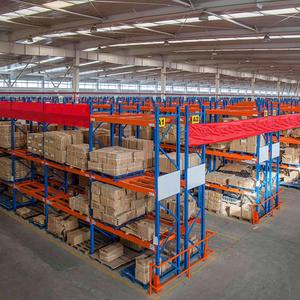
Peterack PT-HD Industrial Heavy Duty 5-Layer Steel Selective Pallet Rack
High-strength Q235B cold-formed structural racking featuring adjustable upright beam configurations, phosphatised powder coatings, and direct single-pallet accessibility.
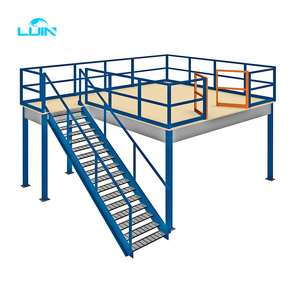
Multi-Functional Mezzanine Platform Heavy Duty Industrial Storage
Structural steel integrated multi-tier platform built to double or triple vertical footprint utility with load bearing ratings exceeding 1,000 kg per square metre.
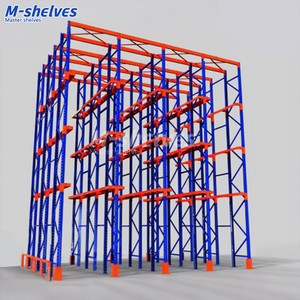
Large Scale Logistics Pallet Racking System High Load Rack
Engineered for e-commerce hubs and high-turnover fulfillment centers requiring rapid order picking, extreme column rigidity, and integrated beam safety locking mechanisms.
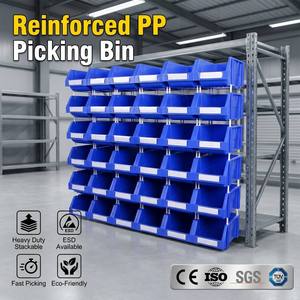
INORDER Semi-Open Stacking Warehouse Bin Spare Parts Organizer
Durable polypropylene modular storage bins engineered for manual hardware picking, parts consolidation, and seamless integration with industrial cantilever or longspan shelving.
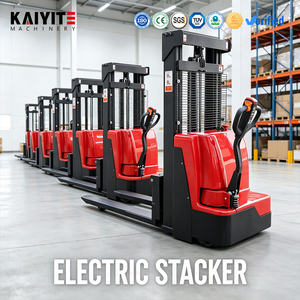
Industrial Electric Pallet Stacker 1-2 Ton 3500mm Lift Height
High-efficiency narrow aisle electric pallet stacker designed to work harmoniously alongside high-density drive-in racking and selective distribution layouts.
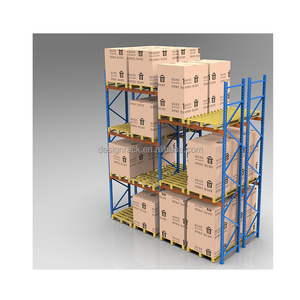
Industrial Heavy Duty Storage Tray Rack System Store Shelf
Robust industrial tray and pallet storage shelf engineered for heavy raw material loads, precision-welded connectors, and corrosion-resistant multi-coat finishing.
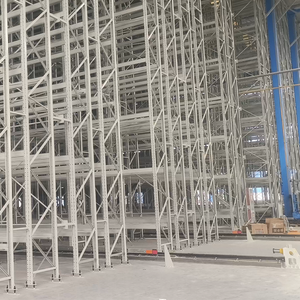
1000kg Warehouse Rack System with High Density Layout
Compact drive-in and double-deep compatible steel matrix engineered to sustain continuous 1-ton unitised pallet loads with strict deflection limit parameters.
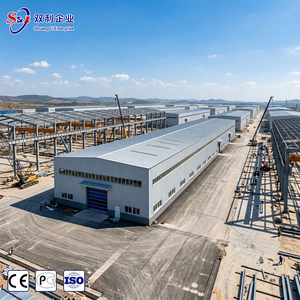
Steel Warehouse Storage Rack Systems with Industrial Stairs
Fully integrated structural multi-level mezzanine system supplied with industrial staircase units, perimeter kick-plates, and high-safety handrail barriers.
Drive-In vs. Drive-Through Racking Systems: Structural Architecture & Density Engineering
Drive-in and drive-through pallet racking represents the premier ultra-high-density storage technology for manufacturing facilities, raw ingredient warehouses, cold storage operations, and distribution complexes handling homogeneous inventory. Unlike traditional selective pallet racking—which requires operational access aisles for every individual row of pallets—drive-in systems condense storage lanes by removing internal aisles completely, consolidating spatial efficiency by up to 75% to 80% compared with conventional layouts.
In structural terminology, the engineering difference centers on pallet entry pathways and operational stock rotation dynamics:
Structural Kinematics & Deflection Calculations
Because forklifts enter directly inside the racking upright bays, the continuous horizontal cross-beam ties typical of selective racking must be substituted with overhead portal bracing, continuous top perimeter ties, and high-torsion cantilever arm rails. Uprights are subjected to combined axial compression and lateral bending moments caused by operational vehicle vibration and seismic drift.
Our manufacturing plant enforces European Standard EN 15512 and American RMI (MH16.1) structural calculation criteria, running 3D Finite Element Analysis (FEA) on every custom installation to evaluate cold-formed profile buckling coefficients, base-plate anchor shear under seismic acceleration, and dynamic impact mitigation.
Technical Anatomy: Core Structural Components of HEDA Racking
The operational longevity and physical safety of drive-in installations depend on steel metallurgical purity and roll-forming tolerances. Below is the technical breakdown of our standard heavy-duty assemblies:
| Structural Element | Material Grade & Specification | Fabrication Standard | Operational Function |
|---|---|---|---|
| Cold-Formed Uprights | Q235B / Q355B Structural Steel | EN 10219 / ASTM A572 | Omega-profile multi-bend columns resisting high vertical axial load and side-impact torque. |
| Cantilever Support Arms | Heavy Gauge Solid Cold Stamped Steel | 3.0mm – 4.5mm Thickness | Bolted or hooked brackets distributing pallet unit loads onto the vertical upright without weld fatigue. |
| Pallet Guide Rails | Continuously Formed Galvanised / Coated Sections | Continuous Roll-Formed Profile | Integrated flared entry guides to direct pallet runners securely and minimise forklift misalignments. |
| Top & Back Bracing | Heavy-Duty Diagonal Structural Bracing | High-Tensile Tubular / C-Channel | Rigid horizontal portal frame stabilizing long storage corridors against harmonic resonance and seismic roll. |
| Floor Guidance Angles | Hot-Rolled Structural Steel Angles | L100x75x6 or Heavy C-Channel | Anchored ground tracks guiding forklift wheels straight into deep lanes, eliminating column collisions. |
Future Procurement Trends in Industrial Storage Systems (2025–2030)
Procurement directors and third-party logistics (3PL) infrastructure leaders are rapidly altering their evaluation parameters for warehousing racking systems. The transition is accelerated by spiraling industrial real estate rental costs, stringent international ESG carbon reporting rules, and the integration of automated material handling fleets.
Hybrid AGV/AMR Automation Ready
Procurement models demand racks engineered with precision tolerances to accommodate autonomous narrow-aisle reach trucks and optical guidance systems alongside manual human operation.
Low-Emission Eco-Coatings
Global supply chains are mandating non-toxic, RoHS-compliant electrostatic powder finishes and energy-efficient roll-forming lines that lower the embodied carbon footprint per pallet position.
Microclimate & Seismic Certification
Warehouse owners in tropical or seismically volatile zones (such as Southeast Asia, Japan, and the Middle East) require validated site-specific finite element calculation reports prior to financial release.
Technological Evolution: From Static Drive-In to Semi-Automated Radio Shuttle Racking
While drive-in racking delivers exceptional volumetric density, traditional setups experience operational bottlenecks: forklifts must drive deeply inside steel bays, increasing turnaround time and the risk of accidental frame impact. The historical progression of high-density warehouse storage reflects continuous optimization of structural safety and throughput efficiency:
Stage 1: Conventional Drive-In Racking. High cubic density with manual forklift bay navigation. Highly effective for batch goods with low throughput requirements, yet reliant on skilled forklift operators.
Stage 2: Drive-Through Racking with Floor Guides. Implements FIFO stock rotation with floor-anchored steel tracks that assist vehicle centering, reducing upright collisions by over 40%.
Stage 3: Push-Back and Gravity Flow Pallet Racking. Introduces dynamic mechanical incline systems with gravity carts or roller beds, ensuring loading and unloading take place strictly from external operational aisles.
Stage 4: Radio Shuttle Pallet Racking Systems (The Current Standard). Integrates autonomous wireless robotic shuttles operating on custom cold-formed tracks inside deep storage channels. Forklifts remain in outer access aisles, while shuttles transport pallets deep into lanes up to 40 pallets deep. This reduces material handling operational time by up to 50% and virtually eliminates frame collision risks inside cold storage rooms.
Why Global Enterprises Partner with Guangzhou Heda Shelves Co., Ltd.
Established in 2001, Guangzhou Heda Shelves Co., Ltd. has developed over 25 years of engineering experience into a world-class manufacturing authority for warehouse storage and mezzanine systems. As a direct factory manufacturer based in Guangzhou, China, we operate a 30,000 m² state-of-the-art facility with over 300 experienced technical professionals, automated roll-forming production lines, and high-precision robotic welding centers.
Certified Quality Standards
Our operations comply with verified CE Certification (No. 2435-CPR-8605159), ISO 9001:2015 (No. 18624Q00169R0M), and environmental RoHS standards, assuring regulatory compliance for global tenders.
End-to-End In-House Control
From prime raw coil inspection, automated column punching, profile bending, pickling, and phosphating pre-treatment to automated electrostatic powder coating, every manufacturing phase remains under one roof.
Complimentary Engineering & 3D CAD
We supply full 2D CAD floor configurations, realistic 3D volumetric models, and structural load calculations within 24 to 48 hours, eliminating planning guesswork before capital investment.
Frequently Asked Questions (FAQ) for Global Racking Procurement
What specific parameters are needed for an accurate Drive-In Racking engineering layout?
How does HEDA prevent paint peeling and rust in tropical or sub-zero environments?
Can HEDA engineering customize systems for seismic activity zones?
How do you support container freight packing and export logistics?
What is the standard manufacturing lead time for full container orders?
Design Your High-Density Warehouse with HEDA Engineers
Submit your facility dimensions, pallet parameters, and load criteria. Receive a complimentary 2D CAD engineering layout, complete structural bill of materials, and transparent factory-direct pricing within 24 hours.
Contact Us