Engineered Heavy-Duty Industrial Racking & High-Density Systems
Fabricated in our 30,000 m² Guangzhou automated manufacturing facility from certified Q235B/Q355B high-tensile steel, all components comply rigorously with EN 15512, EN 15620, and European CPR 305/2011 structural integrity directives.
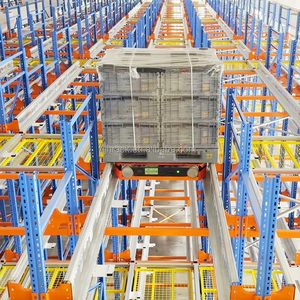
Heavy Duty 4 Way Shuttle Racking System Steel Radio Shuttle Pallet Rack High Density Automated Warehouse Storage
- Up to 1,500 kg/Pallet
- WMS/WCS Integrated
- Cold Room Ready (-25°C)
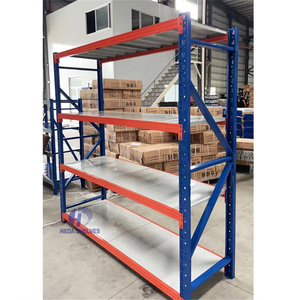
Customized Factory Supply Industrial Workshop Display Shelving Iron Shelves Storage Rack Light Iron Rack
- 200 - 800 kg/Tier
- Boltless Clip Assembly
- Adjustable Pitch 50mm
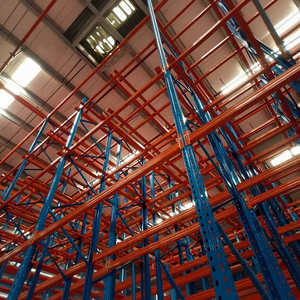
Heavy Duty Single Deep Industrial Selective Pallet Rack Steel Corrosion Protected Powder Coated Garage Warehouse Racks
- 1,000 - 4,000 kg/Level
- Epoxy Powder Coated
- EN 15512 Compliant
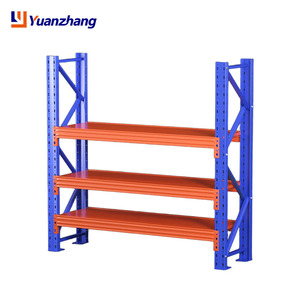
Heavy Duty Double Deep Pallet Racking, Universal Steel Storage Shelves for Factory, Workshop & Cold Room
- 50% Aisle Reduction
- Pantograph Reach Compatible
- Reinforced Box Beams
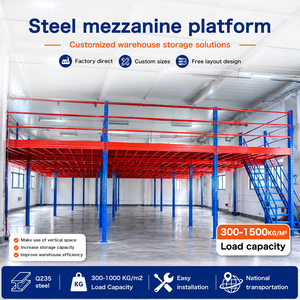
Multi Level Steel Industrial Mezzanine Warehouse Storage Rack Heavy Duty Platform Shelving Customized System
- 300 - 1,200 kg/m² Rating
- 2 to 4 Tiers Structural
- Integrated Access Stairs
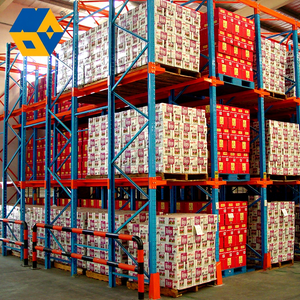
NOVA Customized Warehouse Shelf, Q235 Cold Rolled Steel Drive-in Pallet Racking System Rack
- 85% Floor Space Utilization
- Continuous Pallet Rails
- Impact Floor Guides
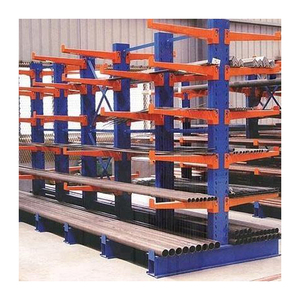
H-Beam Heavy Duty Cantilever Racks Steel Structural Shelf Warehouse Racking for Storaging Wooden Boards, Pipes
- Up to 3,000 kg/Arm
- Hot-Rolled Structural H-Steel
- Single / Double Sided
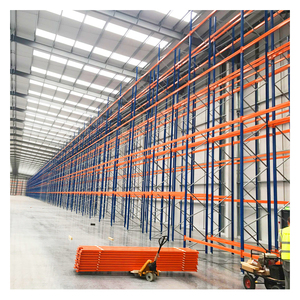
Industrial Storage Rack Pallet Shelving For Sale Heavy Duty Metal Shelf Factory Workshop Equipment
- Omega Profile Uprights
- Safety Interlock Beam Pins
- ISO 9001 Factory Quality
A Quarter-Century of Engineering Rigor in Structural Storage Systems
Founded in 2001, Guangzhou Heda Shelves Co., Ltd. has established itself as an authoritative leader in modern warehouse logistics equipment engineering. Unlike trading intermediaries or assembly brokers, our operations operate an integrated 30,000 square meter heavy-industrial fabrication facility staffed by over 300 experienced engineers, structural technicians, and export logistics coordinators.
Our structural design protocols adhere strictly to international building codes and industrial racking standards, notably the European EN 15512 (Steel Static Storage Systems: Adjustable Pallet Racking Systems - Principles for Structural Design), EN 15620 (Tolerances, Deformations and Clearances), and FEM 10.2.02. Every upright section, connector tab, and load beam is calculated to resist severe vertical load distributions, seismic accelerations, and forklift impact vibrations without catastrophic buckling.
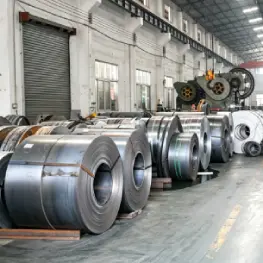
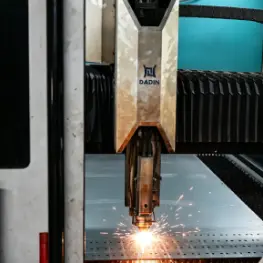
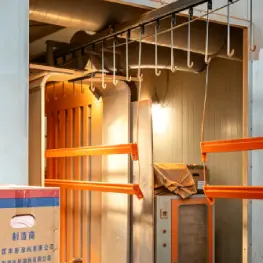
By controlling the complete lifecycle internally—from structural coil inspection, roll-forming, computerized CNC hole-punching to 7-stage chemical surface conversion and robotic electrostatic coating—HEDA Shelves eliminates the quality deviations and hidden stress cracks typical of decentralized production networks.
Factory Structural Benchmarks
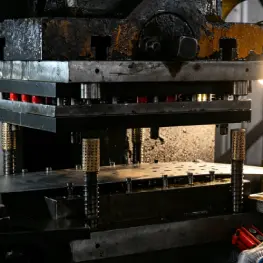
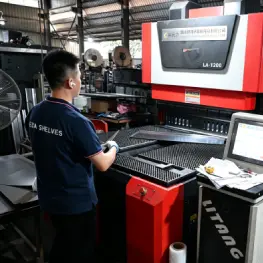
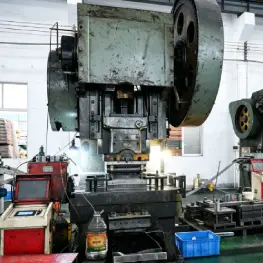
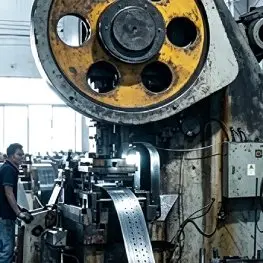
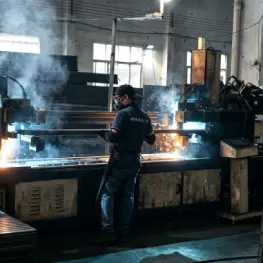
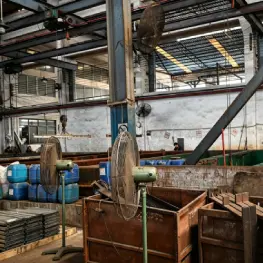
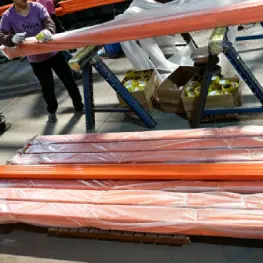
10-Step In-House Precision Manufacturing & Structural QA
Our 10-step proprietary quality assurance pipeline ensures that every structural upright column, diagonal brace, load beam, and connector bracket arriving on your job site delivers predictable metallurgical performance.
Structural Topology, Metallurgy & Warehouse Capacity Optimization
A comparative technical analysis of industrial storage architectures, helping supply chain directors, industrial architects, and EPC contractors match pallet dynamics to operational throughput.
Selective Pallet Racking
Standard universal solution providing 100% individual selectivity to every SKU. Optimized for high-velocity distribution centers (3PLs, FMCG) where stock rotation speed outweighs cubic volumetric density.
Double Deep & Drive-In Systems
Double deep cuts aisle counts by 50% using pantograph deep-reach trucks. Drive-in systems eradicate interior aisles altogether for bulk single-SKU cold rooms, raw materials, and long-batch manufacturing.
Semi-Automated Radio Shuttle
Battery-powered intelligent shuttles navigate storage lanes along precision guide rails. Operators deposit pallets on outer bays; the shuttle automatically positions pallets at speeds up to 1.1 m/s.
Rack-Supported Mezzanines
Capitalizes on vertical facility height by using heavy-duty racking uprights as direct load-bearing pillars for multi-tier picking decks, integrating catwalks, freight lifts, and carton live-flow conveyors.
Future Procurement Trends in Industrial Storage Racking (2025–2030)
Supply chain resilience and skyrocketing urban warehouse lease rates are transforming corporate racking procurement from passive steel purchases to critical, technology-integrated engineering decisions.
Convergence with AS/RS & AMR Systems
Global procurement data reveals a 32% year-over-year migration from purely manual forklift racks toward automated 4-way shuttle and autonomous mobile robot (AMR) hybrid designs. Procurement engineers now mandate tighter manufacturing tolerances (±1.0mm) to accommodate optical positioning laser sensors and avoid shuttle jamming.
Seismic Micro-Zoning Compliance
With major logistics hubs expanding across seismically active corridors in Southeast Asia, Japan, the Middle East, and Latin America, procurement specifications increasingly require Eurocode 8 and FEM 10.2.08 compliant finite element dynamic modeling. Thicker cold-formed floor baseplates and chemical anchor bolt calculations are mandatory.
Deep Freeze Cold-Form Metallurgy
Surging global cold chain logistics for pharmaceuticals and biologics demands steel racking formulated to eliminate low-temperature embrittlement. Modern tenders explicitly specify Charpy V-notch impact-tested steel grades capable of absorbing at least 27 Joules at -30°C, backed by pre-galvanized or hot-dip zinc surface finishes.
Decarbonization & Powder Chemistry
Corporate ESG mandates now penalize high-carbon fabrication. Purchasing managers favor manufacturers utilizing closed-loop water treatment in phosphating lines, zero-VOC heavy-metal-free thermosetting polyester powder coatings (RoHS verified), and certified traceable recycled-scrap steel blends from green steel mills.
Technological Evolution: From Static Iron Shelves to Intelligent 4D Shuttles
How warehouse storage engineering developed over the past half-century, and where structural engineering is heading next.
Static Structural Steel & Manual Operations
Characterized by thick, hot-rolled I-beams or elementary cold-formed slotted angle irons. Systems were assembled with manual nuts and bolts, demanding wide aisles (3.5 to 4.2 meters) for massive counterbalanced forklifts. Inventory tracking was completely paper-based, with low volumetric cubic efficiency and high steel consumption.
Modular Cold-Formed High-Tensile Systems
Transition toward high-yield cold-rolled omega (Ω) upright profiles featuring interlocking beam connectors and safety locking pins. Development of specialized variants like Drive-In, Push-Back, Gravity Pallet Flow, and Narrow Aisle (VNA) systems, allowing building heights to reach 12 to 15 meters while reducing operating aisles to 1.7 meters.
Intelligent Multi-Directional AS/RS Integration
The contemporary standard integrates precision cold-formed steel racking directly with IoT telemetry, semi-autonomous radio shuttles, vertical reciprocating elevators, and automated crane AS/RS. Structures undergo finite element analysis (FEA) to endure dynamic acceleration shocks, accommodating automated picking up to 30 meters clear ceiling heights.
Frequently Asked Questions by International Racking Buyers
Detailed technical answers to the most common structural, compliance, and logistics questions asked by procurement directors, EPC contractors, and warehouse facility operators.
QHow do I verify the authenticity of a CE certificate for warehouse storage racks?
Under European Construction Products Regulation (EU CPR No. 305/2011), structural steel warehouse racking falls under harmonized standard EN 15512 or EN 1090-1 Execution Class (EXC2). Legitimate manufacturers must hold a Certificate of Factory Production Control (FPC) issued by an authorized European Notified Body (e.g., HEDA's Certificate No. 2435-CPR-8605159). Authentic certificates include a registered accreditation number verifiable via the European NANDO database.
QWhat primary parameters are required to calculate structural load capacities and generate CAD layouts?
Our engineering department requires five critical input datasets: (1) Warehouse architectural drawings indicating clear building eave height, concrete slab slab-on-grade thickness and compressive strength, and column grid coordinates; (2) Pallet dimensions (W × D × H) including product overhang and gross weight; (3) Material handling equipment (forklift type, turning radius, mast collapsibility, and maximum fork elevation); (4) Total SKU count and required throughput velocity; (5) Facility geographic coordinates to calculate local seismic spectral acceleration and wind/temperature factors.
QWhat is the maximum permissible deflection limit for heavy-duty pallet racking beams under full load?
According to EN 15512 and FEM 10.2.02 international guidelines, the maximum allowable vertical deflection (δ) for structural pallet beams must not exceed 1/200th of the clear span between upright frame faces (δ ≤ L/200). For automated high-density radio shuttle or AS/RS installations with tight robot carriage clearances, HEDA engineers standardly reinforce beam profiles to meet a stringent deflection limit of L/300 or L/400, eliminating robotic transit errors.
QWhen should a project specify hot-dip galvanization over electrostatic powder coating?
Electrostatic thermoset polyester powder coating (60-90 μm) is the standard cost-effective finish for ambient-temperature, climate-controlled dry warehouses. However, for continuous outdoor storage yards, marine port environments, aggressive chemical storage facilities, or blast chillers with frequent washdowns and high condensation, hot-dip galvanization conforming to ISO 1461 (minimum 55-85 μm zinc barrier) provides decades of maintenance-free cathodic rust prevention.
QHow does HEDA design warehouse storage racks for earthquake-prone zones?
For installations in active seismic zones (e.g., the Pacific Ring of Fire, Indonesia, the Philippines, Japan, or coastal Turkey), we conduct dynamic finite-element response spectrum analyses adhering to EN 16681. We integrate oversized structural baseplates, dual heavy-duty mechanical or chemical expansion wedge anchors, reinforced tubular rear diagonal bracing trusses, and heavier wall-thickness upright sections to safely dissipate ground acceleration forces without progressive structural collapse.
QHow are international export container shipments packed to prevent transit deformation?
Heavy steel members shipped via ocean freight face high humidity, saltwater vapor, and shifting sea conditions. HEDA implements an engineered export packing procedure: upright columns and beams are bundled with steel strapping over wooden dunnage, interleaved with moisture-barrier corrugated cardboard and heavy-gauge PE thermal shrink film. Fragile parts (base plates, connectors, beam safety pins, anchor bolts) are vacuum-bagged and crated in heavy fumigated plywood cases.
QCan standard selective pallet racking be modified or converted into drive-in or shuttle racking later?
Standard selective racking upright frames can occasionally be repurposed if the upright column depth, steel gauge, and pitch match the required system geometry. However, because high-density drive-in and radio shuttle systems impart high localized torsional moments and eccentric cantilever loads onto uprights, structural engineers must review the frame load charts and may need to install heavy-duty top tie beams, portal bracing, and floor guide channels.
QWhat is the typical production lead time and global shipping turnaround?
Standard custom container orders (1 to 5 forty-foot high-cube containers) typically require 15 to 22 business days for complete production, surface pre-treatment, powder coating, and pre-assembly testing. Strategic proximity to South China's premier international deep-water ports (Guangzhou Nansha and Shenzhen Yantian) allows immediate container vessel departures with short transit times: 4-8 days to Southeast Asia, 14-18 days to the Middle East, and 24-28 days to Europe.
Request a Certified Structural Calculation & Free 3D Warehouse Layout
Connect directly with our senior structural logistics engineering team in Guangzhou. Provide your warehouse architectural dimensions, target pallet positions, and forklift operational specs to receive an authoritative engineering proposal with complete CAD layouts and competitive factory-direct pricing within 24 to 48 hours.
- Free 2D CAD & 3D Visual Rendering
- Structural Load Check to EN 15512
- Direct Guangzhou Factory Pricing