High-Performance Certified Racking & Industrial Shelving Systems
Direct from our Guangzhou intelligent roll-forming manufacturing facility. Every upright column, load-bearing connector beam, and wire deck complies with EN 15512, FEM 10.2.02, and certified seismic resistance criteria.
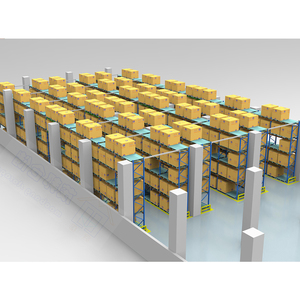
CE Certified Warehouse Racking Conventional Steel Pallet Rack with One-stop Service
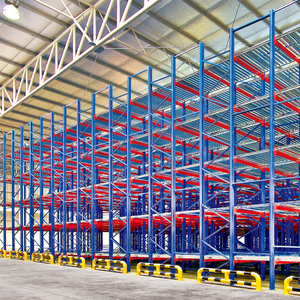
Factory Direct Steel Gravity Roller Racks Adjustable High Space Utilization Warehouse Gravity Flow Shelving Powder Coated
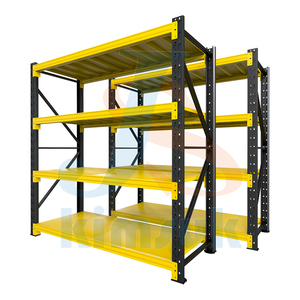
2000*600*2000mm Longspan Display Steel Shelving Medium Duty Stacking Racks & Shelves for Garage Storage
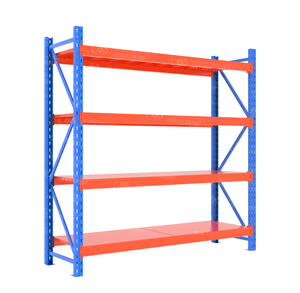
Factory Supply Heavy-Duty Industrial Warehouse Storage Rack Quality 5-Layer Metallic Steel Shelves Customized Bolt
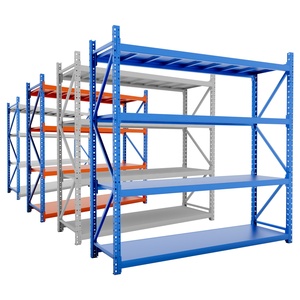
Factory Direct 4-Layer 800kg Medium Heavy Duty Pallet Racking System Steel Adjustable Longspan Warehouse Storage Pallet Racks
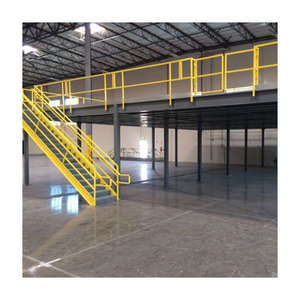
150 Square Meter Customized Attic Industrial Storage Pallet Racking 2 Floors Mezzanine Shelving Rack System Steel Platform
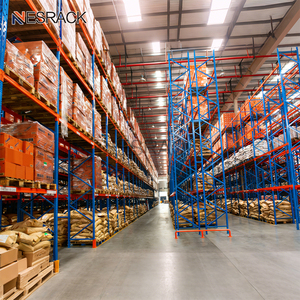
High Density Heavy Duty Galvanized Steel Adjustable Durable Double Deep Industrial Warehouse Pallet Racking System
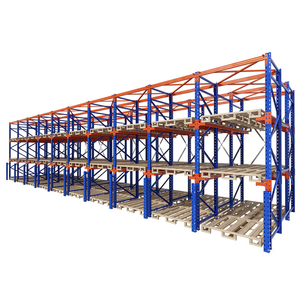
Drive-In Rack and Drive-Thru Racking Systems Are a Cost-effective Solution to High-density Pallet Storage
Structural Design, Beam Deflection Limits & System Archetypes
In modern high-throughput supply chains, warehouse shelving and pallet racking systems transition from passive steel structures into mission-critical logistics hardware. Sourcing from a verified CE Certified Warehouse Shelving Units Supplier ensures your storage configuration adheres to European Standard EN 15512:2020 (Steel static storage systems — Racking structural analysis and design) and EN 15620 (Tolerances, deformations and clearances).
The calculation of load capacities must systematically account for dynamic forklift horizontal impact forces, seismic acceleration vectors (accommodated in accordance with FEM 10.2.08), and vertical beam deflection limitations, typically bounded at L/200 for standard pallets and L/300 or tighter for automated guided vehicle (AGV) interfaces. Structural integrity hinges upon verified steel grades, specifically Q235B high-ductility cold-rolled coils and high-tensile Q355B alloy steel engineered for high-bay uprights exceeding 12 meters.
| Racking Architecture | Standard Pitch / Dimension | Maximum Load Capacity | Floor Area Utilization | Accessibility Index | Primary Application |
|---|---|---|---|---|---|
| Selective Pallet Racking | 50mm / 75mm adjustability | 1,000 – 5,000 kg / beam level | 35% – 45% (Aisle dependent) | 100% Immediate Direct Access | High-SKU distribution, FMCG, 3PL logistics |
| Double Deep Racking | Heavy box beam / stepped | Up to 3,500 kg / bay level | 55% – 65% | 50% Immediate (Reach truck) | Dry food storage, homogeneous batch buffers |
| Drive-In / Drive-Thru | Structural cantilever top rail | 1,500 kg / pallet position | 75% – 85% | LIFO (Drive-In) / FIFO (Drive-Thru) | Refrigerated cold rooms, raw materials |
| Gravity Pallet Flow | 3.0% – 4.5% roller inclination | 1,200 kg / pallet with brakes | 70% – 80% | Strict FIFO Automatic Rotation | Pharmaceutical, perishable food, dairy |
| Rack-Supported Mezzanine | Multi-tier column framework | 300 – 1,000 kg / m² deck load | 180% – 250% (Doubled/tripled) | 100% Multi-level Manual Pick | E-commerce fulfillment, spare parts, retail |
| Medium-Duty Longspan | Clip-in boltless steel/wood deck | 200 – 800 kg / tier shelf | Flexible modular geometry | 100% Direct Manual Hand-load | Garages, automotive maintenance, tool cribs |
Failure to balance steel gauge thickness against dynamic sway deflections leads to dangerous localized column buckling under continuous cyclical loading. Our engineering methodology involves rigorous Finite Element Analysis (FEA), calculating baseplate anchoring pull-out resistance under cracked concrete assumptions, ensuring total load reliability across seismic zones and extreme commercial environments.
Future Procurement Trends in Industrial Storage Infrastructure
How automation, warehouse real estate escalations, and decarbonization directives are reshaping the global procurement blueprint through 2026–2035.
1. High-Precision AGV & AMR Integration
Procurement teams are moving away from manual-only forklift widths. Tolerances on beam deflection and column verticality are shrinking from ±3mm down to ±0.8mm to interface seamlessly with Autonomous Mobile Robots (AMRs), automated pallet shuttles, and 2D vision guiding systems without sensor collision trips.
2. Upward Cubic Densification (High-Bay & Mezzanines)
With industrial land leasing rates climbing exponentially in regional logistics gateways (Singapore, Rotterdam, Dubai, Chicago), warehouse developers maximize vertical volume. 12-to-24-meter clad rack warehouses and 4-tier rack-supported mezzanines lower cost-per-pallet space by upwards of 46% compared to physical relocation.
3. Eco-Coatings & Severe Marine Anti-Corrosion
Global ESG mandates now penalize heavy volatile organic compounds (VOCs). Modern procurement requires RoHS-compliant heavy-metal-free electrostatic polyester powder coats, paired with automated pickling-phosphating or heavy-duty Continuous Hot-Dip Galvanizing (HDG) to endure tropical humidity (C4/C5 atmospheric corrosivity).
4. Mandatory Documentable Regulatory Audits
B2B tier-1 EPC contractors and global insurers no longer accept self-declared factory test sheets. European CPR (Construction Products Regulation) CE certificates, formal ISO 9001:2015 tracking, and independent destructive mechanical compression test logs are prerequisite gatekeepers for international project tenders.
5. Digital Twin Design & Rapid Rapid Prototyping
Enterprise buyers expect customized 3D spatial models, collision clearance simulation, and dynamic load stress simulations within 24 to 48 hours of initial layout submission, shifting the procurement lifecycle from weeks of drafting to agile digital iterations.
6. Hybrid Modular Reconfigurability
Supply chain volatilities require adaptable physical assets. Bolted upright frames and tool-less beam hook connectors permit operators to convert wide aisles into narrow aisles (VNA) or merge longspan hand-pick levels within standard pallet frameworks without discarding base structural columns.
Why Tier-1 Importers Rely on HEDA Shelves as Their Strategic Partner
Founded in 2001 in Guangzhou, China, Guangzhou Heda Shelves Co., Ltd. has spent over a quarter of a century pioneering industrial storage solutions, establishing itself as a premier CE Certified Warehouse Shelving Units Supplier across Europe, Southeast Asia, South Asia, the Middle East, and the Americas.
Unlike trading entities or fragmented assembling workshops, HEDA maintains an integrated 30,000 square meter intelligent manufacturing ecosystem operated by over 300 experienced engineers, cold-forming technicians, and certified international project directors. With an industrial roll-forming and metal fabrication capacity of 30,000 metric tons per month, we ensure scale, metallurgical purity, and punctuality on large-scale logistics deployments.
Full Lifecycle In-House Production
From primary Q235B/Q355B cold strip slit slitting, CNC automated punching, roll-forming of omega upright columns, laser profile cutting, robotic beam welding, surface polishing, 8-stage pickling and phosphating, to high-voltage electrostatic epoxy powder curing — 100% of workflows stay under one roof.
Stringent International Accreditations
Our structures carry independent, authenticated certifications including CE Certification No. 2435-CPR-8605159, complete quality management validation under ISO 9001:2015 (Certificate No. 18624Q00169R0M), and environmentally benign RoHS compliant surface finishes.
Free Pre-Sales Engineering (CAD / 3D)
We eliminate spatial uncertainty before capital commitment. Send us your building blueprints, clear eave heights, column spacings, and material handling truck details; our dedicated structural engineers deliver optimized 2D CAD floor plans, complete 3D photorealistic renderings, and stress load tables within 24 to 48 hours.
Global Logistics & Container Stacking Plans
Positioned directly beside major South China shipping ports, we engineer custom 3D container packing algorithms to optimize cubic volume in 40ft HQ containers, reducing ocean freight costs per pallet position while providing marked installation assemblies for seamless field erection.
Frequently Asked Questions: Warehouse Shelving & Pallet Racks
In-depth structural, legal, and operational answers for industrial engineers, procurement officers, and warehouse directors.
1. Why is CE certification mandatory for industrial warehouse shelving and pallet racks in international markets?
2. How does HEDA engineer racking solutions for active seismic zones (e.g., Philippines, Indonesia, Japan)?
3. What is the fundamental operational difference between Drive-In, Gravity Flow, and Radio Shuttle Racks?
- Drive-In Racking: Operates on a Last-In, First-Out (LIFO) framework. Forklifts physically drive inside the internal steel rack channels. It yields high volumetric density at low initial capital cost, but incurs longer loading times and higher risk of forklift collision with uprights.
- Gravity Flow Racking: Operates on a strict First-In, First-Out (FIFO) dynamic mechanism. Inclined roller beds (3%-4%) utilize gravitational force to move pallets forward automatically from the rear loading face to the front picking face, integrated with internal centrifugal brake rollers to control glide speed. Ideal for batch expirations and perishable food.
- Radio Shuttle Racking: A high-density semi-automated hybrid (switchable LIFO or FIFO). A self-powered low-profile shuttle cart glides underneath pallet lanes along dedicated structural rails, controlled via wireless remote or central WMS, retrieving pallets to the dock face. Forklifts never enter the storage lanes, drastically accelerating pallet turnaround while almost eliminating upright collision risks.
4. What building and floor slab parameters are needed for an accurate structural load quote?
- Warehouse Architectural DWG / Dimensions: Clear height beneath roof trusses, clear height beneath fire sprinkler heads, column grid spacing, and warehouse access door locations.
- Concrete Slab Specifications: Slab thickness (typically 150mm – 250mm), concrete compressive strength grade (e.g., C25/30 or C30/37), reinforcement mesh details, and maximum allowable point-load rating (kN/m²).
- Unit Load Metrics: Pallet dimension (W × D × H including overhang), maximum gross pallet weight, and whether bottom pallets are open or perimeter base (skid vs. 4-way EUR).
- Material Handling Equipment (MHE): Forklift model, minimum aisle turning radius (AST), mast lowered height, and maximum mast extended lift reach.
5. What anti-corrosion protection methods are applied for cold stores, marine ports, and chemical facilities?
6. What are the beam deflection safety tolerances specified by EN 15512?
Request an Engineering-Approved 2D/3D Storage Layout & Feasibility Report
Send your warehouse drawings and payload requirements. Our senior structural engineers deliver customized CAD plans, pallet position metrics, structural load calculations, and turnkey factory-direct pricing within 24–48 hours.