High Bay Heavy-Duty Racking & Material Handling Systems
Engineered to maximize vertical cubic clearance up to 40+ feet, accommodating stringent floor-load tolerances, tight aisle profiles, and rapid throughput requirements for New York warehouse facilities.
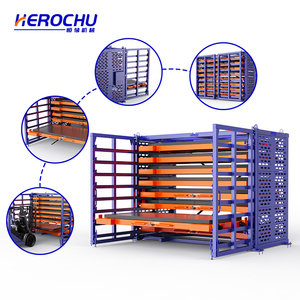 Heavy Duty
High Capacity 6-Layer Roll-Out Vertical Pipe & Bar Storage Racks
- Full-extension crank mechanisms
- Overhead crane accessibility
- Up to 6,600 lbs load per arm
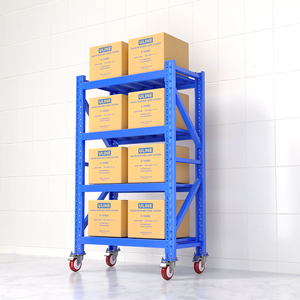 Narrow Aisle
Longspan Industrial Shelves & VNA Selective Pallet Racking
- 50-60" ultra-narrow aisle operation
- Floor wire-guidance compatible
- 100% immediate pallet selectivity
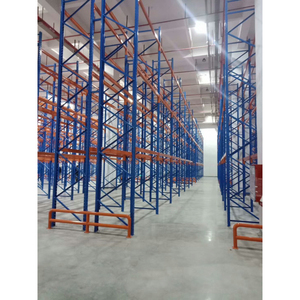 Modular Steel
Modular Boltless High Bay Steel Shelving & Picking Systems
- Quick rivet-lock rapid assembly
- Adjustable on 2-inch increments
- Ideal for e-commerce picking modules
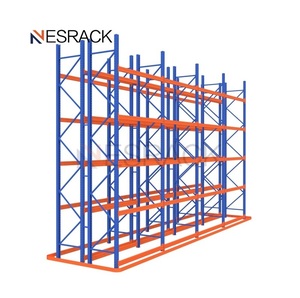 5-Layer Structural
High Bay Selective Pallet Rack with Integrated Guide Rails
- Heavy structural C-channel steel
- High seismic zone anchorage base
- Forklift bottom rub-rail deflection
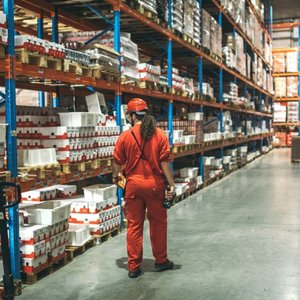 Electrostatic Coat
Powder-Coated Beam-Type High Bay Bolted Pallet Rack System
- High-durability baked thermoset
- Resistant to coastal salt moisture
- Tested under RMI MH16.1 protocols
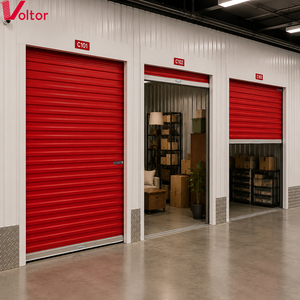 Urban Flexibility
Commercial Roll-Up Door Portable Modular Storage Lockers
- Secure corrugated steel cladding
- Internal multi-tier partition ready
- NYC micro-fulfillment compatible
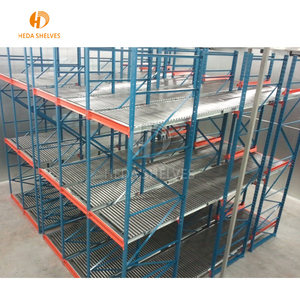 Strict FIFO
Dynamic High Bay Gravity Carton Flow Picking Rack System
- High-density gravity roller beds
- Separates picking & loading aisles
- Reduces travel time by over 40%
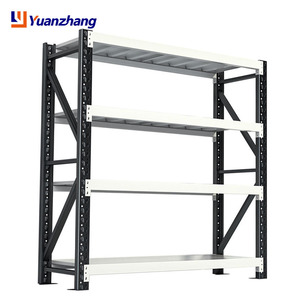 Multi-Tier Pick
Adjustable High Bay Bolted Metal Shelves for Parts & Cartons
- Pre-punched column profiles
- Mezzanine cat-walk catwalk ready
- Galvanized steel deck shelf options
High Bay Racking in New York: Navigating the Industrial Density Crunch
Industrial land scarcity and record-high lease rates across New York City’s outer boroughs, Long Island, and Northern New Jersey demand an aggressive shift from horizontal sprawl to vertical cubic maximization.
In logistics micro-markets spanning Sunset Park and Red Hook in Brooklyn, Maspeth and Long Island City in Queens, Hunts Point in the Bronx, and industrial hubs across Staten Island and the Meadowlands corridor, industrial warehouse real estate command triple net (NNN) rates exceeding $28 to $42 per square foot. In these dense metropolitan areas, expanding the horizontal footprint of a distribution facility is financially unviable. Operations must capitalize on high clear heights—often 32 to 44 feet in newly developed Class A logistics centers and multi-story warehouses.
Deploying high bay storage racks is an engineered operational necessity. A properly designed vertical high-bay rack structure transforms a warehouse from a flat square-foot footprint into an optimized cubic volume asset, scaling storage density by up to 250% within the exact same structural perimeter.
Cubic Storage Efficiency Formula: By transitioning from standard 16-foot selective racking to a 36-foot High Bay VNA (Very Narrow Aisle) or Automated Shuttle system, New York operators decrease their effective real estate occupancy cost per pallet position by an average of 42% over a 5-year lease lifecycle.
Furthermore, New York’s multi-story industrial developments—such as multi-tier logistics centers in Brooklyn and the Bronx—introduce unique structural constraints. These vertical warehouses require specialized engineering for floor slab load distributions, point load dispersion beneath base plates, vibration isolation from multi-floor ramps, and precise deflection control compliant with both NYC Department of Buildings (DOB) Chapter 17 structural safety protocols and the Rack Manufacturers Institute (RMI) MH16.1 specifications.
Multi-Story Warehouse Logistics
Engineered for multi-floor logistics hubs in Brooklyn and the Bronx. Load-spreading seismic baseplates prevent concentrated punch-through stress on upper-level concrete decks.
Cold Chain at Hunts Point
High-density drive-in, radio shuttle, and deep push-back racking tailored for perishables, cold seafood, and frozen meats, eliminating wasted refrigerated air volume.
Port Container Intermodal
Heavy-duty selective and roll-out cantilever racking configured to handle heavy breakbulk cargo, raw steel, machinery, and container drayage transfers near Port Newark/NY.
Last-Mile Micro-Fulfillment
Carton flow, multi-tier picking mezzanines, and high-bay narrow-aisle systems built inside compact urban footprints for rapid 2-hour e-commerce dispatch across Manhattan.
NYC DOB, FDNY, and RMI Structural Compliance Architecture
Deploying storage systems over 8 feet in New York requires rigorous adherence to municipal safety ordinances, seismic acceleration ratings, and strict high-piled fire clearance standards.
Navigating the jurisdictional requirements of the New York City Department of Buildings (NYC DOB), the New York City Fire Department (FDNY), and national structural consensus standards is critical for passing inspections and securing a Certificate of Occupancy. HEDA Shelves engineers our high-bay uprights, load beams, and bracing networks to meet or exceed these exacting building standards.
1. NYC DOB Permitting & Special Inspection (TR-1) Protocol
Under the NYC Construction Codes, steel storage racks exceeding 8 feet in height—or systems supporting automated mechanical handling equipment—are classified as regulated structures. A licensed Professional Engineer (PE) registered in the State of New York must verify structural calculation packages. Critical reviews include:
- Second-Order P-Delta Elastic Analysis: Accounting for lateral frame drift and axial compression under full maximum rated capacity.
- Anchor Bolt Tension and Shear Embedment: Calculated according to ACI 318 Appendix D standards into slab depths typical of older industrial boroughs (5" to 7" non-reinforced or reinforced slabs).
- Mandatory TR-1 Special Inspections: Required for structural cold-formed steel framing, high-strength structural bolting, and on-site anchor pull-out verification.
2. Seismic Design Parameters: USGS & ASCE 7-22 in the NY Metro Area
While New York is not on a major tectonic plate boundary, the Hudson River valley and coastal New York are subject to the Ramapo fault zone and coastal alluvial soil dynamics. Typical New York warehouse sites fall under Seismic Design Category (SDC) B or C with Short-Period Spectral Response Acceleration ($S_s$) ranging from 0.25g to 0.38g. HEDA Shelves addresses this by calculating baseplate thickness, selecting cold-rolled Q355B high-tensile steel, and engineering heavy-duty diagonal bracing patterns that resist seismic shear reversals without frame buckling.
3. FDNY Title 3 RCNY § 507 & NFPA 13 Fire Sprinkler Integration
High-bay installations exceeding 12 feet (or 6 feet for high-hazard commodities like plastics and aerosols) fall under "High-Piled Combustible Storage" regulations. To satisfy FDNY Plan Examination, racking layouts must maintain an unobstructed 36-inch or 48-inch clearance below Early Suppression Fast Response (ESFR) sprinkler heads. Our engineering blueprints calculate transverse flue spaces (minimum 3 inches) and longitudinal flue spaces (minimum 6 inches) using heavy-duty pallet backstops and wire mesh decks to ensure immediate downward deluge penetration during a thermal event.
| High Bay Rack Architecture | Typical Clear Height | Aisle Width (Clear) | Space Utilization % | NYC DOB / Seismic Category | Sprinkler Strategy (NFPA 13) |
|---|---|---|---|---|---|
| VNA Selective High Bay | 28 ft – 44 ft | 54 in – 68 in | 85% - 90% | SDC B/C Engineered Anchorage | Ceiling ESFR or 1-Tier In-Rack |
| Radio Shuttle High-Density | 24 ft – 40 ft | 110 in – 126 in | 92% - 96% | Rigid Welded Column Splicing | Multi-Level Face Flue In-Rack |
| Double-Deep Selective | 24 ft – 36 ft | 120 in – 135 in | 75% - 82% | Standard Heavy Footplate | Ceiling ESFR Compliant |
| Rack-Supported Multi-Tier Mezzanine | 20 ft – 38 ft | 36 in – 48 in (Pedestrian) | 95% (Multi-Floor) | NYC TR-1 Certified Framing | Integrated Under-Deck Deluge |
| Standard Wide-Aisle Selective | 18 ft – 32 ft | 138 in – 156 in | 60% - 70% | Standard RMI Baseplate | Standard Ceiling Sprinklers |
Emerging High-Bay Storage Trends Across the New York Metro
Technological advancement, automated handling systems, and green building ordinances are redefining how New York operators construct and operate high-bay warehouse infrastructure.
ASRS & Autonomous AMR Integration
With warehouse labor availability constrained and wages rising across the Tri-State area, high-bay racking must now accommodate robotic Autonomous Mobile Robots (AMRs), Automated Guided Vehicles (AGVs), and stacker cranes. Tight beam-level deflection ratios (L/240 or L/300) are engineered directly into our profiles to guarantee laser alignment for automated pick-and-place shuttles.
NYC Local Law 97 & Sustainable Steel
New York City's Local Law 97 establishes strict carbon caps on large buildings. HEDA Shelves manufactures racking systems using certified low-embodied carbon steel and VOC-free, lead-free electrostatic powder coatings that support LEED Gold and Platinum building certifications for environmentally conscious industrial developers.
Adaptive Vertical Mezzanine Hybridization
Warehouse managers are blending heavy structural pallet racking columns with multi-tier mezzanine decking. Rather than installing isolated platforms, rack-supported mezzanines run selective pallet bays on the lower tier while supporting high-density e-commerce parcel sorts and picking operations on top-tier open grid decks.
Why New York Supply Chain Operators Partner with HEDA Shelves
Combining 25 years of global production scale with direct engineering support, we deliver precision racking hardware on-spec, on-budget, and fully certified for the US market.
25+ Years of Industry Leadership
Founded in 2001, Guangzhou Heda Shelves Co., Ltd. operates a high-capacity 30,000 m² factory delivering over 30,000 tons of structural steel racking per month to more than 120 countries worldwide.
ISO 9001, CE & RoHS Certified
Manufactured under strict ISO 9001:2015 Quality Management Systems (Cert No. 18624Q00169R0M) and CE Certification (No. 2435-CPR-8605159). Tensile, shear, and weld penetration testing verified on every coil batch.
Rapid 2D/3D CAD Layout in 24-48h
Our dedicated engineering department prepares free customized 2D CAD floor plans, comprehensive 3D isometric warehouse renderings, and structural point-load calculation sheets tailored to your warehouse specs.
Turnkey East Coast Logistics Support
Optimized container nesting, specialized seaworthy bundle crating, and complete export shipping documentation direct to Port Newark and the Port of New York, accompanied by step-by-step installation guides.
Frequently Asked Questions by New York Warehouse Buyers
Essential technical, legal, and operational considerations when sourcing, permitting, and installing high-bay pallet racking systems across the New York metropolitan area.